SLAC researchers wrangle particle beams with digital doppelgängers
Digital twins have been helping scientists simulate environments and technologies for decades. Advances in AI and high-performance computing at SLAC are making these technological doubles more powerful as they are put to the task of boosting cutting-edge experiments at X-ray and ultrafast facilities by delivering high-quality particle beams more quickly.
By Carol Tseng
Key takeaways:
- SLAC researchers are developing digital twins for the accelerator’s subsystems to improve and speed up the beam tuning process.
- Digital twins, powered by AI and physics-based models, offer insights in real or near-real time.
- Accelerator digital twins have potential uses in radiation therapy for cancer treatment and new fabrication methods for next-generation computer chips.
AI at SLAC
Learn more about how AI is powering SLAC science and technology.
Looking to nature for inspiration, scientists have long used the concept of twins as virtual duplicates. Digital twins can act as a spacecraft simulator to train astronauts or as a body double on which doctors can try different treatments when searching for the best option for a patient.
Now, researchers at the Department of Energy's SLAC National Accelerator Laboratory are developing digital twins to solve a challenging issue: how to quickly tame unruly particle beams in a complex system with thousands of components. These particle beams are generated by particle accelerators, the backbone for SLAC’s Linac Coherent Light Source (LCLS), Stanford Synchrotron Radiation Lightsource (SSRL), Facility for Advanced Accelerator Experimental Tests (FACET-II) and Megaelectronvolt Ultrafast Electron Diffraction instrument. Researchers from around the world use the lab’s bright X-rays for cutting-edge experiments that explore the mysterious workings of atoms and molecules for discovering new drugs or materials. Powered by AI and on-site high-performance computing, digital twins are expected to increasingly play a role in the lab’s ability to quickly deliver the high-quality electron and X-ray – or photon – beams that researchers need for these experiments.
Digital doubles: a game changer
The idea of using digital twins at SLAC evolved from the simple physics models that accelerator researchers had been using for decades to better understand the linear accelerator (linac) and particle beam behaviors. Sensors at measurement points along the linac feed readings to the models to make predictions about and approximate the beam behavior. Even this limited information allowed researchers and operators to make better informed decisions on how to adjust accelerator settings, such as changing magnet strengths when adjusting beam energies. Over the years, increasingly sophisticated physics-based models have provided more accurate information about the detailed beam behavior but have required more time to return results, making them unsuitable for use during operation in the accelerator control room.
In recent years, two developments have made a more sophisticated tool – digital twins – possible: the explosion of AI and machine learning and access to on-site high-performance computing at the SLAC Shared Scientific Data Facility (S3DF).
“We’ve known for a long time that predictive physics models are very useful for accelerator operation and control,” said Auralee Edelen, SLAC staff scientist. “It was a natural progression to use more detailed models and to try to speed those up, and machine learning is really well suited for that.”
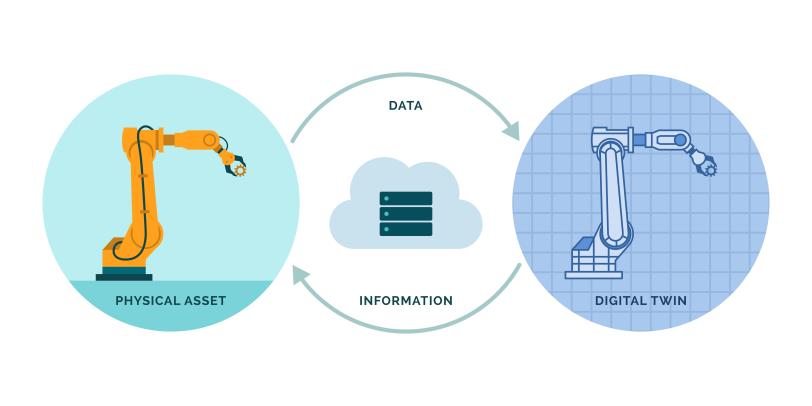
Using machine learning along with physics models, Edelen’s team has been building digital twins of linac subsystems to run in tandem with the real subsystems. The digital twins incorporate real-time facility data and give a live update, providing a more accurate, detailed picture of the beam and subsystems, even in areas between measurement points.
Explore our frontier research: advanced accelerators
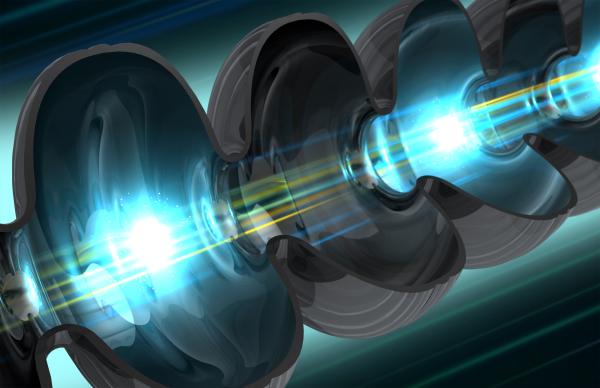
Accelerators form the backbone of SLAC’s national user facilities. They generate some of the highest quality particle beams in the world, helping thousands of scientists perform groundbreaking experiments each year.
Successfully running the digital twin also requires quick access to a data center and a subsystem’s historical data. The team has long sent data back and forth to heavily subscribed supercomputing centers such as Lawrence Berkeley National Laboratory’s National Energy Research Scientific Computing Center (NERSC). Recently, the team has also turned to S3DF for such needs. S3DF is an on-site compute and data facility that supports SLAC’s needs in scientific computing and complex workflows, allowing faster, real-time updating and decision making. The team is working with both NERSC and S3DF to develop shared workflows, so that the digital twins can run on both compute facilities for different types of tasks and make the most efficient use of the computational resources available.
Using information from digital twins, operators and physicists can make well-informed decisions more quickly, reducing time spent on tuning the beam and freeing up more time for researchers to run experiments. For example, in 2022, visualizations from a detailed system model of the injector for the LCLS upgrade were used to aid operator intuition about which settings to adjust, leading to improved beam quality.
Digital twins can also be used directly in automatic control algorithms to improve tuning speed. “We’re seeing pretty substantial speed up by using information from the models, and the effect is more pronounced as we try to tune more accelerator settings at once. For example, we’ve seen a factor of three improvement over the original convergence speed, even in small-scale systems, and several factors more than that for larger systems,” said Edelen.
They also want to keep the AI approaches as flexible as possible. “The philosophy is to combine these system models with techniques that don’t need a lot of data and can adapt to new conditions on the accelerator very quickly, like Bayesian optimization and its variants. That way, we can move very flexibly to different subsections of the machine and different machines,” said Edelen. Bayesian optimization is a method that predicts outcomes for parameter settings based on limited information.
SLAC staff scientistWhat’s exciting about the digital twin and AI and machine learning work we’re doing is it could eventually open up pathways to other applications that also use particle accelerators. We could improve accelerator control for radiation therapy treatments or synthesizing next generation computer chips, to name a few.
Toward a complete picture, step by step
So far, they have prototyped digital twins for many of SLAC’s original copper linac subsystems. Successful demonstrations of some digital twin capabilities have also caught the accelerator community’s attention. The team has collaborated with other DOE national labs and institutions worldwide to share software tools, develop software workflows and standardize the accelerator layout. “This makes it easier for people working on software to exchange it between different accelerator physics simulations and in turn use it on different accelerators,” said Edelen.
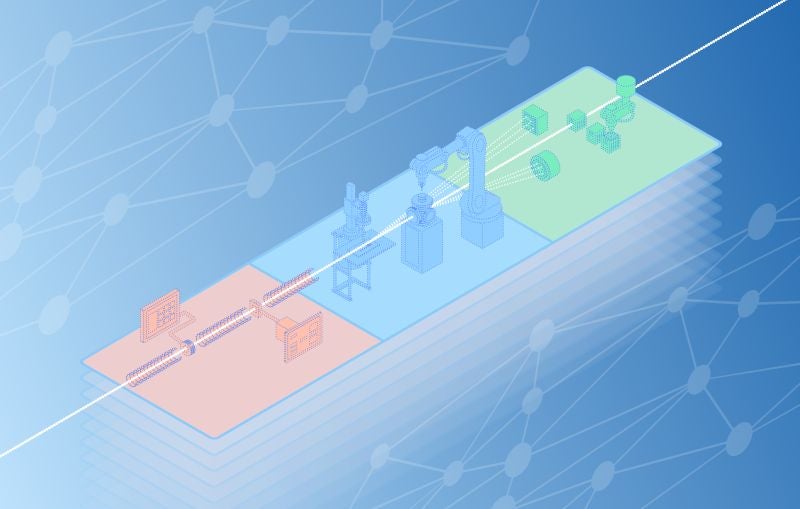
At SLAC, the team is starting to connect the different linac subsystem digital twins with the eventual goal of constructing a digital twin of LCLS – from the start, where electrons are generated, to the end experimental stations.
“When we think about much larger, more precise models of systems in the future, we should consider the whole facility and how all the different subsystems are connected. A true digital twin of the LCLS facility needs to include other complicated components like the cooling systems as well,” said Edelen.
Digital twins built for these large facility particle accelerators lay the groundwork for real-world applications.
“What’s exciting about the digital twin and AI and machine learning work we’re doing is it could eventually open up pathways to other applications that also use particle accelerators,” said Edelen. “We could improve accelerator control for radiation therapy treatments or synthesizing next generation computer chips, to name a few.”
This work was funded by the U.S. Department of Energy (DOE), Office of Science.
LCLS, SSRL, FACET-II and NERSC are DOE Office of Science user facilities.
For questions or comments, contact SLAC Strategic Communications & External Affairs at communications@slac.stanford.edu.
About SLAC
SLAC National Accelerator Laboratory explores how the universe works at the biggest, smallest and fastest scales and invents powerful tools used by researchers around the globe. As world leaders in ultrafast science and bold explorers of the physics of the universe, we forge new ground in understanding our origins and building a healthier and more sustainable future. Our discovery and innovation help develop new materials and chemical processes and open unprecedented views of the cosmos and life’s most delicate machinery. Building on more than 60 years of visionary research, we help shape the future by advancing areas such as quantum technology, scientific computing and the development of next-generation accelerators.
SLAC is operated by Stanford University for the U.S. Department of Energy’s Office of Science. The Office of Science is the single largest supporter of basic research in the physical sciences in the United States and is working to address some of the most pressing challenges of our time.
Related stories