Upcoming Event

How scientists are building the AI-powered laboratory

Presented by Sean Gasiorowski 

Register here to join us in-person, or watch online

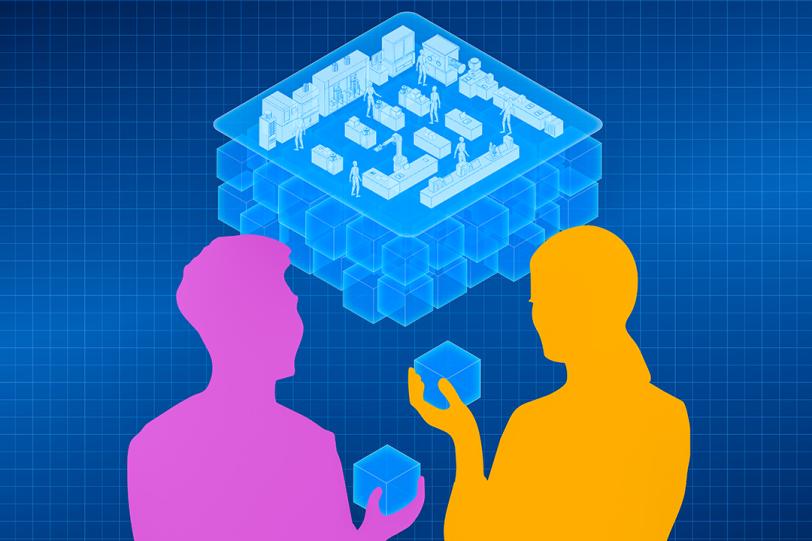
How do we find the next super material? How do we discover the next breakthrough drug? How do we unlock the mystery of dark matter and the structure of the universe? Scientists develop theories about these questions and test those theories with two powerful tools: laboratory experiments and computational models. But these tests can be costly: Each experiment can use hours or days of person-power on specialized equipment, and simulations can take days or weeks on a supercomputer. Access to these resources is limited; every measurement needs to count. This talk explores how scientists are using artificial intelligence to accelerate discovery, not only to analyze data more effectively, but to actively guide choices about the best next measurements to take to meet scientific goals. Along the way, I will explain what is unique about using AI for scientific research, share examples from my own work, and offer a glimpse of where AI-powered science is headed.
About Sean Gasiorowski

Sean Gasiorowski earned his PhD in physics from the University of Washington, working on the ATLAS experiment at CERN, the world’s largest particle physics laboratory. His doctoral research focused on searching for rare production of pairs of Higgs bosons – elementary particles that are a building block of our universe – where he developed a strong interest in using AI and machine learning to extract physical insights from complex data. He joined SLAC in 2021 and is now an associate scientist in the Machine Learning group, where he has broadened his scientific focus to problems ranging from discovery of new materials to understanding the large-scale structure of the universe. His current research interests include using AI for active experimental guidance, and he enjoys helping researchers across the lab accelerate their science with AI. When he’s not doing science, he can be found playing music or experimenting in the kitchen (he’s currently in his fermentation era).

Upcoming Event

How scientists are building the AI-powered laboratory

Presented by Sean Gasiorowski 

Public Lectures
Public Lecture Poster
Jun 4
Date
Thursday, June 4, 2026
7:00–8:00 p.m. PDT
Science and User Support Building (SUSB)
Attending a public event

Coming to SLAC

Free admission 
Registration may be required.

Identification required 
Adults are required to bring a REAL ID to enter the SLAC campus.

Limited seating  
For events in the Kavli Auditorium, seating is limited. Please arrive early to join the event on time.

Free parking 
SLAC offers free parking in our visitor parking lot.

Bags 
In order for SLAC to provide a safe environment for the public and our employees, and expedite access to the event, no bags or backpacks larger than 12"x6"x12" will be allowed inside the venue. Exceptions to this policy will be made for all medically necessary items after proper inspection and for SLAC-badged staff.

Accessibility 
SLAC facilities meet American Disability Act requirements for accessibility. If you need assistance, please notify our security officers as you enter SLAC’s main gate, and they will direct you to a parking area and assist or escort you to the auditorium.     

Getting here 
SLAC is located at 2575 Sand Hill Road, Menlo Park, California, 94025. Please visit our Maps and directions page for driving directions. 

If you have specific questions or concerns about attending an event at SLAC, please contact us.

Site entry informationMaps & directions