SLAC facility allows students to conduct research related to cancer therapy through BeamNetUS
Staff at the Next Linear Collider Test Accelerator helped undergraduates from Harvey Mudd College use the facility’s electron beam to test a detector they designed.
By Chris Patrick
Key takeaways:
- BeamNetUS, a new network of particle accelerator test facilities at DOE laboratories, awards experimental beam time with the aim to create new collaborations, including first-time and nontraditional users.
- This year, SLAC hosted the first BeamNetUS-sponsored project at its Next Linear Collider Test Accelerator (NLCTA) facility.
- With help from SLAC staff, undergraduate students from Harvey Mudd College used NLCTA’s electron beam to test a detector they designed to measure the shape of electron beams that produce radioisotopes for cancer treatment.
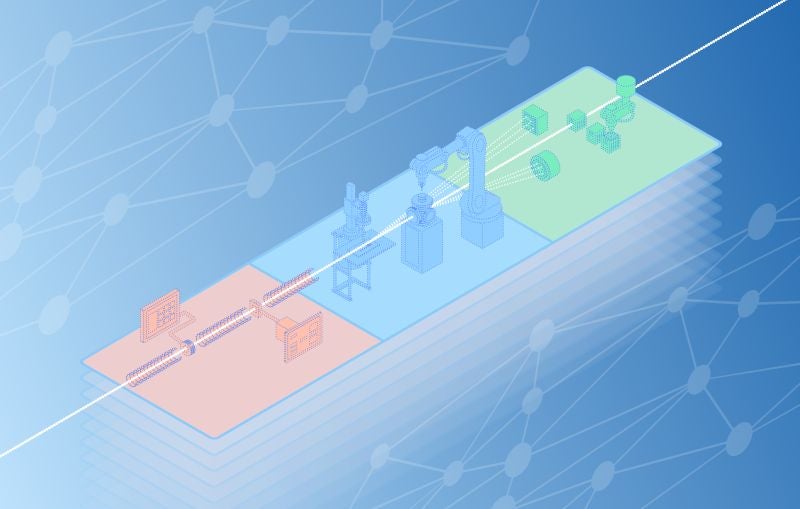
For research groups without prior experience with particle accelerators, it can be challenging to gain access to the powerful beams produced by these machines. A new network of accelerators at Department of Energy laboratories, BeamNetUS, aims to remedy this by awarding nontraditional research groups with beam time at participating facilities. More traditional accelerator-based research groups are also eligible. The DOE’s SLAC National Accelerator Laboratory has two accelerators in the network, the Facility for Advanced Accelerator Experimental Tests (FACET-II) and the Next Linear Collider Test Accelerator (NLCTA).
This year, the NLCTA was the first facility of the network to host a BeamNetUS-sponsored project when a team of undergraduate engineering students from Harvey Mudd College used the facility’s electron beam to test a detector for cancer therapy research for their senior thesis project.
A detector to help cancer therapy research
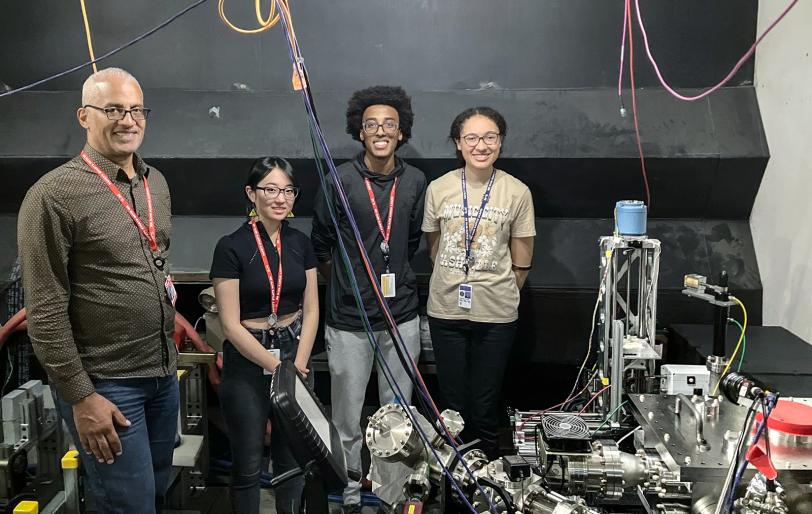
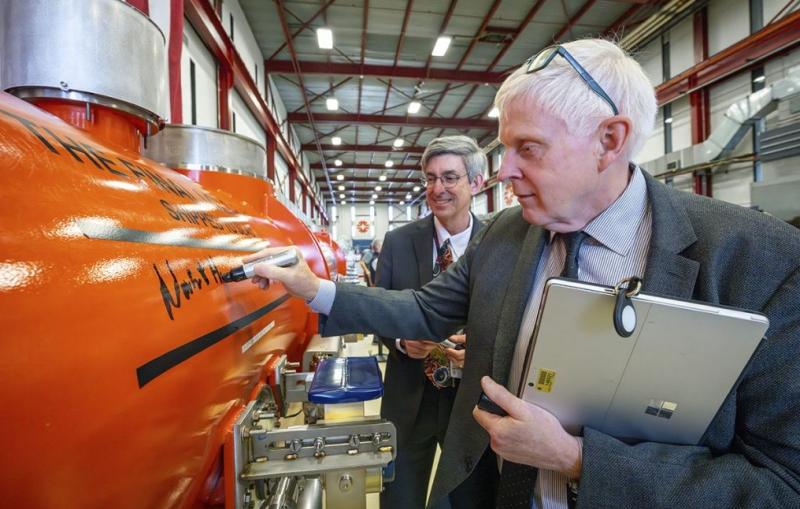
“When assigned this project, we knew it was going to be difficult to find places with the right energy level to test our detector,” said Nebiyu Samuel, the student leading the Harvey Mudd team. When he discovered that the electron beam at the NLCTA could work, Samuel reached out to Emma Snively, department head for accelerator research and technology within the Technology Innovation Directorate at SLAC and operations manager for NLCTA. As the deputy chair of BeamNetUS, Snively encouraged them to send in a proposal for their experiment through the network.
The team succeeded with their proposal and visited SLAC for three days in May to conduct their experiments.
Back at their home institution, the students had worked with a company that produces radioisotopes for cancer therapy by shooting electron beams at various materials. To control this process, it’s important to know the shape of the electron beam. Traditional methods take pictures of the beam, but this creates a time-consuming delay between making adjustments to beam shape and taking images of it.
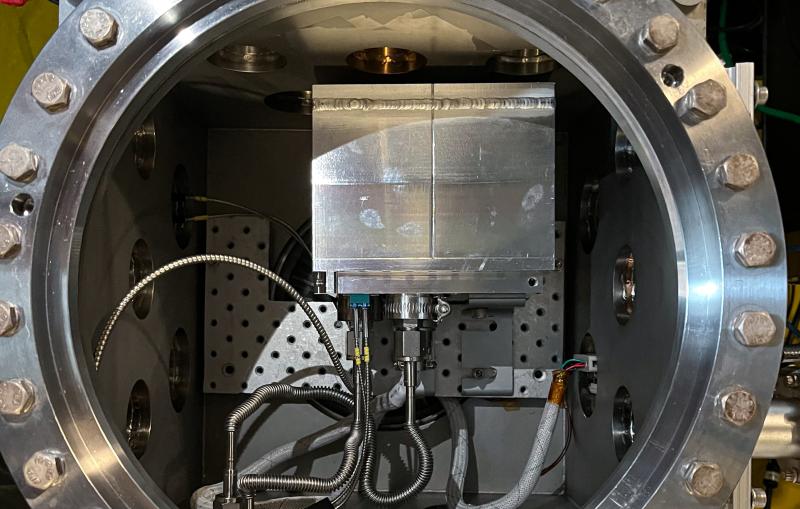
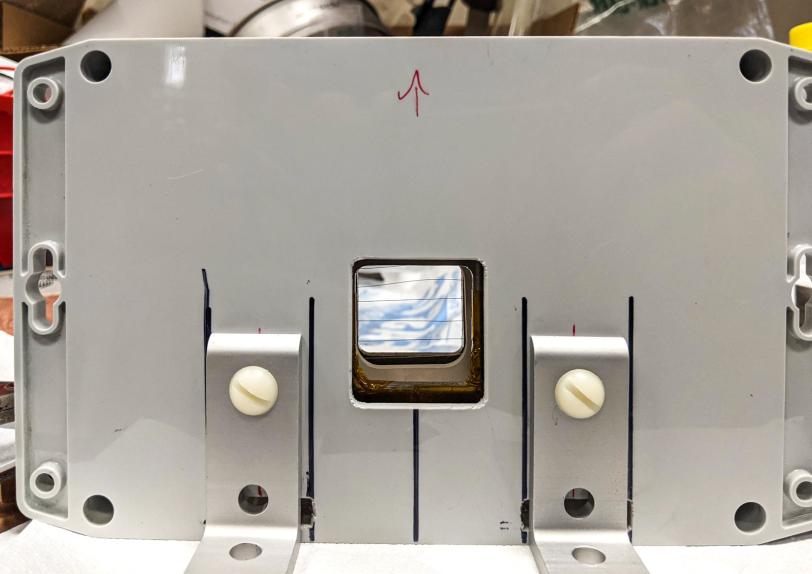
To address that problem, the Harvey Mudd students designed a detector to electronically measure the shape of an electron beam in real-time using a grid of gold-plated tungsten wires in the beam’s path. At the NLCTA, the team was able to confirm that their detector was indeed able to electronically measure the shape of an electron beam.
Making accelerators more accessible
Support from BeamNetUS and SLAC was key to bringing the project to completion.
Department Head for Accelerator Research and Technology, SLACBeamNetUS offers a more approachable introduction and easy access point for groups that are less experienced with these facilities but want to do accelerator research or use accelerators. We’re trying to foster collaboration and new connections in accelerator research and technology.
The students previously tested their detector at another electron beam facility but had to rush to try to collect their data in a limited window of beam time. They didn’t end up getting what they needed. However, working at the NLCTA through BeamNetUS, the team was given more time, flexibility and support, which allowed them to complete their tests.
“BeamNetUS offers a more approachable introduction and easy access point for groups that are less experienced with these facilities but want to do accelerator research or use accelerators,” Snively said. “We’re trying to foster collaboration and new connections in accelerator research and technology.”
The network is modeled after the DOE’s LaserNetUS, a consortium of high-power laser facilities. Through outreach efforts, BeamNetUS hopes to spread awareness about the capabilities of participating accelerator facilities and encourage groups worldwide in academia or industry to apply for beam time through the network. BeamNetUS also provides funding for travel to the facilities. Financial assistance was a big reason why the Harvey Mudd students were able to test their detector at the NLCTA.
“It wasn’t really within the undergraduate budget to ‘buy’ accelerator time,” said Stephanie Allen, one of the undergraduate students at Harvey Mudd working on the project. “If BeamNetUS hadn’t helped us, we most likely would not have been able to go to SLAC at all.”
SLAC staff offer extra support
Another benefit was the level of user support the Harvey Mudd team received from SLAC, a key success factor for nontraditional research groups using advanced accelerator facilities.
NLCTA user from Harvey Mudd CollegeOnce we got on site, we were immediately surrounded by NLCTA staff who were really passionate and knowledgeable about what they were doing and were very eager to help us.
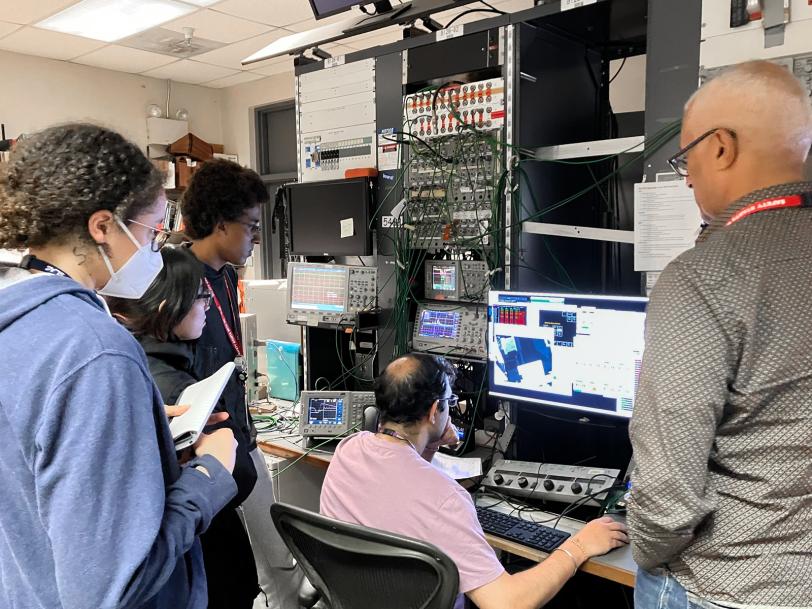
“The students had access to not just the facility, but also to the personnel who run it very, very well,” said David Nembhard, a Harvey Mudd professor who advised the team. SLAC staff helped them safely integrate their device with the beam and were at hand to answer any questions.
“Once we got on site, we were immediately surrounded by NLCTA staff who were really passionate and knowledgeable about what they were doing and were very eager to help us,” Samuel said.
Even before beam time began, Snively helped the students adapt their experiment for the NLCTA. “BeamNetUS really encourages people who want to submit a proposal to reach out and work with the facility ahead of time,” she said.
At the time of their experiment, the Harvey Mudd students had already fulfilled their requirements for graduation, “but it was a passion project for them to get this data. They worked tremendously hard,” Nembhard said. “I think they learned a lot and gained unique, valuable experience.”
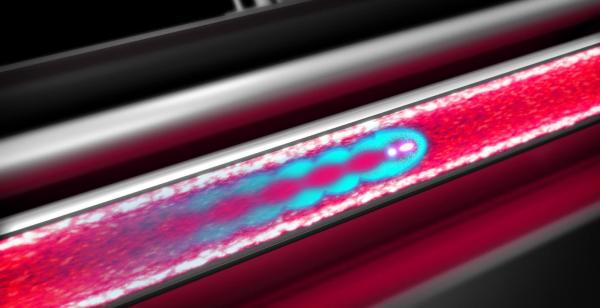
Facility for Advanced Accelerator Experimental Tests (FACET-II)
A new generation of accelerators for research, medicine and more, using electron beams a hundred times more intense than anything that came before.
The students even published their results in a proceedings paper that was submitted to the North American Particle Accelerator Conference 2025. At the conference in August, Samuel presented their project. While at SLAC, Samuel also became aware of internship opportunities and returned to intern over the summer. He hopes to return to SLAC again in some capacity one day.
During the pilot year of BeamNetUS, each facility in the network supported one experiment. Snively said the network will host multiple experiments at each facility in 2026 and will expand to include more facilities.
This work was supported by DOE’s Office of Science. FACET-II is an Office of Science user facility.
For media inquiries, please contact media@slac.stanford.edu. For other questions or comments, contact SLAC Strategic Communications & External Affairs at communications@slac.stanford.edu.
About SLAC
SLAC National Accelerator Laboratory explores how the universe works at the biggest, smallest and fastest scales and invents powerful tools used by researchers around the globe. As world leaders in ultrafast science and bold explorers of the physics of the universe, we forge new ground in understanding our origins and building a healthier and more sustainable future. Our discovery and innovation help develop new materials and chemical processes and open unprecedented views of the cosmos and life’s most delicate machinery. Building on more than 60 years of visionary research, we help shape the future by advancing areas such as quantum technology, scientific computing and the development of next-generation accelerators.
SLAC is operated by Stanford University for the U.S. Department of Energy’s Office of Science. The Office of Science is the single largest supporter of basic research in the physical sciences in the United States and is working to address some of the most pressing challenges of our time.
Related stories