SLAC topics

Accelerator science RSS feed

Accelerators form the backbone of SLAC's national user facilities. Research at SLAC is continually improving accelerators, both at SLAC and at other laboratories, and is also paving the way to a new generation of particle acceleration technology. 

Related link:
Advanced accelerators

Empty undulator hall
Past Event
Modern particle accelerator control rooms are like busy air traffic control centers, where skilled operators juggle hundreds of interconnected and time-sensitive tasks to generate...
Poster art for January 2026 public lecture
News Release

Surfing a plasma wave, electrons get an energy and brightness boost.

Illustration of electrons traveling through a plasma chamber
Feature

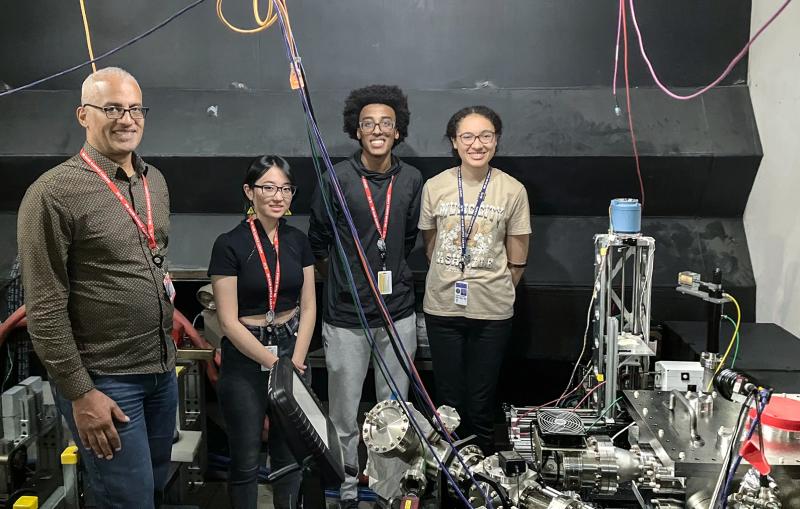
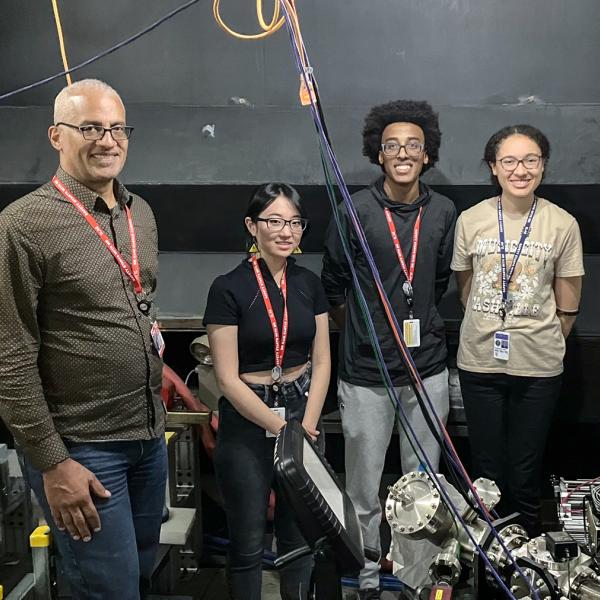
NLCTA staff helped undergraduates from Harvey Mudd College use the facility’s electron beam to test a detector they designed. 

A team from Harvey Mudd College inside the NLCTA accelerator housing at SLAC.
News Release

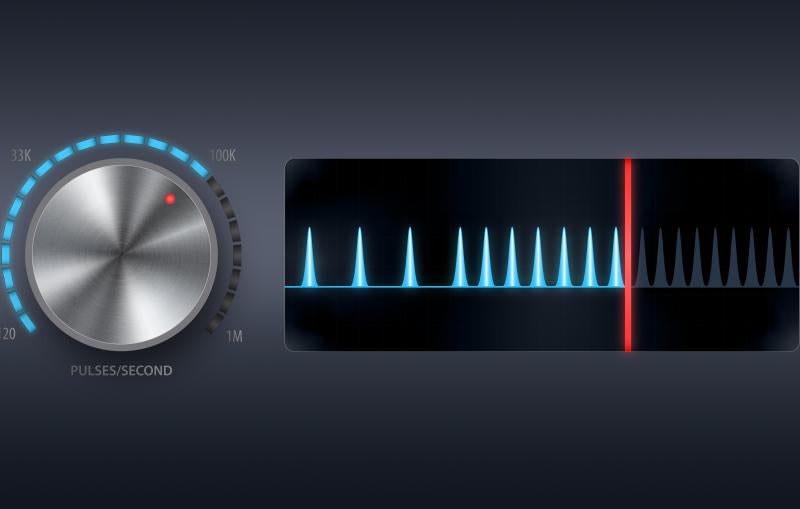
Experiments running at these higher pulse rates will allow scientists to capture ultrafast processes with greater precision, collect data more efficiently and explore phenomena...

lcls ii milestone
Multimedia

His visit highlighted the breadth of our world-class research and the people and collaborations that make it possible. A key theme of the day...

U.S. Deputy Secretary of Energy Danly watches a simulation of dark matter.
Multimedia

Researchers used LCLS to capture the ultrafast motion of electrons inside molecules – at scales never before possible. 

Complex scientific machinery with metal components
Feature

The technique could improve how scientists study materials and drive advancements in high-performance technologies, such as next-generation computer chips.

poincare beams
News Brief

Results obtained with SLAC’s X-ray laser show how tiny magnetic coils can align over a surprisingly broad timescale, inspiring new ideas for microelectronics. 

Vibrant 3D model with red and blue wave patterns on a layered surface, depicting magnetization points, set against blurry background.
Feature

Researchers aim to refine control room tools, improve training, and pave the way for smarter cooperation between humans and machines by studying how operators...

Human in the loop
Feature

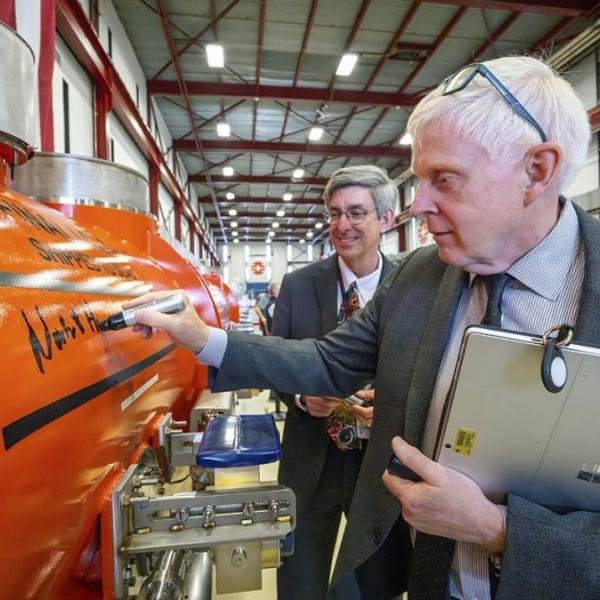
Researchers positioned lasers to compress billions of electrons together, creating a beam five times more powerful than before.

Claudio Emma and Brendan O’Shea examine experimental apparatus.
News Brief

Scientists studying laser-plasma proton acceleration made an unexpected breakthrough, simultaneously resolving multiple long-standing problems although they had only aimed to address one. 

Graphic depiction of a laser beam going through a water target
Feature

Researchers across the lab are developing AI tools to harness data and particle beams in real time and make molecular movies, speeding up the...

Graphic of AI in several science areas