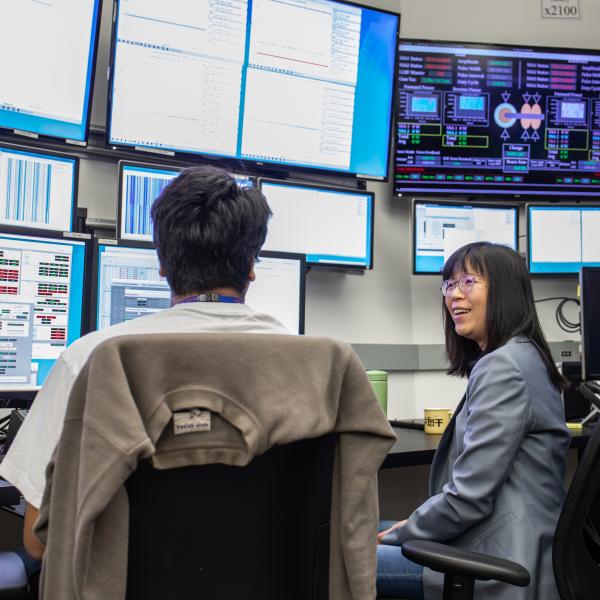
Modern particle accelerator control rooms are like busy air traffic control centers, where skilled operators juggle hundreds of interconnected and time-sensitive tasks to generate and shape high-energy particle beams. Control room tasks are increasingly performed with the support of AI. This talk explores our study of how operators select and organize these tasks, revealing key differences in task understanding based on expertise. Our study suggests that novices stick to “safe” task groups, while experts have more precise mental models of the entire complex system, allowing them to perform “riskier” tasks to achieve better results. Insights into how humans understand and think about the complex problem of accelerator operations and how these mental models evolve with expertise can help guide the design of trustworthy AI helpers that complement human expertise rather than replace it. Through this human-centered AI approach, I will share how we can make high-stakes technological environments safer and more efficient.
Humans Navigating Complexity with AI Helpers
Presented by Dr. Wan-Lin Hu
About Dr. Wan-Lin Hu
Dr. Wan-Lin Hu received her master’s degree in electrical engineering from the National Taiwan University. She then received her PhD in mechanical engineering from Purdue University in 2017 where she studied human–machine interactions within complex automated systems in high-stakes environments. This experience brought her to SLAC, where she modeled the behavior of human operators of complex systems, including at SLAC accelerators, and their interaction with intelligent automation, first as a postdoctoral fellow and then as a member of the SLAC staff. She is now an independent consultant specializing in developing human-centered AI tools and STEM education programs. In her spare time, Dr. Hu enjoys hiking, camping, and designing scientific toys.
Humans Navigating Complexity with AI Helpers
Presented by Dr. Wan-Lin Hu

7:00–8:00 p.m. PST
Coming to SLAC
Free admission
Registration may be required.
Identification required
Adults are required to bring a REAL ID to enter the SLAC campus.
Limited seating
For events in the Kavli Auditorium, seating is limited. Please arrive early to join the event on time.
Free parking
SLAC offers free parking in our visitor parking lot.
Bags
In order for SLAC to provide a safe environment for the public and our employees, and expedite access to the event, no bags or backpacks larger than 12"x6"x12" will be allowed inside the venue. Exceptions to this policy will be made for all medically necessary items after proper inspection and for SLAC-badged staff.
Accessibility
SLAC facilities meet American Disability Act requirements for accessibility. If you need assistance, please notify our security officers as you enter SLAC’s main gate, and they will direct you to a parking area and assist or escort you to the auditorium.
Getting here
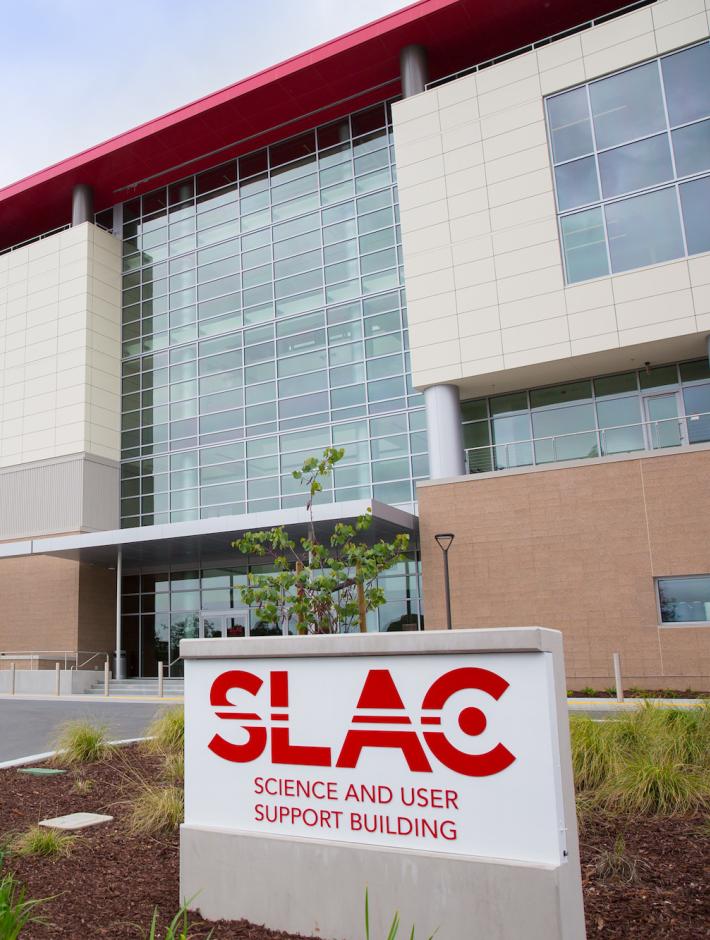
SLAC is located at 2575 Sand Hill Road, Menlo Park, California, 94025. Please visit our Maps and directions page for driving directions.
If you have specific questions or concerns about attending an event at SLAC, please contact us.