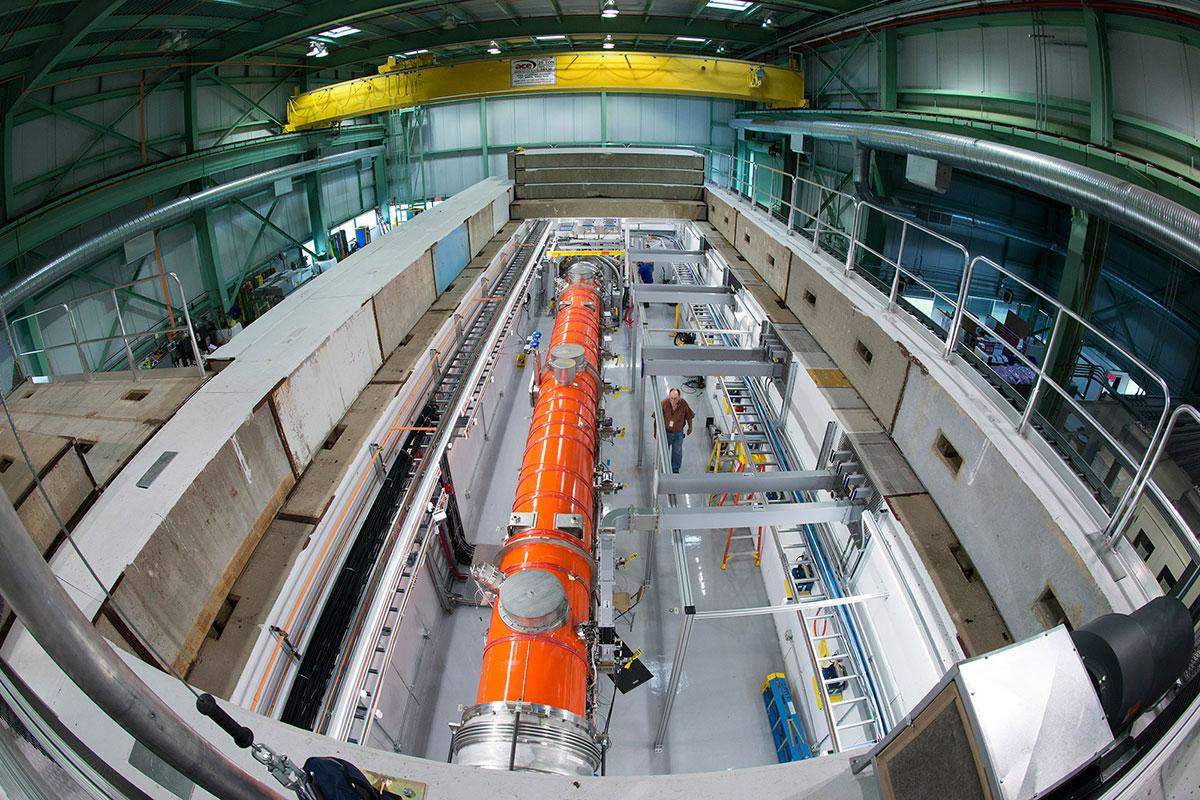
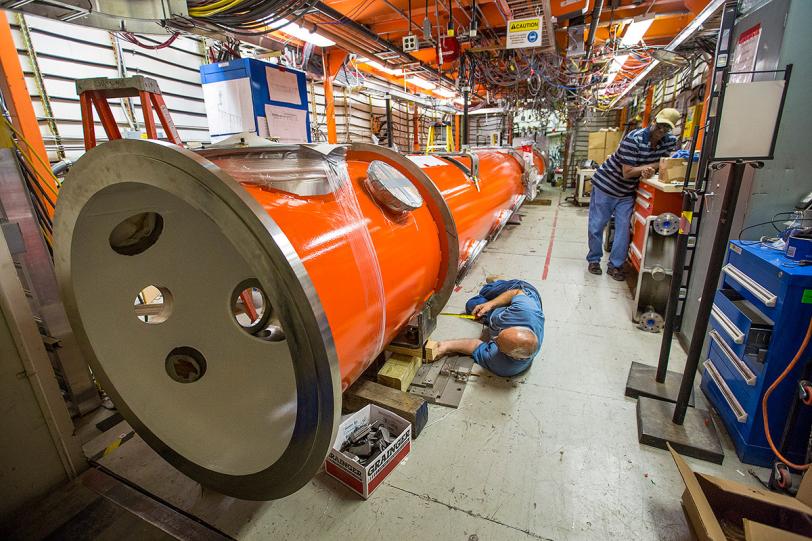
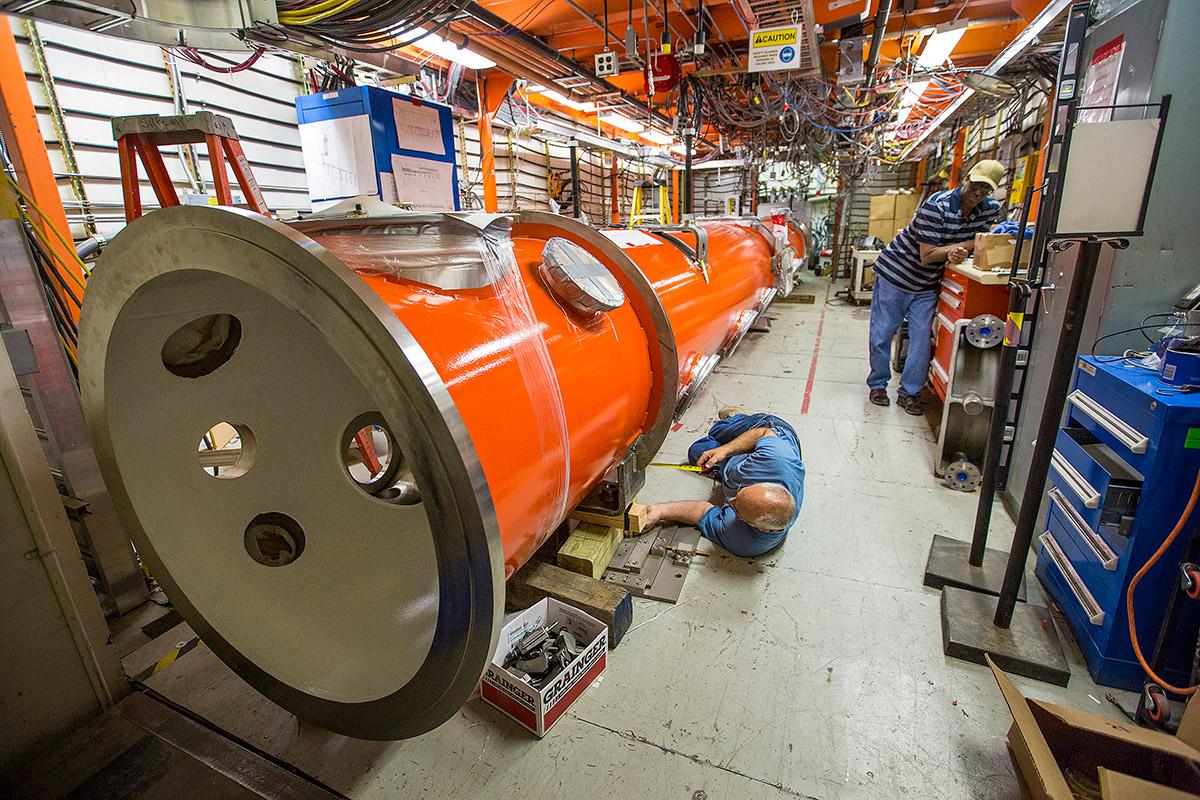
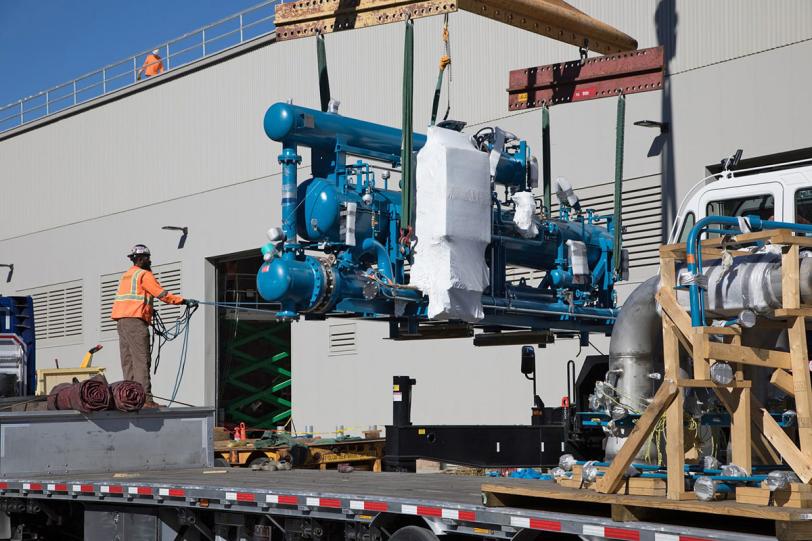
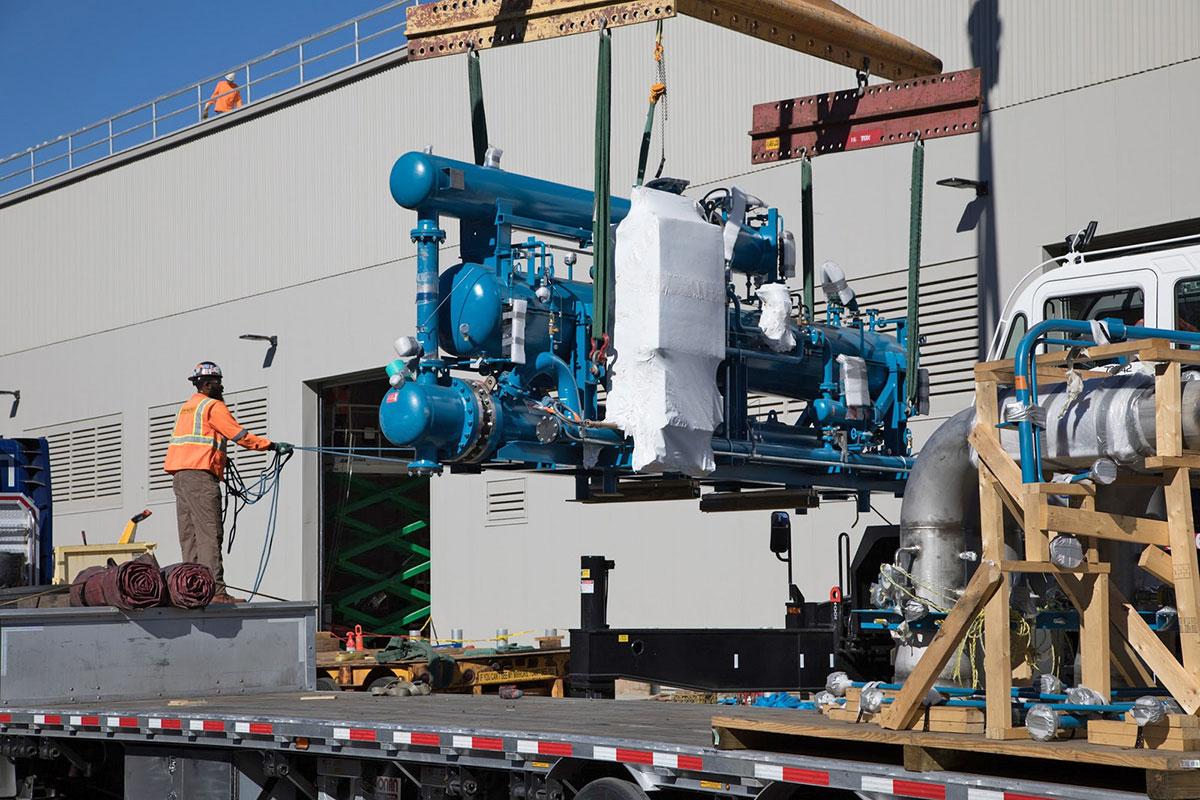
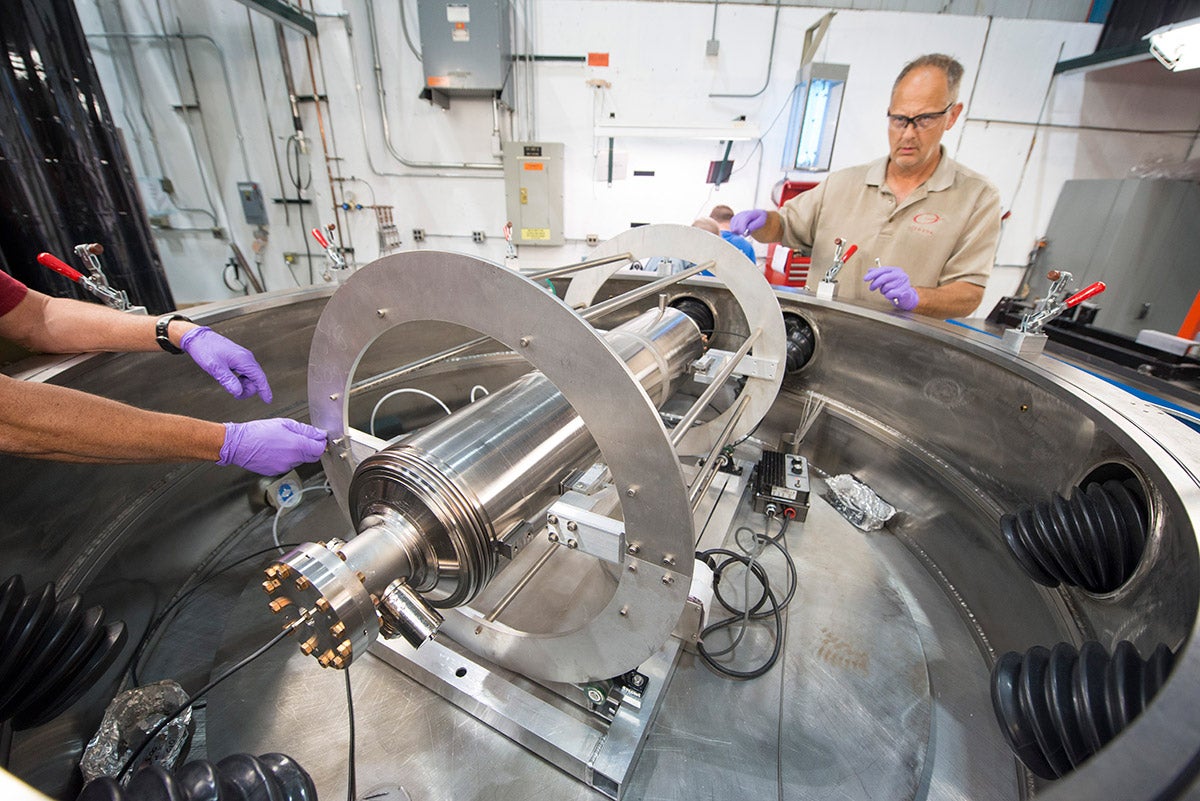
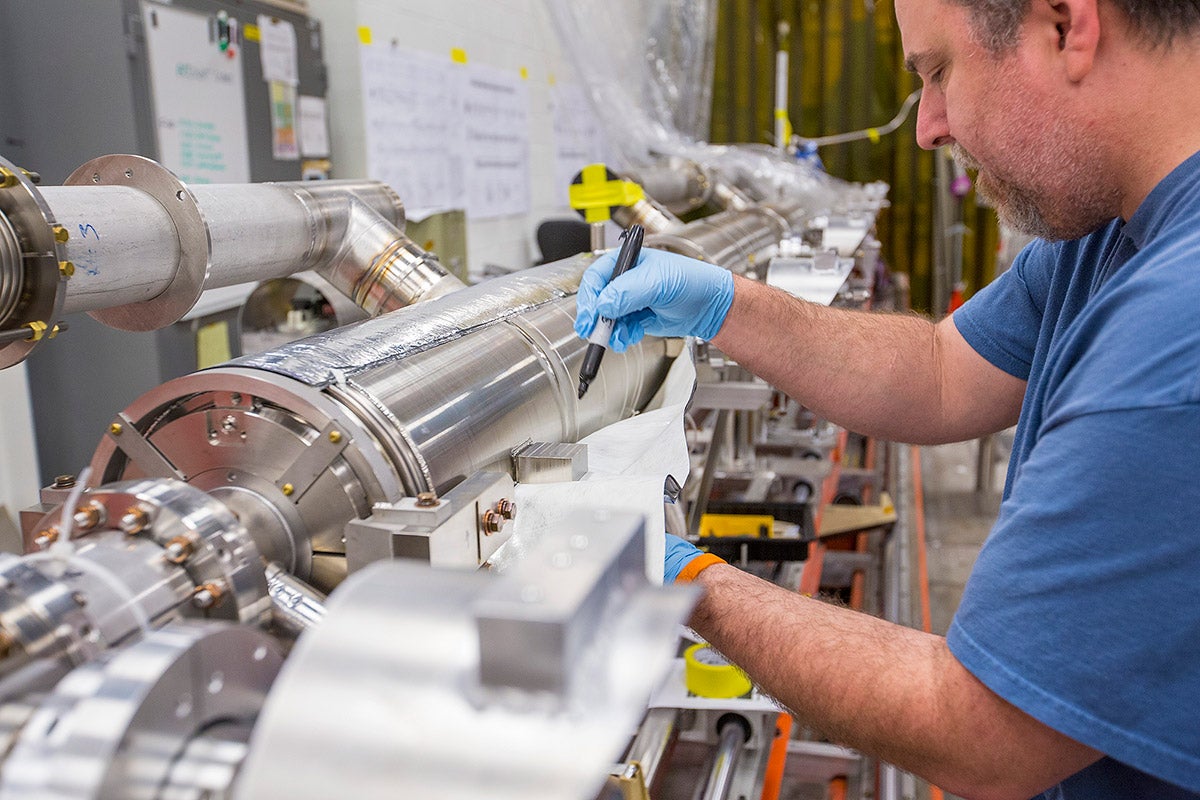
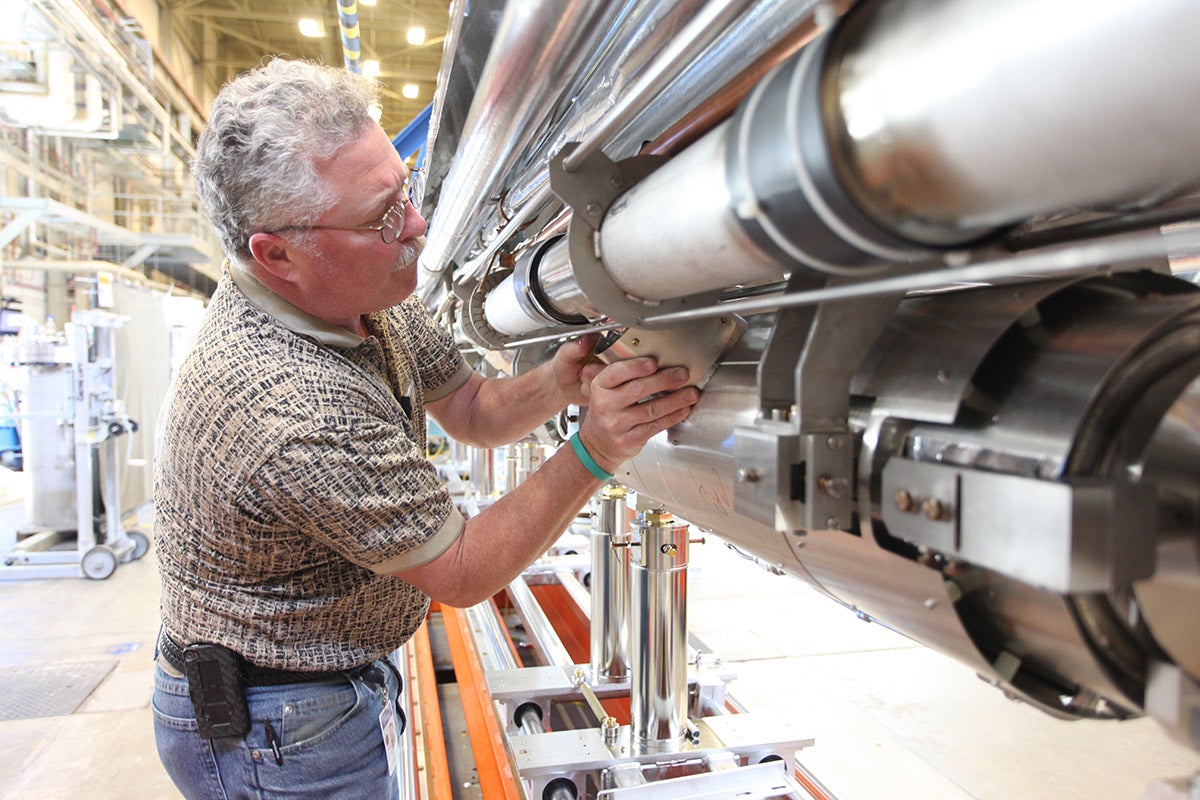
The first cryomodule for LCLS-II arrived at SLAC on January 19, 2018. Linked together and chilled to nearly absolute zero, 37 of these segments will accelerate electrons to almost the speed of light and power LCLS-II, an upgrade to the nation’s only X-ray free-electron laser facility.

Superconducting X-ray laser takes shape in Silicon Valley

January 19, 2018 | Menlo Park, California

The first cryomodule has arrived at SLAC. Linked together and chilled to nearly absolute zero, 37 of these segments will accelerate electrons to almost the speed of light and power an upgrade to the nation’s only X-ray free-electron laser facility.

By Amanda Solliday

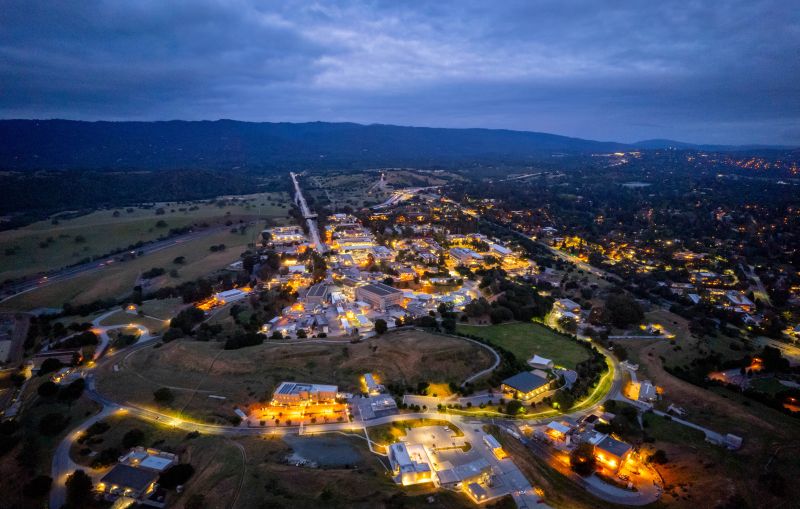
An area known for high-tech gadgets and innovation will soon be home to an advanced superconducting X-ray laser that stretches 3 miles in length from the beginning of the accelerator to the end of the experimental halls, built by a collaboration of national laboratories. On January 19, the first section of the machine’s new accelerator arrived by truck at SLAC National Accelerator Laboratory in Menlo Park after a cross-country journey that began in Batavia, Illinois, at Fermi National Accelerator Laboratory.

These 40-foot-long sections, called cryomodules, are building blocks for a major upgrade called LCLS-II that will amplify the performance of the lab’s X-ray free-electron laser, the Linac Coherent Light Source (LCLS).

“It required years of effort from large teams of engineers and scientists in the United States and around the world to make the arrival of the first cryomodule at SLAC a reality,” says John Galayda, SLAC’s project director for LCLS-II. “And it marks an important step forward as we construct this innovative machine.”

Inside the cryomodules, strings of super-cold niobium cavities will be filled with electric fields that accelerate electrons to nearly the speed of light. This superconducting technology will allow LCLS-II to fire X-rays that are, on average, 10,000 times brighter than LCLS in pulses that arrive up to a million times per second.

With these new features, scientists have ambitious research goals: examine the details of complex materials with unparalleled resolution, reveal rare and transient chemical events, study how biological molecules perform life’s functions, and peer into the strange world of quantum mechanics by directly measuring the internal motions of individual atoms and molecules.


“…this will allow scientists to do things they can’t do anywhere else in the world.”
Marc Ross
Marc Ross
Video
SLAC Accelerator Physicist Marc Ross explains how the lab's new superconducting accelerator will be built. (Video Credit: Robert Kish, Farrin Abbott & Greg Stewart / SLAC)


Fermi National Accelerator Laboratory is building half of the cryomodules for the LCLS-II laser upgrade, and Thomas Jefferson National Accelerator Facility in Newport News, Virginia will build the other half. Fermilab, Jefferson Lab and SLAC are Department of Energy (DOE) Office of Science laboratories.
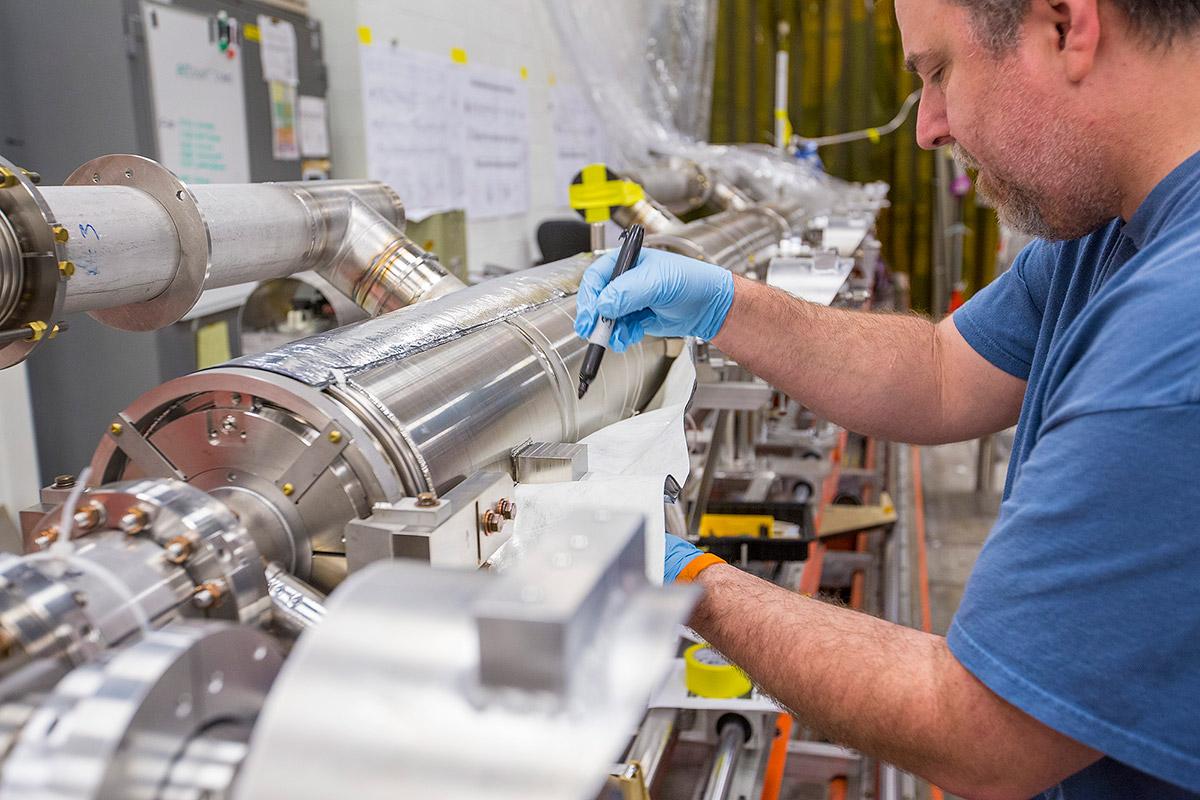
cryomodule
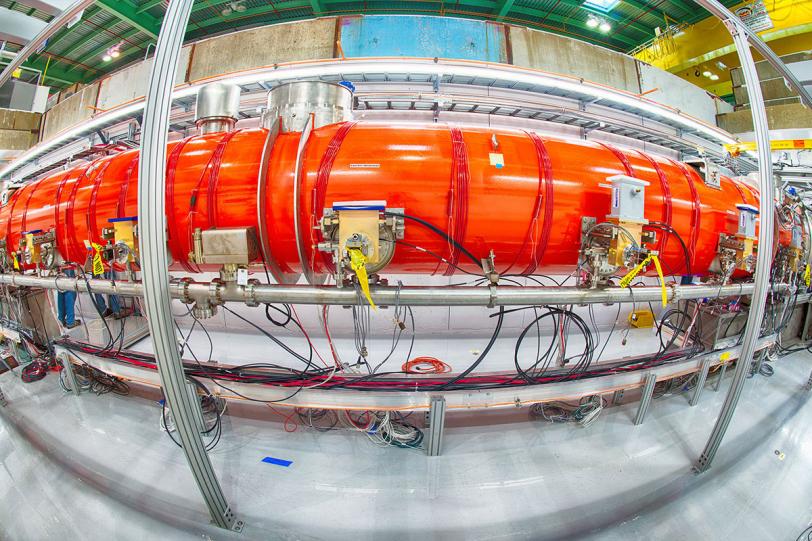
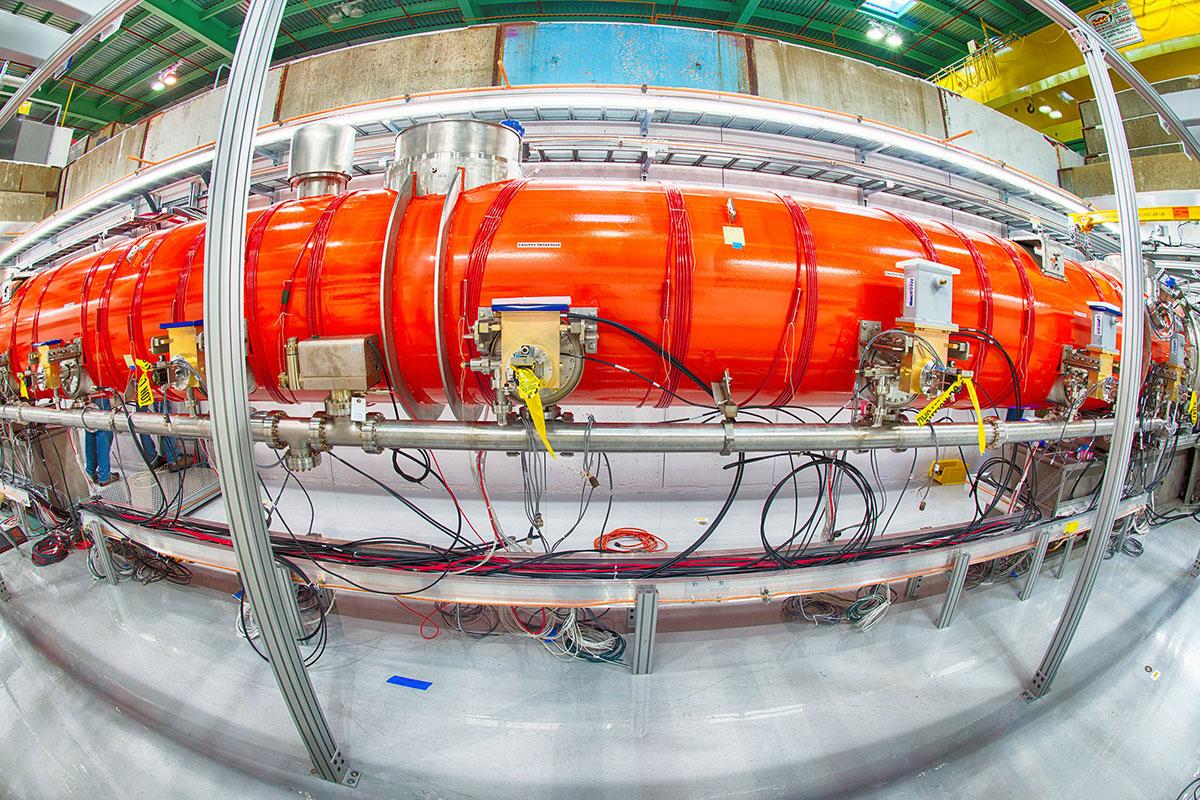
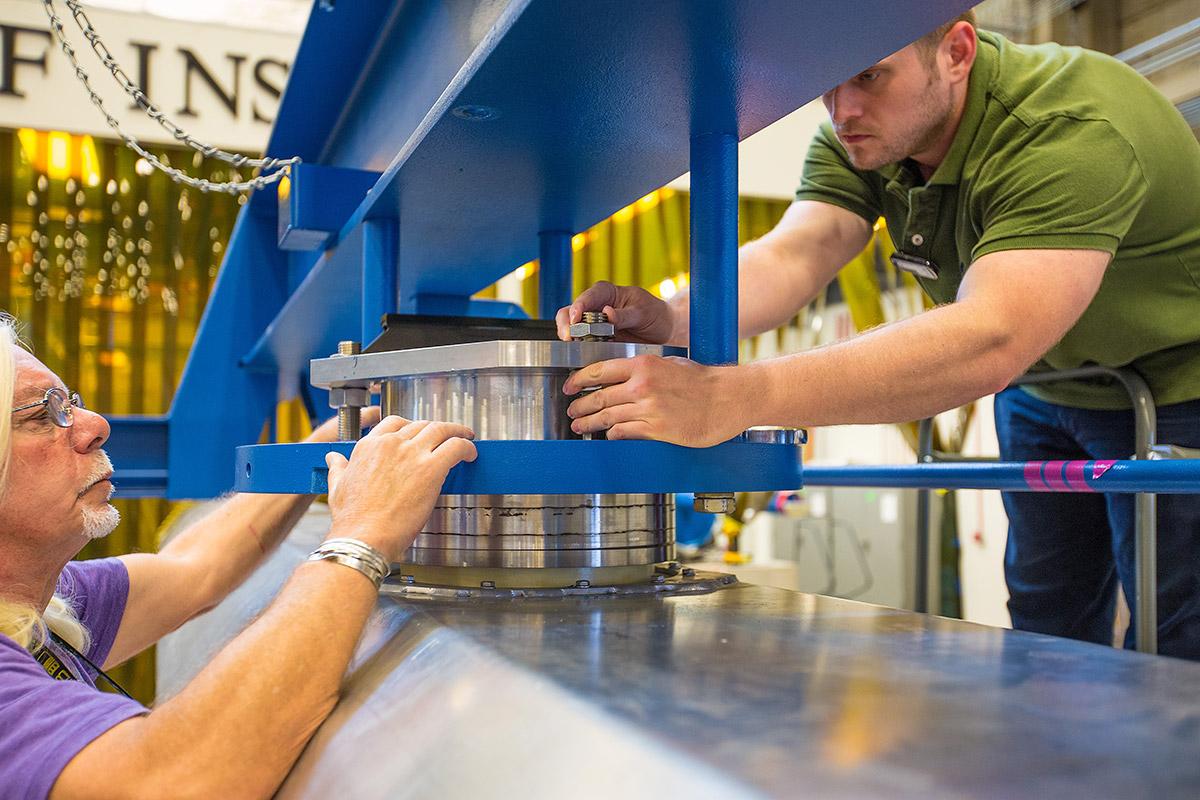
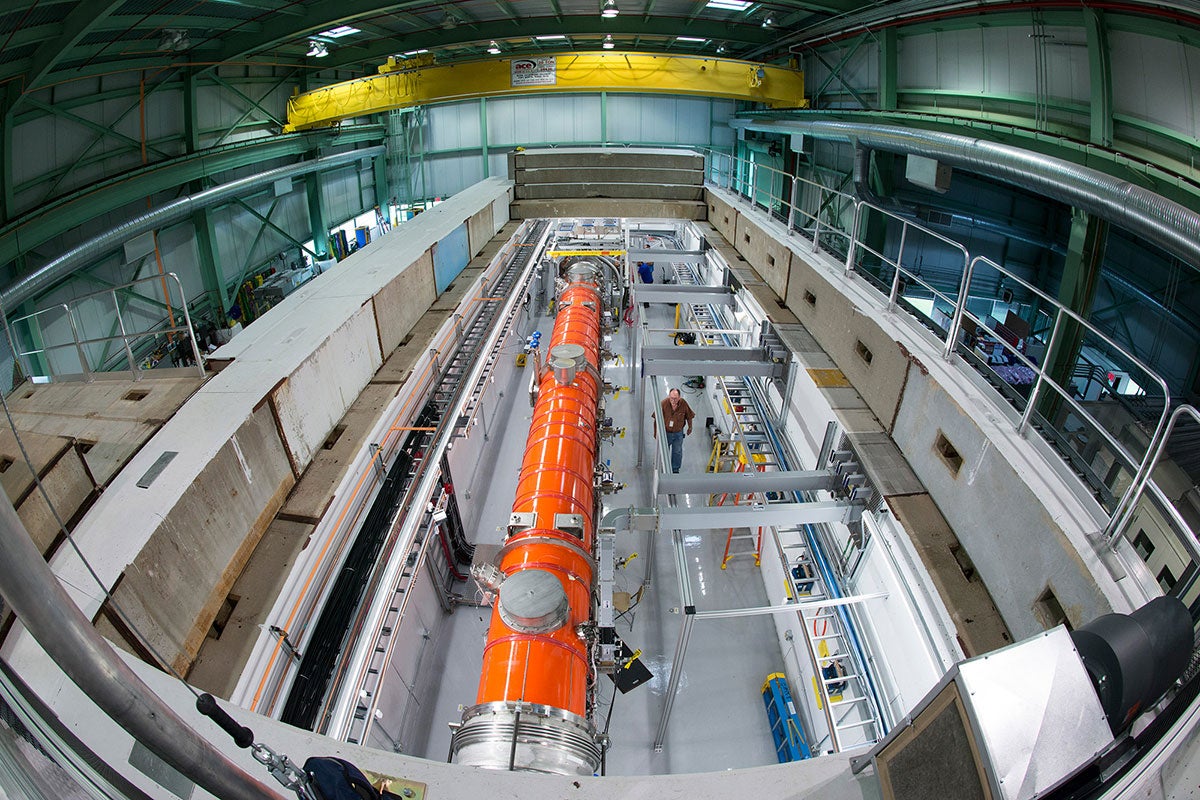
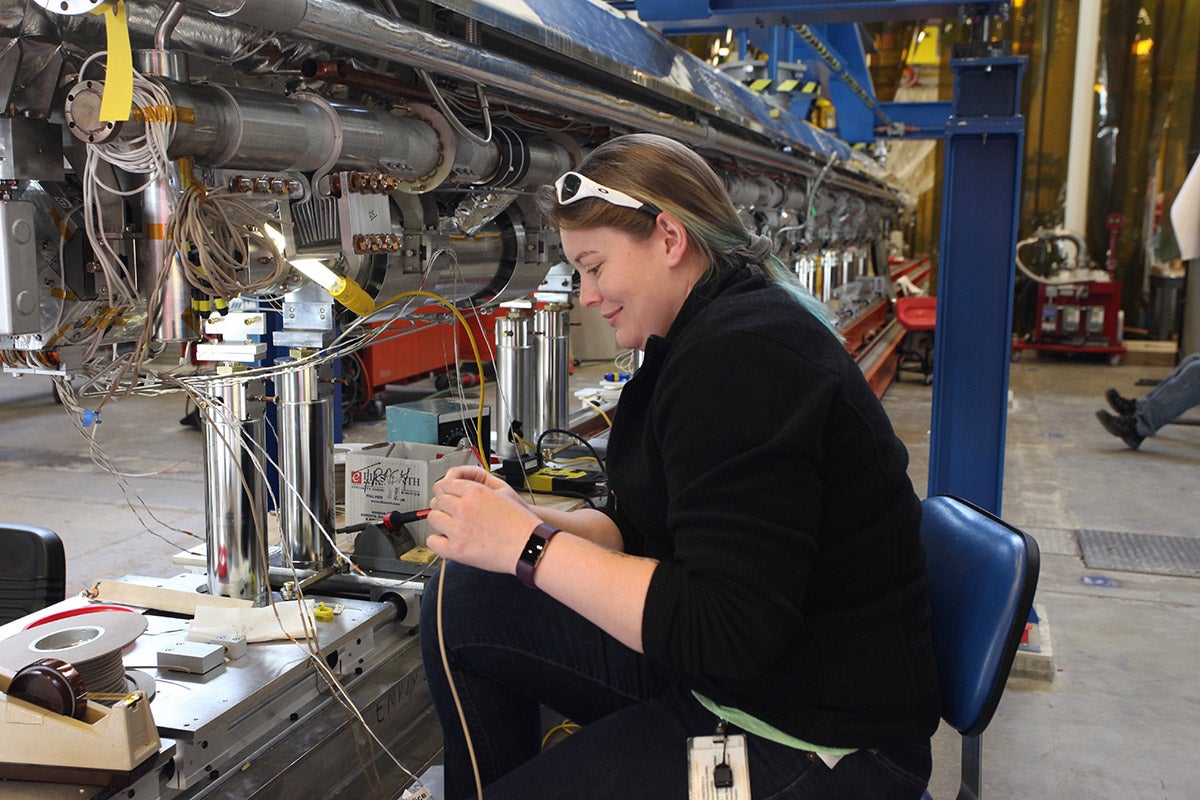
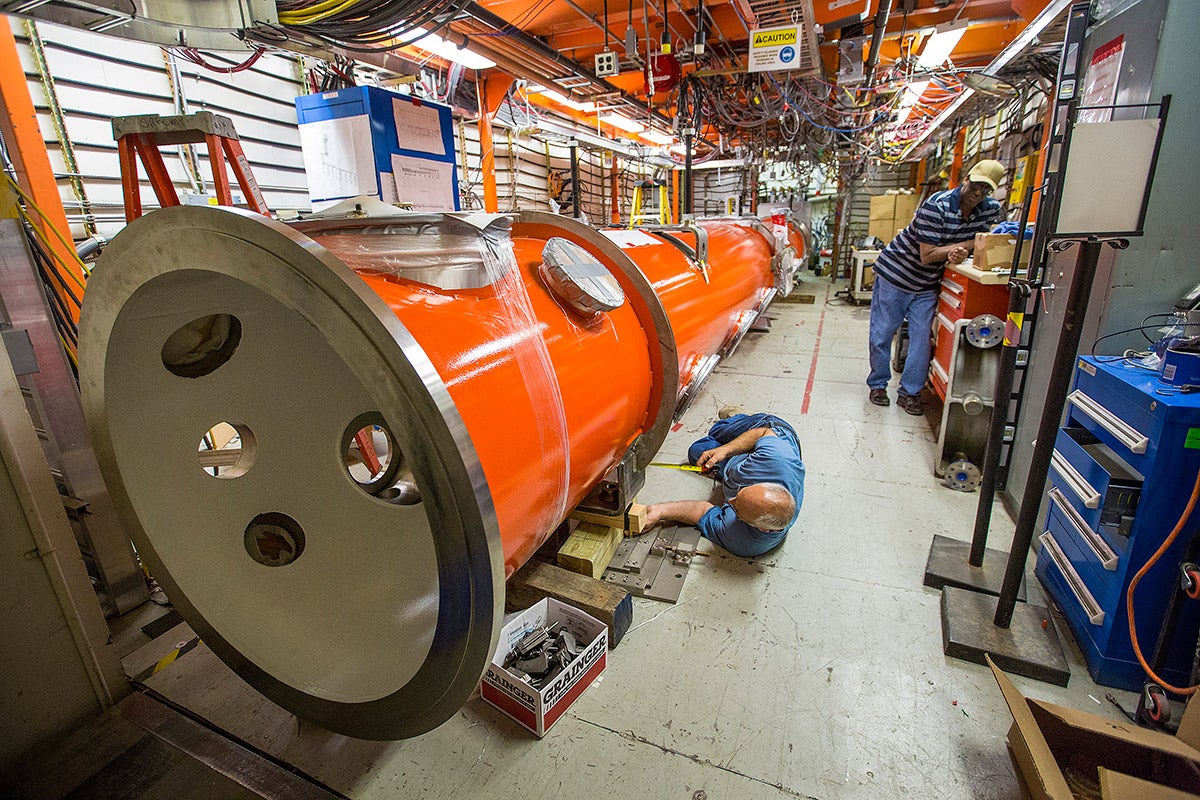
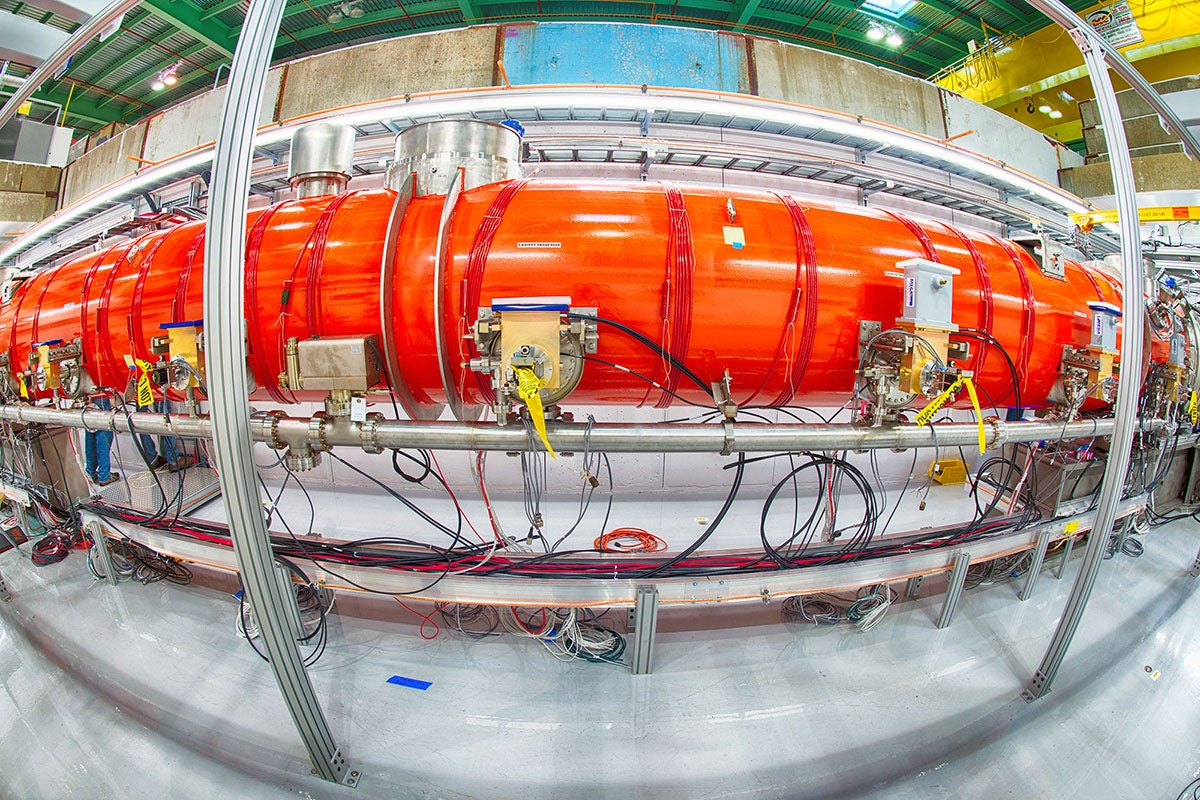
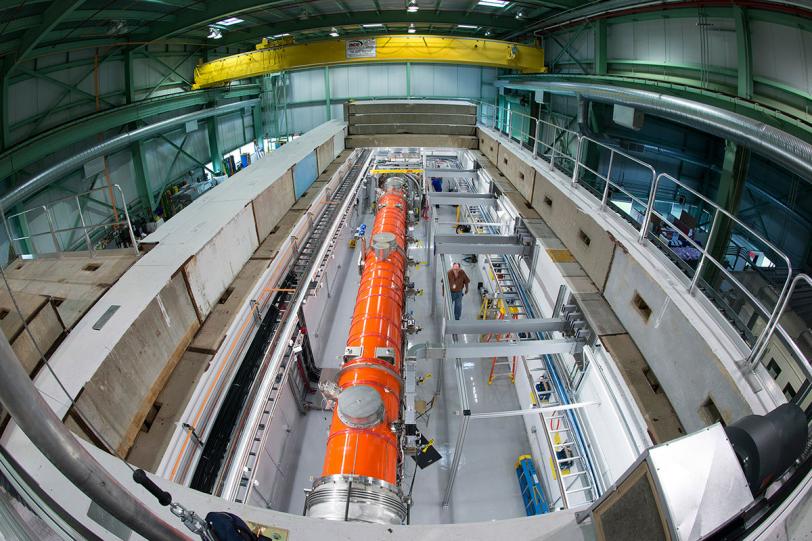
Photo from Fermilab, where LCLS-II cryomodules are constructed and tested. Linked together and chilled to nearly absolute zero, 37 of these segments of superconducting particle accelerator called cryomodules will accelerate electrons to almost the speed of light and power an upgrade to the nation’s only X-ray free-electron laser facility. (Fermilab)
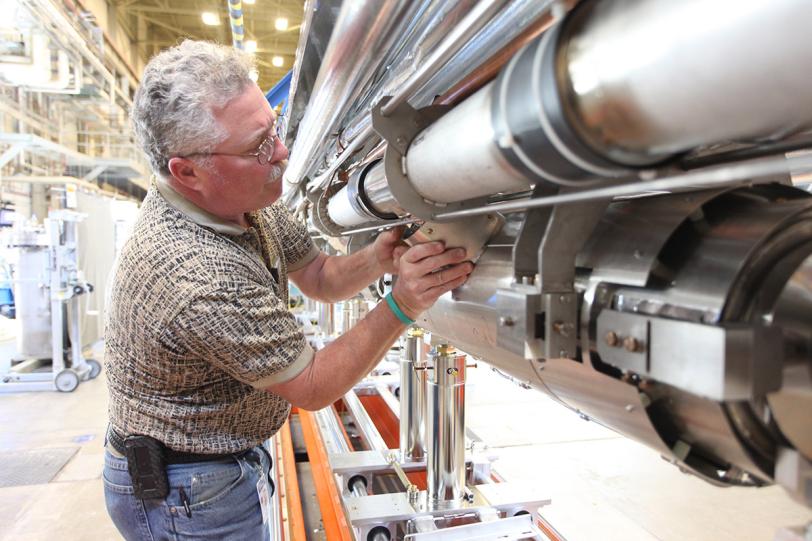
cryomodule
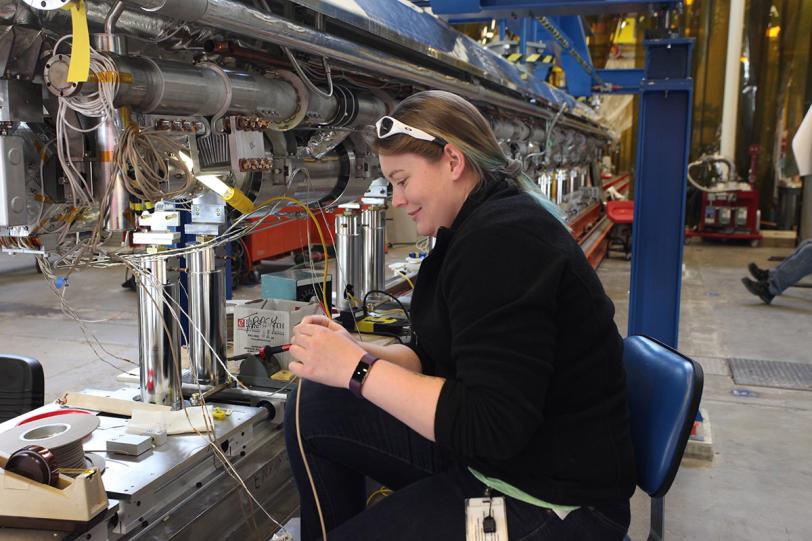
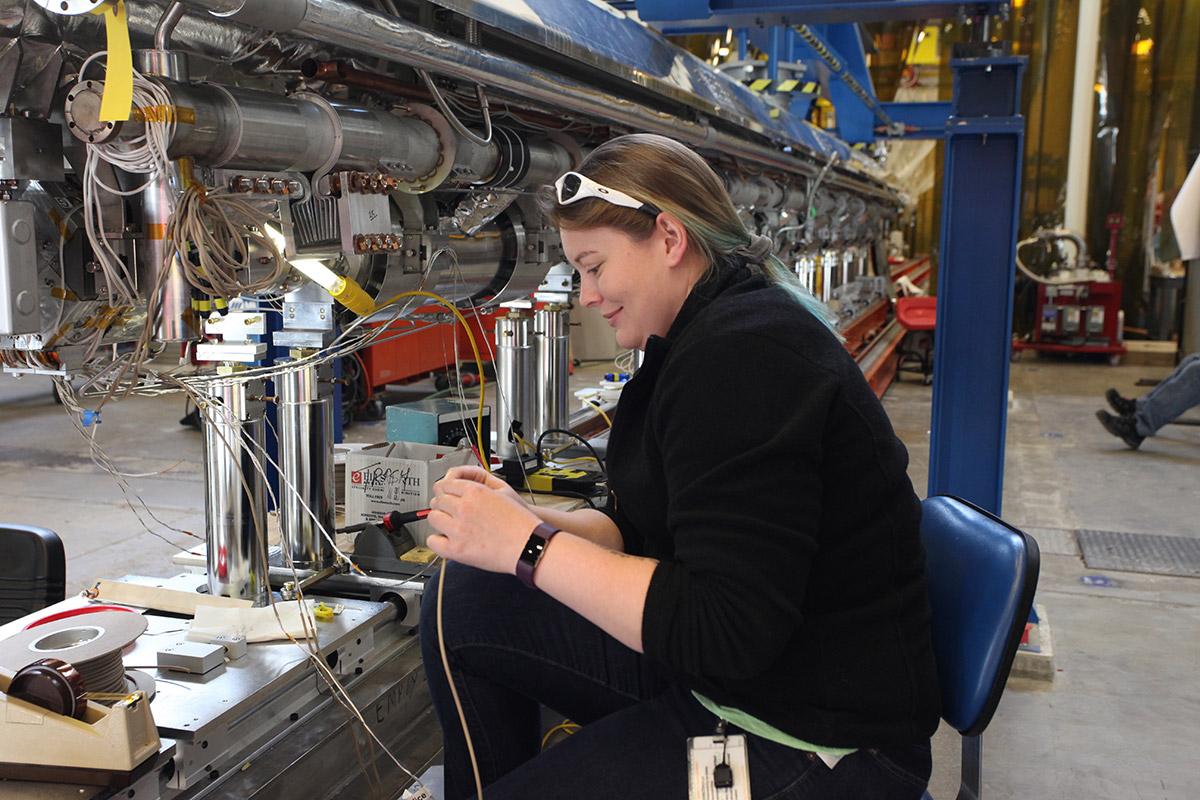
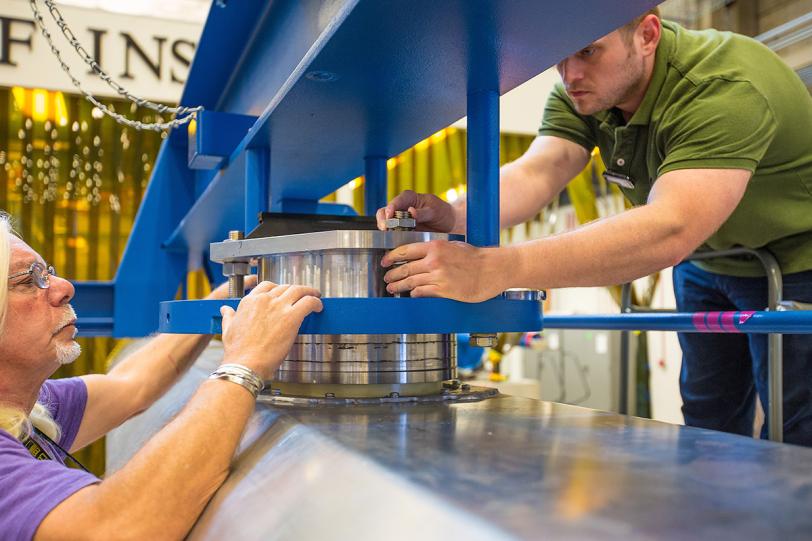
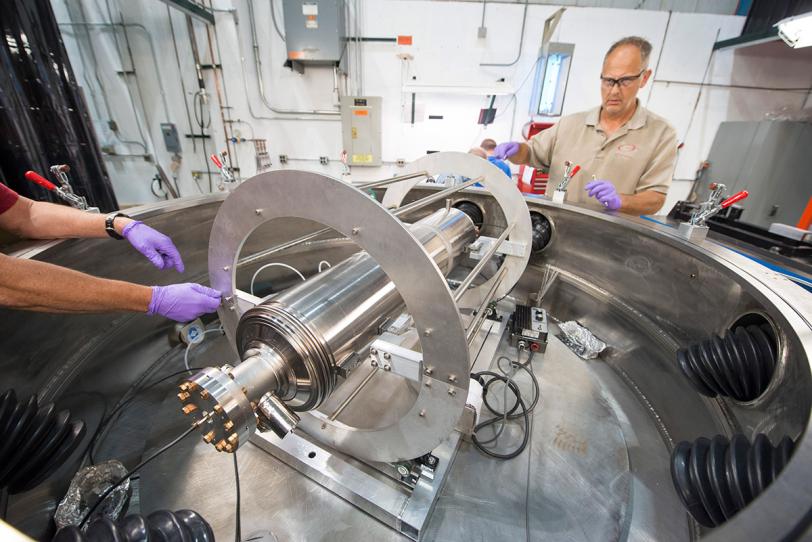
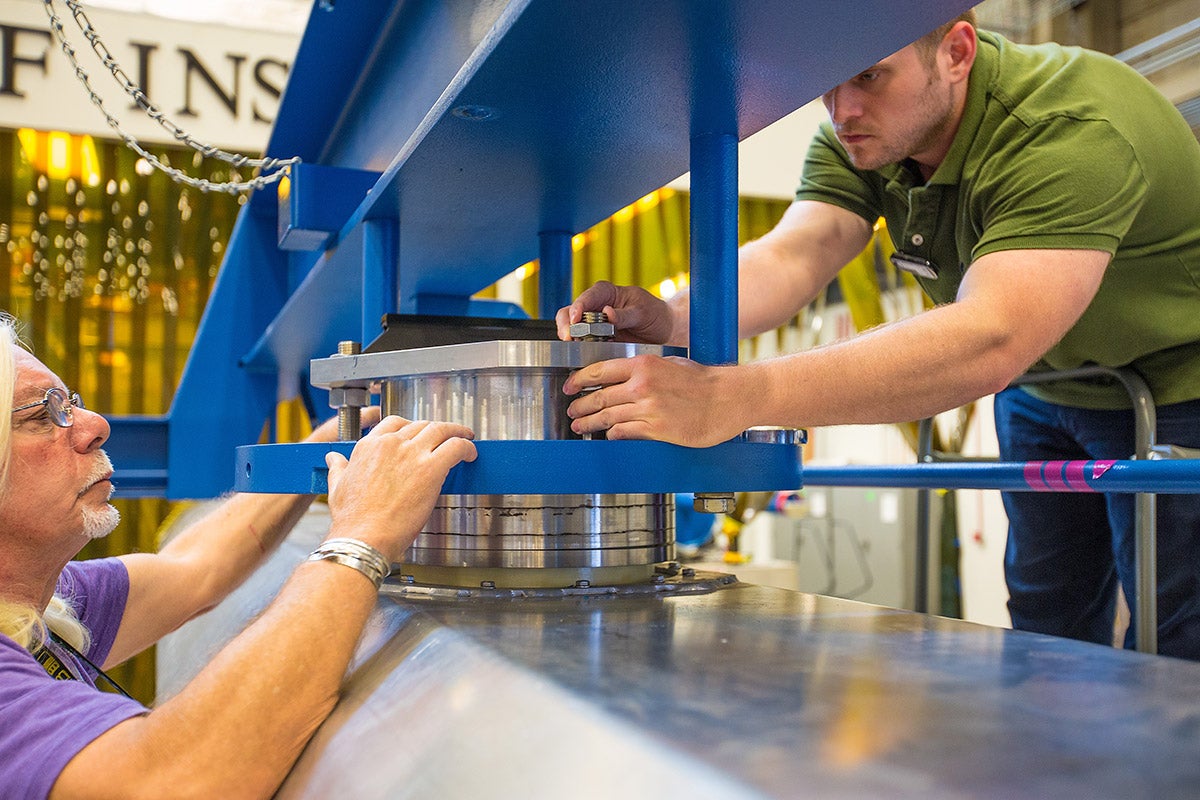
Photo from Jefferson Lab, where engineers prepare a cryomodule. Linked together and chilled to nearly absolute zero, 37 segments of superconducting particle accelerator called cryomodules will accelerate electrons to almost the speed of light and power an upgrade to the nation’s only X-ray free-electron laser facility. (Jefferson Lab)
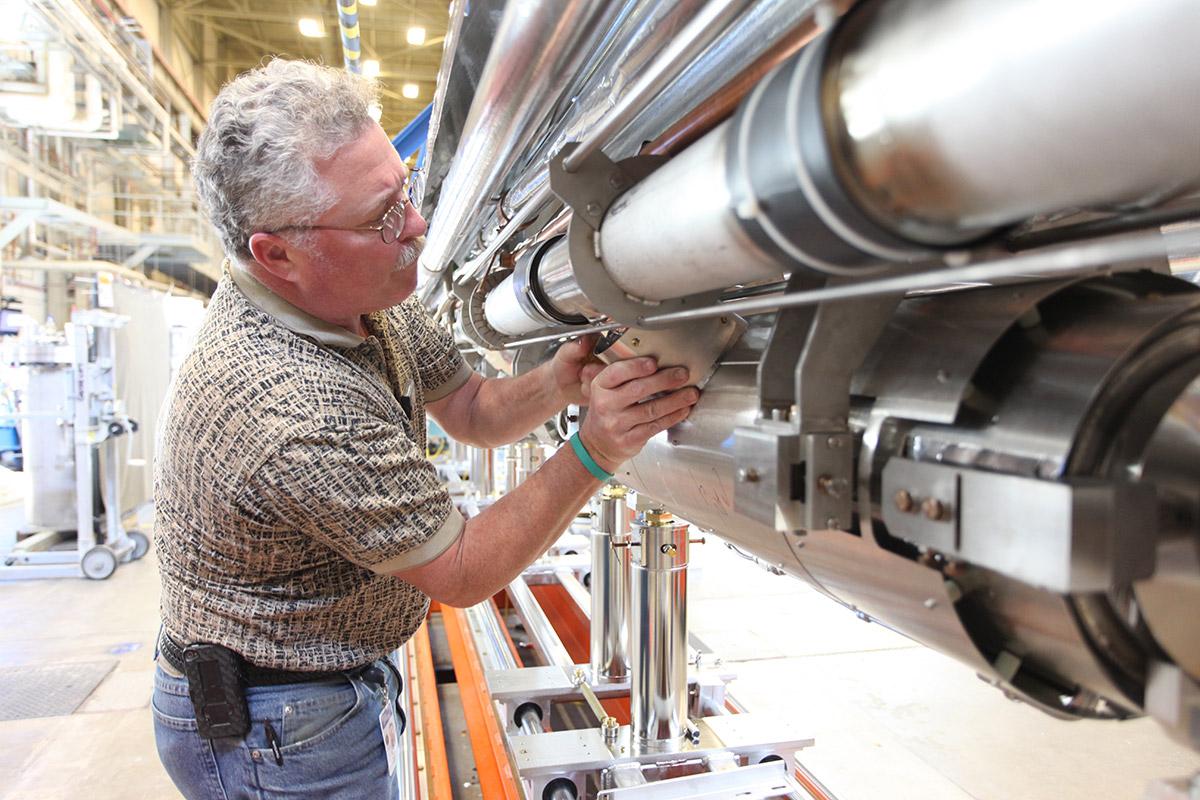
cryomodule
Photo from Jefferson Lab, where engineers prepare a cryomodule. Linked together and chilled to nearly absolute zero, 37 segments of superconducting particle accelerator called cryomodules will accelerate electrons to almost the speed of light and power an upgrade to the nation’s only X-ray free-electron laser facility. (Jefferson Lab)
cryomodule
Photo from Fermilab, where LCLS-II cryomodules are constructed and tested. Linked together and chilled to nearly absolute zero, 37 of these segments of superconducting particle accelerator called cryomodules will accelerate electrons to almost the speed of light and power an upgrade to the nation’s only X-ray free-electron laser facility. (Fermilab)
cryomodule
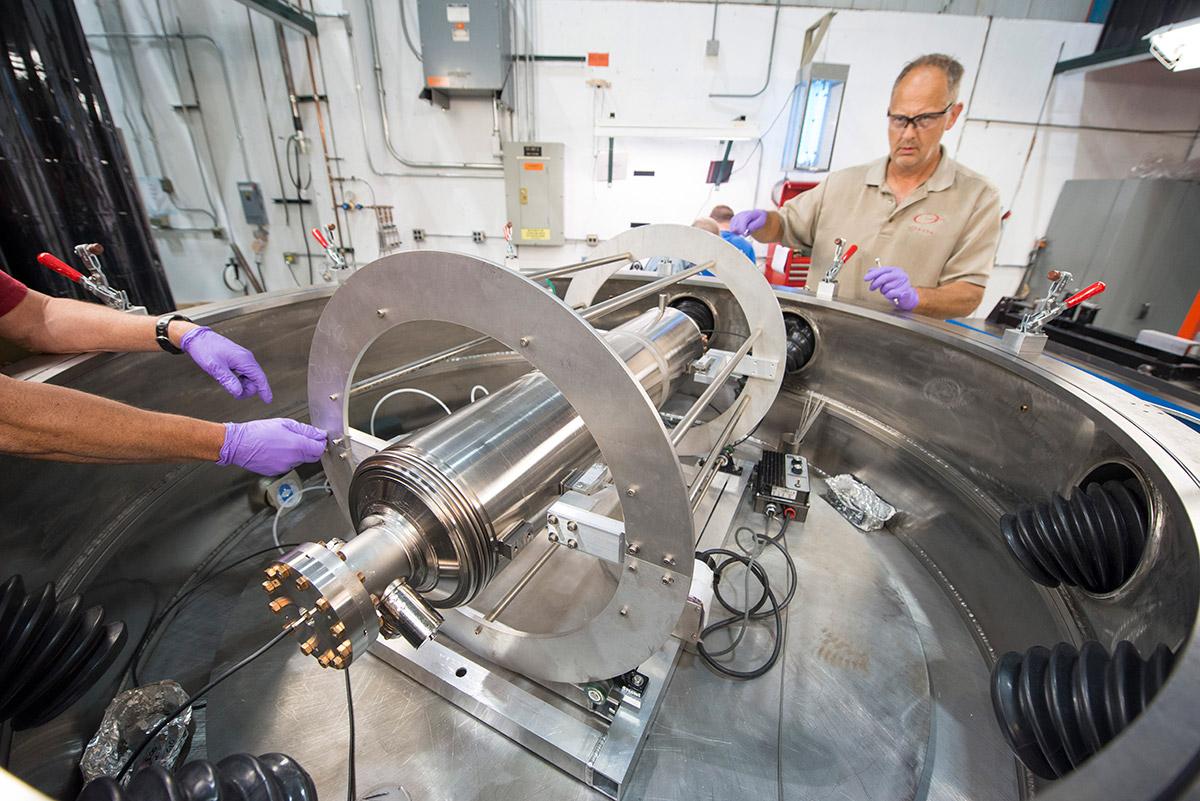
Photo from Jefferson Lab, where engineers prepare a cryomodule. Linked together and chilled to nearly absolute zero, 37 segments of superconducting particle accelerator called cryomodules will accelerate electrons to almost the speed of light and power an upgrade to the nation’s only X-ray free-electron laser facility. (Photo Credit: Fermilab / Jefferson Lab)
cryomodule
Photo from Jefferson Lab, where engineers prepare a cryomodule. Linked together and chilled to nearly absolute zero, 37 segments of superconducting particle accelerator called cryomodules will accelerate electrons to almost the speed of light and power an upgrade to the nation’s only X-ray free-electron laser facility. (Jefferson Lab)
cryomodule
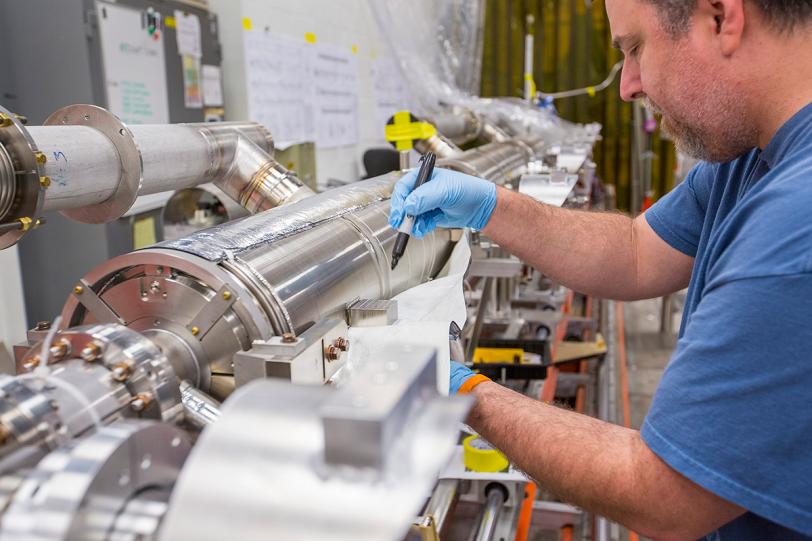
Photo from Jefferson Lab, where engineers prepare a cryomodule. Linked together and chilled to nearly absolute zero, 37 segments of superconducting particle accelerator called cryomodules will accelerate electrons to almost the speed of light and power an upgrade to the nation’s only X-ray free-electron laser facility. (Jefferson Lab)
cryomodule
Photo from Jefferson Lab, where engineers prepare a cryomodule. Linked together and chilled to nearly absolute zero, 37 segments of superconducting particle accelerator called cryomodules will accelerate electrons to almost the speed of light and power an upgrade to the nation’s only X-ray free-electron laser facility. (Photo Credit: Fermilab / Jefferson Lab)

After constructing the cryomodules, Fermilab and Jefferson Lab are testing each one extensively before the vessels are packed and shipped by truck. Their new home in California will be the tunnel formerly occupied by a section of SLAC’s 2-mile-long accelerator, located 30 feet below ground. In tribute to their Bay Area destination, the cryomodules are painted “international orange” to match the Golden Gate Bridge.

 See more photos of the cryomodule's arrival at SLAC on Flickr.


A Super-Cool Refrigeration System

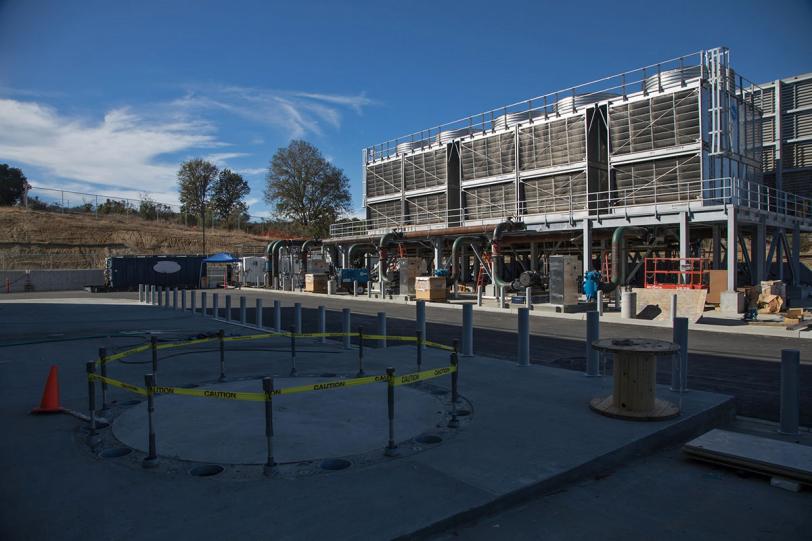
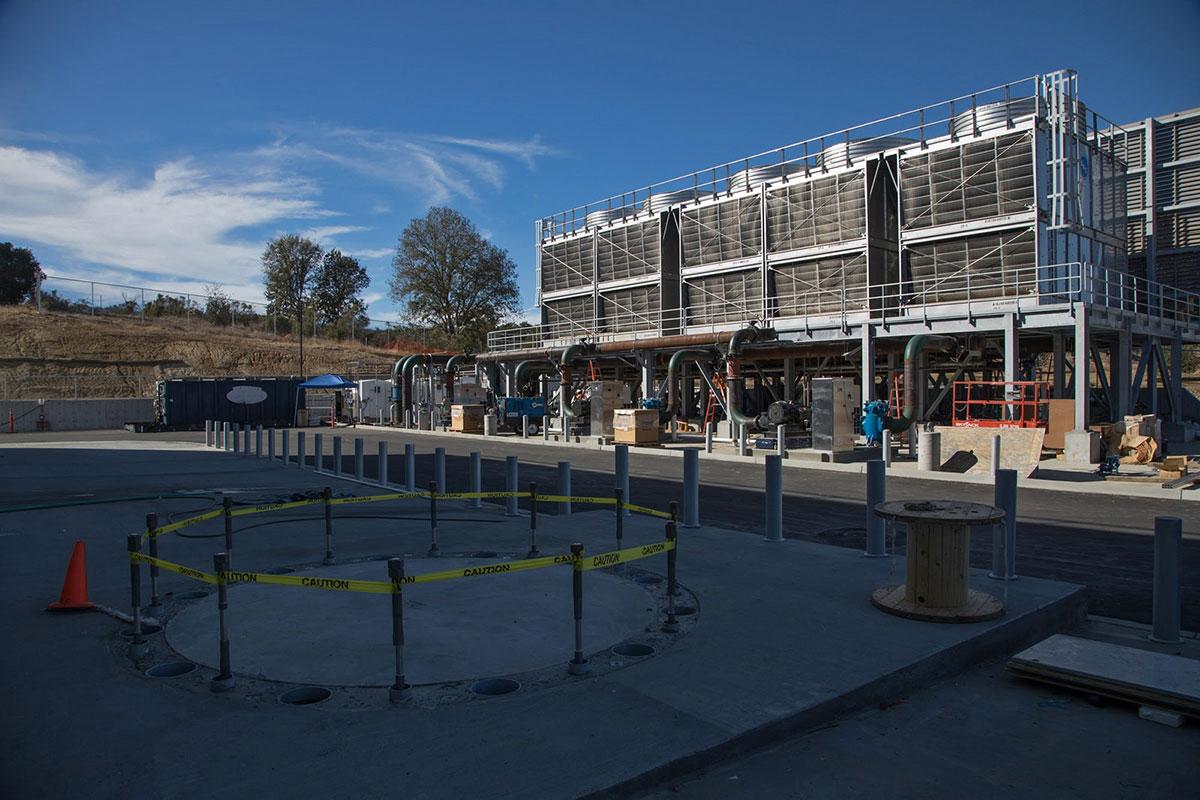
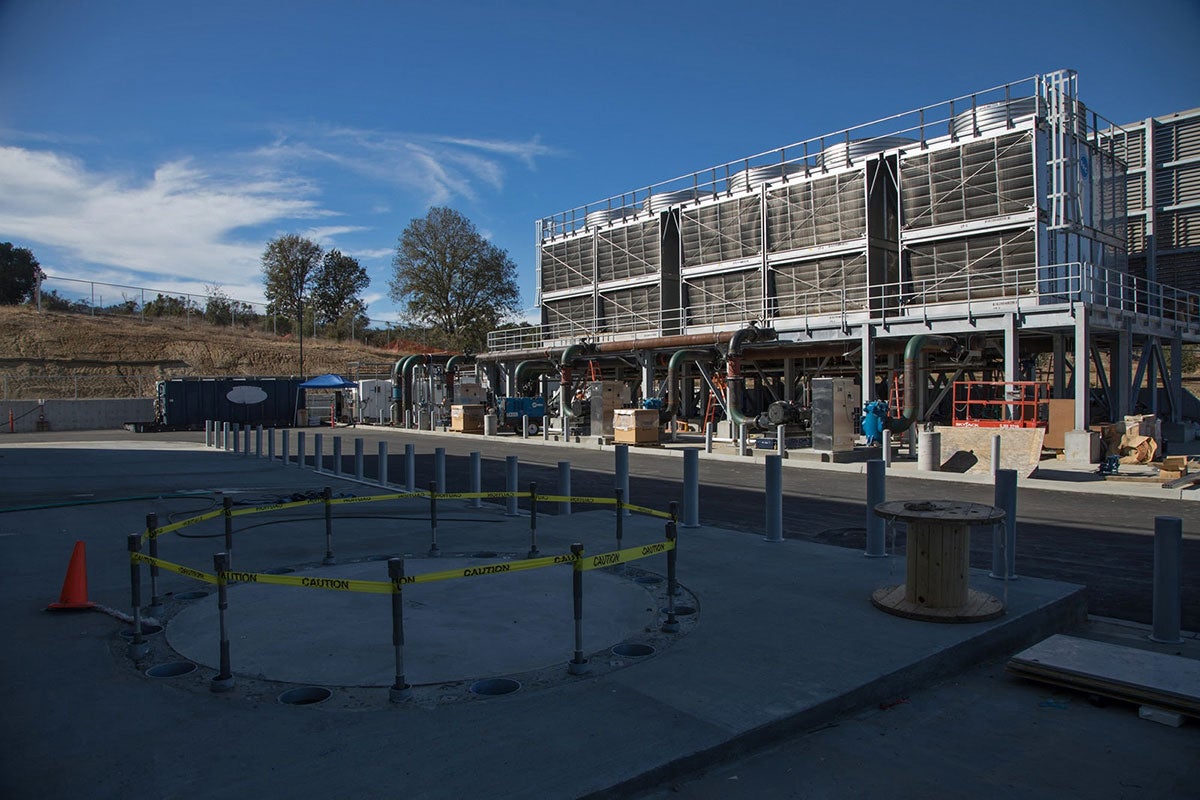
SLAC engineers and their partners are building a cryoplant refrigerator—a powerful chilling plant that will contain the compressors, pumps and helium needed to keep the accelerator at 2 degrees Celsius above absolute zero (or minus 456 degrees Fahrenheit), about the same temperature as outer space.

Animation Credit: Greg Stewart/SLAC


At these low temperatures, the accelerator becomes what’s known as superconducting, able to boost electrons to high energies with minimal energy loss as they travel through the cavities. By the time the electrons pass through all 37 cryomodules, they'll be traveling at nearly the speed of light.

Once the electrons reach such high speeds, they pass through a series of strong magnets, called undulators, which bounce the electron beam back and forth to generate an X-ray laser beam that’s much brighter than the current LCLS, moving from 120 pulses per second to 1 million pulses per second—far beyond any other facility in the world.
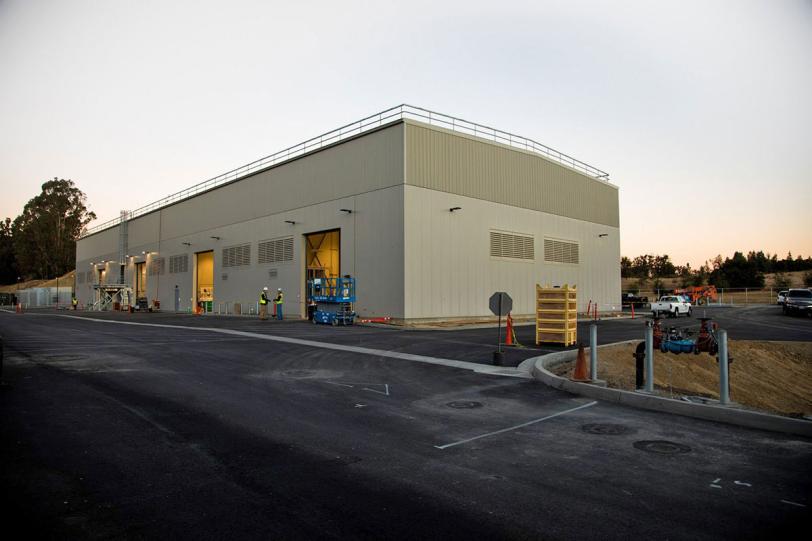
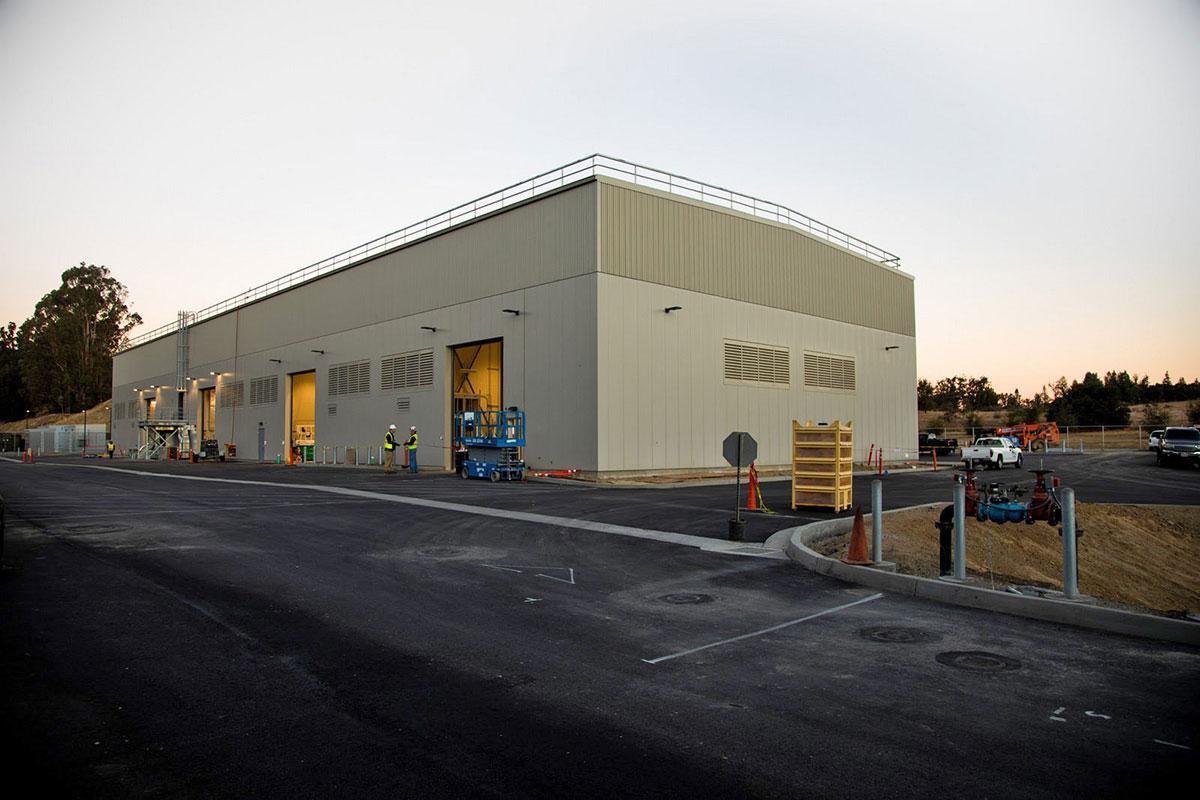
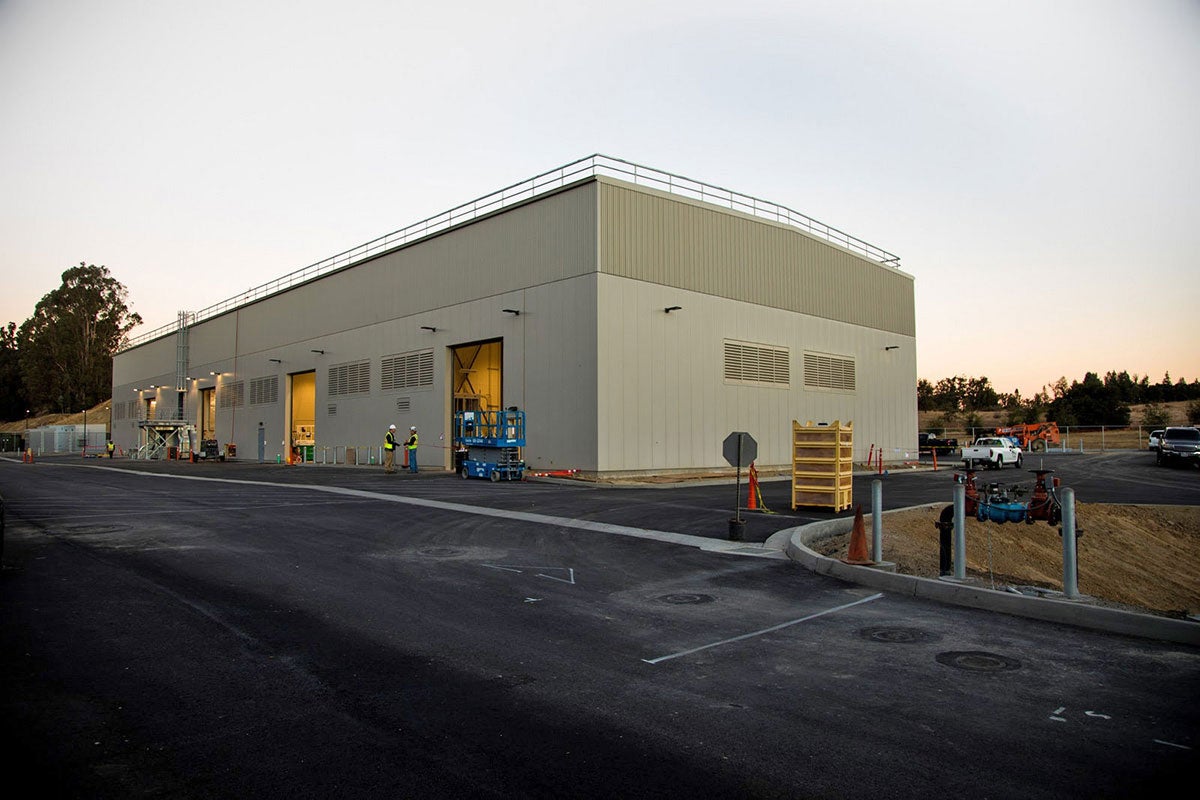
cryoplant building
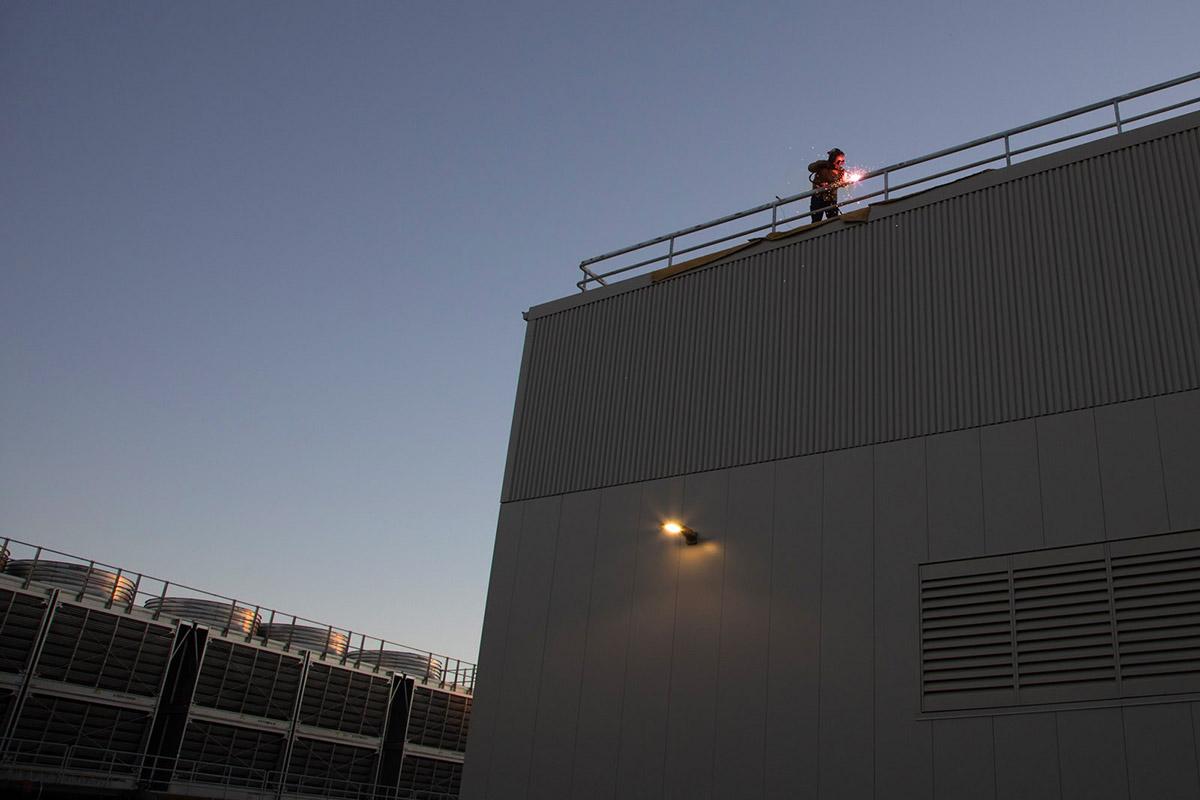
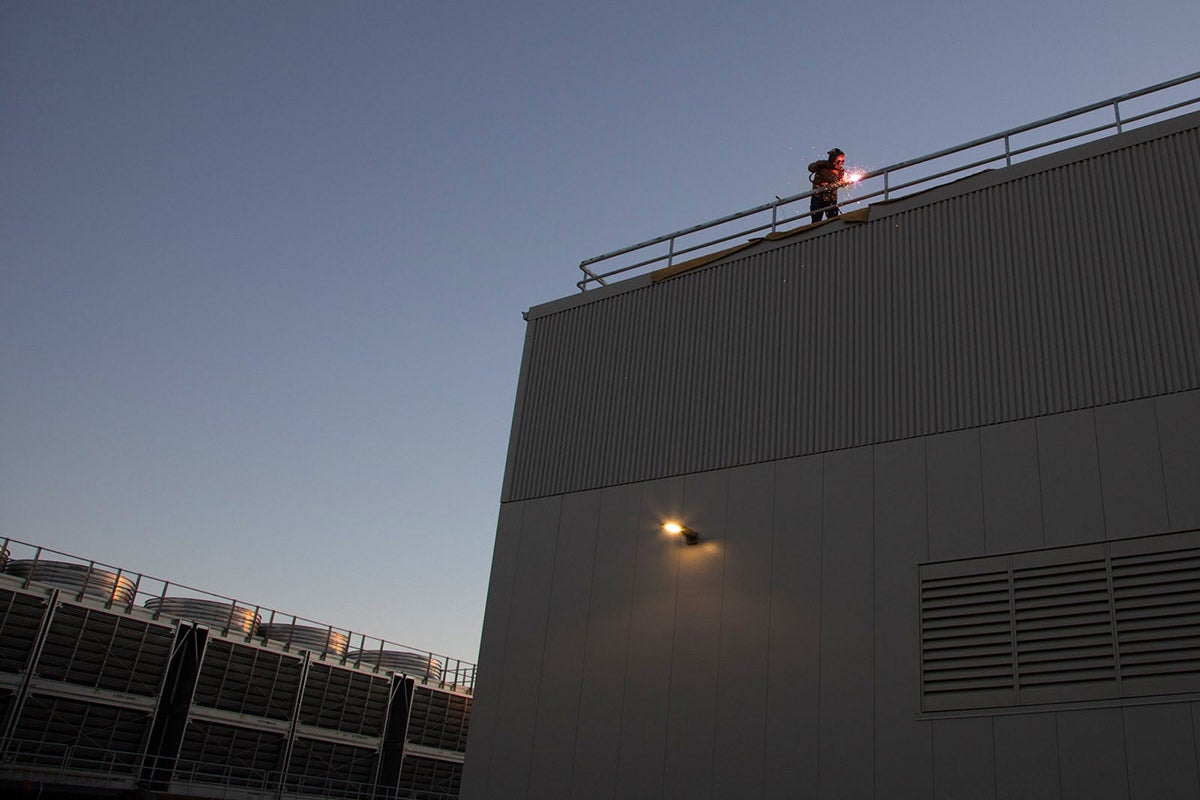
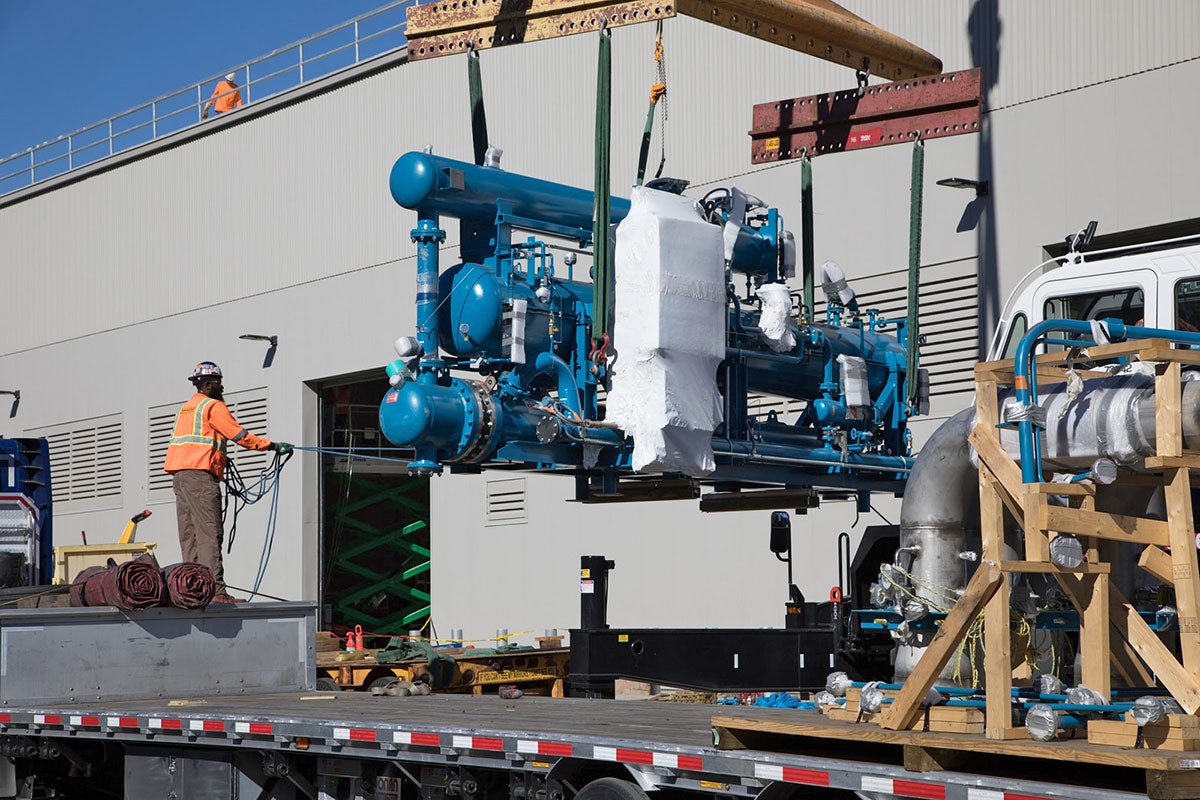
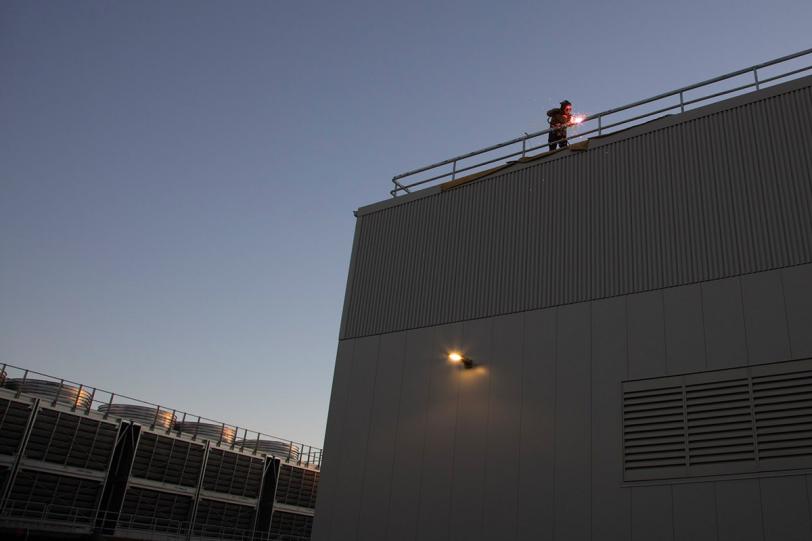
A total of 12 warm helium compressors, designed and built by Jefferson Lab, will be installed into the cryoplant building. The cryoplant will feed liquid helium into the superconducting linear accelerator. (Dawn Harmer/SLAC National Accelerator Laboratory)
cryoplant building
(Dawn Harmer/SLAC National Accelerator Laboratory)
cryoplant building
(Dawn Harmer/SLAC National Accelerator Laboratory)
cryoplant building
(Dawn Harmer/SLAC National Accelerator Laboratory)

How a Superconducting Accelerator Works

The segments of the new accelerator at SLAC rely on what’s called superconducting radiofrequency technology. Microwave power generated above ground is fed through pipes called waveguides into the underground cryomodules. There, the microwaves power an oscillating electric field that resonates inside niobium cavities and eventually builds in strength to a very high voltage.

Hover or tap on the blue circles for descriptions.
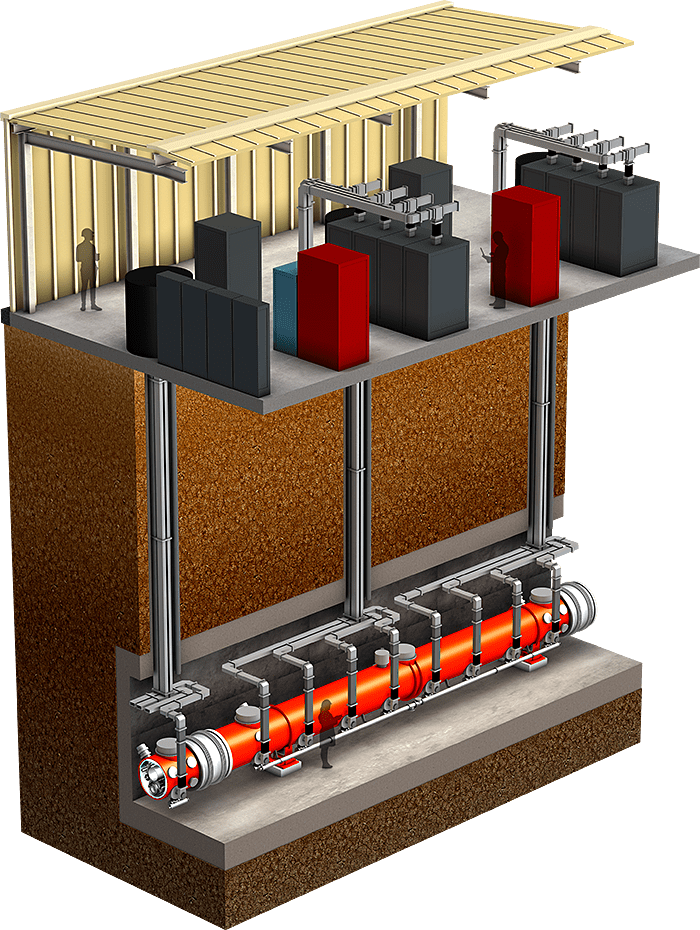
Cutaway diagram of superconducting accelerator
+

Accelerator Building

The same aboveground exterior that houses SLAC’s original accelerator will cover the new superconducting accelerator.

+

Solid-State Amplifiers

These boxes generate microwaves, which power an oscillating electric field. In order to make sure the system is synced, all the amplifiers are fed from a single, common master. In the gallery above the accelerator, the new amplifiers will replace klystrons—invented at Stanford University—the current source of microwaves.

+

Waveguide

Microwaves travel through these tubes to the underground cryomodules.

+

Cryomodule

The electric field generated by microwaves builds in strength within the niobium cavities inside each cryomodule. Scientists and engineers time the oscillating voltage in each cavity to the rhythm of electron bunches passing through the cavities, and the electrons get a boost of energy and accelerate.


Graphics credit: Greg Stewart/SLAC


When the oscillating voltage in each cavity is timed to the rhythm of electron bunches passing through the cavities, the electrons get a boost of energy and accelerate.

“If a tuning fork—another type of resonator—had the same performance quality as one of these superconducting cavities, it would ring for well over a year,” says Marc Ross, a SLAC accelerator physicist who is leading the development of the cryomodules. “Superconductivity allows the cavities to accelerate the electrons in a steady, continuous wave without interruption, and with extremely high efficiency.”
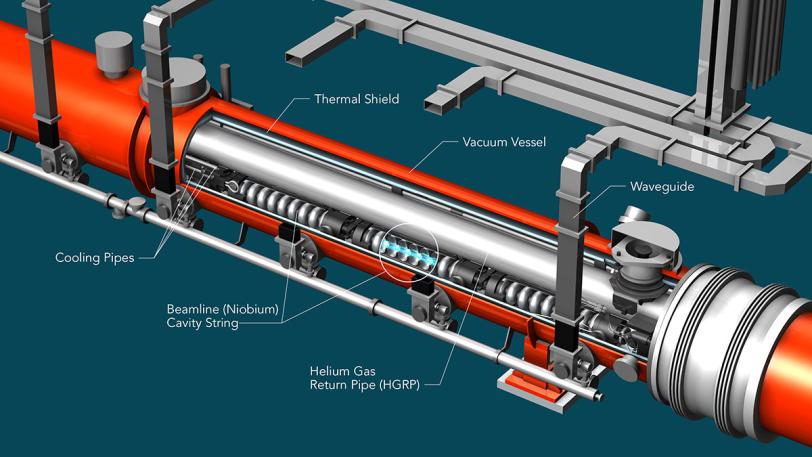
 

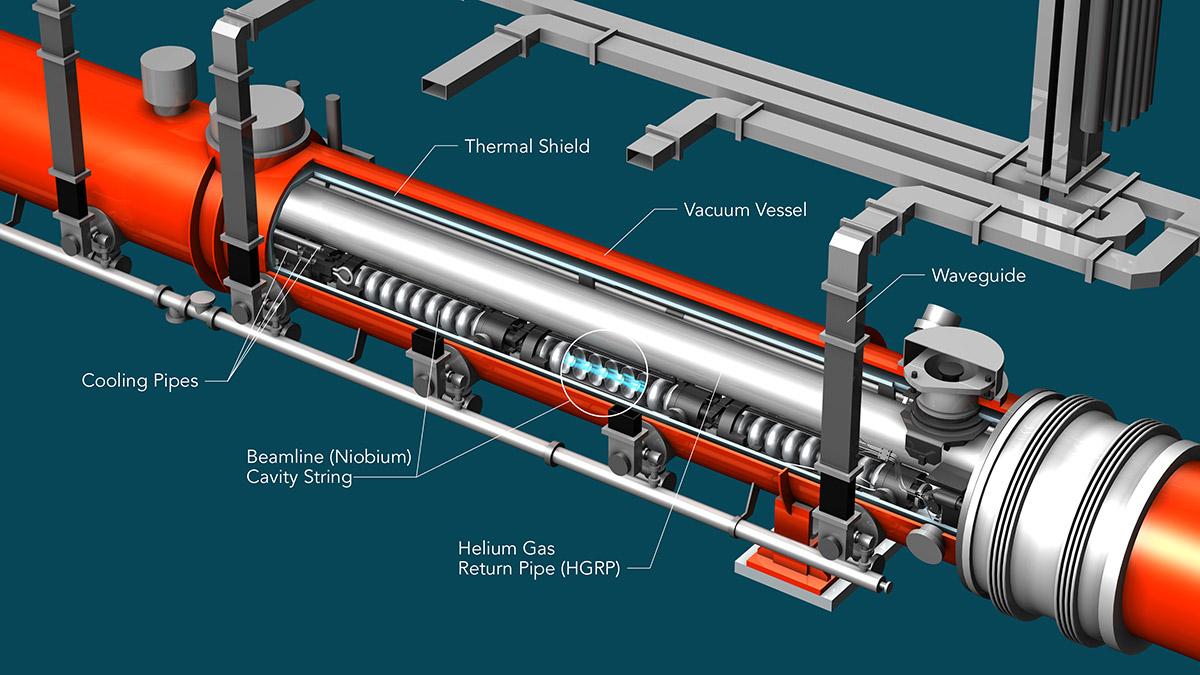
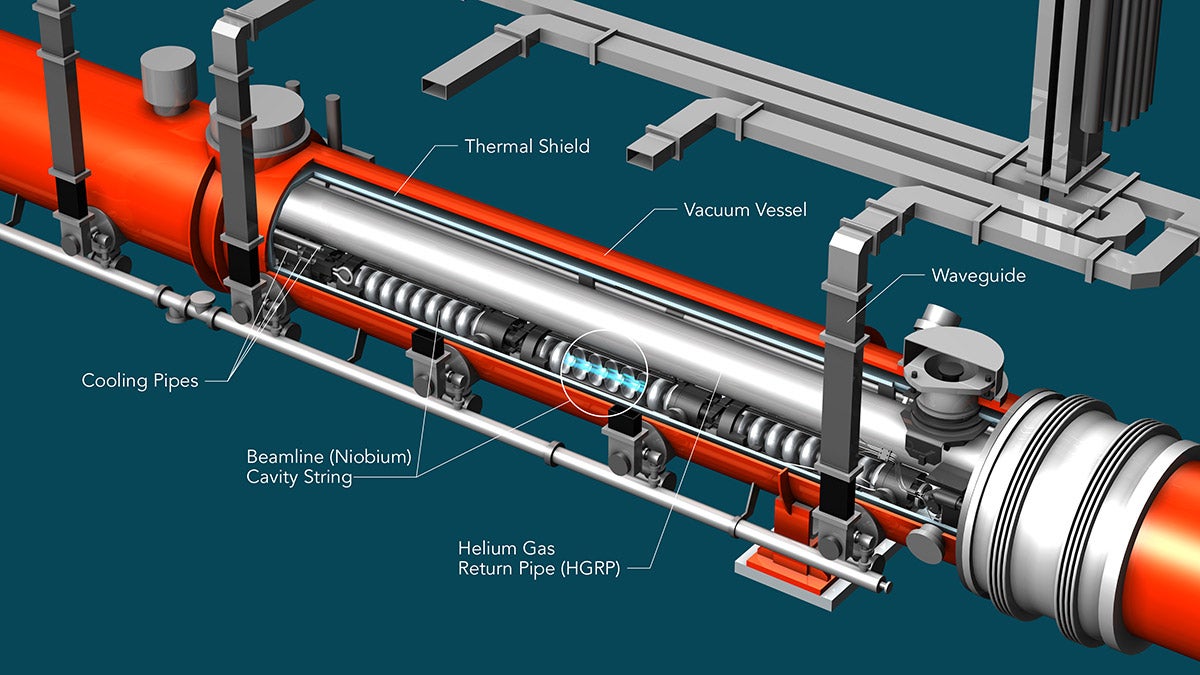
cutaway illustration of cryomodule
Cutaway image of a cryomodule. Each large metal cylinder contains layers of insulation and cooling equipment, in addition to the cavities that will accelerate electrons. The cryomodules are fed liquid helium from an aboveground cooling plant. Microwaves reach the cryomodules through waveguides connected to a system of solid-state amplifiers. (Greg Stewart / SLAC)


The element niobium is a common material for superconductors, and the cavities are made with an extremely pure version to minimize any electrical loss. Eight niobium cavities are bolted together in a string inside each cryomodule. They’re assembled like “a ship in a bottle,” Ross says. The cavities are surrounded by three nested layers of cooling equipment, with each successive layer lowering the temperature until it reaches nearly absolute zero.


The Next Generation of X-Ray Lasers

The system that keeps the cavities cold has been used to cool magnets that steer particles in colliders, including the Large Hadron Collider at European Organization for Nuclear Research (CERN) and Fermilab’s Tevatron.

Cryomodules with superconducting radiofrequency cavities accelerate electrons that generate X-rays at the recently commissioned European X-ray Free-Electron Laser. Engineers at Fermilab and Jefferson Lab tweaked the design of those cryomodules to tailor the equipment for LCLS-II. They also greatly improved the quality of the cavities through a technique called nitrogen doping, which produces cavities that generate less heat at the coldest temperatures. These tweaks reduce energy loss and make a much brighter laser possible. LCLS-II will be the first large-scale implementation of these latest technical advances.


For LCLS-II, Lawrence Berkeley National Laboratory also created a new advanced “electron gun” to inject electrons into the accelerator and, with significant design contributions by Argonne National Laboratory, specialized undulators to generate the X-rays.
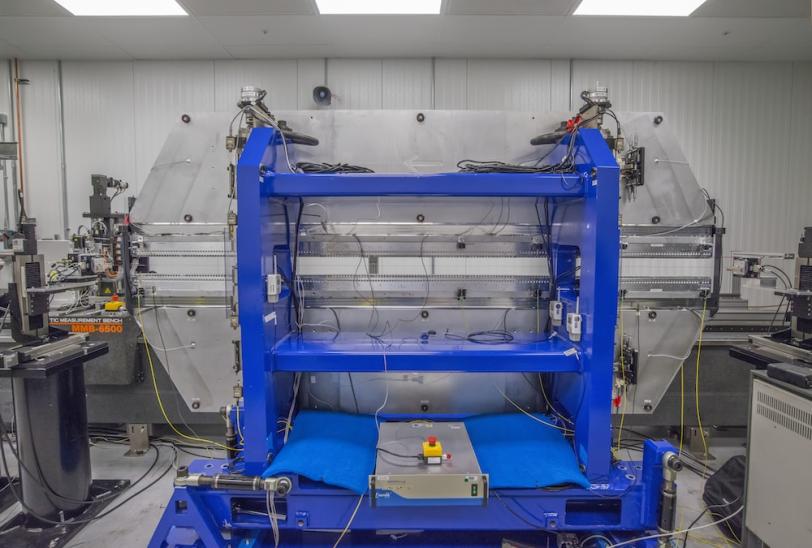
A prototype LCLS-II undulator
A prototype LCLS-II undulator, which is designed to wiggle electrons, causing them to emit brilliant X-ray light, undergoes magnetic measurements at Berkeley Lab. (Credit: Roy Kaltschmidt / Berkeley Lab)

New Scientific Possibilities

With more frequent pulses, the upgraded laser will allow scientists to gather more data in less time. This increases the number of experiments that can be performed and enables new types of studies that were previously inconceivable.

“Within the space of just a few hours, LCLS-II will be able to produce more X-ray pulses than the current laser has delivered in its entire operations to date,” says Mike Dunne, director of LCLS. “Data that would currently take a month to collect could be produced in a few minutes.”

More frequent pulses also increase the chance that scientists can, for example, observe rare events that happen during chemical reactions or in delicate biological molecules in their natural environments. The superconducting accelerator under construction will work in parallel with the original one. The two laser beams will open up entirely new types of studies of the quantum world, informing the development of materials with novel characteristics.

The remaining 36 cryomodules are expected to arrive at SLAC over the next 18 months. Construction for LCLS-II began last year. The DOE user facility will open to researchers from around the world with the best ideas for experiments in the early 2020s.

Read more about science opportunities with LCLS-II


SLAC’s Historic Linac: Then and Now

SLAC has a history of taking on large projects since the lab’s birth more than five decades ago. “Project M” (for “Monster”), the construction of a particle accelerator that stretches 2 miles in length, allowed scientists to study the building blocks of the universe. This linear accelerator was the longest ever constructed.

In 2009, the lab repurposed one-third of the original 1960s-era copper accelerator to feed an electron beam into LCLS, the first laser of its kind that produces rapid pulses of “hard” or high-energy X-rays for innovative imaging experiments. Another one-third of that original copper linac has now been cleared to make room for the arrival of the new superconducting cryomodules.

This project is supported by DOE’s Office of Science. LCLS is a DOE Office of Science user facility.


For media inquiries, please contact media@slac.stanford.edu. For other questions or comments, contact SLAC Strategic Communications & External Affairs at communications@slac.stanford.edu.


About SLAC

SLAC National Accelerator Laboratory explores how the universe works at the biggest, smallest and fastest scales and invents powerful tools used by researchers around the globe. As world leaders in ultrafast science and bold explorers of the physics of the universe, we forge new ground in understanding our origins and building a healthier and more sustainable future. Our discovery and innovation help develop new materials and chemical processes and open unprecedented views of the cosmos and life’s most delicate machinery. Building on more than 60 years of visionary research, we help shape the future by advancing areas such as quantum technology, scientific computing and the development of next-generation accelerators.

SLAC is operated by Stanford University for the U.S. Department of Energy’s Office of Science. The Office of Science is the single largest supporter of basic research in the physical sciences in the United States and is working to address some of the most pressing challenges of our time.

Related SLAC news highlights:
News Release

Upgrade will sharpen our view of nature’s atomic processes at work, aiding the development of a number of transformative technologies.

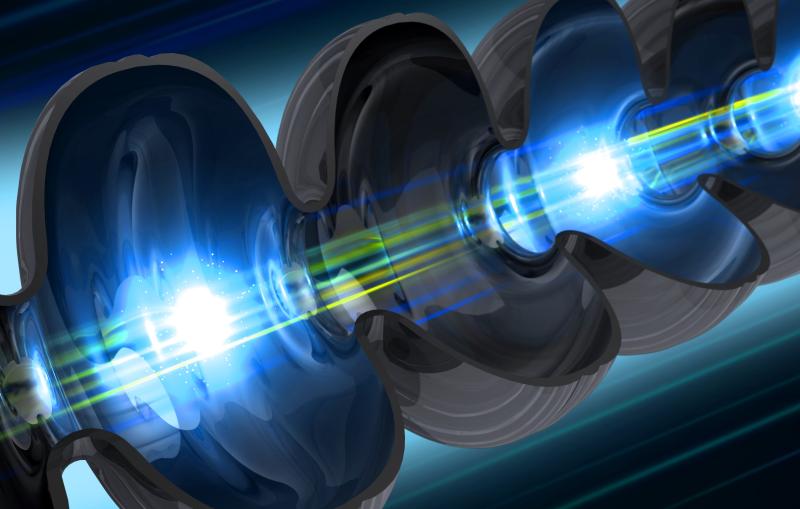
Illustration of an electron beam traveling through a niobium cavity.
Feature

The Secretary celebrated LCLS-II first light with 600 SLAC staff and collaborators Oct. 26.

Secretary of Energy Jennifer M. Granholm and SLAC staff celebrate LCLS-II first light
news collection

Now, we’re turning up the energy. The high-energy upgrade to LCLS will extend its ultrafast megahertz capability into the “hard,” or high-energy, X-ray regime.   

The first of 23 cryomodules is delivered to SLAC for the high energy upgrade to the Linac Coherent Light Source
Dig Deeper

Related stories

Feature

The lab’s contributions to the national AI initiative are bolstered by its breakthrough scientific tools, unprecedented data and unique partnerships that help illuminate nature...

Sunrise over SLAC campus
News Brief

The lab sent its final contribution to SLAC for the high-energy upgrade of the superconducting accelerator of the LCLS X-ray laser.

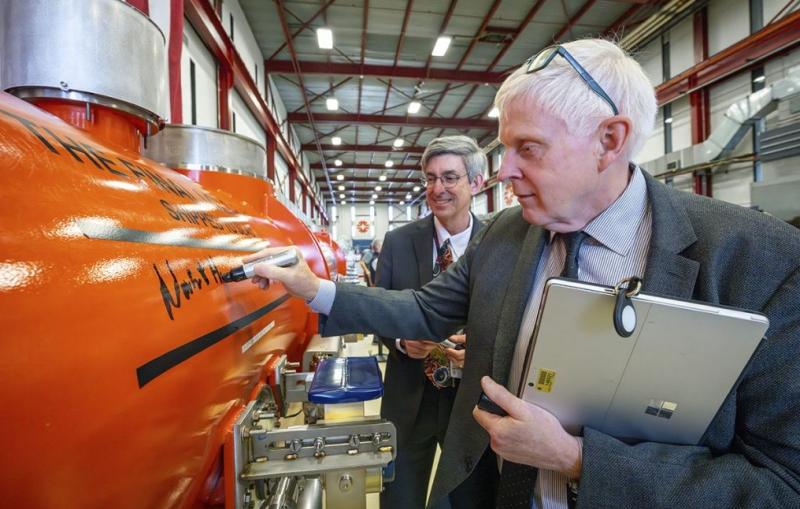
Fermilab Director Norbert Holtkamp signs a cryomodule while SLAC Director John Sarrao looks on.
News Brief

Researchers reengineered an ePix10k detector for use in ultrafast electron diffraction, empowering studies of chemical processes that were previously out of reach. 

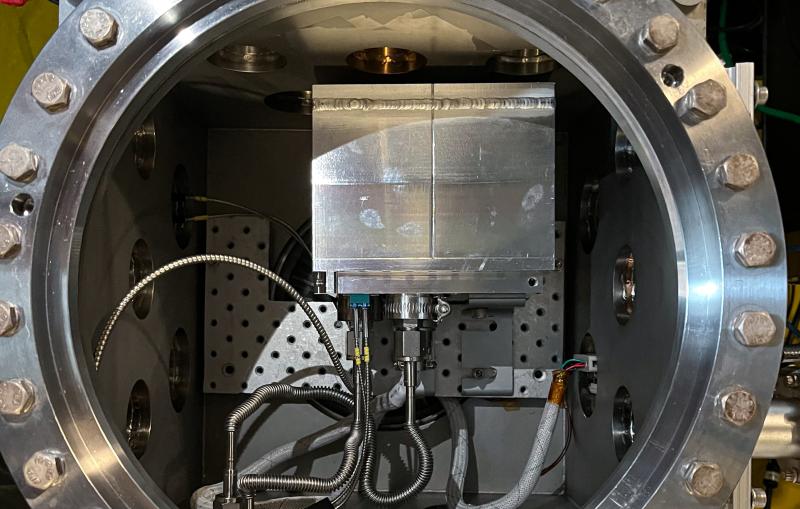
Photo of the detection chamber of SLAC's MeV-UED instrument
Feature

The lab’s contributions to the national AI initiative are bolstered by its breakthrough scientific tools, unprecedented data and unique partnerships that help illuminate nature...

Sunrise over SLAC campus
News Brief

The lab sent its final contribution to SLAC for the high-energy upgrade of the superconducting accelerator of the LCLS X-ray laser.

Fermilab Director Norbert Holtkamp signs a cryomodule while SLAC Director John Sarrao looks on.
News Brief

Researchers reengineered an ePix10k detector for use in ultrafast electron diffraction, empowering studies of chemical processes that were previously out of reach. 

Photo of the detection chamber of SLAC's MeV-UED instrument
Feature

After five years, SLAC scientists are ready to prototype a new X-ray laser concept.

Illustration of parts of a device.
Feature

SLAC experts discuss how microelectronics impacts our lives and where the future lies in this Q&A.

Angelo Dragone and Paul McIntyre
News Release

Surfing a plasma wave, electrons get an energy and brightness boost.

Illustration of electrons traveling through a plasma chamber