
When SLAC’s Linac Coherent Light Source (LCLS) turned on in 2009, the first-of-its-kind facility empowered us to investigate the material world around us with unprecedented resolution in space and time. In 2023, a major facility upgrade dialed up its speed, enabling the facility to generate up to a million pulses per second, and set in motion a 1,000-fold increase in X-ray power, making LCLS the most powerful X-ray laser in the world.
Now, we’re turning up the energy. The high‑energy upgrade to LCLS will extend its high‑repetition rate capability into the “hard,” or high‑energy regime, generating X‑ray wavelengths short enough to capture images with atomic resolution.
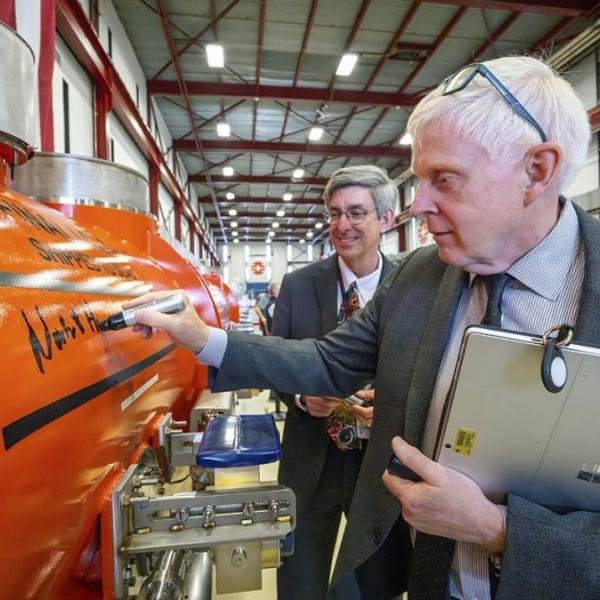
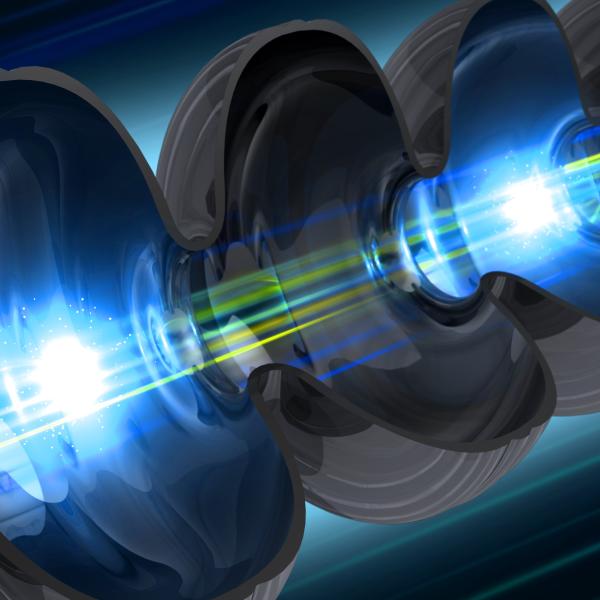
The upgrade will add 23 cryomodules to the superconducting electron accelerator, doubling the energy of the electron beam and more than doubling the maximum X-ray energy. This will deliver a 3,000-fold performance increase in average X-ray brightness for hard X-rays. After the upgrade, LCLS will be on a path to generating X-rays with high energies (up to 12 kiloelectron volts) and ultrashort wavelengths (in the Angstrom domain) at high-repetition rates (up to a million pulses per second).
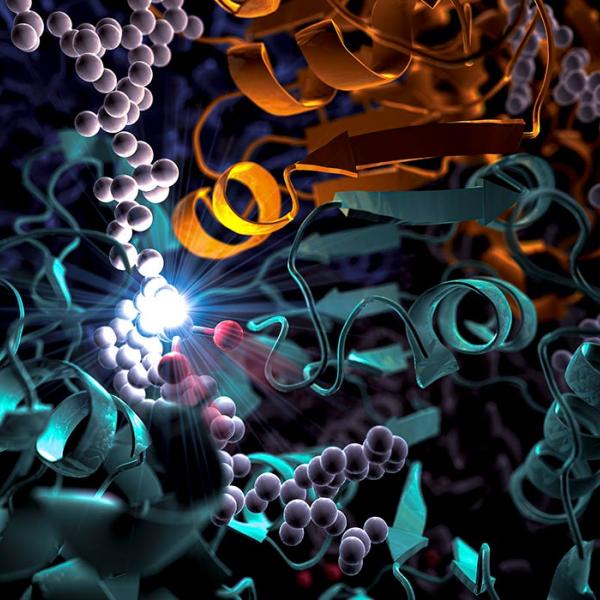
With hard X-rays and higher sensitivity, LCLS will deliver a sharper view of materials – helping scientists design transformational energy technologies, catalysts and microelectronics – and biomolecular structures – revealing the structures that influence their function and guiding new treatments for cancer and other diseases. The upgrade will deliver high-resolution tools to capture the behavior of novel materials and quantum systems. The enhanced LCLS will advance machine learning and AI by generating over a petabyte of high-quality data per day, powering more accurate models, autonomous experimentation and faster discovery across these fields.
The upgrade will also improve the linac’s soft X-ray undulator, overhaul the XPP experimental hutch and excavate a new tunnel for a future low-emittance injector, which could one day deliver X-rays at energies high enough to probe material transformations inside functioning devices with high precision.
SLAC is proud to partner with four other national labs – Argonne National Laboratory, Lawrence Berkeley National Laboratory, Fermi National Accelerator Laboratory and Thomas Jefferson National Accelerator Facility – and the Facility for Rare Isotope Beams at Michigan State University on planning, design and construction with input from experts around the world. The DOE’s Office of Science program for Basic Energy Sciences’ investment in LCLS, a DOE user facility, will keep the U.S. at the forefront of the field for decades to come.
LCLS-II High Energy news
The high-energy upgrade will keep the U.S. at the forefront of X-ray science and technology, allowing researchers to advance fields such as sustainability, human health and quantum information.




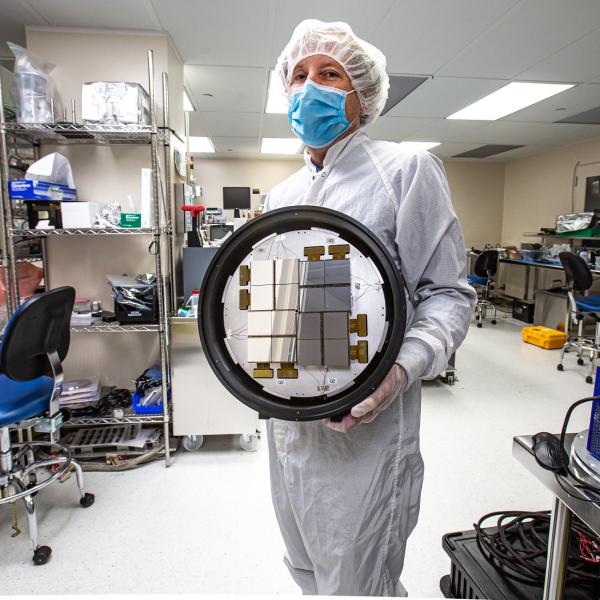

LCLS-II High Energy explained
The high-energy upgrade to LCLS will sharpen our view of materials and biomolecules, reveal quantum behavior, and generate petabyte-scale data for AI-driven discovery. Learn more about X-ray free-electron lasers, or XFELs, and how they shed light on our universe.
XFELs: Spying on atoms and molecules
Molecular movie-making is both an art and a science; The results let us watch how nature works on the smallest scales.
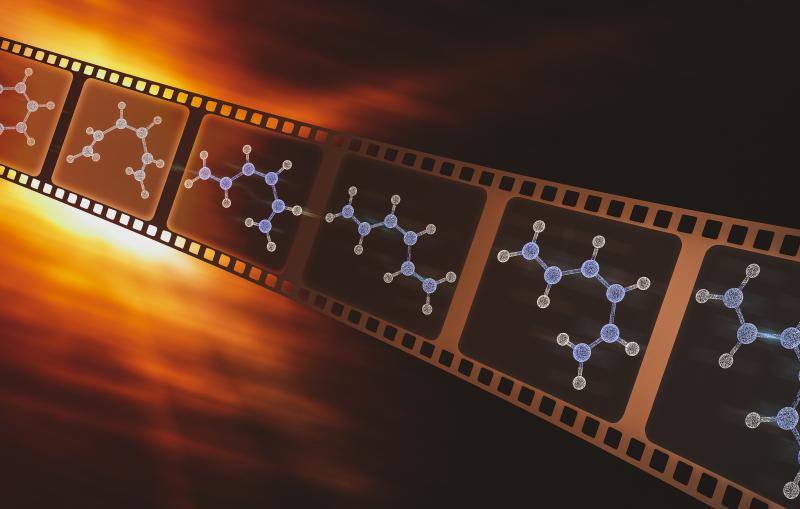
Play this video for a simple explanation of what an XFEL is and what kind of research scientists can do with this engineering marvel.
LCLS-II High Energy (HE)
Read about the high-energy upgrade to LCLS and its impact on U.S. science leadership and discovery.
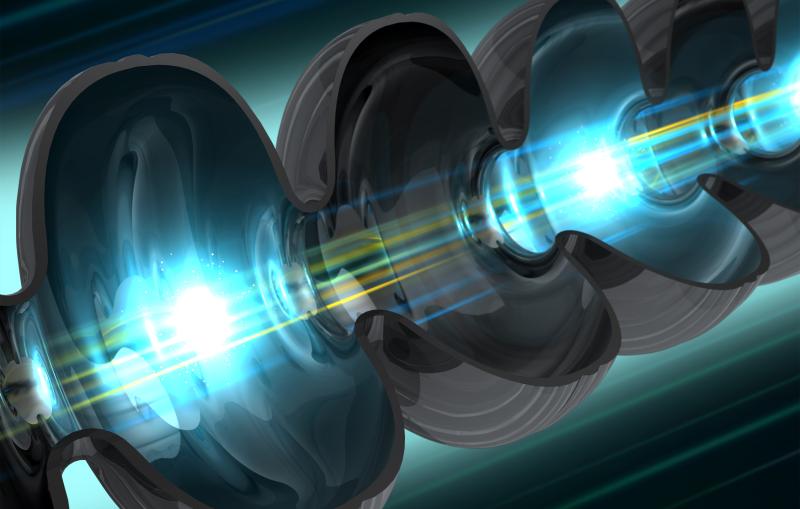
In the decade since LCLS produced its first light, it has pushed boundaries in countless areas of discovery.
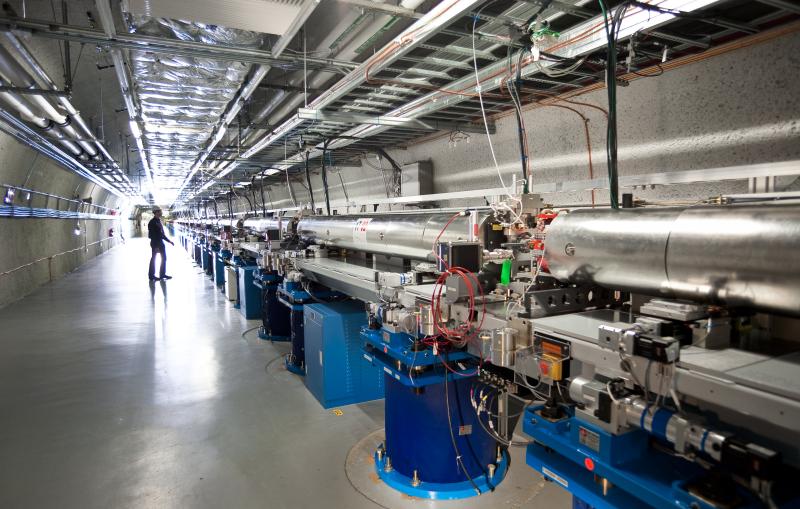
En route to record-breaking X-rays, SLAC’s Cryogenic team built a helium-refrigeration plant that lowers the LCLS-II accelerator to superconducting temperatures.
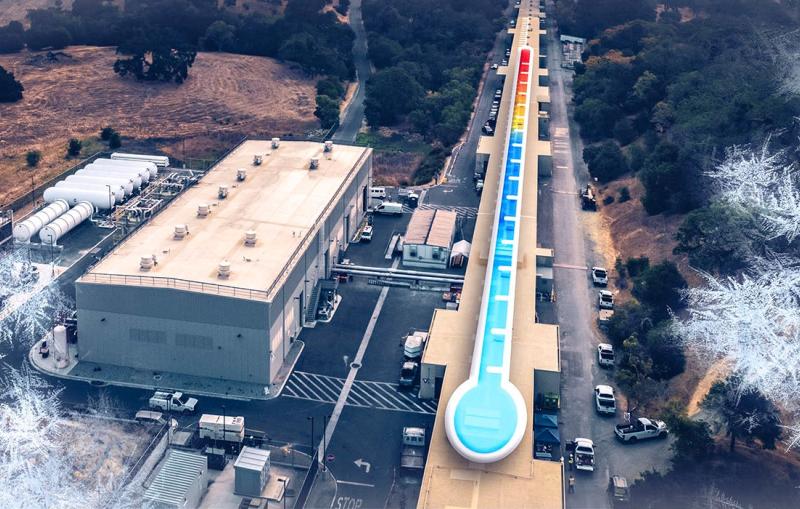
Progress in real time
We’re making progress every day. Follow along as we share major project milestones on social media.
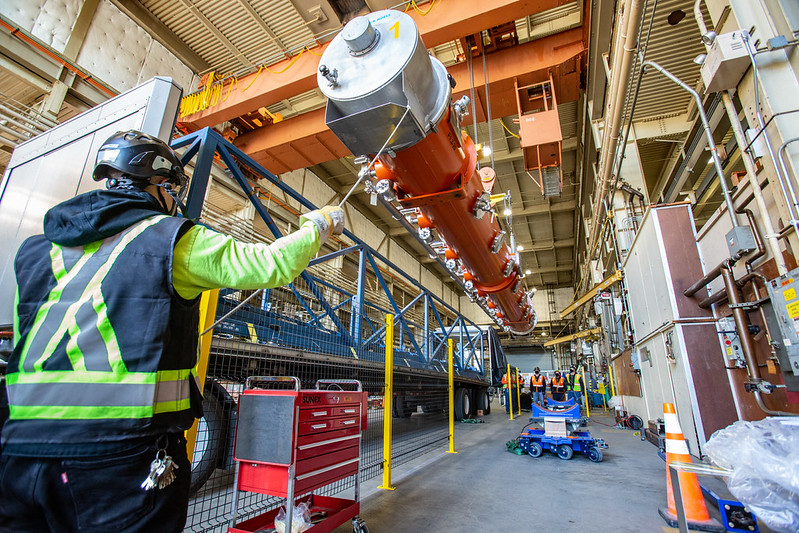
Big moves for higher energies
Teams across SLAC are making this effort possible. Explore the project through our image gallery.
For questions or comments, contact SLAC Strategic Communications & External Affairs at communications@slac.stanford.edu.
About SLAC
SLAC National Accelerator Laboratory explores how the universe works at the biggest, smallest and fastest scales and invents powerful tools used by researchers around the globe. As world leaders in ultrafast science and bold explorers of the physics of the universe, we forge new ground in understanding our origins and building a healthier and more sustainable future. Our discovery and innovation help develop new materials and chemical processes and open unprecedented views of the cosmos and life’s most delicate machinery. Building on more than 60 years of visionary research, we help shape the future by advancing areas such as quantum technology, scientific computing and the development of next-generation accelerators.
SLAC is operated by Stanford University for the U.S. Department of Energy’s Office of Science. The Office of Science is the single largest supporter of basic research in the physical sciences in the United States and is working to address some of the most pressing challenges of our time.
