SLAC topics

Matter in extreme conditions RSS feed

Under extreme conditions – like those in the hearts of planets or in exploding stars – materials can enter other exotic phases with unique characteristics. At SLAC, researchers are studying some of the most extreme and exotic forms of matter ever created, in detail never before possible.

Browse tagged content
Concept of Matter in extreme conditions
Multimedia

His visit highlighted the breadth of our world-class research and the people and collaborations that make it possible. A key theme of the day...

U.S. Deputy Secretary of Energy Danly watches a simulation of dark matter.
News Brief

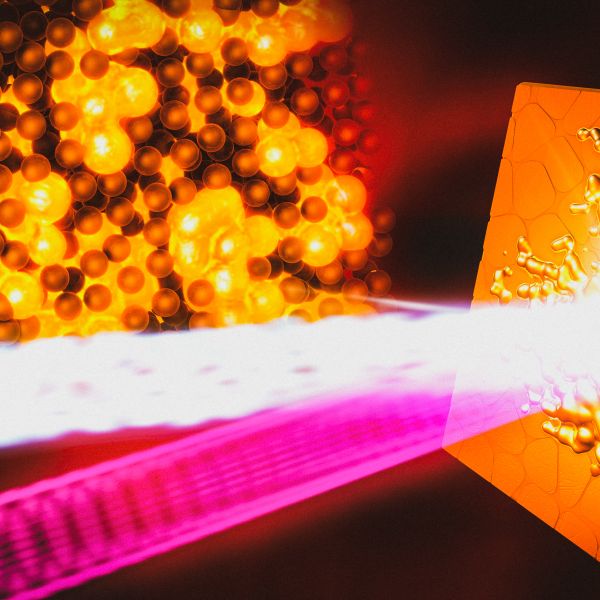
The team unexpectedly formed gold hydride in an experiment that could pave the way for studying materials under extreme conditions like those found inside...

Intense pulses from an X-ray free-electron laser heat compressed samples of hydrocarbons to extreme conditions, resulting in the reaction of gold and hydrogen to form gold hydride.
Feature

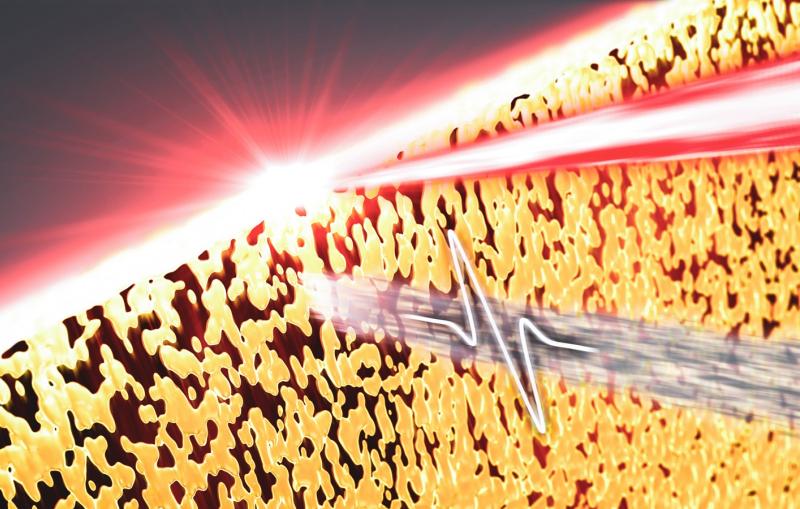
Researchers taking the first-ever direct measurement of atom temperature in extremely hot materials inadvertently disproved a decades-old theory and upended our understanding of superheating. 

Graphic representation shows a pulse of yellow light hitting a lattice and diffracting into a spectrum of color
Feature

In this Q&A, Arianna Gleason discusses the technologies needed to make commercialized fusion energy a reality and how SLAC is advancing this energy frontier. 

Headshot of Arianna Gleason with graphic representation of a laser shot
News Brief

As a member of a collaborative team led by General Atomics, SLAC will help bridge basic research programs with the growing fusion industry. 

Graphic representation of lasers hitting a fusion fuel target in a fusion target chamber
Feature

Descamps was recognized for turning the world’s most powerful X-ray laser into a sophisticated tool for probing extremely hot, dense matter.

Adrien Descamps presents his research.
News Brief

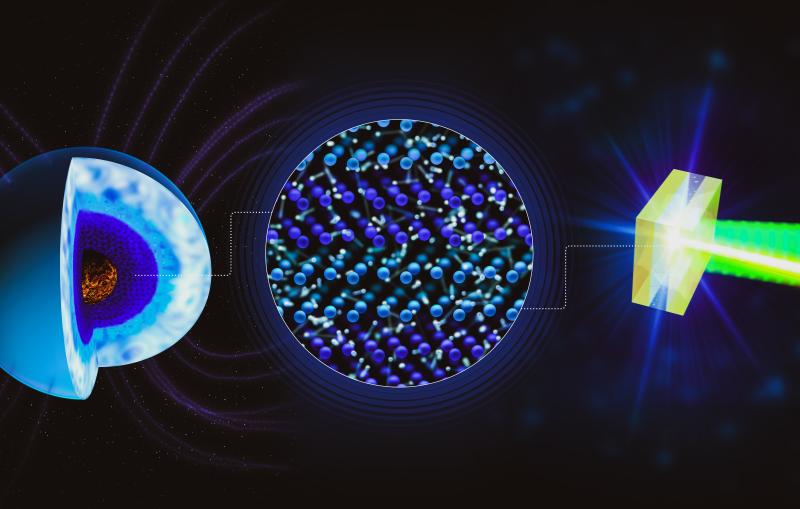
This research advances our understanding of Earth's deep interior and exoplanets, opening new research avenues in Earth and planetary sciences.

mec_super_earth
News Brief

An X-ray imaging technique revealed that copper nanofoams used in inertial fusion experiments aren't as uniform as expected.

Green blobs on a blue background.
Feature

Researchers have uncovered new insights about tungsten's ability to conduct heat, which could lead to materials advancements for fusion reactor and aerospace technologies.

tungsten
Feature

The research could lead to a better understanding of how metals behave under extreme conditions, which will aid in the development of more resilient...

phonon hardening
Feature

A new experiment suggests that this exotic precipitation forms at even lower pressures and temperatures than previously thought and could influence the unusual magnetic...

Diamond rain
News Brief

SLAC will partner in two collaborations that aim to speed up progress in fusion energy science and technology.

Laser engineer Eric Cunningham with the Matter in Extreme Conditions optical laser