
SLAC topics

X-ray science RSS feed

X-ray studies at SLAC facilities help scientists understand the fundamental workings of nature by probing matter in atomic detail.

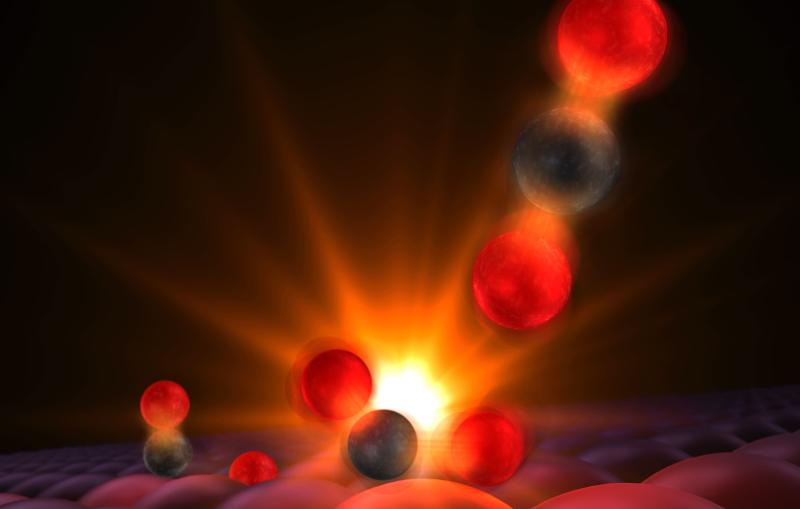
atoms forming a tentative bond
Feature

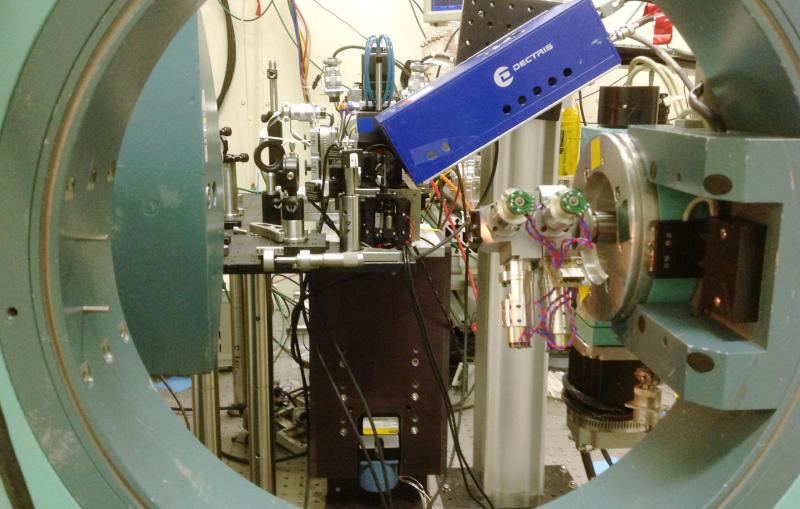
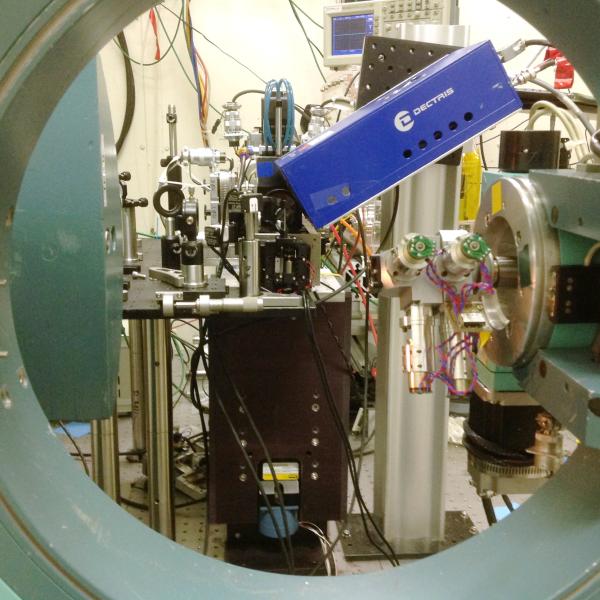
In a recent experiment at SLAC's Stanford Synchrotron Radiation Lightsource, scientists "tickled" atoms to explore the flow of heat and energy across materials at...

Photo - A view of a materials science experimental setup at SLAC's Stanford Synchrotron Radiation Lightsource (SSRL). The circular instrument that frames this photo is part of a diffractometer that was used to align samples and a detector with X-rays.
Feature

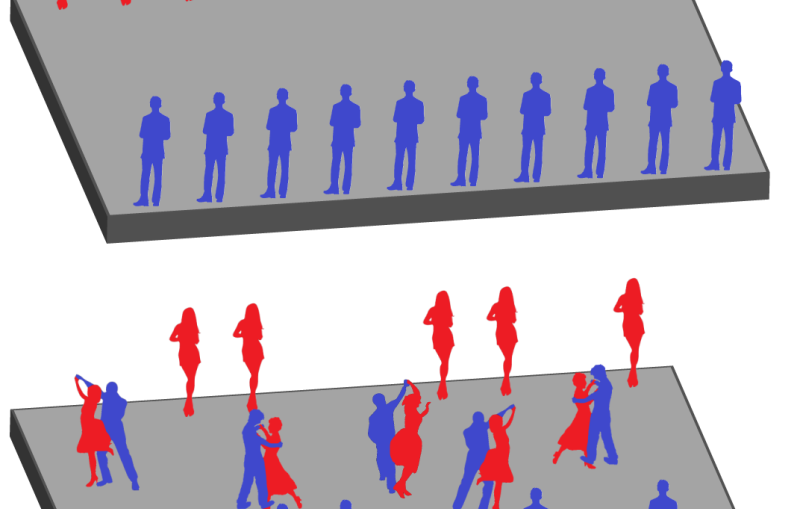
Scientists at SLAC and Stanford show how high-temperature superconductivity emerges out of magnetism in an iron pnictide, a class of materials with great potential...

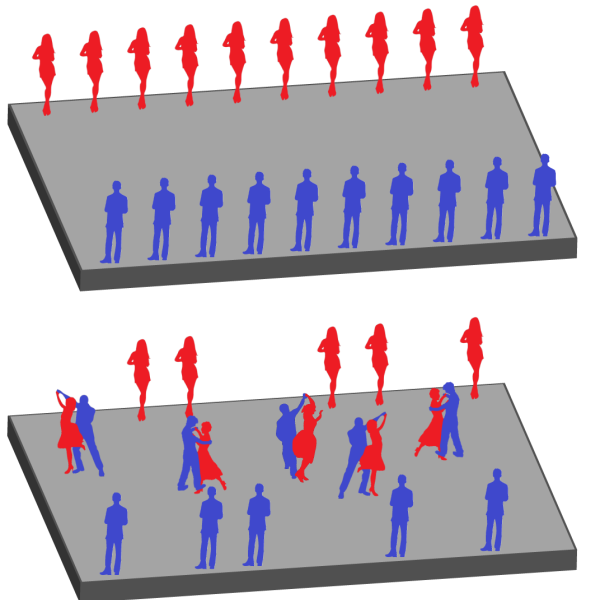
An illustration of electrons pairing up like dancers at a party
Feature

Rolls-Royce researchers came to SLAC earlier this month as part of a team testing titanium and its alloys, such as those used in engine...

Photo - Despina Milathianaki, a staff scientist at SLAC's LCLS, holds a series of titanium alloy samples prepared for an experiment. The experiment was designed to study the laser-shocked state of the materials. (Fabricio Sousa/SLAC)
Feature

SLAC's Siegfried Glenzer has been selected to receive an Ernest Orlando Lawrence Award, presented by the U.S. Secretary of Energy to honor scientists across...

Photo - Siegfried Glenzer
Feature

A new study, based on an experiment at SLAC's X-ray laser, pins down a major factor behind the appearance of superconductivity—the ability to conduct...

Image - In this illustration, stripes of charge run in perpendicular "ripples" between the copper-oxide layers of a material (top). When a mid-infrared laser pulse strikes the material, it "melts" these ripples and induces superconductivity.
Feature

A new theory and computer simulation by SLAC and Stanford researchers rule out high-energy magnetic interactions as a major factor in making copper oxide...

Photo - Researchers at SLAC
Feature

Five years ago, the brightest source of X-rays on the planet lit up at SLAC. The Linac Coherent Light Source (LCLS) X-ray laser's scientific...

Image - Some of the LCLS team members stand by the newly installed undulators in this 2009 photo. From right: Mike Zurawel, Geoff Pile from Argonne National Laboratory, Paul Emma, Dave Schultz, Heinz-Dieter Nuhn and Don Schafer. (Brad Plummer)
Feature

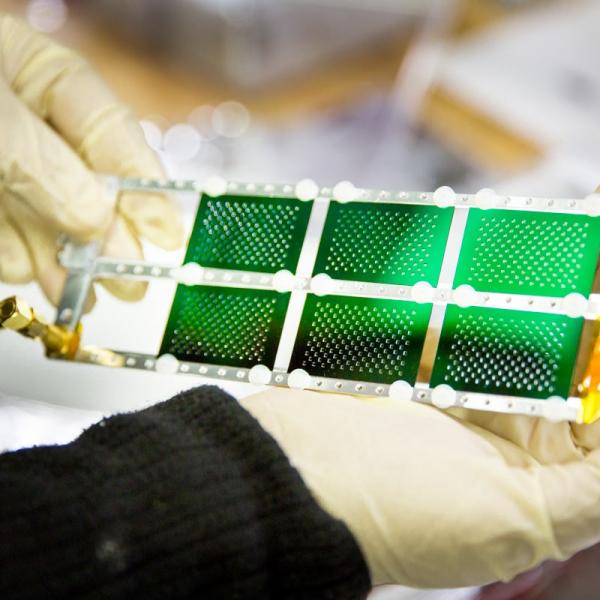
Windows that darken to filter out sunlight in response to electric current, function much like batteries. Now, X-ray studies at SLAC provide a crystal-clear...

lithium ions interact with an ultrathin sheet of nickel oxide
Feature

SLAC researchers have found a new way to transform graphite into diamond. The approach may have implications for industrial applications ranging from cutting tools...

Feature

X-ray studies conducted at SLAC and in the United Kingdom have resurrected the detailed chemistry of 50-million-year-old leaves from fossils found in the western...

A composite optical and X-ray image (red is copper, green is zinc, blue is nickel) of a 50-million-year-old leaf fossil. Trace metals correlate with the leaf's original biological structures. Also visible are ancient caterpillar feeding tubes.
News Release

Scientists have discovered a potential way to make graphene – a single layer of carbon atoms with great promise for future electronics – superconducting...

Superconducting Graphene Layers
Feature

A new tool for analyzing mountains of data from SLAC’s Linac Coherent Lightsource (LCLS) X-ray laser can produce high-quality images of important proteins using...

Photo - Nicholas Sauter, middle, points to a monitor during an experiment this month at SLAC's Linac Coherent Light Source X-ray laser.