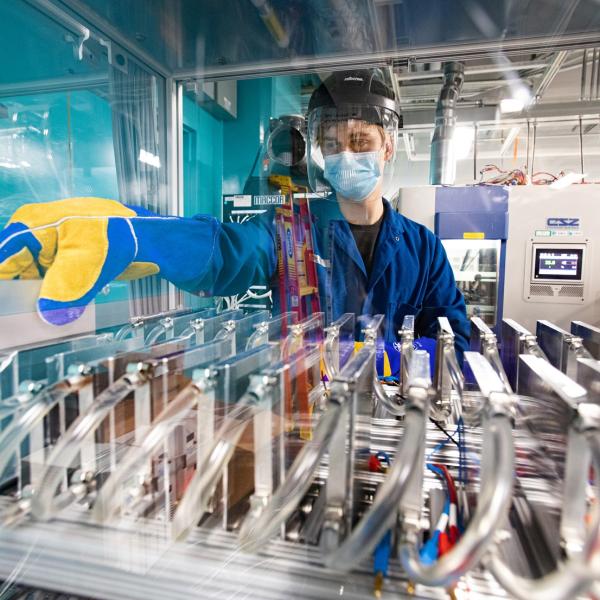
SLAC Deputy Director for Science and Technology Alberto Salleo's lab at Stanford is creating artificial synapses to replicate the brain’s efficiency and learning capacity...
Results obtained with SLAC’s X-ray laser show how tiny magnetic coils can align over a surprisingly broad timescale, inspiring new ideas for microelectronics.
He met with SLAC staff and toured the lab’s cutting-edge facilities, diving into world-leading research in X-ray and ultrafast science, artificial intelligence, astrophysics and...
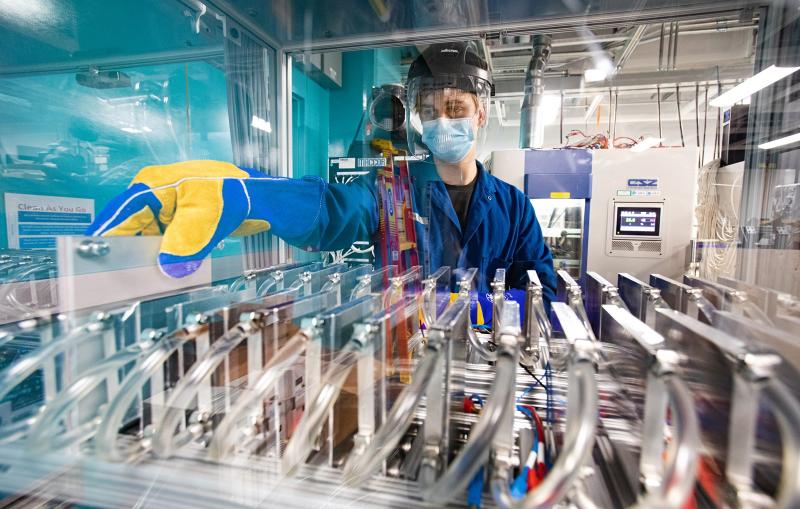
SLAC partners with five national labs and eight universities seeking to increase the supply diversity of EV batteries and relieve supply chain concerns.
His visit highlighted the breadth of our world-class research and the people and collaborations that make it possible. A key theme of the day: how SLAC and the National Labs are advancing AI to accelerate discovery.
SLAC Deputy Director for Science and Technology Alberto Salleo's lab at Stanford is creating artificial synapses to replicate the brain’s efficiency and learning capacity in computing systems.
Results obtained with SLAC’s X-ray laser show how tiny magnetic coils can align over a surprisingly broad timescale, inspiring new ideas for microelectronics.
He met with SLAC staff and toured the lab’s cutting-edge facilities, diving into world-leading research in X-ray and ultrafast science, artificial intelligence, astrophysics and more.
SLAC partners with five national labs and eight universities seeking to increase the supply diversity of EV batteries and relieve supply chain concerns.