SLAC topics

SLAC+Stanford RSS feed

See content related to SLAC+Stanford here below.

Feature

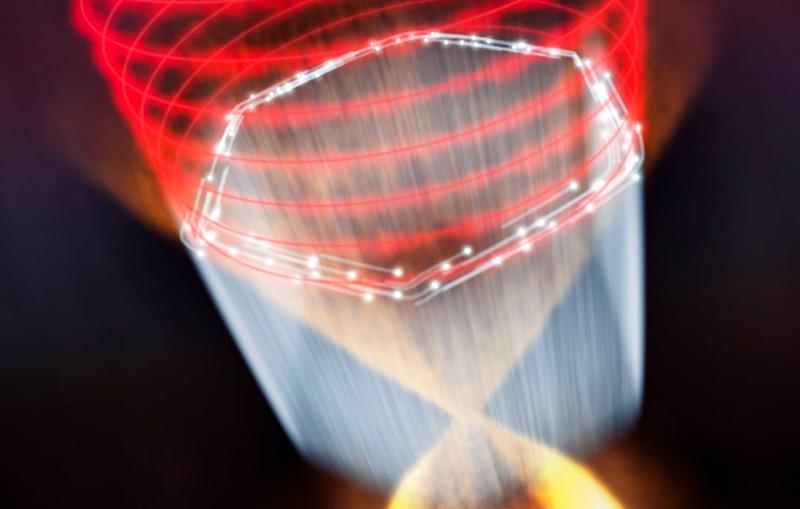
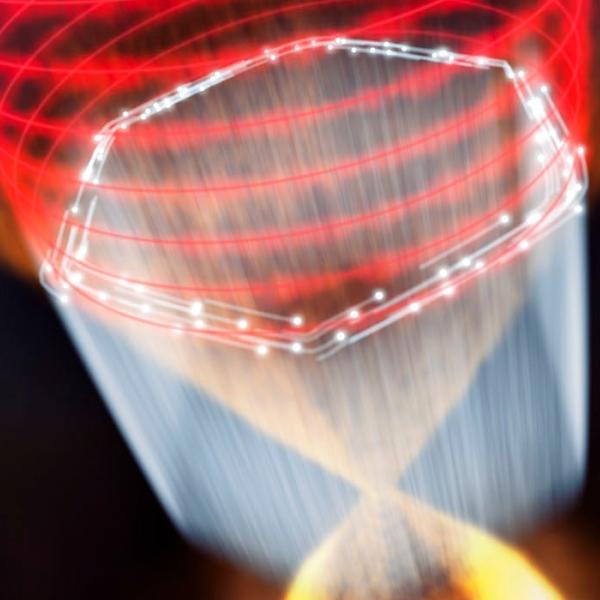
Spiraling laser light reveals how topological insulators lose their ability to conduct electric current on their surfaces.

Against a black background, thin, glowing red wires at top impinge on the hexagonal surface of a translucent mass. Small white dots travel along the edges of the surface in two directions. Within the mass, two orange cones meet at their tips.
Feature

Waves of magnetic excitation sweep through this exciting new material whether it’s in superconducting mode or not – another possible clue to how unconventional...

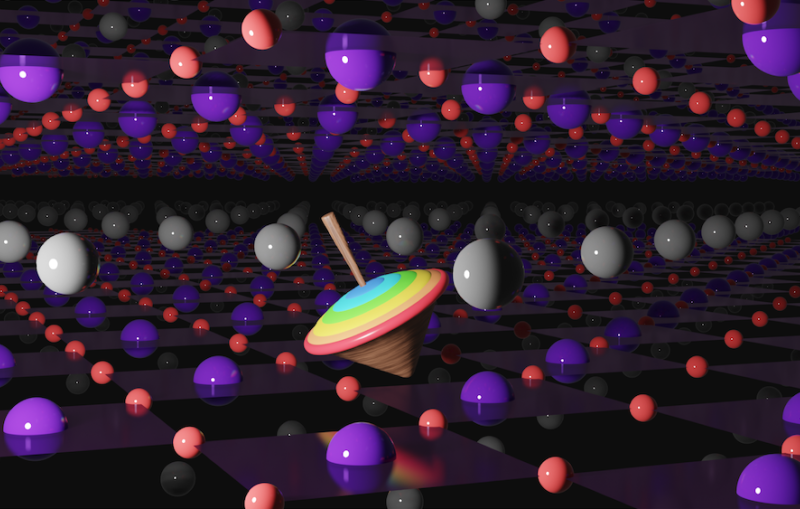
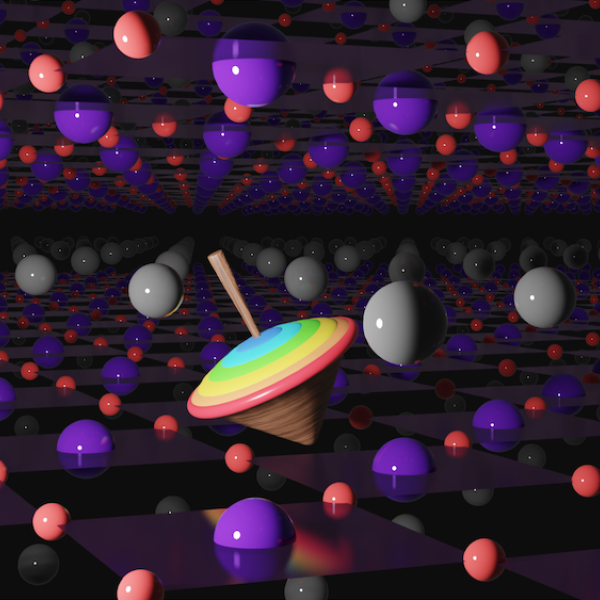
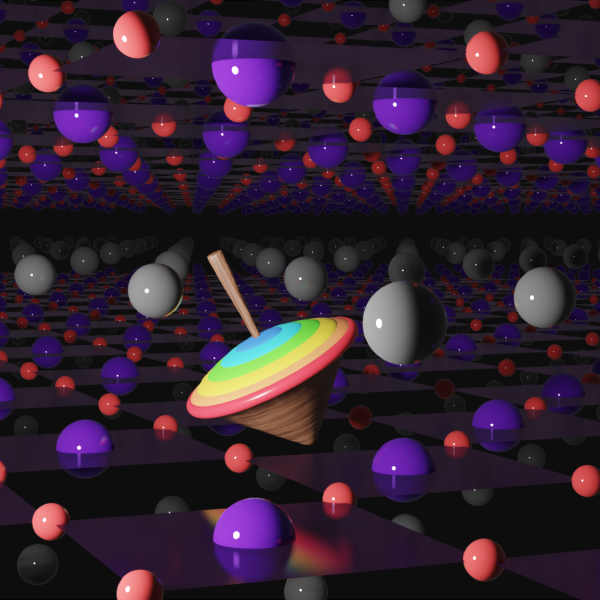
A brightly colored top is seen spinning between two layers of gray, purple and red spheres representing atoms in a nickel oxide superconductor.
Illustration

A muon, center, spins like a top within the atomic lattice of a thin film of superconducting nickelate.
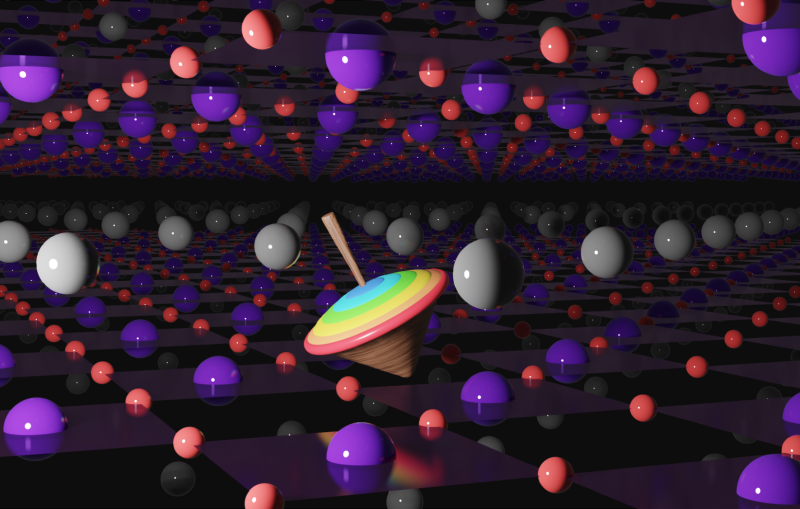

A brightly colored top is seen spinning between two layers of gray, purple and red spheres representing atoms in a nickel oxide superconductor.  The top represents a fundamental particle called a muon.
Feature

An extension of the Stanford Research Computing Facility will host several data centers to handle the unprecedented data streams that will be produced by...

SRCF-II
Feature

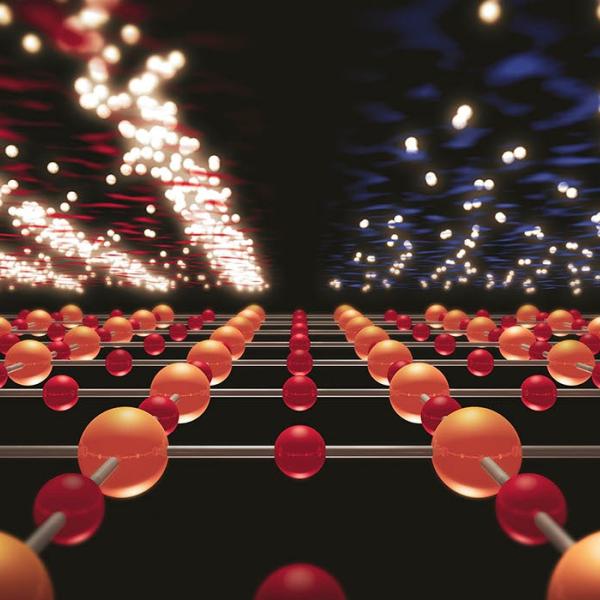
Researchers discover they contain a phase of quantum matter, known as charge density waves, that’s common in other unconventional superconductors. In other ways, though...

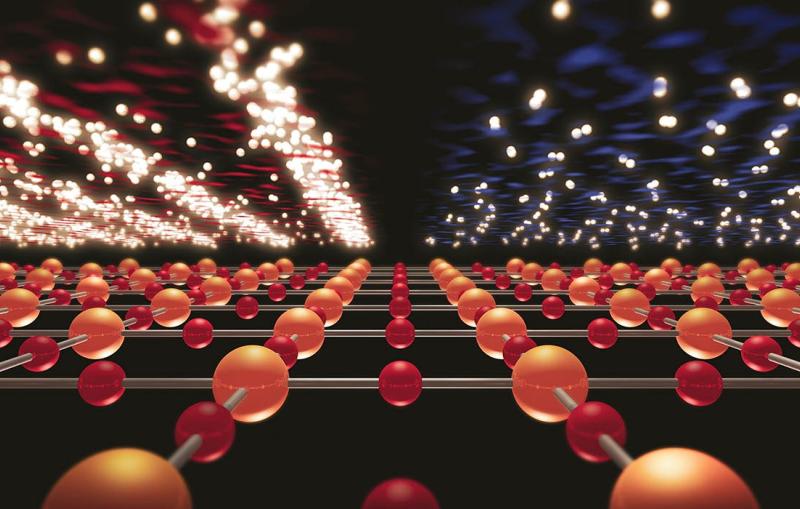
Artist's illustration shows quantum states called superconductivity and charge density waves atop an atomic lattice of balls and sticks
Feature

After decades of experience in the DOE lab system and as director of a leading synchrotron light source, he’s back to where he earned...

Stephen Streiffer
Feature

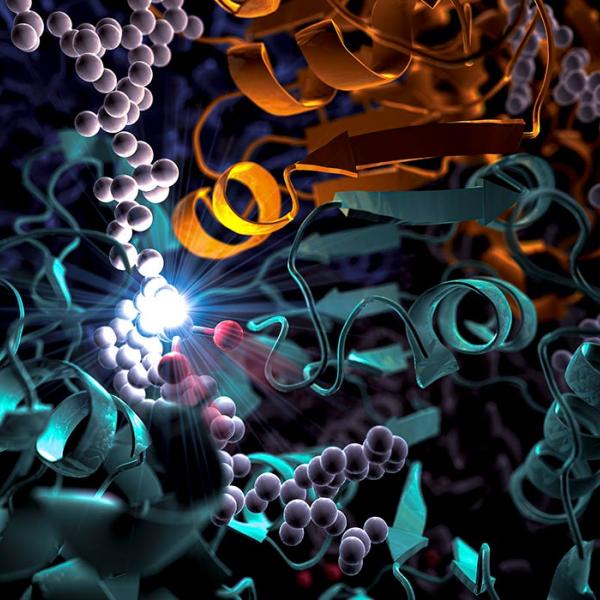
Researchers discover that a spot of molecular glue and a timely twist help a bacterial enzyme convert carbon dioxide into carbon compounds 20 times...

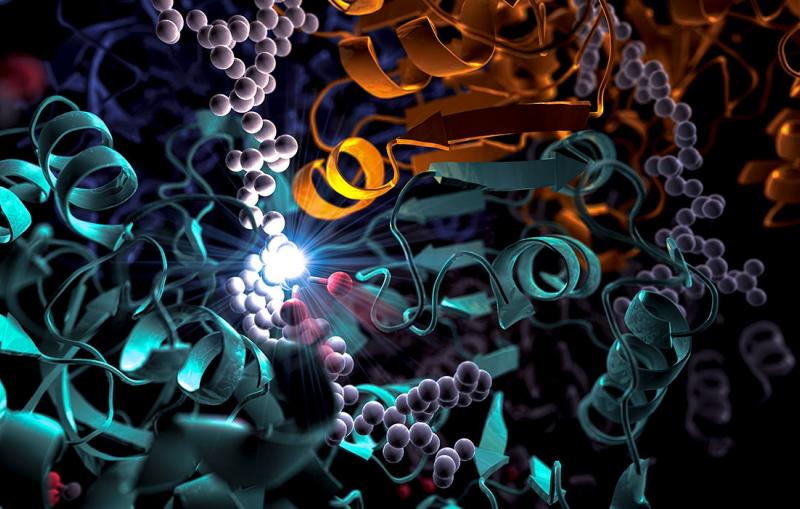
An illustration shows the pocket in an enzyme called ECR where the carbon fixing reaction takes place.
Feature

It’s a significant step in understanding these whirling quasiparticles and putting them to work in future semiconductor technologies.

A beam of light hits a semiconductor material, ejecting an electron (blue) which goes on to partner with a hole (orange) to form a whirling compound particle, the exciton.
Feature

SLAC’s Matt Garrett and Susan Simpkins talk about tech transfer that brings innovations from the national lab to the people, including advances for medical...

Tech Transfer
Feature

X-ray laser experiments show that intense light distorts the structure of a thermoelectric material in a unique way, opening a new avenue for controlling...

Illustration shows two ball-and-stick molecules in pink and red separated by a blurred streak representing how the first structure is slightly deformed into the second.
Feature

The results cap 15 years of detective work aimed at understanding how these materials transition into a superconducting state where they can conduct electricity...

Conceptual illlustration showing a beam of light entering from the right and hitting a material, ejecting a sphere representing an electron
Feature

Cryo-EM snapshots of the solid-electrolyte interphase, or SEI, reveal its natural swollen state and offer a new approach to lithium-metal battery design.

A battery's liquid electrolyte clings to small holes in a cryo-EM sample holder.