
SLAC topics

Chemistry and catalysis RSS feed

Catalysts are the unsung heroes of chemistry, accelerating reactions used to make fertilizers, fuels and consumer products. Our work aims to make catalysts more efficient and reduce the use of fossil fuels.

Related link: Energy sciences
Browse tagged content below

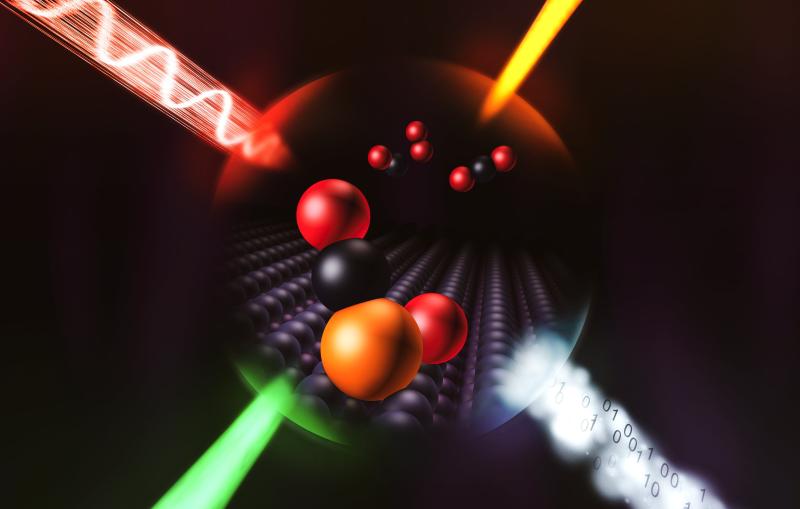
Depiction of four techniques used to study a single-atom catalyst.
Feature

This early-career scientist has undertaken challenging projects with significant implications for lithium-ion batteries.

Hans-Georg Steinrück
Feature

The technique can be used to study molecular phenomena and the forming and breaking of chemical bonds.

vibrating molecules
Feature

Combined with the lab’s LCLS X-ray laser, it’ll provide unprecedented atomic views of some of nature’s speediest processes.

Alex Reid, ultrafast electron diffraction (UED)
News Release

A new twist on cryo-EM imaging reveals what’s going on inside MOFs, highly porous nanoparticles with big potential for storing fuel, separating gases and...

Images of cryo-EM equipment, CO2 molecule in cage
News Release

X-rays reveal an extinct mouse was dressed in brown to reddish fur on its back and sides and had a tiny white tummy.

mighty mouse false color
Feature

Both are professors at Stanford and SLAC, where Martinez is an investigator with the Stanford PULSE Institute.

Stanford and SLAC professors Todd Martinez, left, and William Weis
Feature

Scientists precisely control where single-atom catalysts sit on their support structures, and show how changing their position affects their reactivity.

Feature

A new method could be used to look at chemical reactions that other techniques can’t catch, for instance in catalysis, photovoltaics, peptide and combustion...

molecule
News Release

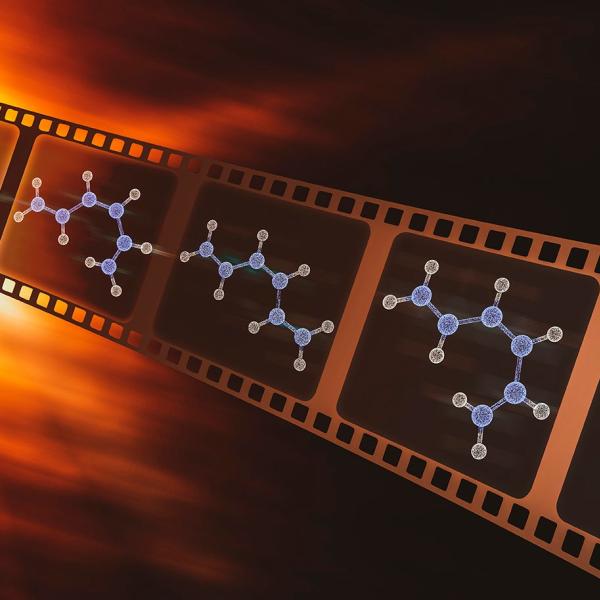
First direct look at how atoms move when a ring-shaped molecule breaks apart could boost our understanding of fundamental processes of life.

Molecular Movie in HD Art
Feature

In the decade since LCLS produced its first light, it has pushed boundaries in countless areas of discovery.

Undulator Hall
Feature

Researchers will use SLAC’s X-ray light source to probe 150-million-year-old dinosaur fossils at the atomic level.

Jurassic Mile
Feature

A better understanding of these systems will aid in developing next-generation energy technologies.

synchronized molecules