Catalysts are the unsung heroes of chemistry, accelerating reactions used to make fertilizers, fuels and consumer products. Our work aims to make catalysts more efficient and reduce the use of fossil fuels.
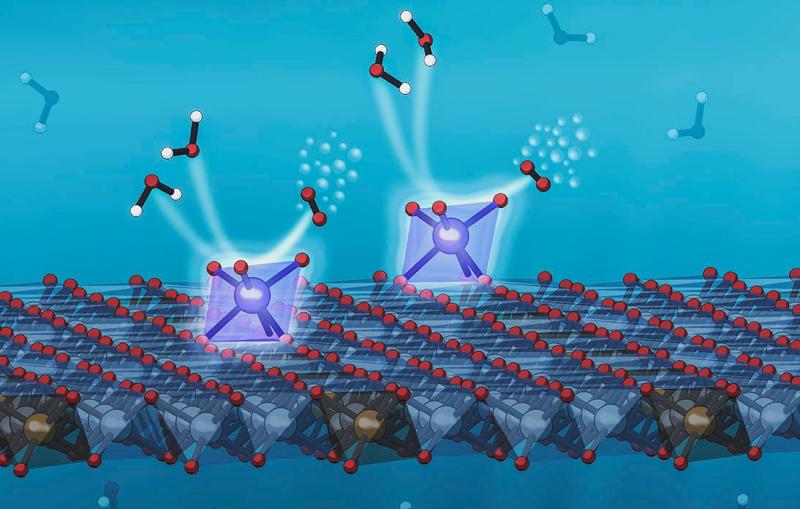
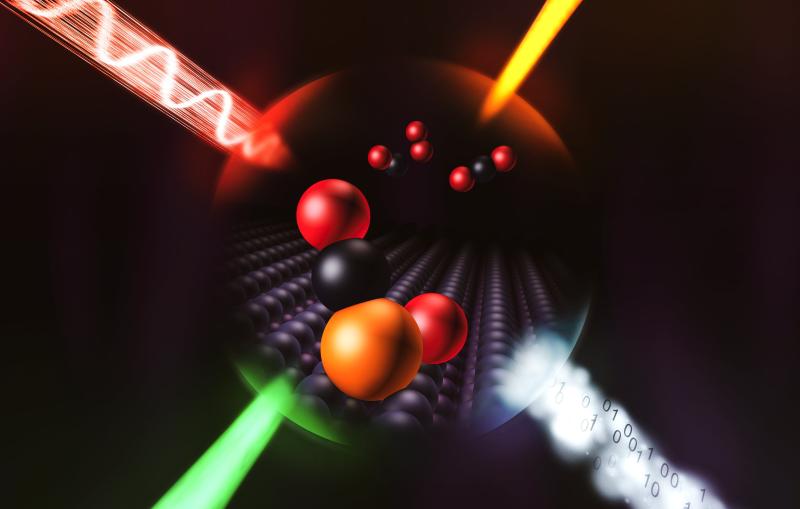
Scientists used a combination of four techniques, represented here by four incoming beams, to reveal in unprecedented detail how a single atom of iridium catalyzes a chemical reaction.
(Greg Stewart/SLAC National Accelerator Laboratory)
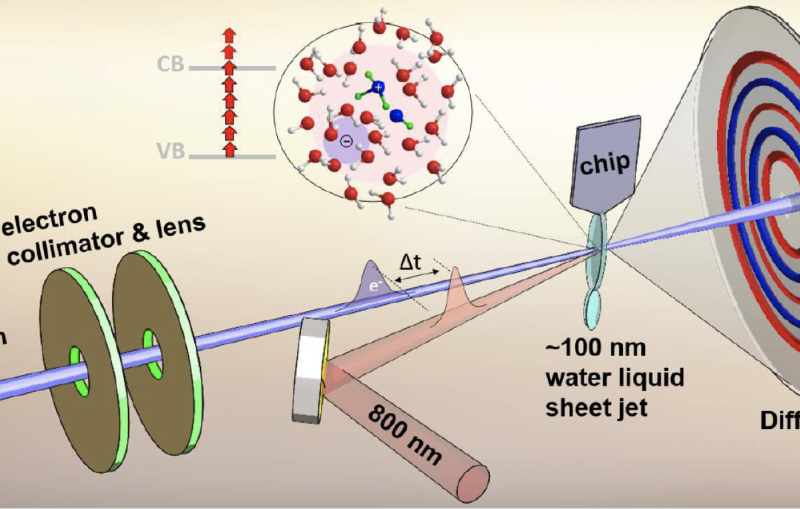
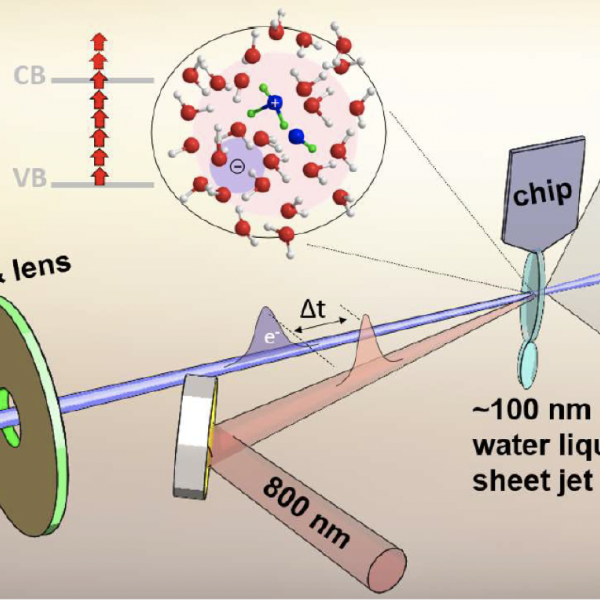
This is the first direct observation of a hydroxyl-hydronium complex – important for a wide range of chemical and biological processes from the tails...
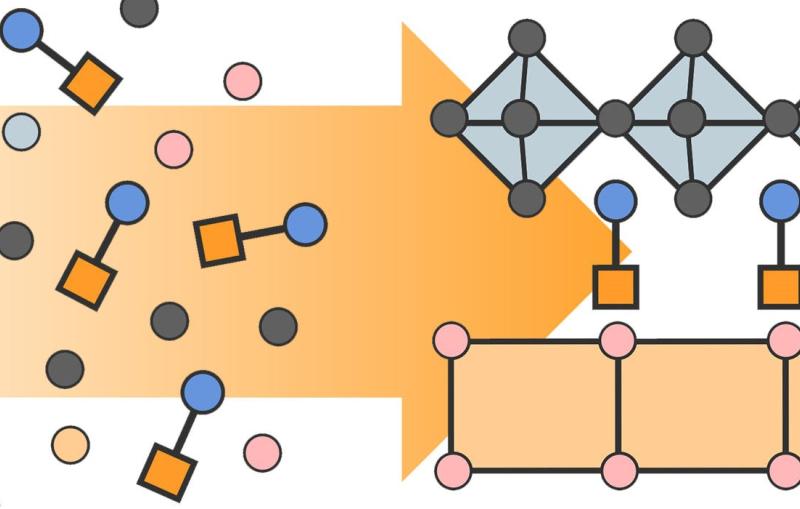
Much like crystallizing rock candy from sugar syrup, the new method grows 2D perovskites precisely layered with other 2D materials to produce crystals with...
Researchers at the University of Leeds deepened their understanding of a synthetic detergent without ever setting foot in the lab where their experiments took...
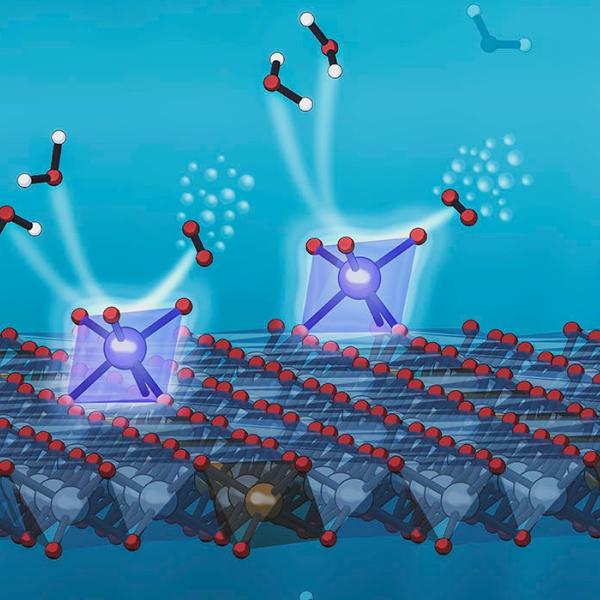
Anchoring individual iridium atoms on the surface of a catalytic particle boosted its performance in carrying out a reaction that’s been a bottleneck for...
An international team led by SLAC/Stanford Professor Ed Solomon used a tantalizing principle borrowed from nature to turn harmful methane into useful methanol.
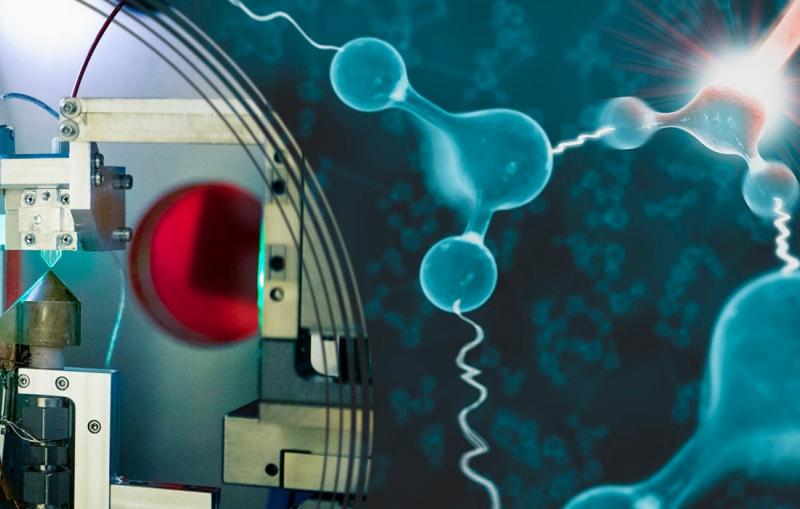
This is the first direct observation of a hydroxyl-hydronium complex – important for a wide range of chemical and biological processes from the tails of comets to cancer treatment.
Much like crystallizing rock candy from sugar syrup, the new method grows 2D perovskites precisely layered with other 2D materials to produce crystals with a wide range of electronic properties.
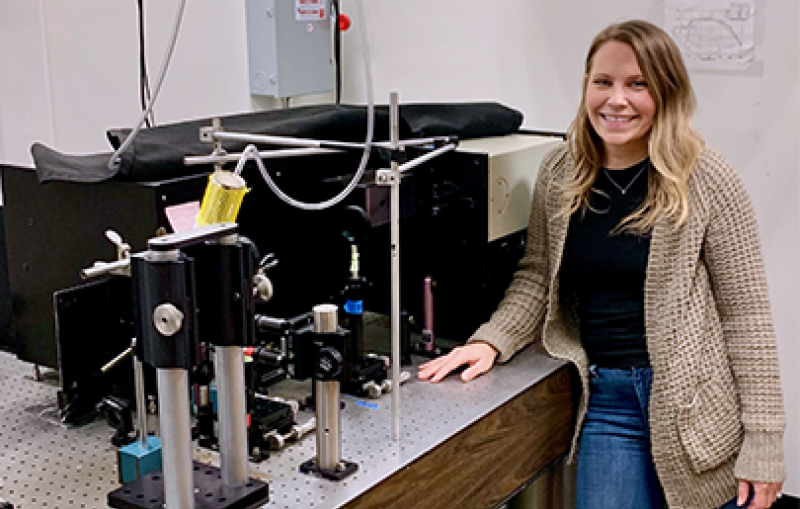
Researchers at the University of Leeds deepened their understanding of a synthetic detergent without ever setting foot in the lab where their experiments took place.
Anchoring individual iridium atoms on the surface of a catalytic particle boosted its performance in carrying out a reaction that’s been a bottleneck for sustainable energy production.
The work sheds light on the web of hydrogen bonds that gives water its strange properties, which play a vital role in many chemical and biological processes.
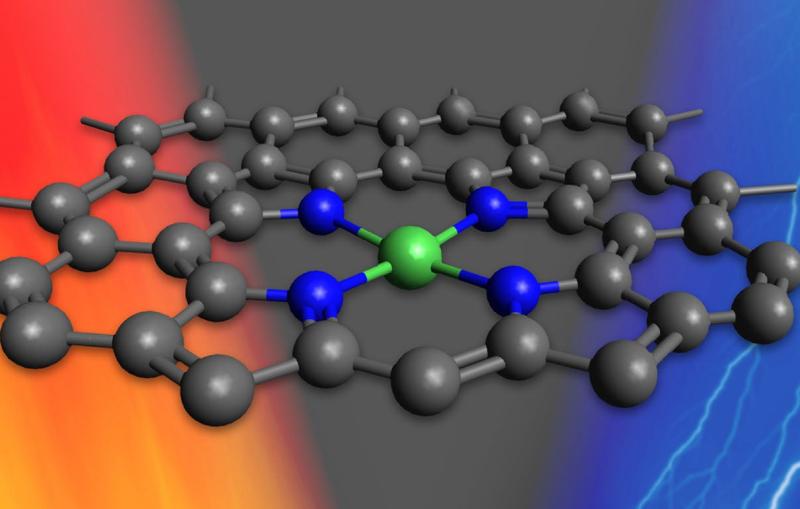
Their work aims to bridge two approaches to driving the reaction – one powered by heat, the other by electricity – with the goal of discovering more efficient and sustainable ways to convert carbon dioxide into useful products.
An international team led by SLAC/Stanford Professor Ed Solomon used a tantalizing principle borrowed from nature to turn harmful methane into useful methanol.