



SLAC topics

Engineering RSS feed

Engineering is at the heart of SLAC’s scientific innovation, from large scale projects like the LSST Camera and the LCLS X-ray laser upgrade to detectors and software solutions.

Browse tagged content below
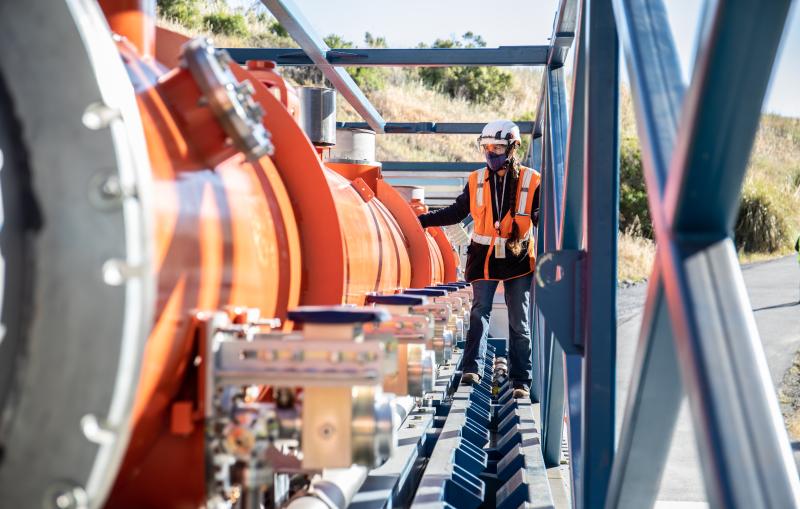
Last cryomodule unload, #41 from Fermilab F1.3-06. This one will be one of a few spares for LCLS-II.
Feature

Derek Mendez and Xueli “Sherry” Zheng aim to accelerate drug discovery and improve energy storage.

Man and woman
Feature

SLAC experts discuss how microelectronics impacts our lives and where the future lies in this Q&A.

Angelo Dragone and Paul McIntyre
News Release

Surfing a plasma wave, electrons get an energy and brightness boost.

Illustration of electrons traveling through a plasma chamber
Multimedia

His visit highlighted the breadth of our world-class research and the people and collaborations that make it possible. A key theme of the day...

U.S. Deputy Secretary of Energy Danly watches a simulation of dark matter.
Feature

In this Q&A, Arianna Gleason discusses the technologies needed to make commercialized fusion energy a reality and how SLAC is advancing this energy frontier. 

Headshot of Arianna Gleason with graphic representation of a laser shot
Feature

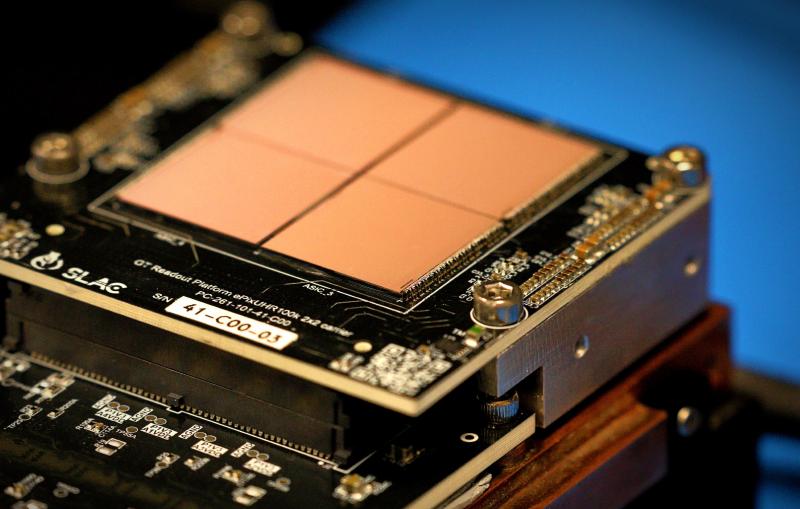
The microelectronics that power daily life and speed discoveries in science and technology are the focus of a bold new vision to make them...

photo of detector
Feature

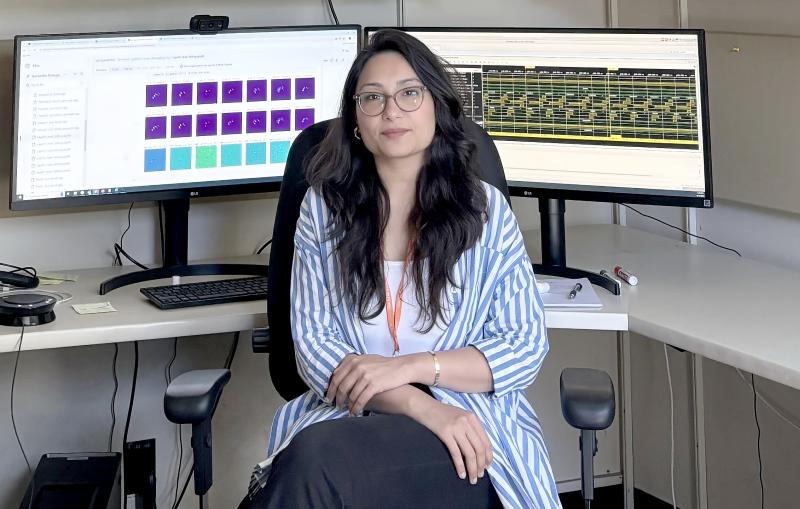
Digital design engineer Abhilasha Dave’s passion for connecting machine learning and hardware is helping SLAC solve big data challenges.

Photo of Abhilasha Dave in her office
Feature

David Cesar, Julia Gonski and W.L. Kimmy Wu will each receive $2.75 million issued over five years for their research in X-ray and ultrafast...

Early Career Award Winners 2024
Feature

The SLAC/Stanford researcher is a leading materials scientist and entrepreneur whose research is paving the way for better batteries, cleaner power grids.

SLAC and Stanford researcher Will Chueh
Feature

The software tool sorts through messy data to reveal what’s really going on with solar panels on cloudy and sunny days.

This is a graphic representation of solar power system data. The data is processed by algorithms, which turn the data into specific power loss causes.
Feature

What could smaller particle accelerators look like in the future? SLAC scientists are working on innovations that could give more researchers access to accelerator...

This is a graphic image of particles moving through plasma during plasma wakefield acceleration.
News Release

With up to a million X-ray flashes per second, 8,000 times more than its predecessor, it transforms the ability of scientists to explore atomic-scale...

LCLS-II first light