Learn about our science, people, facilities and partners. Discover our history and vision for the future.
Who we are
We explore radically new ideas with an entrepreneurial mindset.
Get an overview of research at SLAC: X-ray and ultrafast science, particle and astrophysics, cosmology, particle accelerators, biology, energy and technology.
Revealing nature’s fastest processes with X-rays, lasers and electrons
Studying the particles and forces that knit the cosmos together
Building smaller, faster, more powerful accelerators for all
Understanding the machinery of life at its most basic level
Inventing new tools for science and society
Breaking new ground in securing abundant, affordable and reliable energy.
SLAC science explained
Cut through the jargon while exploring our research.
Learn more about the places where science happens at SLAC: our major facilities, institutes and centers.
Linac Coherent Light Source
Stanford Synchrotron Radiation Lightsource
Facility for Advanced Accelerator Experimental Tests
Cryogenic Electron Microscopy
Stanford Institute for Materials & Energy Science
Kavli Institute for Particle Astrophysics & Cosmology
Stanford PULSE Institute
Center for Interface Science & Catalysis
NSF-DOE Vera C. Rubin Observatory LSST
SLAC & Stanford build the world’s largest digital camera for the Legacy Survey of Space and Time (LSST).
Find a career, partner with us or apply to use our tools and facilities.
Apply to become a user of our scientific research facilities and instruments.
Careers at SLAC
Join our united workforce.
Get the latest news about the lab, our science and discoveries. Explore SLAC events and learn how to participate.
This joint publication of SLAC and Fermilab is your view into the world of particle physics.
SLAC on Tap: Night of the Dark Matter
Wednesday, October 28, 5:30pm
In the coming weeks, Symmetry will explore the ways scientists are using artificial intelligence to advance particle physics and astrophysics—in a series of articles written and illustrated entirely by humans.
How do you solve a problem like big data?
The long and continuing quest to understand dark energy has entered exciting new territory.
An advisory committee recommends the US work to advance three key areas of emerging accelerator technology.
Scientists inside and outside of particle physics and astrophysics are leaning on AI for assistance with complex tasks.
Physics may seem like its own world, but different sectors using machine learning are all part of the same universe.
Machine learning is becoming an essential part of a physicist’s toolkit. How should new students learn to use it?
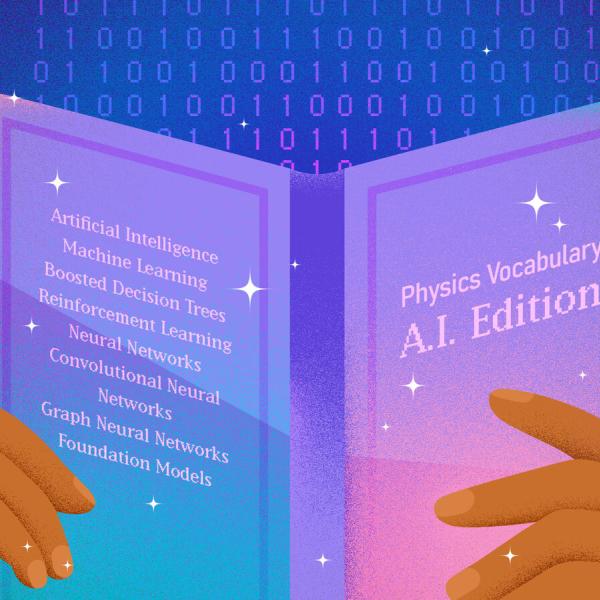
Do you know your convolutional neural networks from your boosted decision trees?
Physicists in the United States support the development of an off-shore Higgs Factory.
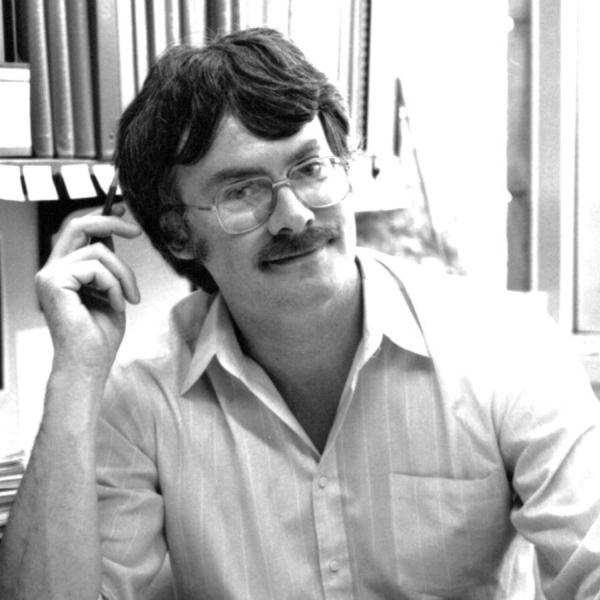
Michael Riordan has spent decades ruminating on the history of physics, including events he participated in himself.
Physicists are preparing for the next generation of dark-matter experiments.
How does sunscreen work on the atomic level?