From our kitchens to our clothes to the delivery of medicines, plastics play an indispensable role in our daily lives. But, the end-life of these plastics is not always taken into account. Few types of plastics can be readily recycled...
SLAC is hosting a workshop Driving critical chemical transformations with photons, electrons, and catalysts. The workshop will identify key approaches and opportunities to breathe new life into the structure-function paradigm foundational to the understanding of chemistry.
Join us at the Kavli Building or online. Registration is required if you plan to attend in person. Catalysts are the unsung heroes of our modern age. Working tirelessly behind the scenes, they find many applications that touch our lives...
The world’s biggest digital camera was built at SLAC, and shipped to the NSF-DOE Vera C. Rubin Observatory in northern Chile last year. This observatory has a goal no less ambitious than to map the entire the southern sky and...
Modern particle accelerator control rooms are like busy air traffic control centers, where skilled operators juggle hundreds of interconnected and time-sensitive tasks to generate and shape high-energy particle beams. Control room tasks are increasingly performed with the support of AI...
Electrons are tiny, charged particles with huge jobs: They hold all matter together, they drive the chemical reactions that power life, and they transport information and energy across the globe. Despite their importance, we still don’t fully understand how they...
Over the full 10-year survey, Rubin Observatory will produce half an exabyte of data. To make use of this data, teams of scientists and engineers have been developing algorithms that will detect and measure every single astronomical object. The data...
Please join us for a workshop being hosted as part of SLAC National Accelerator Laboratory’s X-ray and Ultrafast Strategic Initiative. The workshop is focused on advancing the durability of energy technologies through mastery of fundamental processes leading to material degradation...
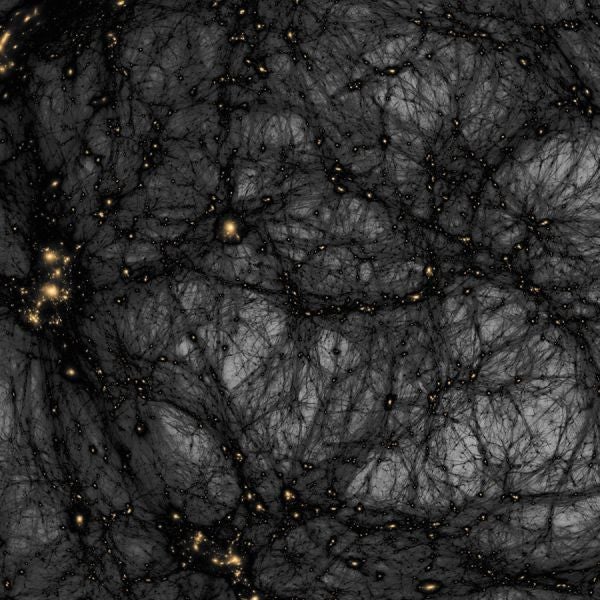
SLAC scientists played key roles in leadership, survey design, cosmological applications, studies of dark matter and of links to the cosmic microwave background.