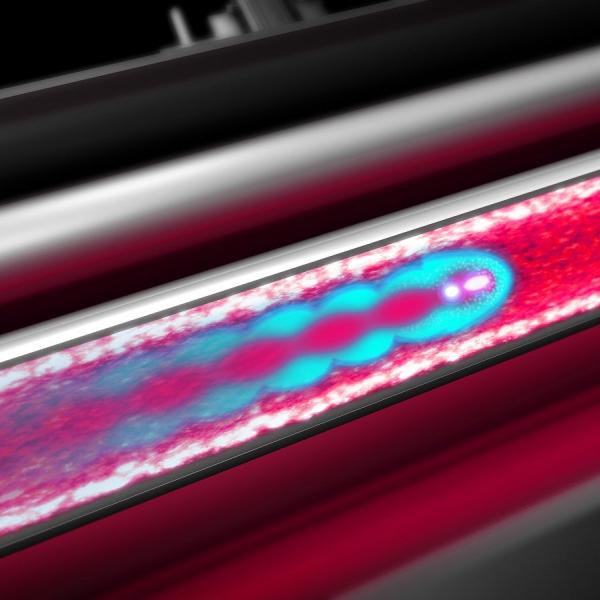
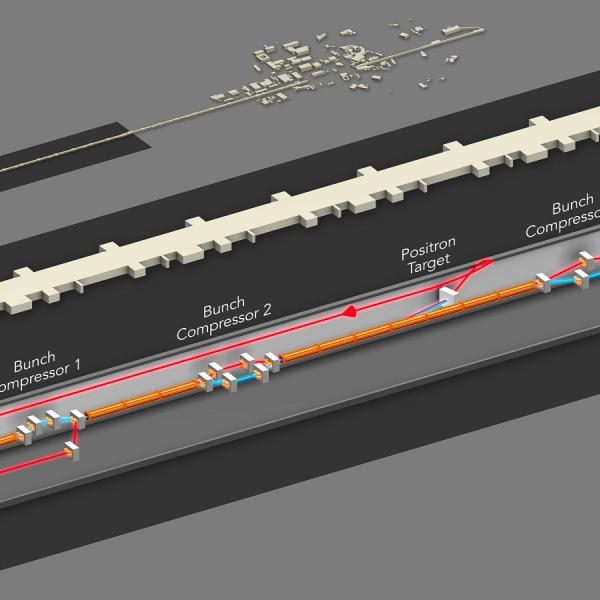
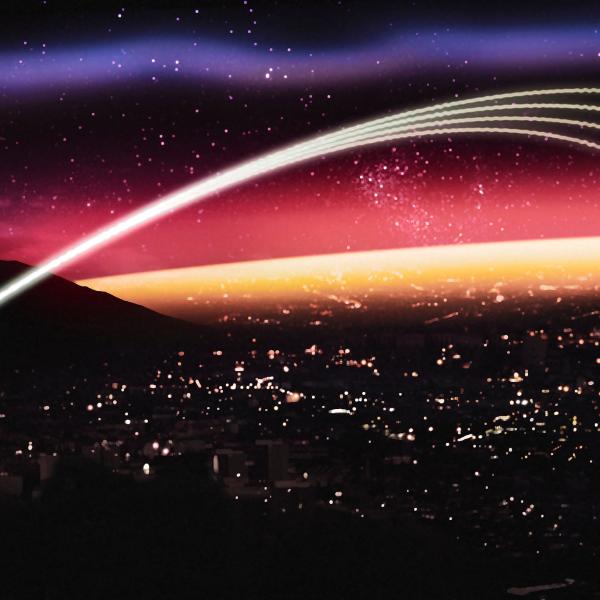
Researchers will use FACET-II to develop the plasma wakefield acceleration method, in which researchers send a bunch of very energetic particles through a hot ionized gas, or plasma, creating a plasma wake for a trailing bunch to “surf” on and...
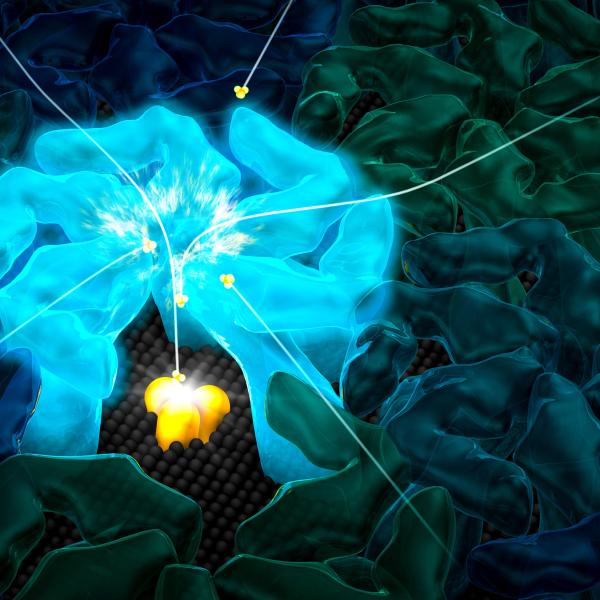
An artist’s depiction of a tiny pore in the crystalline shell of an ammonia-eating archaea microbe; surrounding proteins are shown in blue. The pore’s negative charge attracts ammonium ions from the environment, which interact with an enzyme complex (yellow) to...
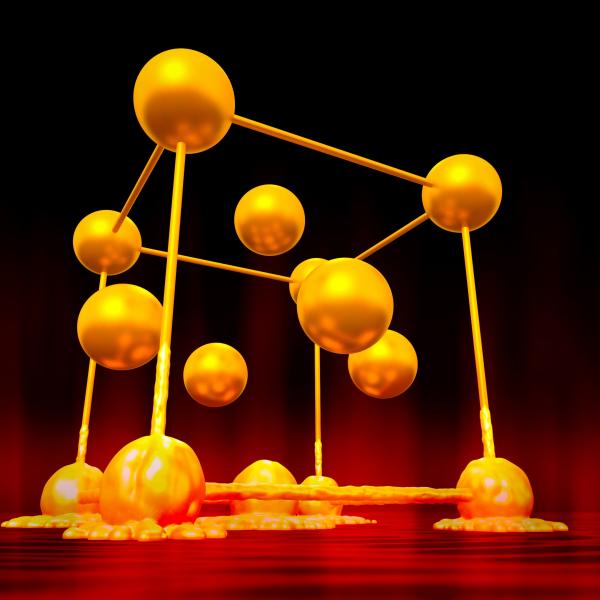
This animation shows the results of a recent study at SLAC, in which researchers used a powerful beam of electrons to watch gold melt extremely rapidly after being heated by a laser pulse.
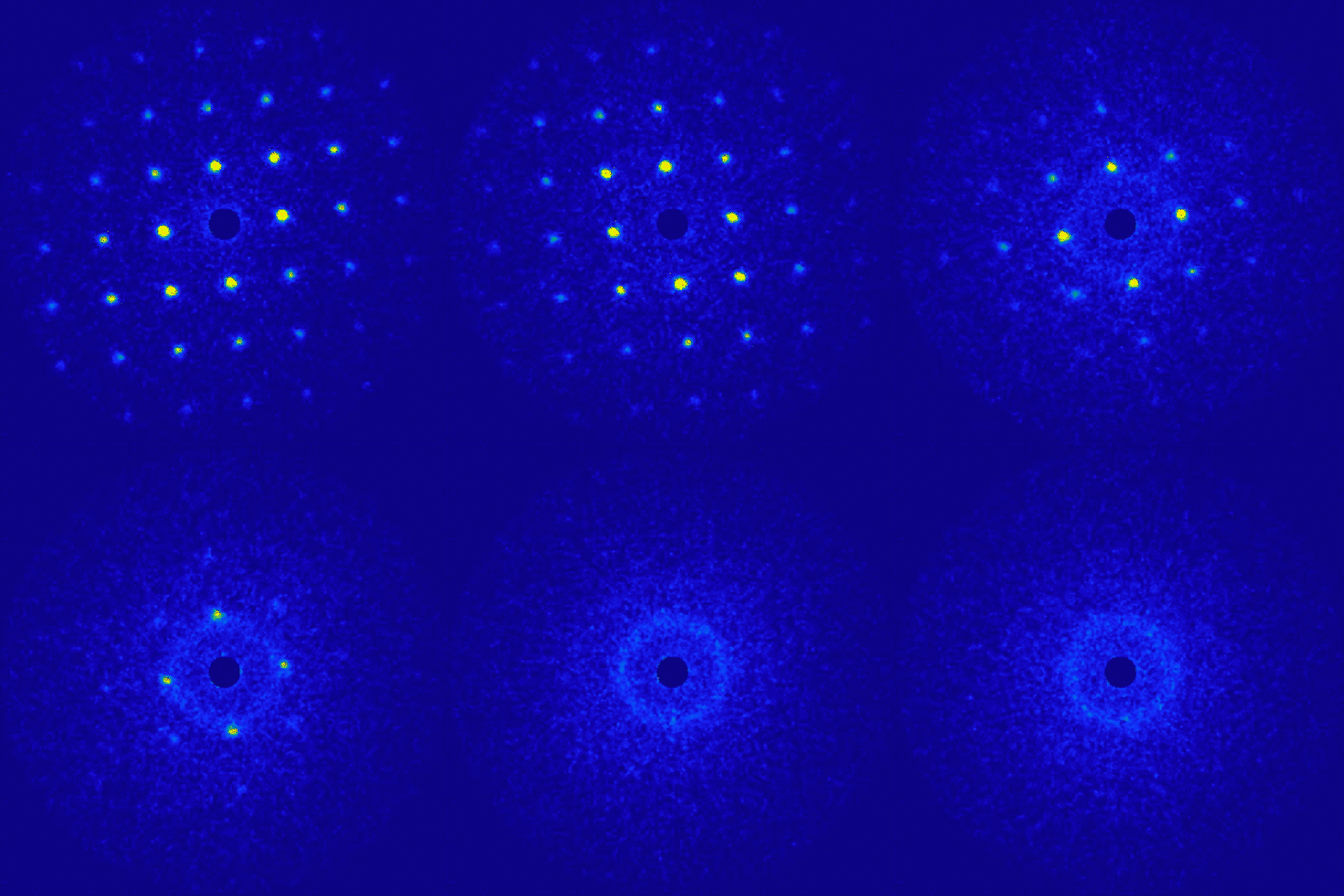
This movie shows the transition of a gold sample from a solid (dotted pattern) to a liquid (ring pattern) after being heated by a laser pulse. It was taken with SLAC’s ultrafast “electron” camera, an instrument for ultrafast electron diffraction...
A study using a powerful beam of electrons at SLAC has revealed new atomic details of the melting of gold, potentially benefitting the development of fusion power reactors, steel processing plants, spacecraft and other applications.
A new type of pocket-sized antenna, developed at SLAC, could enable mobile communication in situations where conventional radios don’t work, such as under water, through the ground and over very long distances through air.
This illustration shows snapshots of the light-triggered transition of the ring-shaped 1,3-cyclohexadiene (CHD) molecule (background) to its stretched-out 1,3,5-hexatriene (HT) form (foreground).