News releases

Browse the full collection of SLAC news releases and stay up to date on the latest scientific advancements at the laboratory.
Upgrade will sharpen our view of nature’s atomic processes at work, aiding the development of a number of transformative technologies.

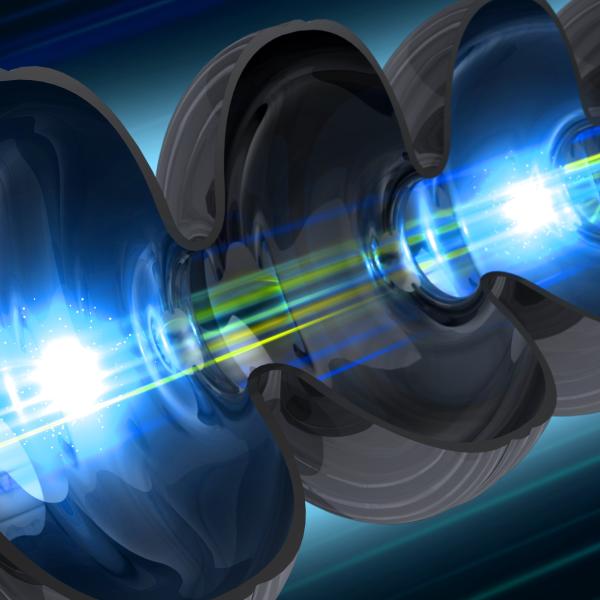
Illustration of an electron beam traveling through a niobium cavity.

Scientists have used X-rays to observe exactly how silver electrical contacts form during manufacturing of solar modules.

A new study with the LCLS X-ray laser could change the way researchers take atomic-level snapshots of important biological machineries, potentially affecting research in drug development, clean energy production and many more areas.

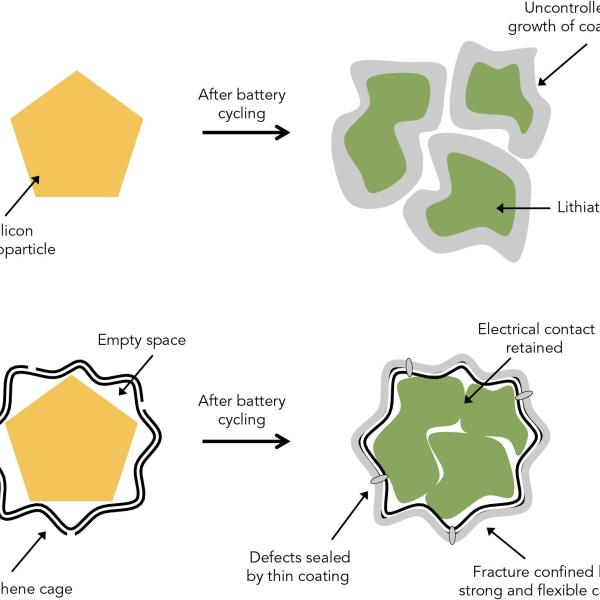
Wrapping silicon anode particles in custom-fit graphene cages could solve two major obstacles to using silicon in high-capacity lithium ion batteries.

Illustration of silicon particles with and without graphene cages

Menlo Park, Calif.

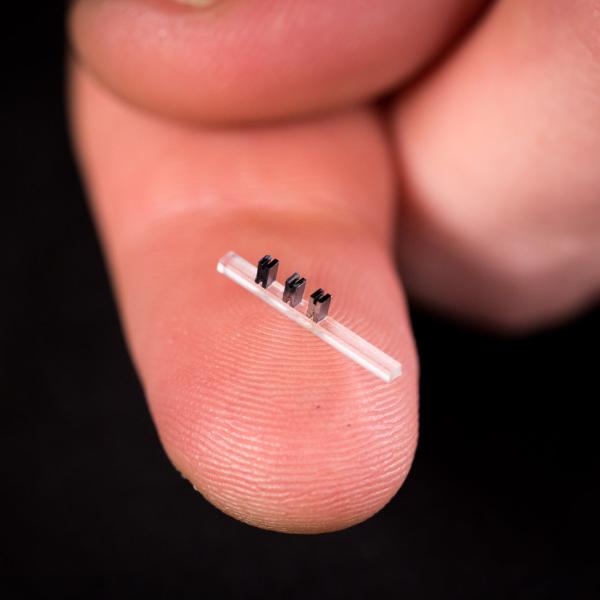
The Gordon and Betty Moore Foundation has awarded $13.5 million for an international effort to build a working particle accelerator the size of a shoebox based on an innovative technology known as “accelerator on a chip.”

Three accelerator chips on a finger

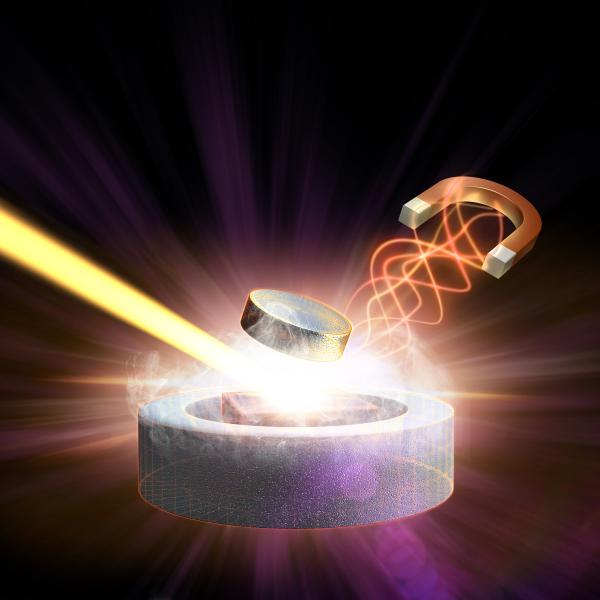
A team led by SLAC scientists combined powerful magnetic pulses with some of the brightest X-rays on the planet to discover a surprising 3-D effect that appears linked to a mysterious phenomenon known as high-temperature superconductivity.

Image - In this artistic rendering, a magnetic pulse (right) and X-ray laser light (left) converge on a superconductor material to study the behavior of its electrons. (SLAC National Accelerator Laboratory)

Understanding Motions of Thin Layers May Help Design Solar Cells, Electronics and Catalysts of the Future

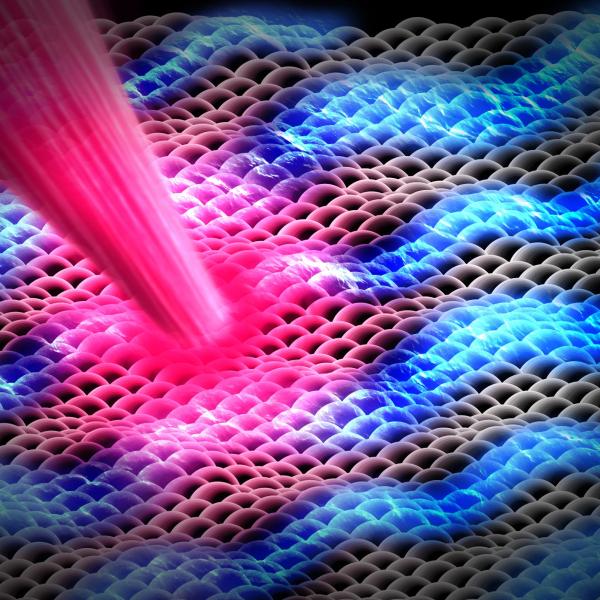
a three-atom-thick layer of a promising material as it wrinkles in response to a laser pulse

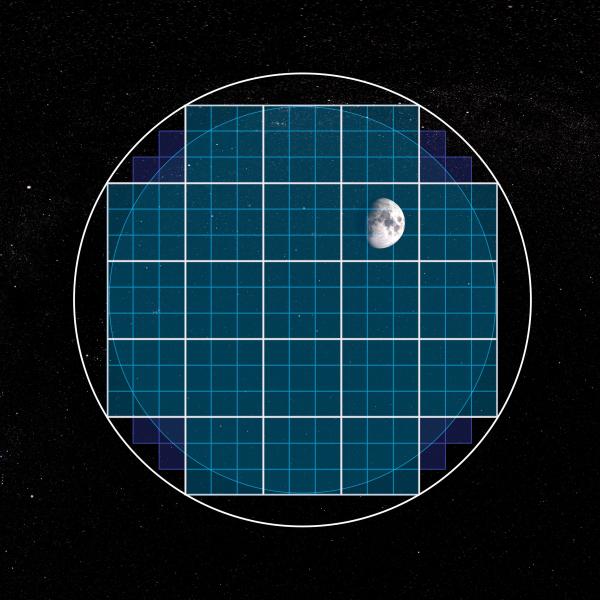
The Large Synoptic Survey Telescope’s ‘Eye’ Will be Built at SLAC.

A SLAC-led research team working at the lab’s FACET facility has demonstrated a new way of accelerating positrons that could help develop smaller, more economical future particle colliders.

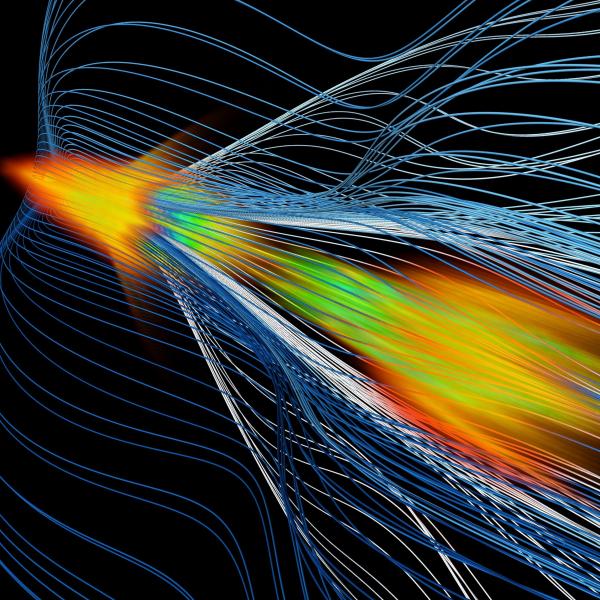
Simulation of high-energy positron acceleration in an ionized gas, or plasma