News releases

Browse the full collection of SLAC news releases and stay up to date on the latest scientific advancements at the laboratory.
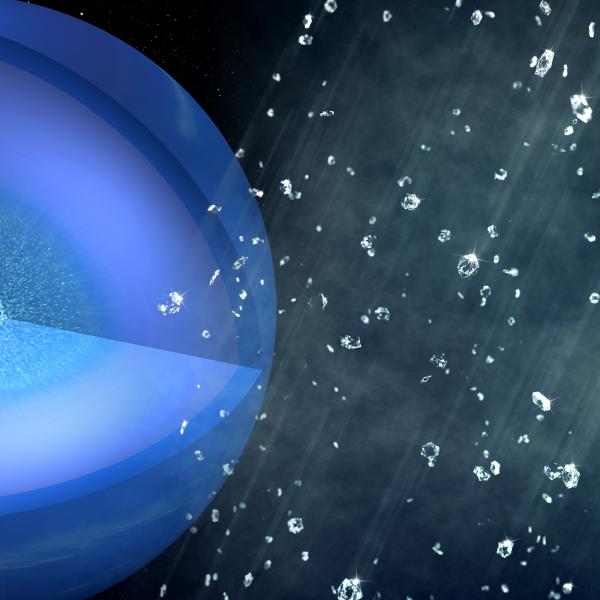

SLAC’s X-ray laser and Matter in Extreme Conditions instrument allow researchers to examine the exotic precipitation in real time as it materializes in the laboratory.

A cutaway depicts the interior of Neptune and an illustration of diamond rain.

SLAC and Stanford astrophysicists made crucial contributions to the galaxy survey, showing that the universe clumps and expands as predicted by our best cosmological models.

Blanco Telescope

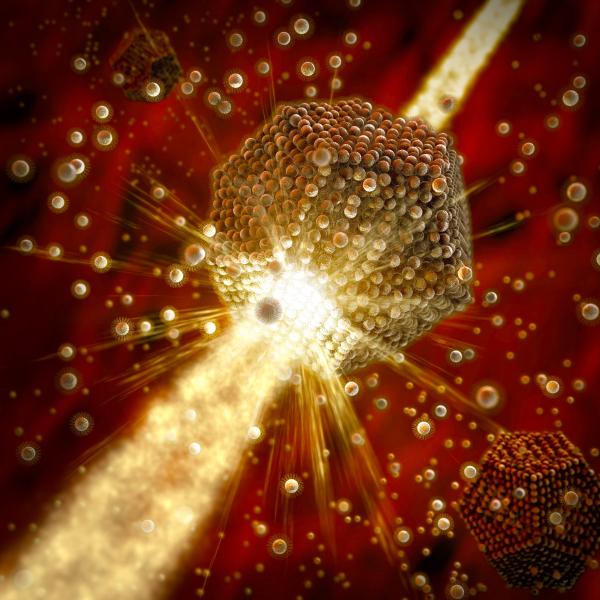
A serendipitous discovery lets researchers spy on this self-assembly process for the first time with SLAC’s X-ray synchrotron. What they learn will help them fine-tune precision materials for electronics, catalysis and more.

Illustration of nanocrystals forming into superlattices at SLAC's SSRL

SLAC’s ultrafast “electron camera” reveals unusual atomic motions that could be crucial for the efficiency of next-generation perovskite solar cells.

UED Perovskites

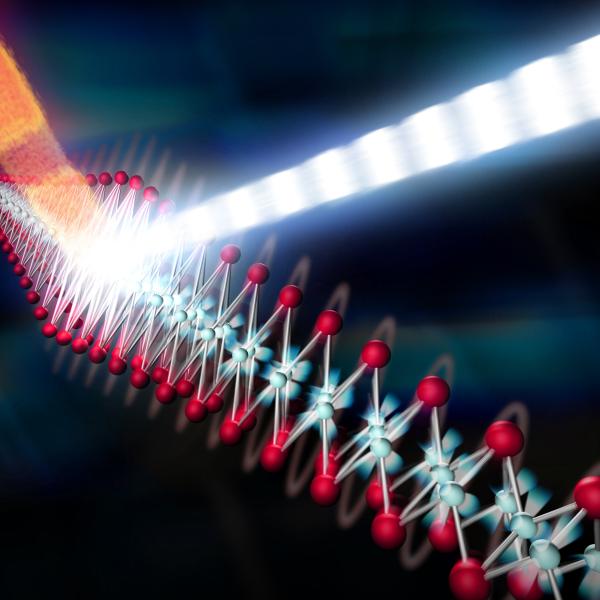
Extraordinarily precise measurements -- within millionths of a billionth of a second and a billionth of a hair's breadth -- show this ‘electron-phonon coupling’ can be far stronger than predicted, and could potentially play a role in unconventional superconductivity.

Illustration of a laser beam triggering atomic vibrations in iron selenide

When scientists at the Department of Energy’s SLAC National Accelerator Laboratory focused the full intensity of the world’s most powerful X-ray l

molecular black hole

An excess of gamma rays at the center of the Milky Way, previously discussed as a sign of dark matter, is likely caused by the superdense remains of ancient stars.

Pulsars

Join us for five days of ultrafast science from April 17 to 21.

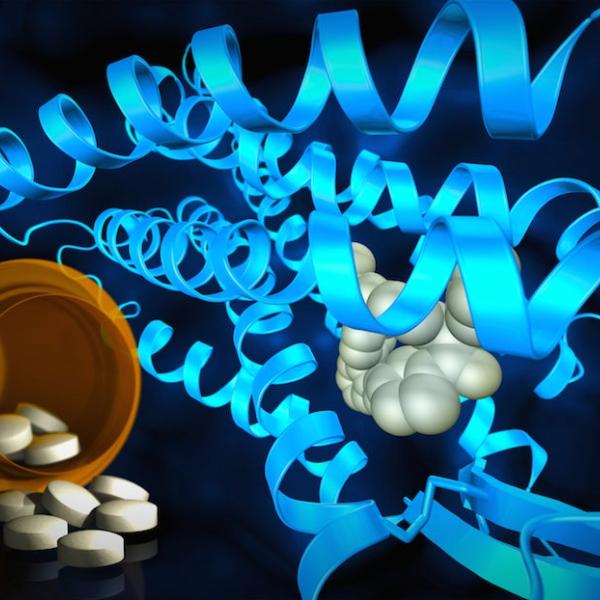
X-ray studies have produced surprising insights into the workings of a hormone receptor associated with blood pressure regulation that could be a target for new medicines related to cardiovascular conditions, neuropathic pain and tissue growth.

Powerful X-rays reveal molecular structures at the site where drug compounds interact with cell receptors.