News releases

Browse the full collection of SLAC news releases and stay up to date on the latest scientific advancements at the laboratory.
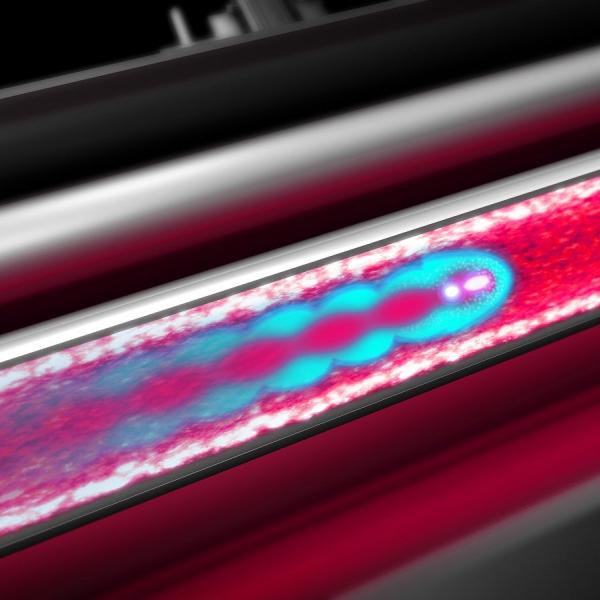
The goal: develop plasma technologies that could shrink future accelerators up to 1,000 times, potentially paving the way for next-generation particle colliders and powerful light sources.

FACET-II science

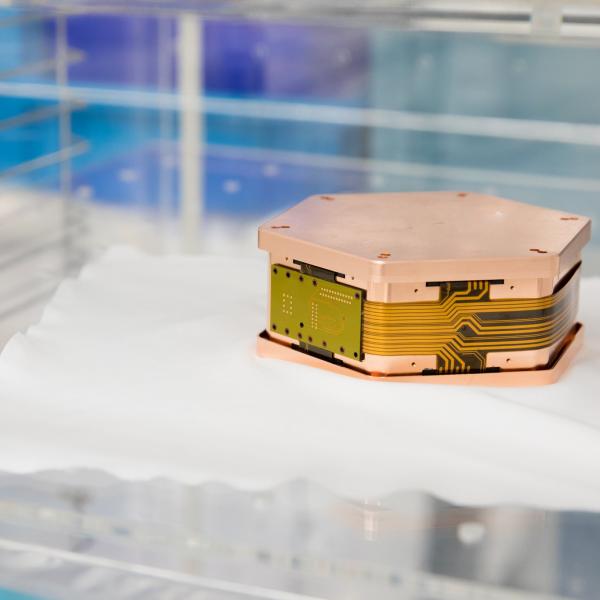
The SuperCDMS SNOLAB project, a multi-institutional effort led by SLAC, is expanding the hunt for dark matter to particles with properties not accessible to any other experiment.

SuperCDMS Detector 2

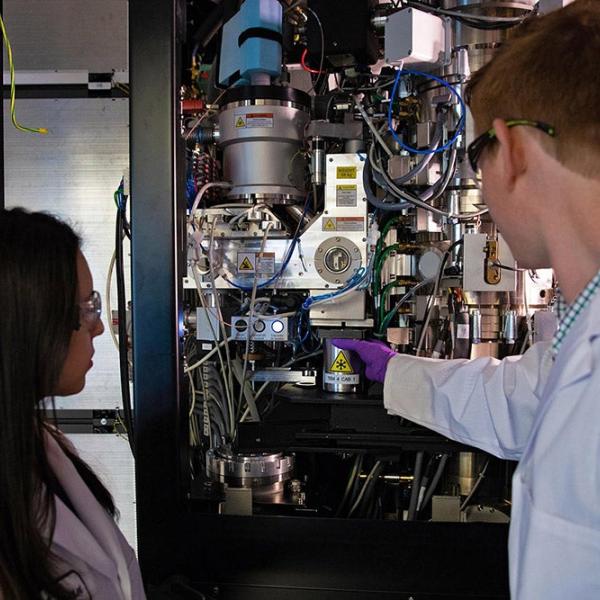
The new facility provides revolutionary tools for exploring tiny biological machines, from viral particles to the interior of the cell.

SLAC-Stanford Cryo-EM Facility

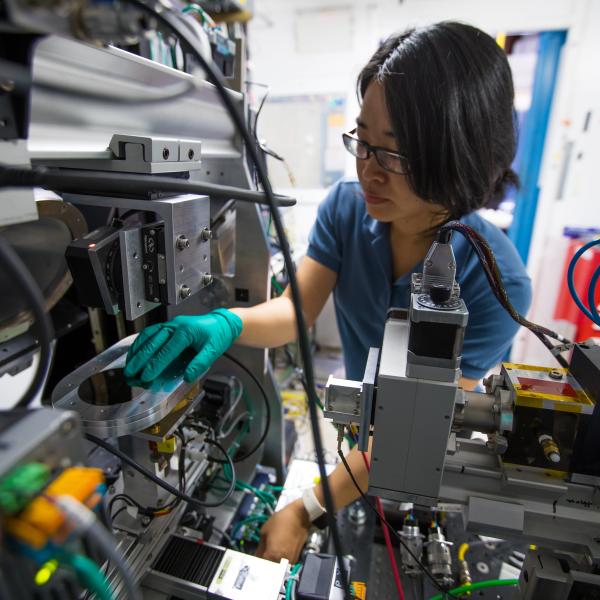
SLAC and its collaborators are transforming the way new materials are discovered. In a new report, they combine artificial intelligence and accelerated experiments to discover potential alternatives to steel in a fraction of the time.

SLAC postdoctoral scholar Fang Ren at an SSRL beamline

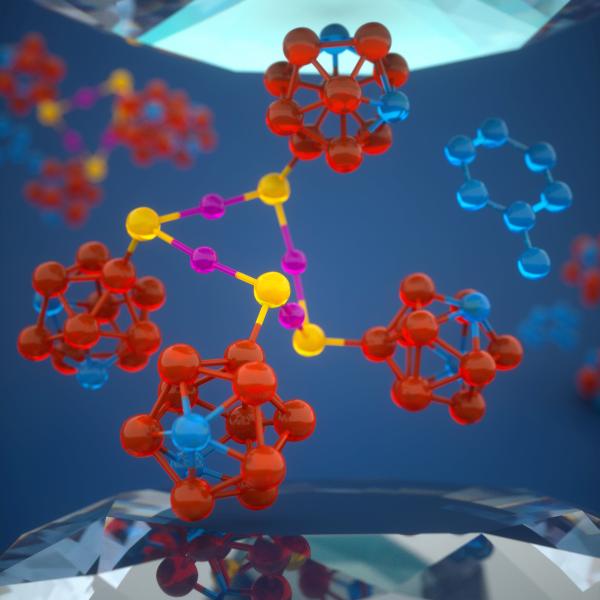
Experiments with 'molecular anvils' mark an important advance for mechanochemistry, which has the potential to make chemistry greener and more precise.

Illustration of soft molecules attached to molecular anvils between diamond tips

The first cryomodule has arrived at SLAC. Linked together and chilled to nearly absolute zero, 37 of these segments will accelerate electrons to almost the speed of light and power an upgrade to the nation’s only X-ray free-electron laser facility.

The first cryomodule for LCLS-II arrived at SLAC on January 19, 2018. Linked together and chilled to nearly absolute zero, 37 of these segments will accelerate electrons to almost the speed of light and power LCLS-II, an upgrade to the nation’s only X-ray free-electron laser facility.

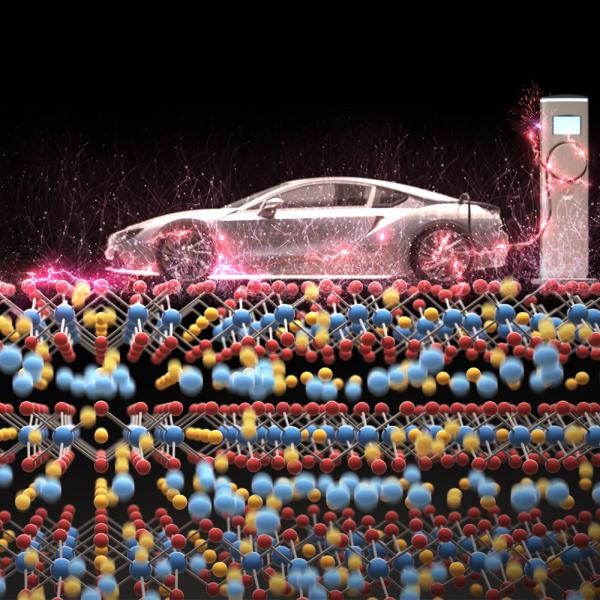
They created a comprehensive picture of how the same chemical processes that give these cathodes their high capacity are also linked to changes in atomic structure that sap performance.

Electrode structure for lithium ion battery.

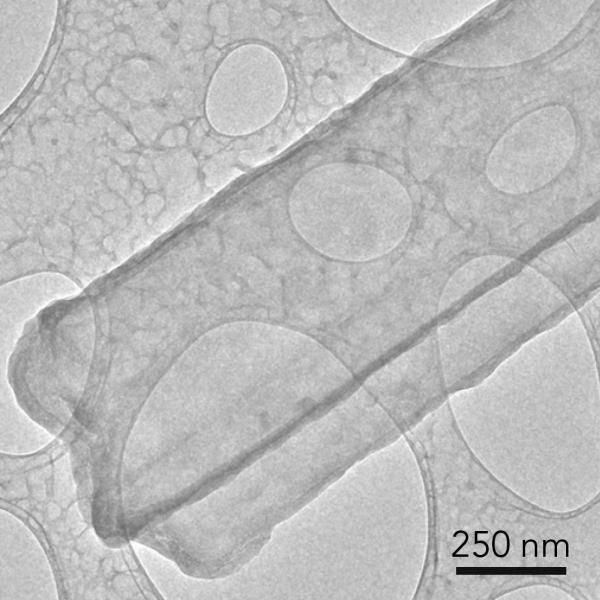
Remarkable cryo-EM images that reveal details down to the individual atom will yield new insights into why high-energy batteries fail.

A lithium metal dendrite, taken with cryogenic electron microscopy or cryo-EM

It's the first to employ AI to help the grid manage power fluctuations, resist damage and recover faster from storms, solar eclipses, cyberattacks and other disruptions.

Electric grid components.

SLAC and Stanford researchers demonstrate that brain-mimicking ‘neural networks’ can revolutionize the way astrophysicists analyze their most complex data, including extreme distortions in spacetime that are crucial for our understanding of the universe.

Neural Nets and Gravitational Lenses