

SLAC topics

Stanford PULSE Institute RSS feed

Researchers at the Stanford PULSE Institute watch ultrafast particle motions and chemical reactions to get a deeper understanding of matter in all its forms. Soon we’ll be able to watch even speedier electron movements that underlie all of chemistry, technology and life.

Visit PULSE website

Browse tagged content

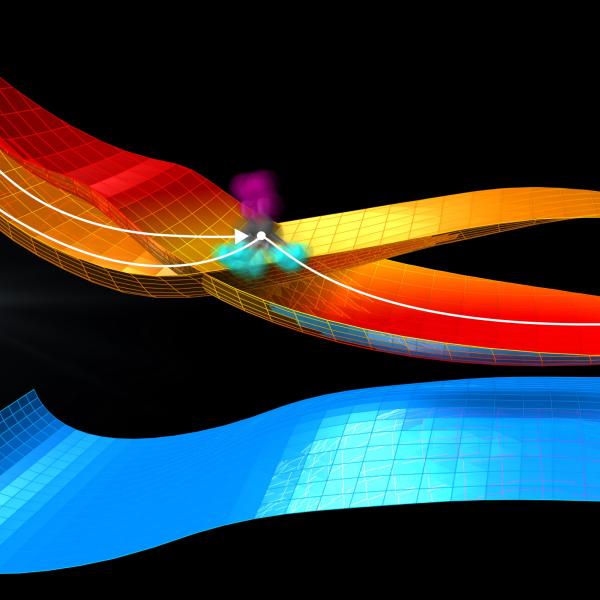
XLEAP illustration
Animation
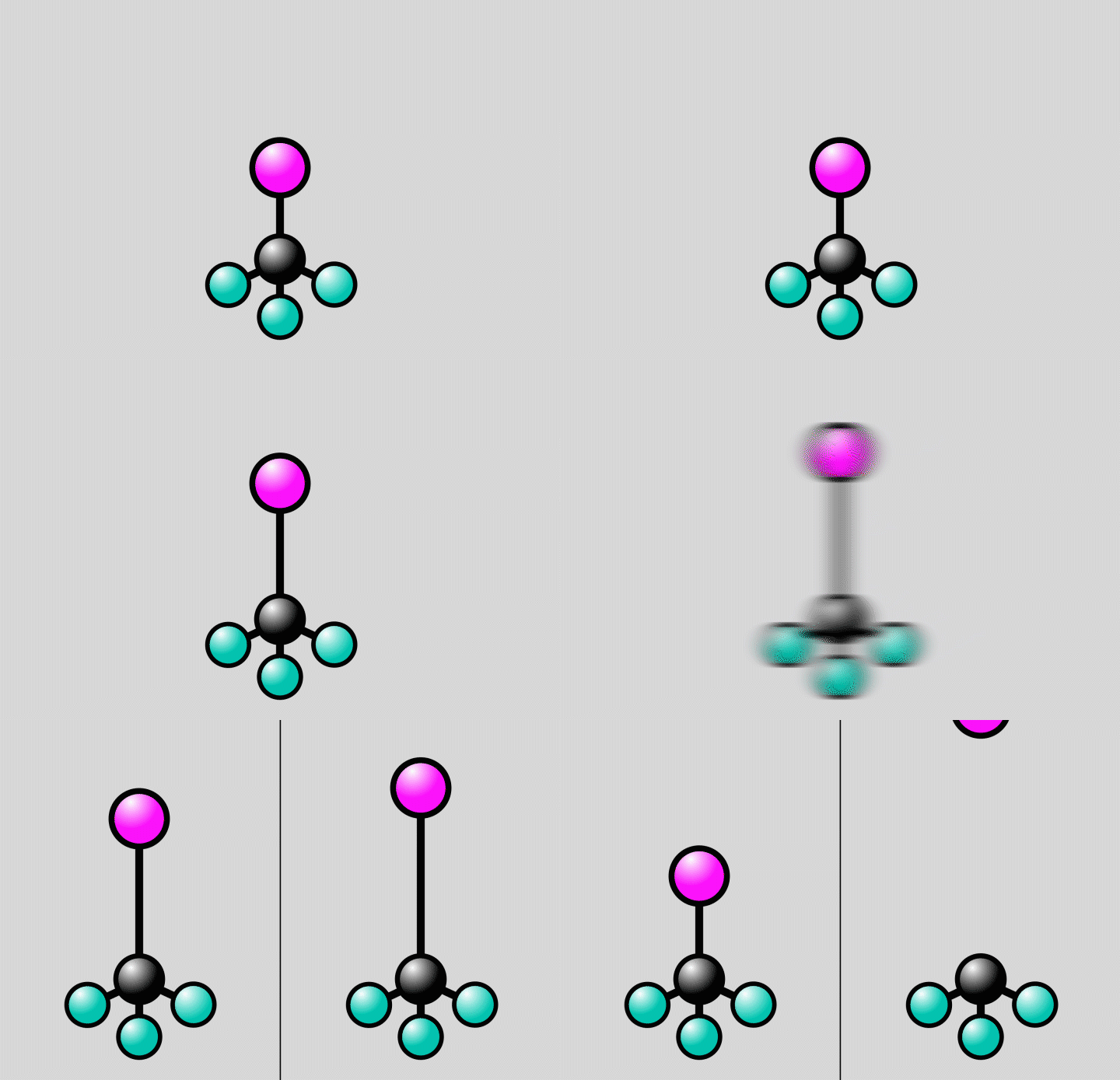
Animation of a trifluoroiodomethane molecule (carbon shown in black, fluoride in green, iodine in pink) responding to laser light. The...
UED Bond Breaking
Feature

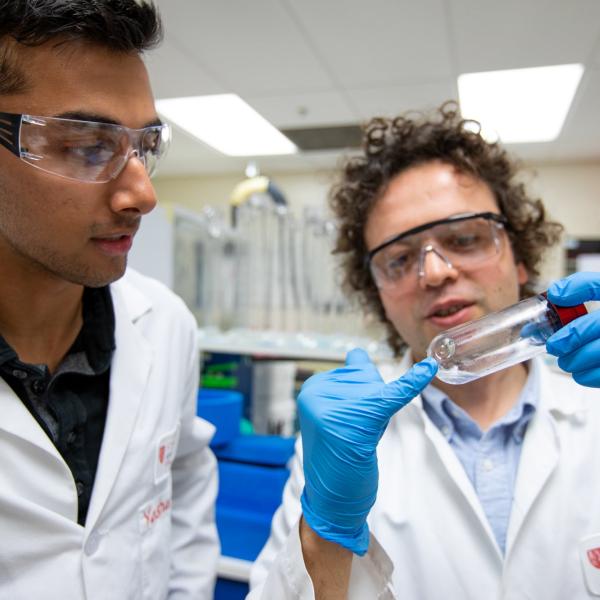
Tais Gorkhover, Michael Kagan, Kazuhiro Terao and Joshua Turner will each receive $2.5 million for research that studies fundamental particles, nanoscale objects, quantum materials...

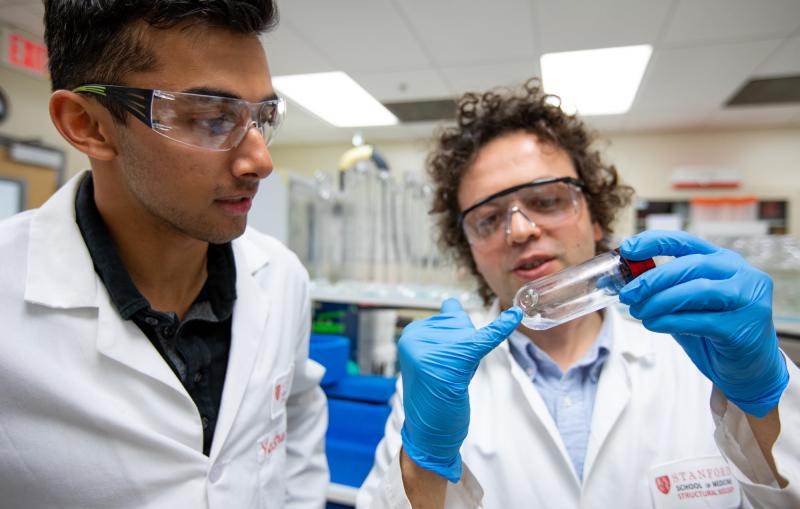
Photos of SLAC's 2018 Early Career Award winners
Feature

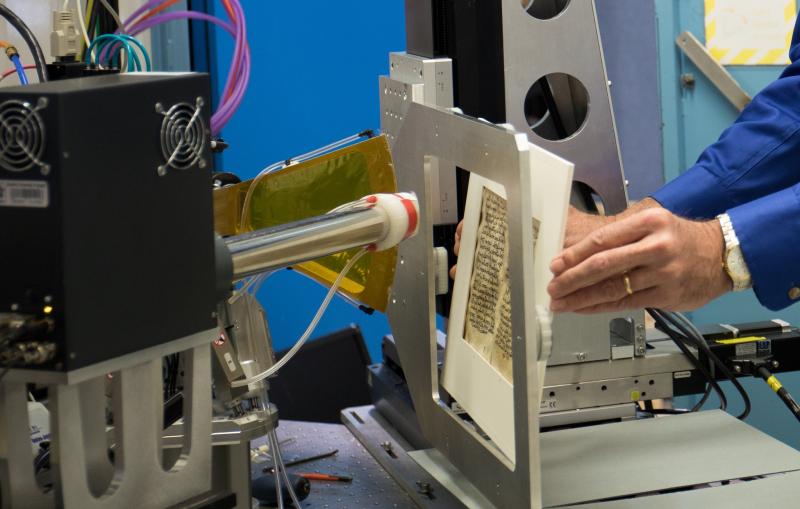
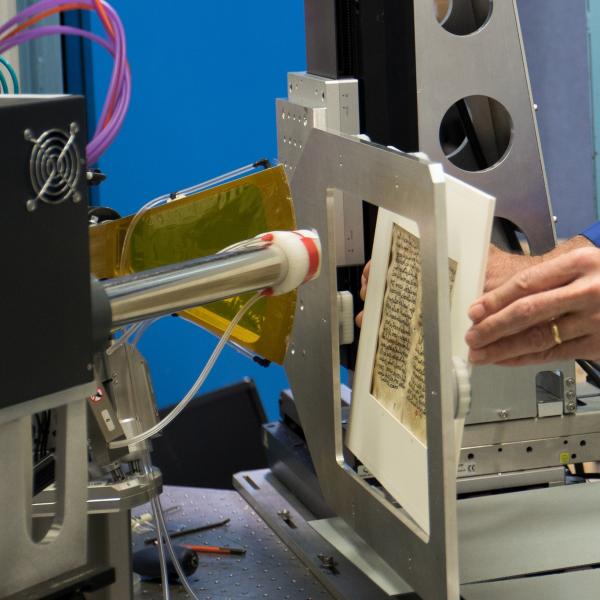
With X-ray imaging at SLAC’s synchrotron, scientists uncovered a 6th century translation of a book by the Greek-Roman doctor Galen. The words had been...

hands holding an old book page in front of synchrotron X-ray imaging equipment
Feature

Using SLAC’s X-ray laser, researchers have made detailed 3-D images of nanoscale biology, with future applications in the study of air pollution, combustion and...

Colorful image formed from multiple X-ray diffraction patterns.
Feature

In experiments with the lab’s ultrafast "electron camera," laser light hitting a material is almost completely converted into nuclear vibrations, which are key to...

UED Molybdenum Diselenide
Feature

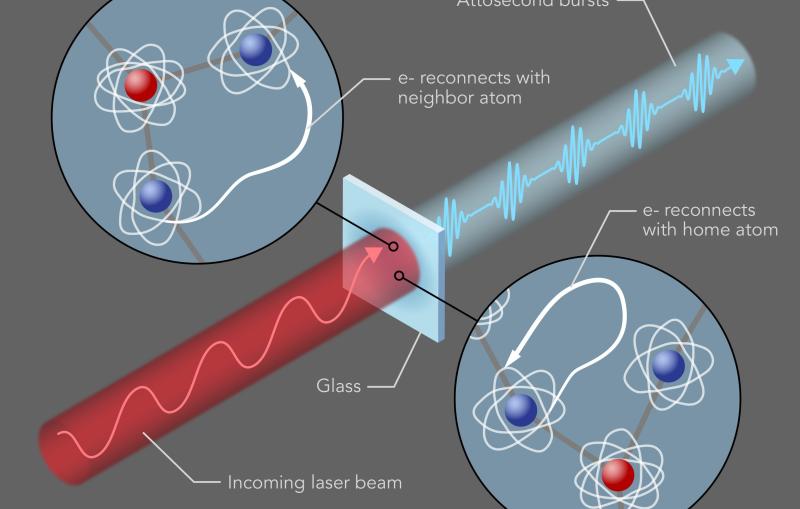
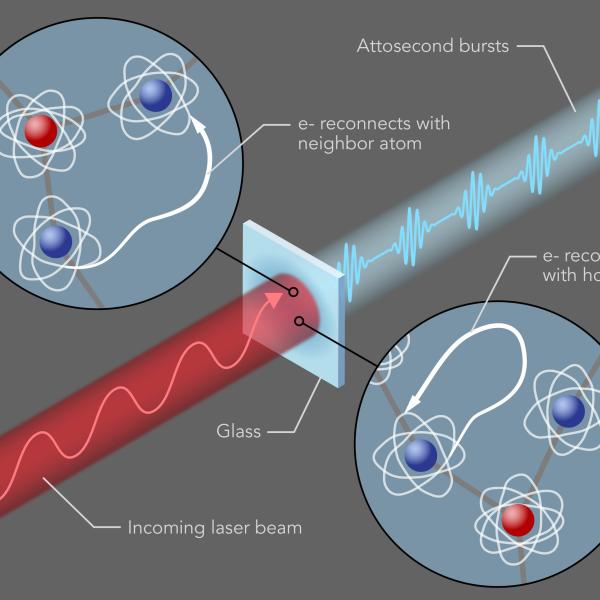
This novel method could shrink the equipment needed to make laser pulses billionths of a billionth of a second long for studying ultra-speedy electron...

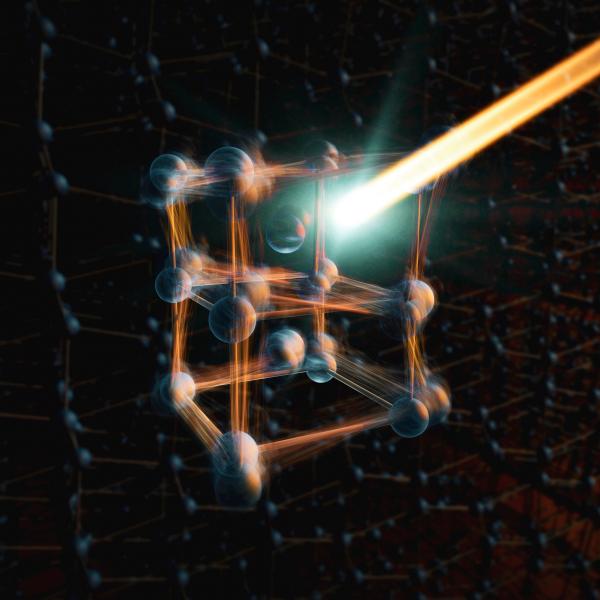
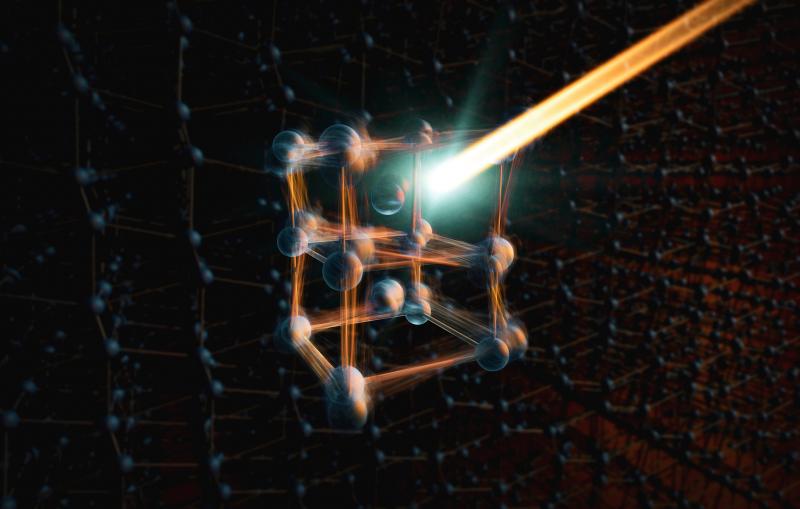
In this illustration, a near-infrared laser beam hits a piece of ordinary glass and triggers a process called high harmonic generation
Feature

The early career award from SLAC’s X-ray laser recognizes Kjaer’s work in ultrafast X-ray science.

photo of Kasper Kjaer in Panofsky Auditorium
News Release

SLAC’s ultrafast “electron camera” reveals unusual atomic motions that could be crucial for the efficiency of next-generation perovskite solar cells.

UED Perovskites
Feature

The research team was able to watch energy from light flow through atomic ripples in a molecule. Such insights may provide new ways to...

View of the The X-ray Pump Probe instrument at SLAC’s Linac Coherent Light Source.
Feature

A new X-ray laser technique allows scientists to home in on these single-electron triggers to better understand organic molecules that respond to light, including...

Thymine
Feature

Aaron Lindenberg, associate professor at Stanford and SLAC, talks about how he combines X-ray and electron techniques to understand and engineer novel materials.

Feature

PULSE scientist Amy Cordones-Hahn describes her work on chemical reactions that turn sunlight into useable energy.