New technologies

Related Content

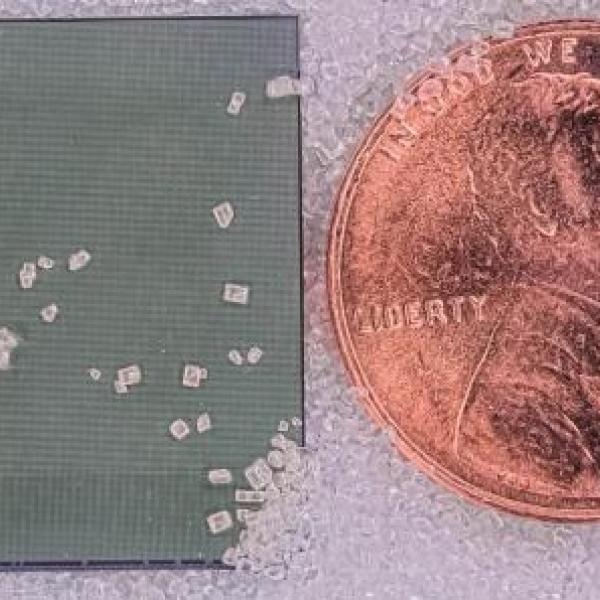
Argonne, SLAC researchers designed a chip that compresses and processes detector data instantly, letting scientists analyze results and steer experiments as they happen.

Silicon chip that integrates both imaging sensors and data compression, shown next to a U.S. penny

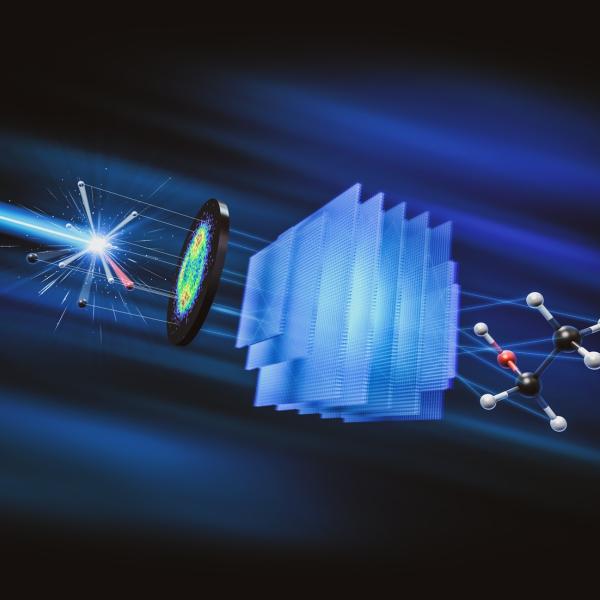
SLAC researchers and collaborators trained a neural network that can use ion momentum to work backward and predict the pre-blast geometry of a molecule.

Illustration of AI used for the reconstruction of the structure of molecules blown up by X-ray pulses

SLAC experts discuss how microelectronics impacts our lives and where the future lies in this Q&A.

Angelo Dragone and Paul McIntyre

Salleo sees strength in the big picture and minute details of the people, tools and partnerships at SLAC.

Portrait of Alberto Salleo
Modern particle accelerator control rooms are like busy air traffic control centers, where skilled operators juggle hundreds of interconnected and time-sensitive tasks to generate and shape high-energy particle beams. Control room tasks are increasingly performed with the support of AI...
Poster art for January 2026 public lecture

Surfing a plasma wave, electrons get an energy and brightness boost.

Illustration of electrons traveling through a plasma chamber

The SLAC team is developing digital twins – powered by AI and high-performance computing – to help quickly shape high-quality particle beams for the lab’s X-ray and ultrafast facilities.

hand pointing to digital twin