New technologies

Related Content

TID leverages its state-of-the-art scientific expertise in exploiting the electromagnetic spectrum and in advanced instrumentation to develop novel technologies.

Copper instrument

The research reveals the potential for machine learning in understanding the complex behavior of quantum materials.

machine learning

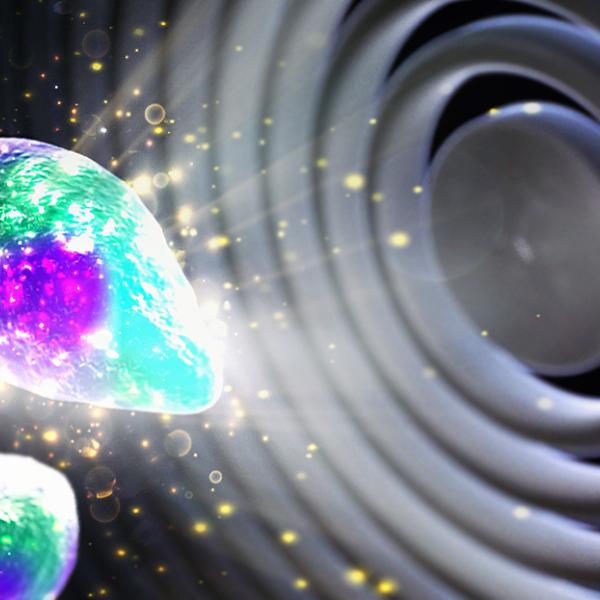
Scientists developed a groundbreaking technology that allows them to see sound waves and microscopic defects inside crystals, promising insights that connect ultrafast atomic motion to large-scale macroscopic behaviors.

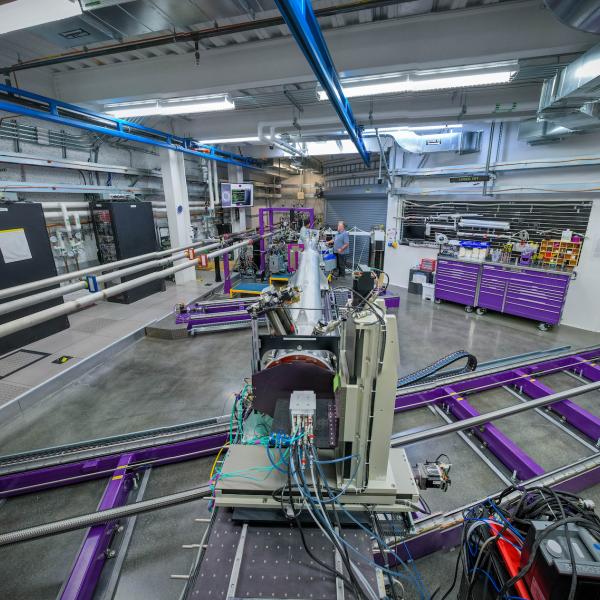
CXI hutch

With up to a million X-ray flashes per second, 8,000 times more than its predecessor, it transforms the ability of scientists to explore atomic-scale, ultrafast phenomena that are key to a broad range of applications, from quantum materials to clean...


LCLS-II first light

Analyzing X-ray movies with computer vision reveals how nanoparticles in a lithium-ion battery electrode work.

Illustration of battery electrode nanoparticles being imaged by X-rays
SLAC EXPERTS

Adeyemi Adesanya

Areas of research: S3DF (SLAC Shared Science Data Facility); evaluating technologies for massive scale analytics; forming partnerships with technology providers; developing and recruiting computing skills and competencies; supporting science users’ requirements and operational issues; creating business models and technology roadmaps...

Portrait of Adeyemi Adesanya
Past Event · Seminars and conferences

SLAC Workshop on the Future of Nano/Microelectronics

Invited speakers from national labs, academia, and industry, will describe their thoughts on the future of nano/microelectronics.

SLAC Workshop on the Future of Nano/Microelectronics May 25-26, 2023

SLAC researcher Sadasivan Shankar talks about a new environmental effort starting at the lab – building a roadmap that will help researchers improve the energy efficiency of computing, from devices like cellphones to artificial intelligence.

Sadasivan Shankar

Presented by Axel Levy.

public lecture poster image

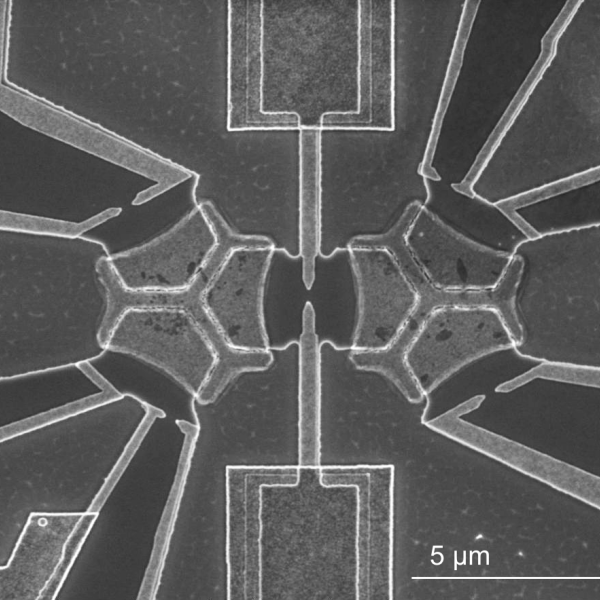
If scaled up successfully, the team's new system could help answer questions about certain kinds of superconductors and other unusual states of matter.

A grayscale image showing the outlines of a complex electrical device.