SLAC National Accelerator Laboratory
    • About

      Learn about our science, people, facilities and partners. Discover our history and vision for the future.

    • OUR STORY
      • Mission, vision, values
      • History
    • LAB OVERVIEW
      • SLAC at a glance
      • Lab organization
      • Our partnerships
    • OUR PEOPLE
      • Leadership
      • Meet our teams
      • Faculty
    • VISIT SLAC
      • Public tours
      • Contact us
    • Resources
      • Images, videos & more
      • Brochures & fact sheets
    • Connect With Us
      • Facebook
      • Flickr
      • Instagram
      • LinkedIn
      • Twitter
      • YouTube
    video

    Who we are

    We explore radically new ideas with an entrepreneurial mindset.

    Science and User Support Building to the left and Arrillaga Science Center building to the right from above the Main Quad at SLAC's campus.
    • Research

      Get an overview of research at SLAC: X-ray and ultrafast science, particle and astrophysics, cosmology, particle accelerators, biology, energy and technology.

    • X-ray and Ultrafast science icon X-ray & ultrafast science

      Revealing nature’s fastest processes with X-rays, lasers and electrons

    • Physics of the universe science icon Physics of the universe

      Studying the particles and forces that knit the cosmos together

    • Advanced Accelerators science icon Advanced accelerators

      Building smaller, faster, more powerful accelerators for all

    • Science of life science icon Science of life

      Understanding the machinery of life at its most basic level

    • New technologies science icon New technologies

      Inventing new tools for science and society

    • Energy sciences science icon Energy sciences

      Finding clean, sustainable solutions for the world’s energy challenges

    Spotlight

    SLAC science explained

    Cut through the jargon while exploring our research.

    SAGE campers have fun experimenting with a Van de Graff generator
    • Facilities & Centers

      Learn more about the places where science happens at SLAC: our major facilities, institutes and centers.

    • SCIENTIFIC FACILITIES
      • LCLS website

        Linac Coherent Light Source

      • SSRL website

        Stanford Synchrotron Radiation Lightsource

      • FACET-II website

        Facility for Advanced Accelerator Experimental Tests

      • CryoEM website

        Cryogenic Electron Microscopy

    • JOINT INSTITUTES & CENTERS
      • SIMES website

        Stanford Institute for Materials & Energy Science

      • KIPAC website

        Kavli Institute for Particle Astrophysics & Cosmology

      • PULSE website

        Stanford PULSE Institute

      • SUNCAT website

        Center for Interface Science & Catalysis

      • SLAC-Stanford Battery Center

    NSF-DOE Vera C. Rubin Observatory LSST

    SLAC & Stanford build the world’s largest digital camera for the Legacy Survey of Space and Time (LSST).

    A drone photo of Rubin Observatory while taking pictures during the First Look observing campaign
    • Work with Us

      Find a career, partner with us or apply to use our tools and facilities.

    • PARTNER WITH US
      • For industry partners
      • Research partnerships & tech transfer
      • Technology Innovation
    • CAREERS AT SLAC
      • Job openings
      • Internships
      • Life at SLAC
    • USE OUR FACILITIES

      Apply to become a user of our scientific research facilities and instruments.

    • COMING TO SLAC
    • BECOME A SUPPLIER

    Careers at SLAC

    Join our united workforce.

    SLAC staff in main quad
    • News & Events

      Get the latest news about the lab, our science and discoveries. Explore SLAC events and learn how to participate.

    • NEWS CENTER
      • News archive
      • Media resources
      • Images & videos
    • SLAC EVENTS
      • Public lectures
      • Scientific seminars
      • Community events
    • SYMMETRY MAGAZINE

      This joint publication of SLAC and Fermilab is your view into the world of particle physics.

    • EDUCATIONAL PROGRAMS
      • Educational tours
      • Resources for students & educators
    • Connect With Us
      • Facebook
      • Flickr
      • Instagram
      • LinkedIn
      • Twitter
      • YouTube
    Upcoming public lecture

    Reinventing the way we break down plastic waste

    Thursday, March 26, 2026
    7:00–8:00 p.m. PDT

    Public Lecture: Ozge Bozkurt
Filter search by
Staff portalStanford directoryComing to SLACResources for…
  1. Home
  2. …
Filter by research area
  • X-ray and ultrafast science (338)
  • Physics of the universe (282)
  • Energy sciences (96)
  • Science of life (86)
  • New technologies (58)
  • Advanced accelerators (41)
Filter by Type
  • News (1775)
  • Image (387)
  • Video (227)
  • Event (158)
  • Page (67)
  • Person (66)
  • resource (64)
  • News Collection (4)
Sort by
2748 results
Display Grid Display List
Feature

The Decades-long Search for the Higgs

It was a little over two years ago that the Large Hadron Collider kicked off its search for the Higgs boson.

July 5, 2012  ·  5 min read
The fundamental particles of the Standard Model
Feature

New Report Lays Out What Kids Should Know About Science

Theoretical physicist and SLAC Professor Emeritus Helen Quinn chaired a National Academy of Sciences committee that last week issued A Framework for K-12 Science...

July 28, 2011  ·  10 min read
SLAC Professor Emeritus Helen Quinn (Photo courtesy Helen Quinn.)
Feature

The Universe Through Fermi's Eyes

On June 11, 2008, what was then the Gamma-ray Large Area Space Telescope rode a Delta II rocket into low-Earth orbit. After two months...

August 22, 2013  ·  5 min read
Photo - The Fermi Gamma-ray Space Telescope launches June 11, 2008
Feature

Designing Chemical Catalysts: There's an App for That

A big reason for publishing scientific results is to inform others who can then use your data and conclusions to make additional discoveries, technologies...

January 19, 2012  ·  3 min read
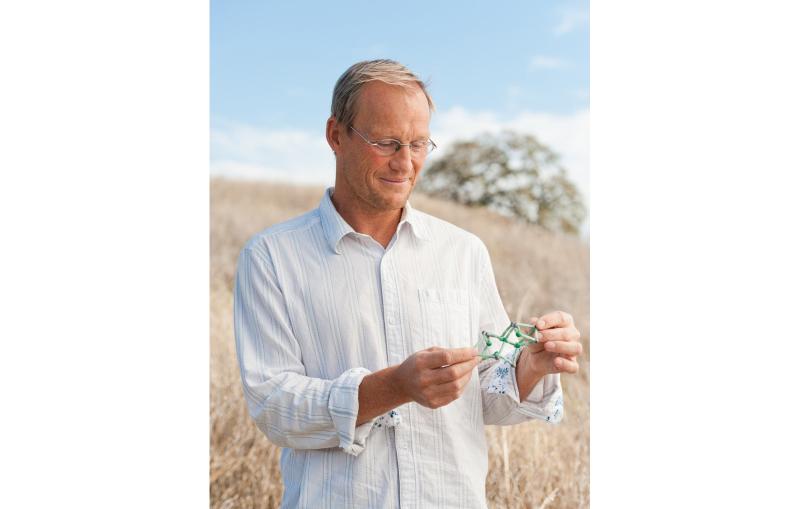
Jens Hummelshøj shows off CatApp
Feature

Physics Society Honors Beam Physicist for 'Outstanding' Doctoral Thesis

SLAC’s Daniel Ratner will be honored with the Outstanding Doctoral Thesis Research in Beam Physics award at the American Physical Society meeting in New...

May 24, 2012  ·  2 min read
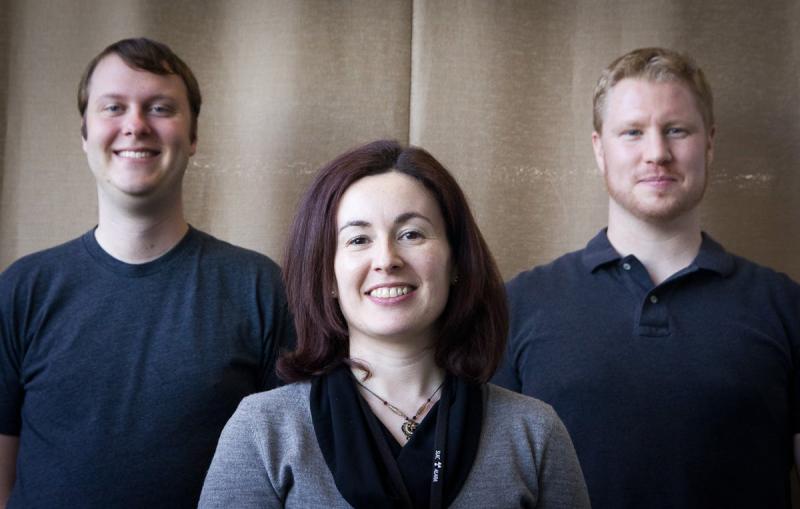
Daniel Ratner
Feature

Bienenstock, Michelson Elected to American Academy of Arts and Sciences

Two SLAC-affiliated professors were recently elected members of the American Academy of Arts and Sciences.

April 30, 2013  ·  2 min read
Photos of SLAC-affiliated professors Bienenstock (left) and Michelson (right)
News Release

X-ray Vision Exposes Aerosol Structures

Laser probes microscopic components of air pollution

June 27, 2012  ·  3 min read
Simulated Soot Particles (Image by Duane Loh and Andy Freeberg, SLAC National Accelerator Laboratory)
Feature

All Systems Go: A New High-energy Record for LCLS

John Hill watched with eager anticipation as controllers ramped up the power systems driving SLAC's X-ray laser in an attempt to achieve the record...

June 18, 2013  ·  3 min read
Photo - Linear accelerator tunnel at SLAC. (SLAC Multimedia Communications)
Feature

For Superionic Material, Smaller is Better

A material that could enable faster memory chips and more efficient batteries can switch between high and low ionic conductivity states much faster than...

February 7, 2013  ·  2 min read
Image - Artistic rendering of elements at atomic level.
Feature

SSI Celebrates 40 Years of Science, Learning and Friendship

Along with lectures, poster sessions, discussions, and the traditional SLAC vs. SSI soccer game, the 160 attendees from five continents who converged on SLAC...

August 2, 2012  ·  2 min read
Su Dong and Tom Rizzo display a SLAC Summer Institute birthday cake
Feature

SIMES Researcher Recognized for Work in Topological Insulators

Shoucheng Zhang, a condensed matter theorist with the Stanford Institute for Materials and Energy Sciences, a joint SLAC-Stanford institute, has been named one of...

December 12, 2012  ·  1 min read
Photo - Shoucheng Zhang
Feature

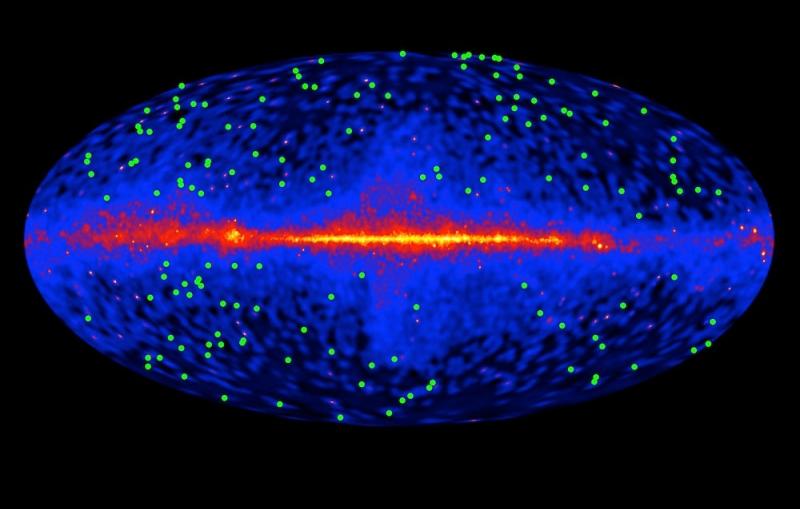
Fermi's Latest Gamma-ray Census Highlights Cosmic Mysteries

Every three hours, NASA's Fermi Gamma-ray Space Telescope scans the entire sky and deepens its portrait of the high-energy universe.

September 9, 2011  ·  1 min read
Image - Pie Chart of Gamma-ray Source Classes Found by Fermi. Pie Chart of Gamma-ray Source Classes Found by Fermi. (Image courtesy NASA/Goddard Space Flight Center)
  • Go to previous page
  • Page 1
  • …
  • Page 121
  • Page 122
  • Page 123
  • Page 124
  • Currently on page 125
  • Page 126
  • Page 127
  • Page 128
  • Page 129
  • …
  • Page 229
  • Go to next page

SLAC National Accelerator Laboratory 
2575 Sand Hill Road  
Menlo Park, CA 94025-7015  
650.926.3300

  • Coming to SLAC
  • Connect with us
  • Contact us
  • Facebook
  • Flickr
  • Instagram
  • LinkedIn
  • Twitter
  • YouTube

Sign up for our email

Monthly newsletter for cutting-edge science, SLAC milestones and events.

Sign up

Bold People
Visionary Science
Real Impact

We explore how the universe works at the biggest, smallest and fastest scales and invent powerful tools used by scientists around the globe.

  • About
    • Our story
    • Our people
    • Lab overview
    • Visit SLAC
    • Resources
    • Connect with us
  • Research
    • X-ray & ultrafast science
    • Advanced accelerators
    • New technologies
    • Physics of the universe
    • Science of life
    • Energy sciences
    • SLAC science explained
  • Facilities & centers
    • Scientific facilities
    • Joint institutes & centers
  • Work with us
    • Partner with us
    • Become a supplier
    • Use our facilities
    • Careers at SLAC
  • News & events
    • News center
    • Symmetry Magazine
    • Media resources
    • Events
    • Educational programs
    • Connect with us
  • Staff portal
  • Privacy policy
  • Accessibility
  • Vulnerability disclosure
  • A–Z index
  • Website feedback
Home
  • SLAC home
  • Maps & directions
  • Emergency info
  • Careers

© 2026 SLAC National Accelerator Laboratory is operated by Stanford University for the U.S. Department of Energy Office of Science.

Stanford University U.S. Department of Energy
Top Top
Back to top Back to top