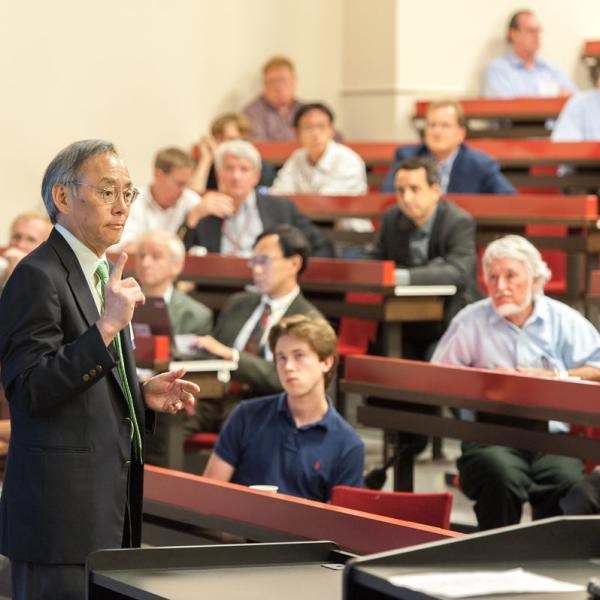
Theoretical physicist and SLAC Professor Emeritus Helen Quinn chaired a National Academy of Sciences committee that last week issued A Framework for K-12 Science Education, which “identifies the key scientific practices, concepts and ideas that all students should learn by...
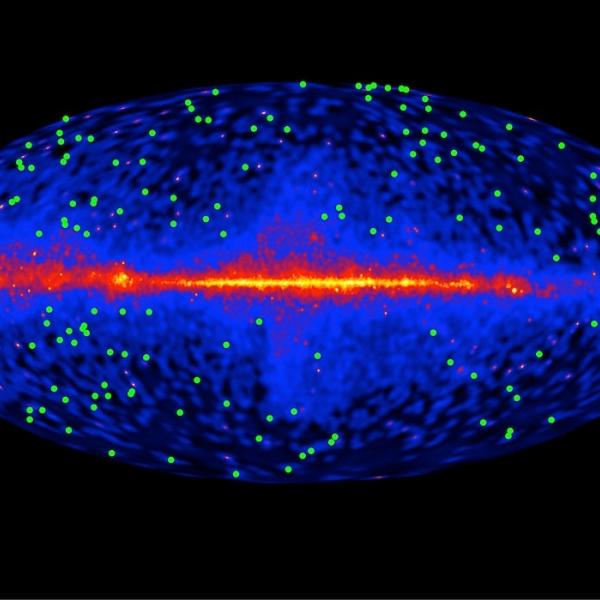
On June 11, 2008, what was then the Gamma-ray Large Area Space Telescope rode a Delta II rocket into low-Earth orbit. After two months of tests and checks and calibrations, on August 11, 2008, NASA declared GLAST open for business...
A big reason for publishing scientific results is to inform others who can then use your data and conclusions to make additional discoveries, technologies or products.
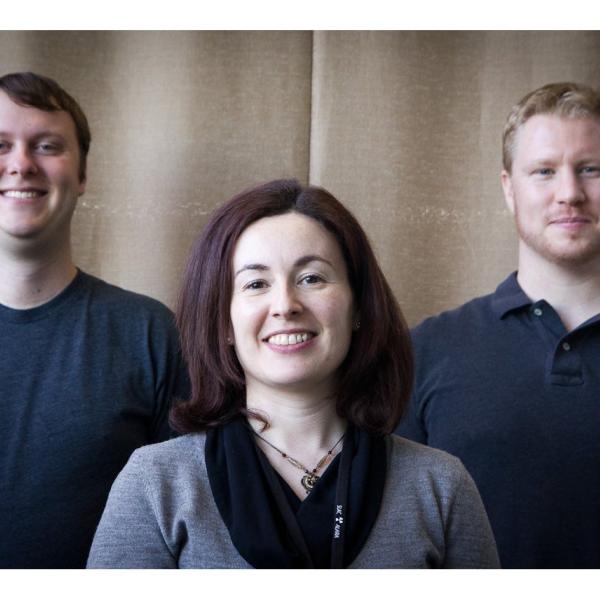
SLAC’s Daniel Ratner will be honored with the Outstanding Doctoral Thesis Research in Beam Physics award at the American Physical Society meeting in New Orleans this week.
John Hill watched with eager anticipation as controllers ramped up the power systems driving SLAC's X-ray laser in an attempt to achieve the record high energies needed to make his experiment a runaway success.
A material that could enable faster memory chips and more efficient batteries can switch between high and low ionic conductivity states much faster than previously thought, SLAC and Stanford researchers have determined. The key is to use extremely small chunks...
Along with lectures, poster sessions, discussions, and the traditional SLAC vs. SSI soccer game, the 160 attendees from five continents who converged on SLAC for this year's SLAC Summer Institute have been treated to something that happens only once every...
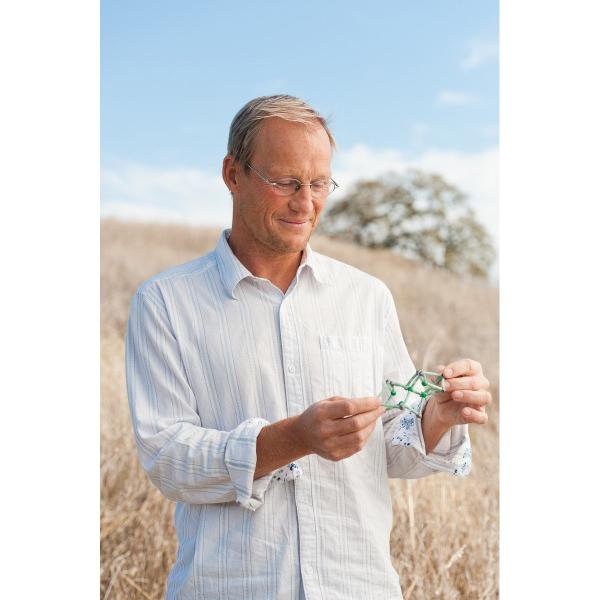
Shoucheng Zhang, a condensed matter theorist with the Stanford Institute for Materials and Energy Sciences, a joint SLAC-Stanford institute, has been named one of five recipients of a 2013 Physics Frontiers Prize for his work on topological insulators.