SLAC National Accelerator Laboratory
    • About

      Learn about our science, people, facilities and partners. Discover our history and vision for the future.

    • OUR STORY
      • Mission, vision, values
      • History
    • LAB OVERVIEW
      • SLAC at a glance
      • Lab organization
      • Our partnerships
    • OUR PEOPLE
      • Leadership
      • Meet our teams
      • Faculty
    • VISIT SLAC
      • Public tours
      • Contact us
    • Resources
      • Images, videos & more
      • Brochures & fact sheets
    • Connect With Us
      • Facebook
      • Flickr
      • Instagram
      • LinkedIn
      • Twitter
      • YouTube
    video

    Who we are

    We explore radically new ideas with an entrepreneurial mindset.

    Science and User Support Building to the left and Arrillaga Science Center building to the right from above the Main Quad at SLAC's campus.
    • Research

      Get an overview of research at SLAC: X-ray and ultrafast science, particle and astrophysics, cosmology, particle accelerators, biology, energy and technology.

    • X-ray and Ultrafast science icon X-ray & ultrafast science

      Revealing nature’s fastest processes with X-rays, lasers and electrons

    • Physics of the universe science icon Physics of the universe

      Studying the particles and forces that knit the cosmos together

    • Advanced Accelerators science icon Advanced accelerators

      Building smaller, faster, more powerful accelerators for all

    • Science of life science icon Science of life

      Understanding the machinery of life at its most basic level

    • New technologies science icon New technologies

      Inventing new tools for science and society

    • Energy sciences science icon Energy sciences

      Finding clean, sustainable solutions for the world’s energy challenges

    Spotlight

    SLAC science explained

    Cut through the jargon while exploring our research.

    SAGE campers have fun experimenting with a Van de Graff generator
    • Facilities & Centers

      Learn more about the places where science happens at SLAC: our major facilities, institutes and centers.

    • SCIENTIFIC FACILITIES
      • LCLS website

        Linac Coherent Light Source

      • SSRL website

        Stanford Synchrotron Radiation Lightsource

      • FACET-II website

        Facility for Advanced Accelerator Experimental Tests

      • CryoEM website

        Cryogenic Electron Microscopy

    • JOINT INSTITUTES & CENTERS
      • SIMES website

        Stanford Institute for Materials & Energy Science

      • KIPAC website

        Kavli Institute for Particle Astrophysics & Cosmology

      • PULSE website

        Stanford PULSE Institute

      • SUNCAT website

        Center for Interface Science & Catalysis

      • SLAC-Stanford Battery Center

    NSF-DOE Vera C. Rubin Observatory LSST

    SLAC & Stanford build the world’s largest digital camera for the Legacy Survey of Space and Time (LSST).

    A drone photo of Rubin Observatory while taking pictures during the First Look observing campaign
    • Work with Us

      Find a career, partner with us or apply to use our tools and facilities.

    • PARTNER WITH US
      • For industry partners
      • Research partnerships & tech transfer
      • Technology Innovation
    • CAREERS AT SLAC
      • Job openings
      • Internships
      • Life at SLAC
    • USE OUR FACILITIES

      Apply to become a user of our scientific research facilities and instruments.

    • COMING TO SLAC
    • BECOME A SUPPLIER

    Careers at SLAC

    Join our united workforce.

    SLAC staff in main quad
    • News & Events

      Get the latest news about the lab, our science and discoveries. Explore SLAC events and learn how to participate.

    • NEWS CENTER
      • News archive
      • Media resources
      • Images & videos
    • SLAC EVENTS
      • Public lectures
      • Scientific seminars
      • Community events
    • SYMMETRY MAGAZINE

      This joint publication of SLAC and Fermilab is your view into the world of particle physics.

    • EDUCATIONAL PROGRAMS
      • Educational tours
      • Resources for students & educators
    • Connect With Us
      • Facebook
      • Flickr
      • Instagram
      • LinkedIn
      • Twitter
      • YouTube
    Upcoming public lecture

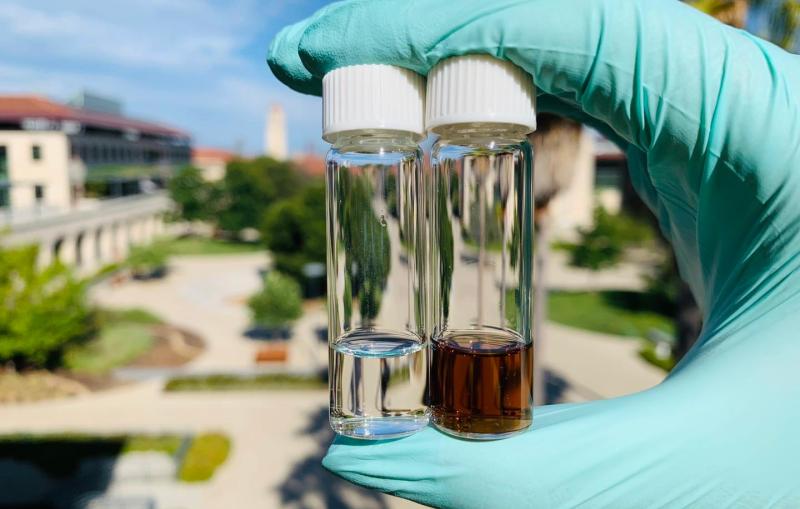
    Reinventing the way we break down plastic waste

    Thursday, March 26, 2026
    7:00–8:00 p.m. PDT

    Public Lecture: Ozge Bozkurt
Filter search by
Staff portalStanford directoryComing to SLACResources for…
  1. Home
  2. …
Filter by research area
  • X-ray and ultrafast science (179)
  • Physics of the universe (127)
  • Energy sciences (43)
  • Science of life (28)
  • New technologies (22)
  • Advanced accelerators (10)
Filter by Type
  • (-) News (1774)
  • Image (387)
  • Video (227)
  • Event (157)
  • Page (67)
  • Person (66)
  • resource (64)
  • News Collection (4)
Sort by
1774 results
Display Grid Display List
Clear all
Feature

Connecting the dots in the sky could shed new light on dark matter

Matching up maps of matter and light from the Dark Energy Survey and Fermi Gamma-ray Space Telescope may help astrophysicists understand what causes a...

January 13, 2020  ·  7 min read
DES-Fermi
News Brief

First detailed electronic study of new nickelate superconductor

Discovered at SLAC and Stanford, this new class of unconventional superconductors is starting to give up its secrets – including a surprising 3D metallic...

January 20, 2020  ·  3 min read
Graphic showing electronic structure of nickelate superconductor
Feature

A day in the life of an X-ray laser coach

Siqi Li develops connections with people and concepts while working on new technologies for accelerators.

January 29, 2020  ·  4 min read
Siqi Li headshot
Feature

Rust offers a cheap way to filter arsenic-poisoned water

In regions that lack the resources to treat the contaminated water, it can lead to disease, cancer, and even death.

January 30, 2020  ·  5 min read
Electrode tank
Feature

Could the next generation of particle accelerators come out of the 3D printer?

SLAC scientists and collaborators are developing 3D copper printing techniques to build accelerator components.

February 5, 2020  ·  6 min read
3D-printed copper components
News Brief

How iron carbenes store energy from sunlight – and why they aren’t better at it

These inexpensive photosensitizers could make solar power and chemical manufacturing more efficient. Experiments at SLAC offer insight into how they work.

February 6, 2020  ·  2 min read
Illustration of carbene reaction pathways
News Brief

Atom or noise? New method helps cryo-EM researchers tell the difference

Cryogenic electron microscopy can in principle make out individual atoms in a molecule, but distinguishing the crisp from the blurry parts of an image...

February 11, 2020  ·  2 min read
An overall image of the apoferritin molecule (left) and a small section (right)
Feature

Researchers show how electric fields affect a molecular twist within light-sensitive proteins

A better understanding of this phenomenon, which is crucial to many processes that occur in biological systems and materials, could enable researchers to develop...

February 12, 2020  ·  4 min read
photoexcitation
Feature

Victory for The Harker School of San Jose in 2020 SLAC Regional Science Bowl competition

Twenty-eight teams went head-to-head, testing their science knowledge and buzzer skills, for the chance to go to the nationals in April.

February 13, 2020  ·  3 min read
Students compete in 2020 SLAC Regional Science Bowl
News Brief

Researchers identify new culprit for Minamata mercury poisoning tragedy

The 1950s and ‘60s poisoning event was long attributed to methylmercury, but studies at SLAC suggest a different compound was to blame. The findings...

February 21, 2020  ·  3 min read
Illustration of toxic waste being dumped from a pipe, a molecule, and a map showing the location of Minamata, Japan.
News Brief

Radio waves detect particle showers in a block of plastic

A cheap technique could detect neutrinos in polar ice, eventually allowing researchers to expand the energy reach of IceCube without breaking the bank.

February 24, 2020  ·  2 min read
Radar echo
Feature
VIA Stanford Earth

A better way to build diamonds

With the right amount of pressure and surprisingly little heat, a substance found in fossil fuels can transform into pure diamond.

February 26, 2020
Scientist holding diamondoid molecule moldels
  • Go to previous page
  • Page 1
  • …
  • Page 81
  • Page 82
  • Page 83
  • Page 84
  • Currently on page 85
  • Page 86
  • Page 87
  • Page 88
  • Page 89
  • …
  • Page 148
  • Go to next page

SLAC National Accelerator Laboratory 
2575 Sand Hill Road  
Menlo Park, CA 94025-7015  
650.926.3300

  • Coming to SLAC
  • Connect with us
  • Contact us
  • Facebook
  • Flickr
  • Instagram
  • LinkedIn
  • Twitter
  • YouTube

Sign up for our email

Monthly newsletter for cutting-edge science, SLAC milestones and events.

Sign up

Bold People
Visionary Science
Real Impact

We explore how the universe works at the biggest, smallest and fastest scales and invent powerful tools used by scientists around the globe.

  • About
    • Our story
    • Our people
    • Lab overview
    • Visit SLAC
    • Resources
    • Connect with us
  • Research
    • X-ray & ultrafast science
    • Advanced accelerators
    • New technologies
    • Physics of the universe
    • Science of life
    • Energy sciences
    • SLAC science explained
  • Facilities & centers
    • Scientific facilities
    • Joint institutes & centers
  • Work with us
    • Partner with us
    • Become a supplier
    • Use our facilities
    • Careers at SLAC
  • News & events
    • News center
    • Symmetry Magazine
    • Media resources
    • Events
    • Educational programs
    • Connect with us
  • Staff portal
  • Privacy policy
  • Accessibility
  • Vulnerability disclosure
  • A–Z index
  • Website feedback
Home
  • SLAC home
  • Maps & directions
  • Emergency info
  • Careers

© 2026 SLAC National Accelerator Laboratory is operated by Stanford University for the U.S. Department of Energy Office of Science.

Stanford University U.S. Department of Energy
Top Top
Back to top Back to top