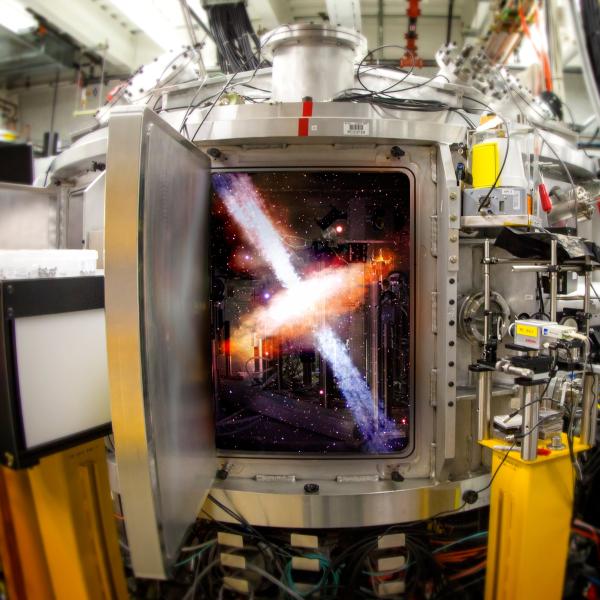
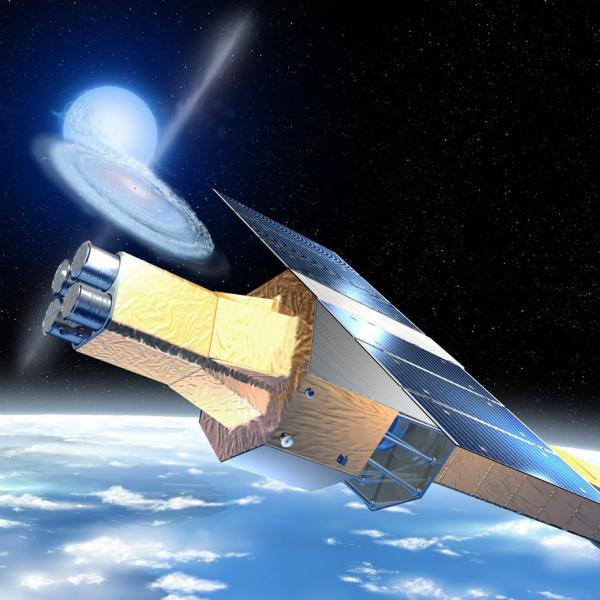
Computer simulations and lab experiments help researchers understand the violent universe and could potentially lead to new technologies that benefit humankind.
It will provide new insights into the physics of black holes, the formation of chemical elements, stars and galaxies, and the evolution of the universe itself.
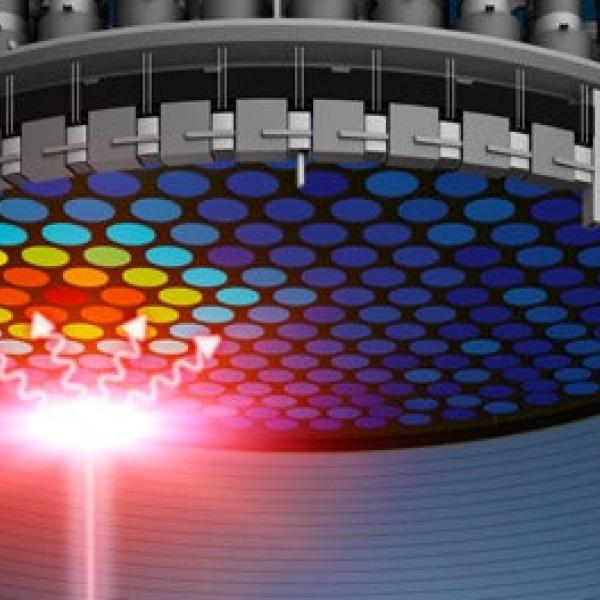
SLAC is ramping up its efforts to understand neutrinos – elusive fundamental particles whose properties may help researchers solve a number of cosmic mysteries.
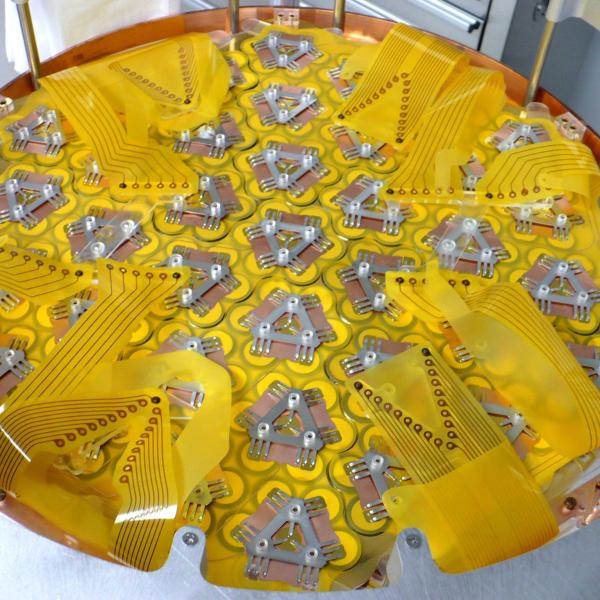
Researchers at SLAC are setting up a test stand and liquid xenon purification system for the future LZ experiment, which is scheduled to begin its search for dark matter particles in 2019.
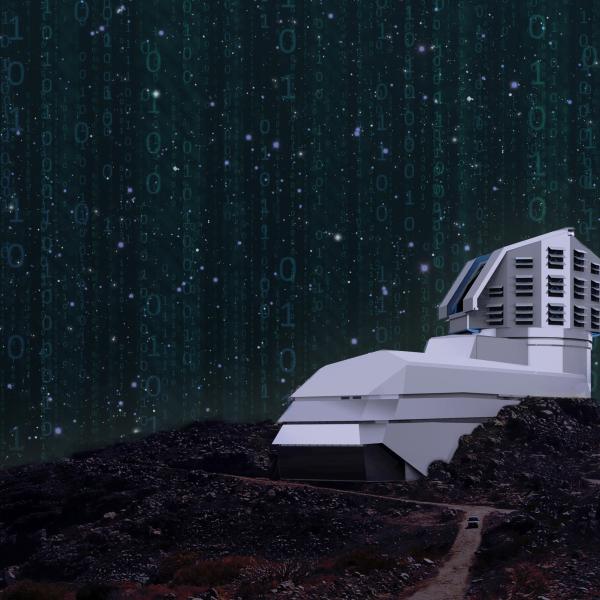
Two recent meetings at SLAC brought together experts working on computer hardware and software for LSST – a future telescope that will provide unprecedented views of the sky and may solve some of the biggest mysteries of the universe.
This event is free, open to all, and family-friendly hosted by Kavli Institute for Particle Astrophysics and Cosmology (KIPAC) at Stanford University, Science & Engineering Quad.
In celebration of Women’s History Month, the Department of Energy recently launched a new feature, Women @ Energy, which showcases DOE employees who work in the fields of science, technology, engineering and mathematics (STEM).
A new program led by SLAC and Sandia national laboratories connects investors and entrepreneurs with Department of Energy scientists to launch startups in key technology areas.