In a study that could rewrite biology textbooks, scientists have found the first known living organism that incorporates arsenic into the working parts of its cells.
SLAC and Stanford researchers have developed a breakthrough technique that quantifies energy dissipation in complex, small systems, offering insights into energy use, efficiency, and speed in computers and other devices.
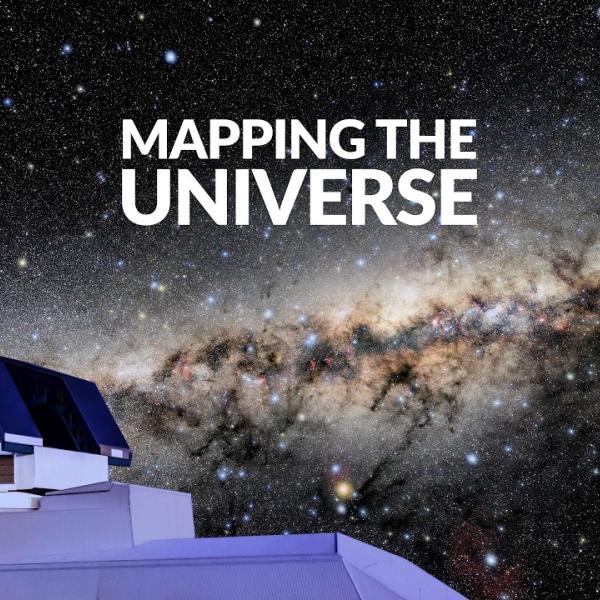
Cosmologists Josh Frieman and Risa Wechsler look back on the Dark Energy Survey, sharing how it’s paving the way for Rubin Observatory to dig deeper into some of the universe’s darkest mysteries.
Pages from the Codex Climaci Rescriptus palimpsest from the Museum of the Bible in Washington, DC, were brought to the Stanford Synchrotron Radiation Lightsource to recover erased astronomical text, especially fragments from Hipparchus' star catalog.
Director, SLAC-Stanford Battery Center; Director, Precourt Institute for Energy; Professor of materials science and engineering and of energy science and engineering; Faculty Scientist, Stanford Institute for Materials and Energy Sciences (SIMES)
Areas of research: energy science; materials for energy; clean energy; sustainability; batteries; energy storage and conversion electrochemistry; redox chemistry; engineering; materials science; X-ray science; A.I. and machine learning
First peer-reviewed paper using data from SLAC-built LSST Camera identifies an asteroid, nearly the size of eight football fields, rotating every two minutes.
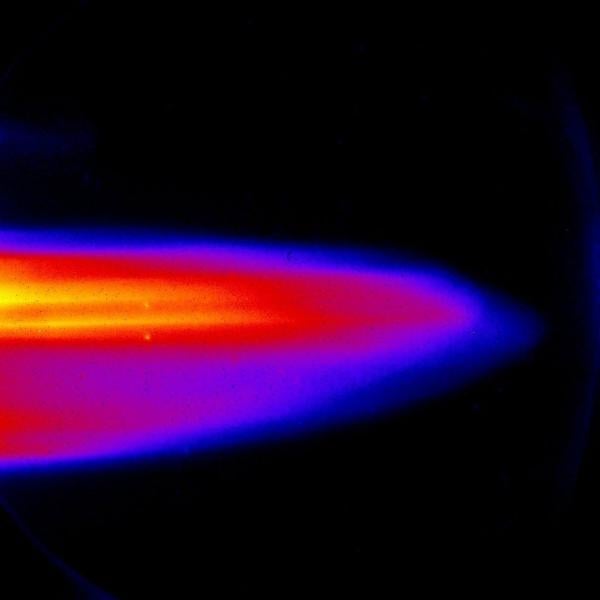
The team developed a platform that uses powerful X-rays from the lab’s LCLS X-ray laser to resolve for the first time the evolution of instabilities in high-density plasmas.
Once set in place atop a telescope in Chile, the 3,200-megapixel LSST Camera will help researchers better understand dark matter, dark energy and other mysteries of our universe.