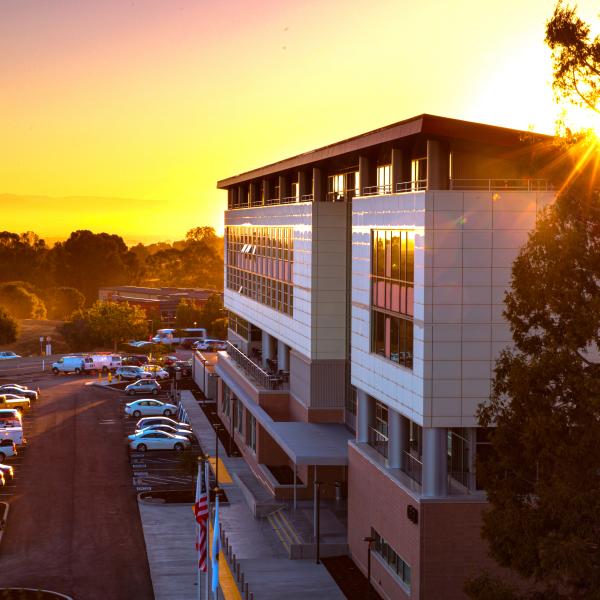
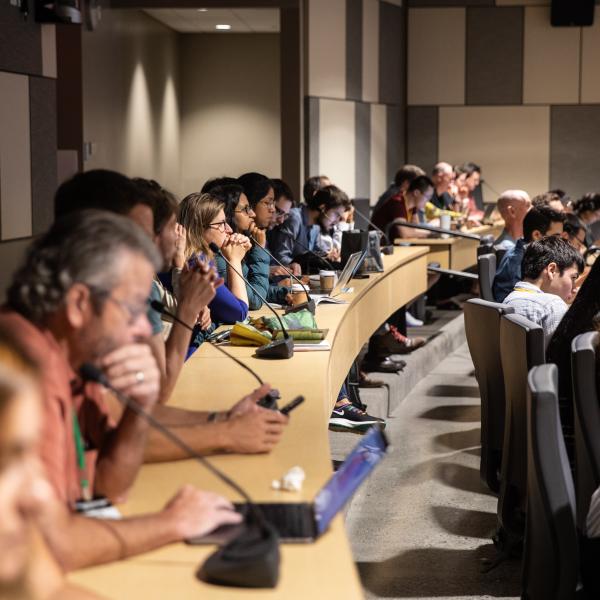
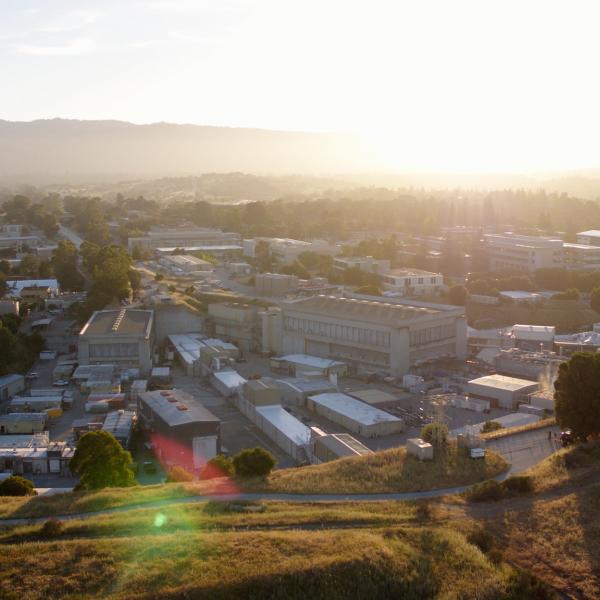
Every day, SLAC people can be seen collaborating across our beautiful campus. The Main Quad is busy during lunch with colleagues catching up, and our buildings offer spaces to think up new ideas. Explore SLAC through our articles or take...
Learn about SLAC’s senior leadership, directorates and core teams below. For an overview of our organizational structure, you can download the interactive PDF org chart.
The first cryomodule has arrived at SLAC. Linked together and chilled to nearly absolute zero, 37 of these segments will accelerate electrons to almost the speed of light and power an upgrade to the nation’s only X-ray free-electron laser facility.
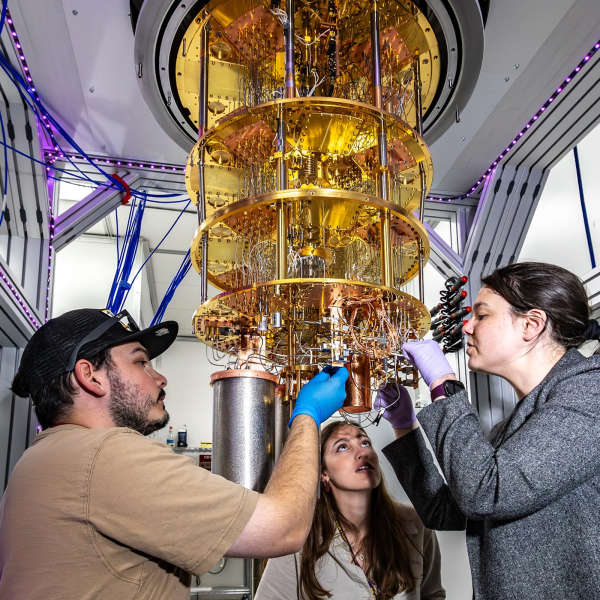
Driven by curiosity about nature, SLAC researcher Shannon Harvey develops quantum dots, a mass-producible type of qubit, as part of the Q-NEXT collaboration.
Nearly 200 guests attended a symposium on fundamental physics to celebrate the former deputy director’s numerous scientific contributions, which continue to have a tremendous impact on our understanding of the subatomic world.