



SLAC topics

Particle physics RSS feed

Working at the forefront of particle physics, SLAC scientists use powerful particle accelerators to create and study nature’s fundamental building blocks and forces, build sensitive detectors to search for new particles and develop theories that explain and guide experiments. SLAC's particle physicists want to understand our universe – from its smallest constituents to its largest structures.

Related links:
Physics of the universe
Elementary particle physics
Browse tagged content below

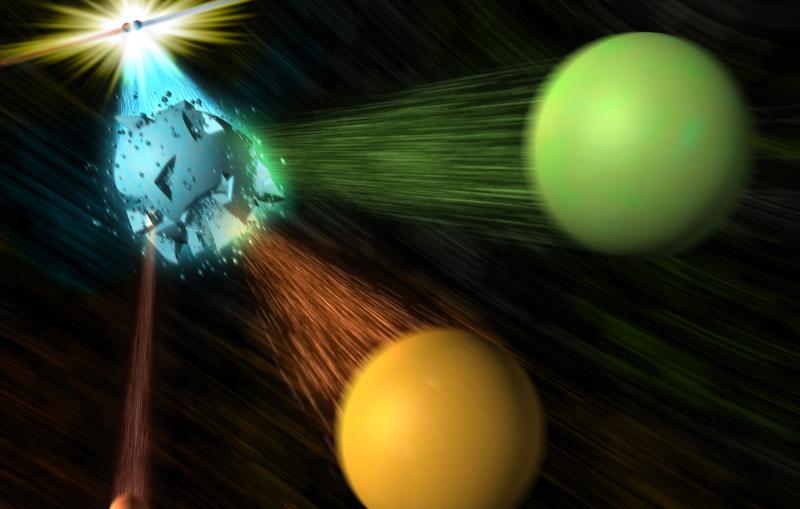
Particles collide in this illustration
Feature

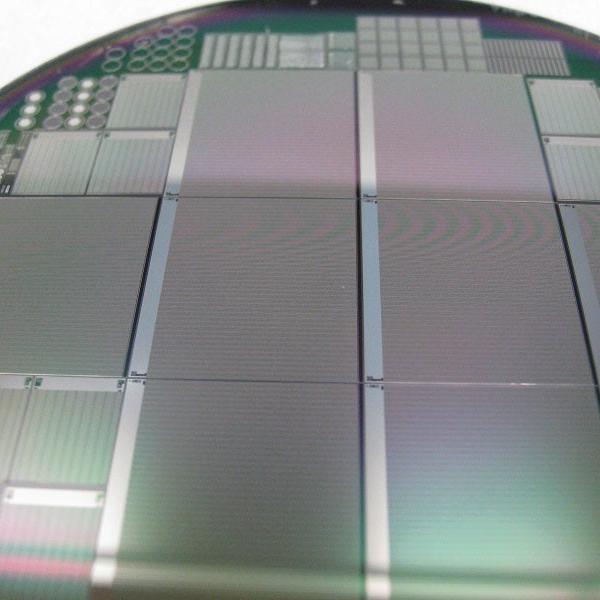
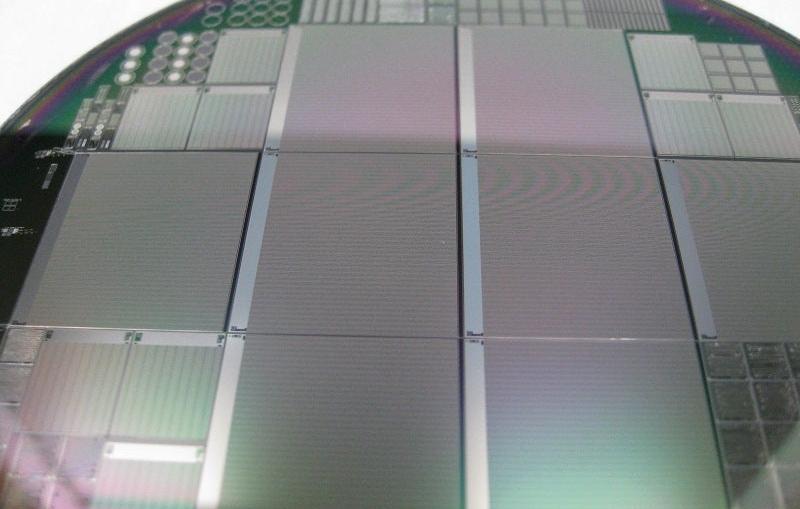
A sensor design first envisioned in 1995 by physicists and engineers at SLAC plays a starring role in a major ATLAS detector upgrade at...

Photo - Several 3-D sensors etched into a silicon wafer
Feature

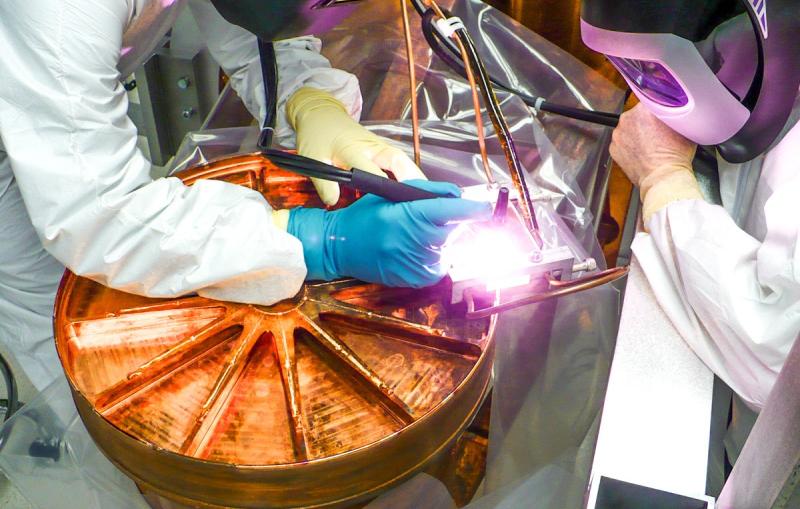
If it exists, a type of decay called neutrinoless double-beta decay will show that neutrinos are their own antiparticles and can help scientists determine...

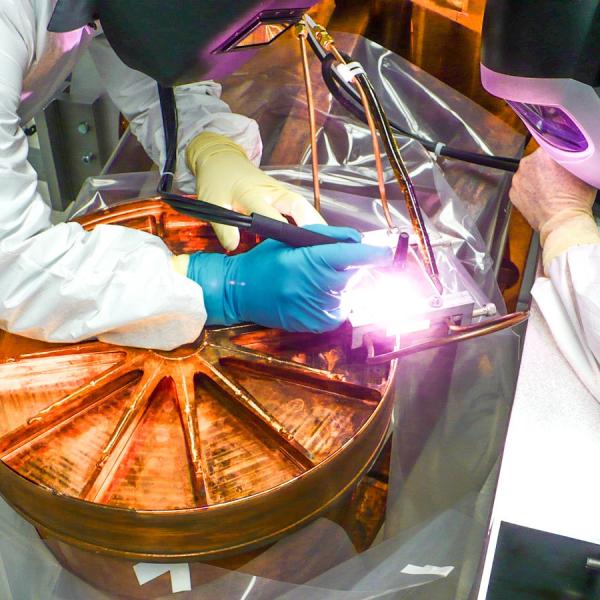
Photo – SLAC engineers weld the xenon vessel shut
Feature

After working with particle accelerators his entire professional career, Heather Rock Woods’ father placed himself in the path of a beam to fight cancer.

Feature

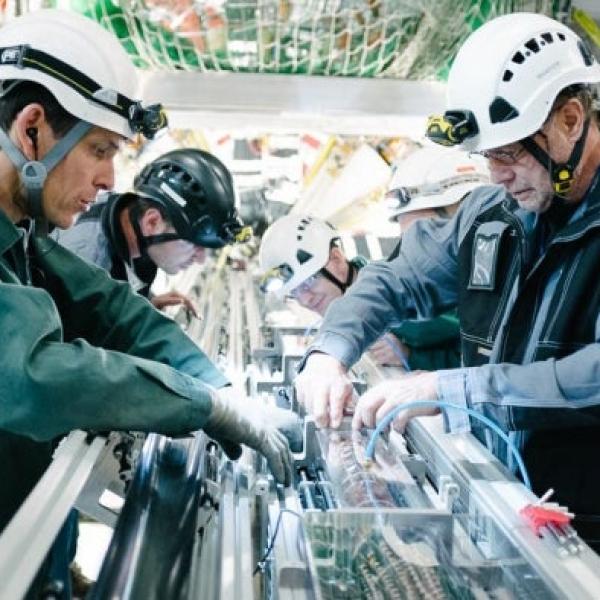
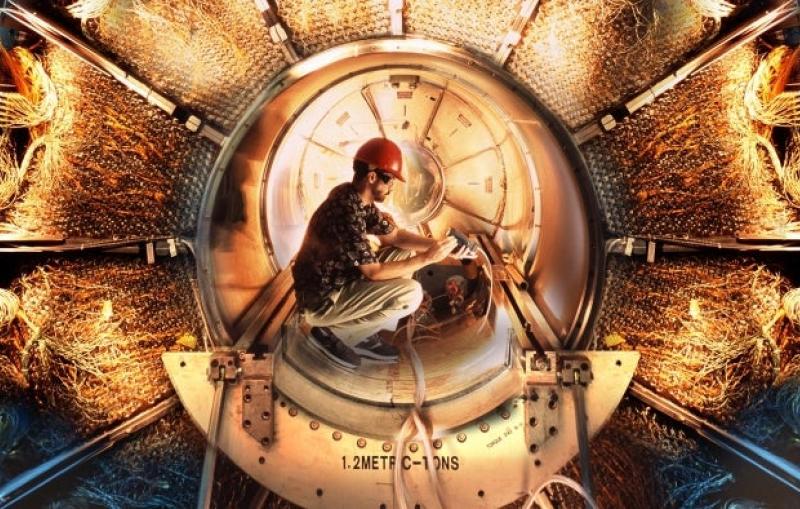
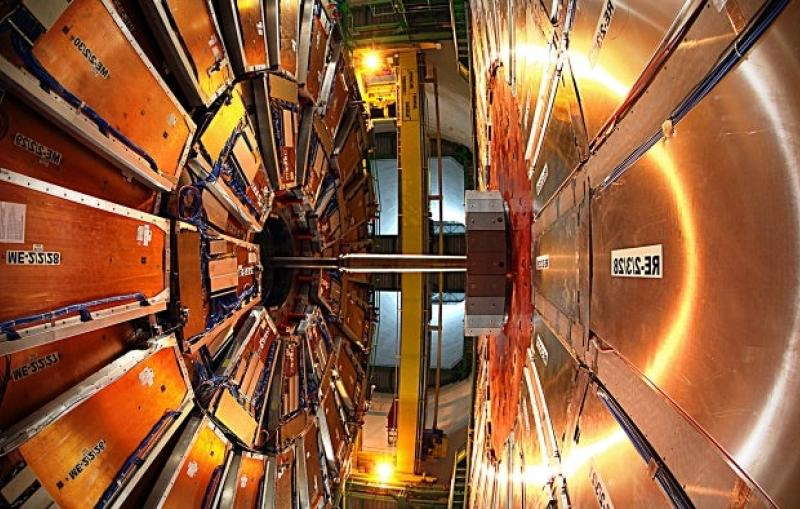
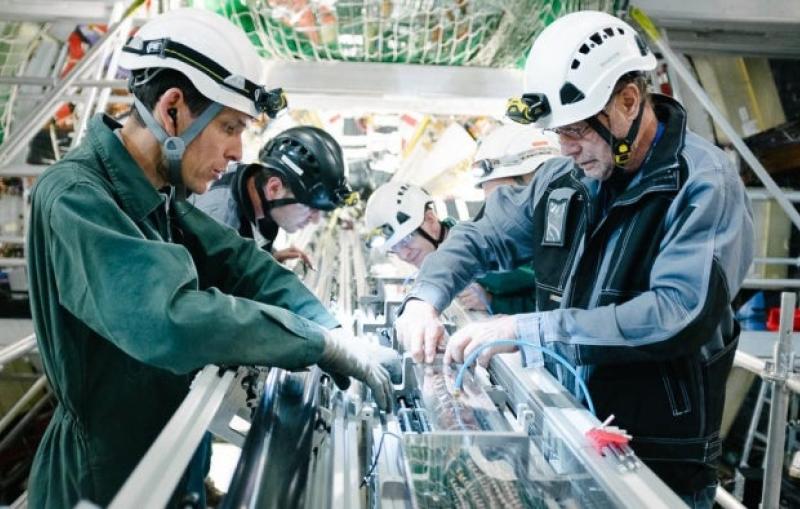
US scientists collaborated with an international team to install a new component in the core of the ATLAS detector at the Large Hadron Collider.

Feature

Physicist Rick Field discusses physics, Hollywood and a recent appearance by his sister, actress Sally Field, on the Late Show with David Letterman.

Feature

The Particle Physics Project Prioritization Panel’s report, released today, recommends a strategic path forward for US particle physics.

Feature

The Particle Physics Project Prioritization Panel’s recommendations will set the course for the future of particle physics in the United States.

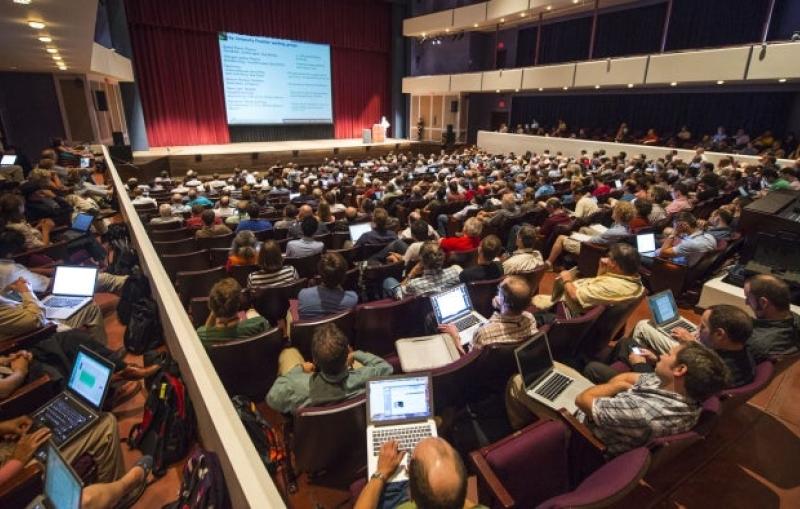
Snomass 2013 Opening
Feature

When the Large Hadron Collider restarts, it will be an even more powerful dark-matter-hunting machine.

Feature

In a few years, scientists will come out with a new map of a third of the sky, one that will go deeper and...

Feature

SLAC recently hosted a forward-looking group of theoretical and experimental particle physicists. Their purpose: Follow the science to determine what a post-LHC collider could...

Photo - Members of the Physics at 100 TeV workshop
Feature
VIA Symmetry Magazine

The 'Cosmos' connection

Science is no longer the wallflower who doesn’t get asked to the dance, writes physicist Glen Crawford in an essay about science outreach past...

Feature

A new trigger system will expand what ATLAS scientists can look for during high-energy collisions at the Large Hadron Collider.