



SLAC topics

Particle physics RSS feed

Working at the forefront of particle physics, SLAC scientists use powerful particle accelerators to create and study nature’s fundamental building blocks and forces, build sensitive detectors to search for new particles and develop theories that explain and guide experiments. SLAC's particle physicists want to understand our universe – from its smallest constituents to its largest structures.

Related links:
Physics of the universe
Elementary particle physics
Browse tagged content below

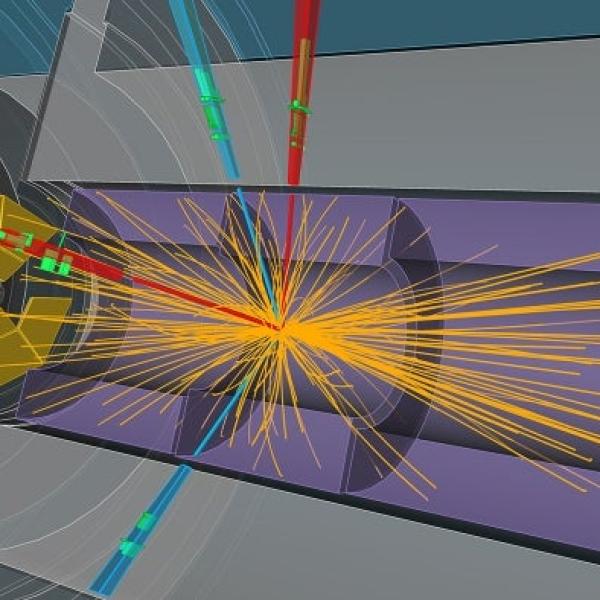
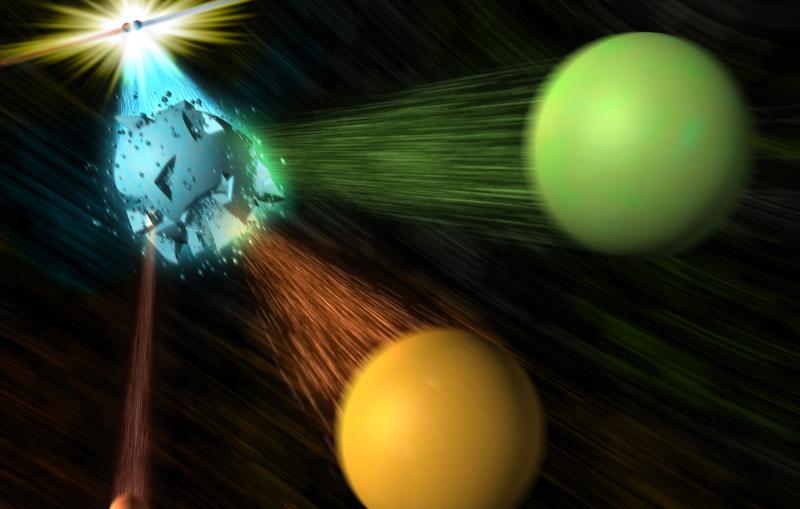
Particles collide in this illustration
Feature

SLAC is ramping up its efforts to understand neutrinos – elusive fundamental particles whose properties may help researchers solve a number of cosmic mysteries.

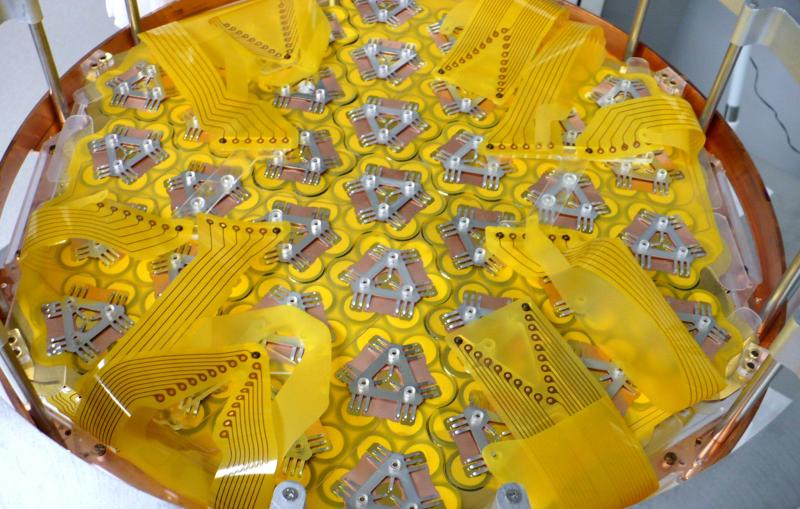
The EXO-200 underground detector.
Feature
VIA Symmetry Magazine

Do Protons Decay?

Is it possible that these fundamental building blocks of atoms have a finite lifetime?

Feature
VIA Symmetry Magazine

Where the Higgs Belongs

The Higgs doesn’t quite fit in with the other particles of the Standard Model of particle physics.

Feature

The CMS and ATLAS experiments combined forces to more precisely measure properties of the Higgs boson.

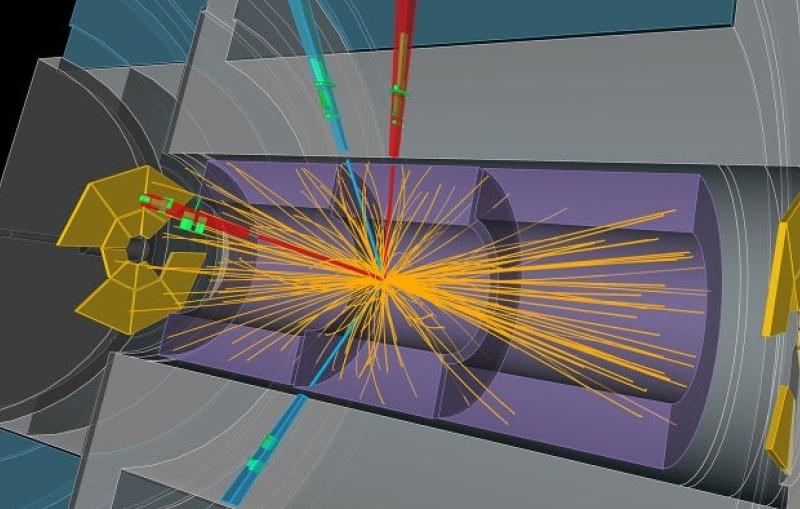
ATLAS experiment image
Feature

Theorists from the Institute for Advanced Study have proposed a way forward in the quest to test string theory.

Feature
VIA Symmetry Magazine

All About Supernovae

Exploding stars have an immense capacity to destroy—and create.

Feature
VIA Symmetry Magazine

The Age of the Universe

How can we figure out when the universe began?

Feature

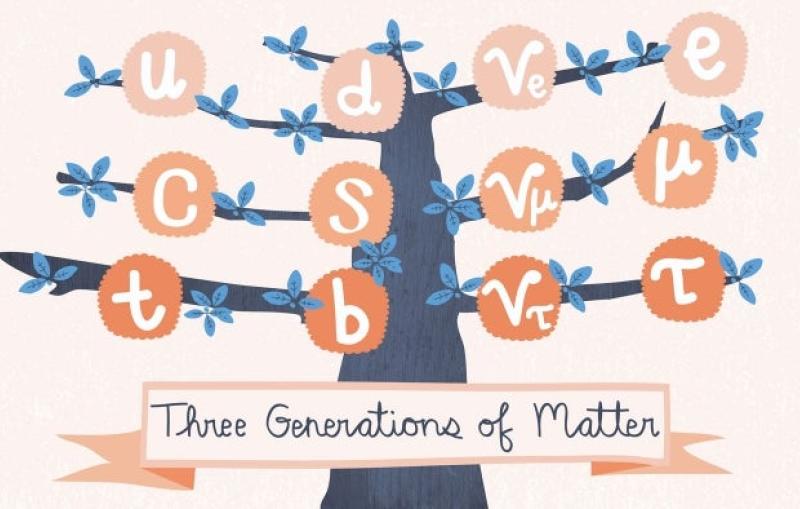
Why are there three almost identical copies of each particle of matter?

Feature

Observations of this kind could lead scientists to the source of ultra-high-energy cosmic rays.

Feature

Physicists discovered one type of Higgs boson in 2012. Now they’re looking for more.

Feature
VIA Symmetry Magazine

Is this the only universe?

Our universe could be just one small piece of a bubbling multiverse.

Feature

A researcher interviewed SLAC and Stanford administrators, scientists and Nobel laureates and sifted through archival materials to better understand the drivers for change in...

Image - Olof Hallonsten