

SLAC topics

Batteries RSS feed

Batteries and similar devices accept, store, and release electricity on demand. Scientists are using new tools to better understand the electrical and chemical processes in batteries to produce a new generation of highly efficient, electrical energy storage. 

Related links:   
Energy & sustainability news collection 
Energy sciences 
DOE explains...batteries

Browse tagged content

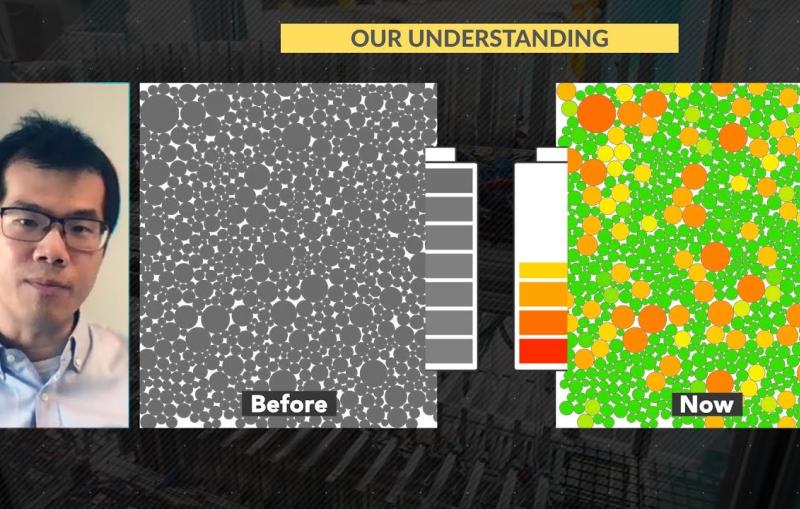
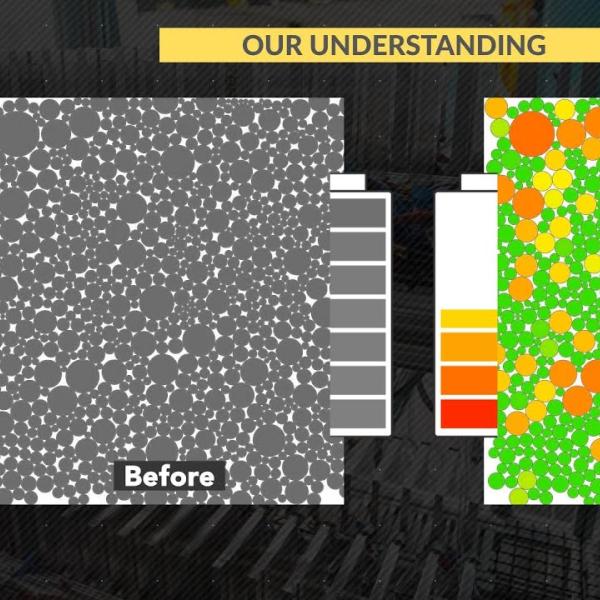
Illustration from SLAC Public Lecture series titled Improving batteries from the atoms up.
Photograph
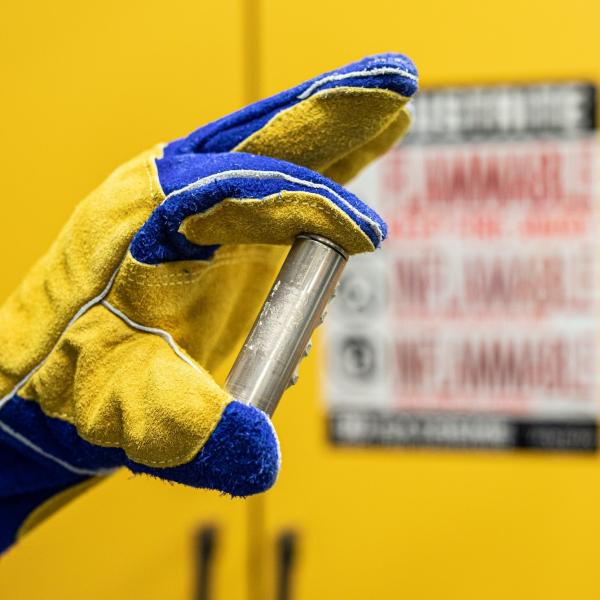
Staff engineer Bruis van Vlijmen holds a single Tesla battery cell inside the Battery Informatics Lab at SLAC.
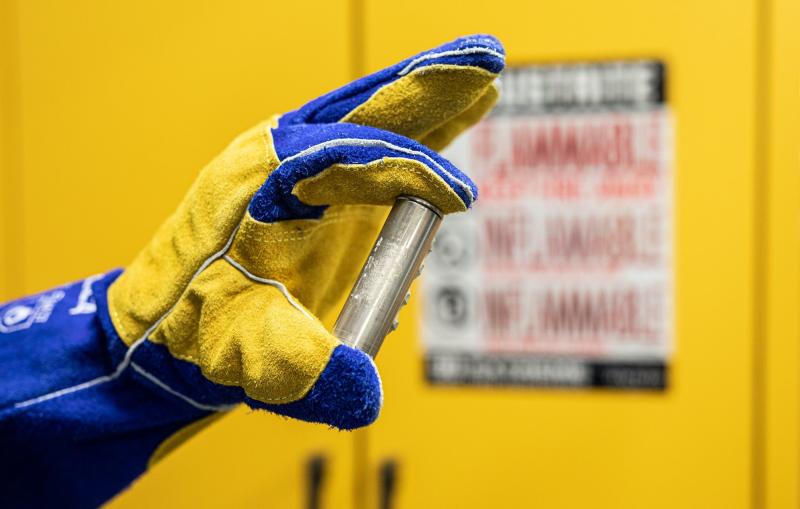
Staff engineer Bruis van Vlijmen holds a single battery cell inside the Battery Informatics Lab at SLAC
Photograph

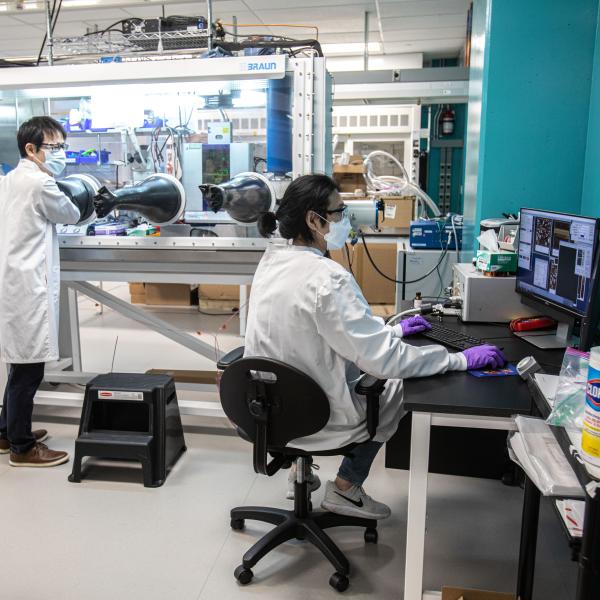
Stanford postdoctoral researcher Stephen Dongmin Kang, left, demonstrates how he works at a modular glovebox workstation while Stanford postdoc Jungjin Park works at a...
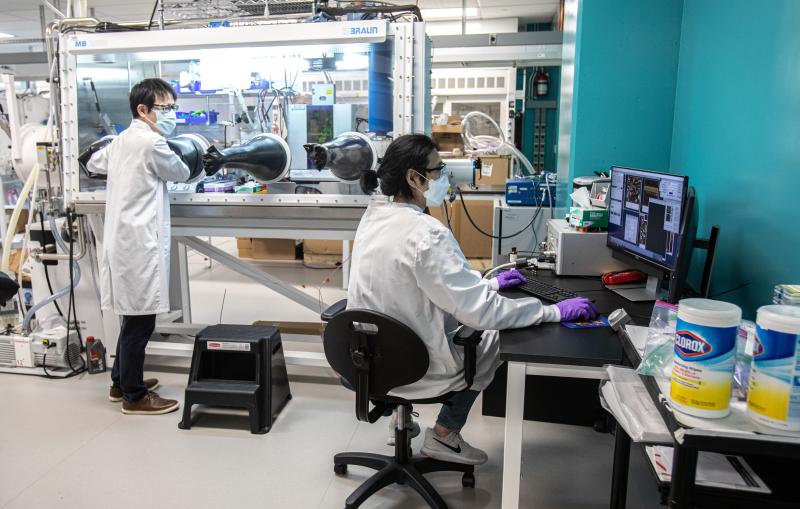
 Arrillaga Science Center battery research
Photograph

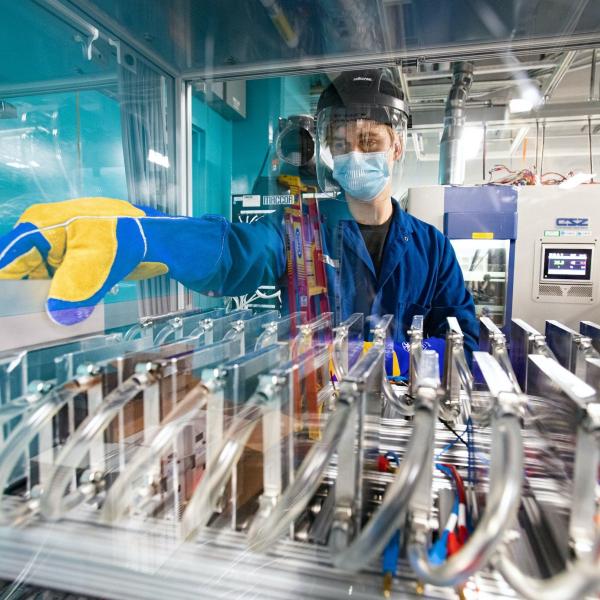
Staff engineer Bruis van Vlijmen demonstrates how he works in the Battery Informatics Lab at SLAC. 
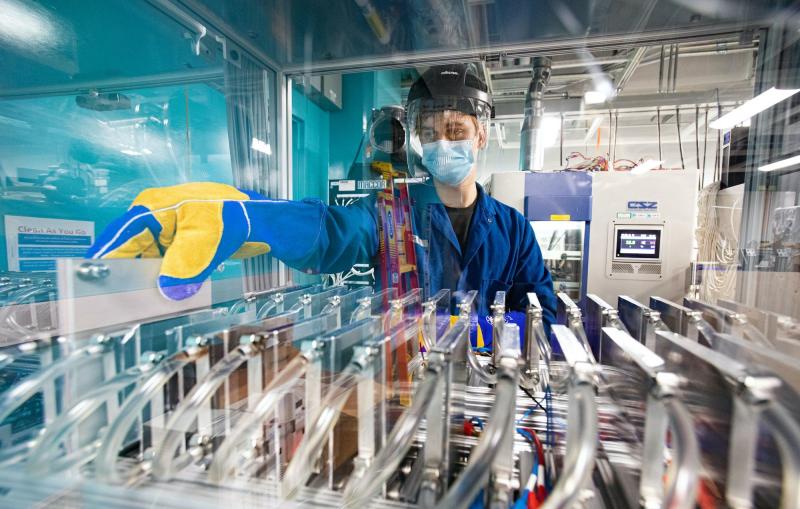
Staff engineer Bruis van Vlijmen demonstrates how he works in the Battery Informatics Lab at SLAC
Past Event

Presented by Yijin Liu. In batteries, energy is stored in tiny particles within the electrodes that individually breathe in and out and chemically evolve...

Public Lecture | Improving Batteries from the Atoms Up presented by Yijin Liu
Public Lecture Poster
Public Lecture poster: image of a battery
Feature

A pioneer in clean energy technology at Stanford and SLAC, he is one of eight scientists and engineers honored by the U.S. Department of...

Photo of Stanford and SLAC Professor Yi Cui
News Release

Adding polymers and fireproofing to a battery’s current collectors makes it lighter, safer and about 20% more efficient.

Conceptual illustration of advantages of redesigned current collector.
Feature

The results show how a particle’s surface and interior influence each other, an important thing to know when developing more robust batteries.

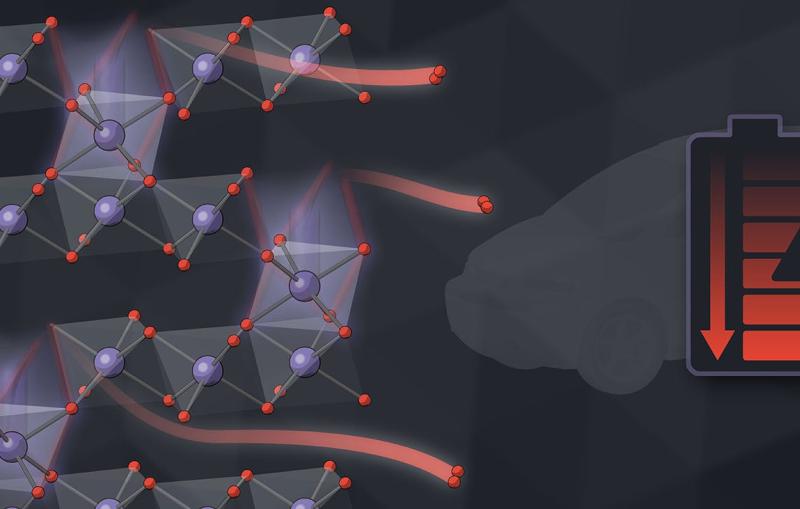
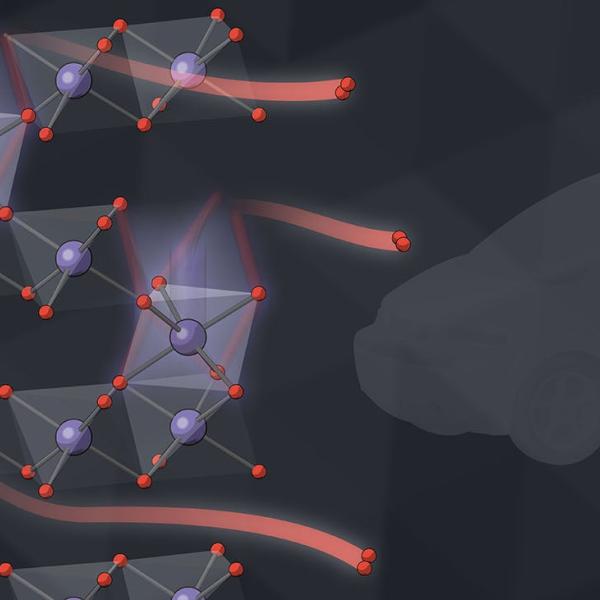
Closeup of an illustration showing how battery cathode material degrades
Feature

A new lithium-based electrolyte invented by Stanford University scientists could pave the way for the next generation of battery-powered electric vehicles.

Photo of vials containing new electrolyte for lithium metal batteries
News Brief

New machine learning methods bring insights into how lithium ion batteries degrade, and show it’s more complicated than many thought.

Particles in a nickel-manganese-cobalt cathode are highlighted using a new computer vision algorithm.
Feature

The coating significantly extends the battery's life and reduces the problems that cause batteries to burst into flames.

Stanford PhD students David Mackanic, left, and Zhiao Yu with their battery tester
Feature

This early-career scientist has undertaken challenging projects with significant implications for lithium-ion batteries.

Hans-Georg Steinrück