SLAC topics

Advanced accelerator R and D RSS feed

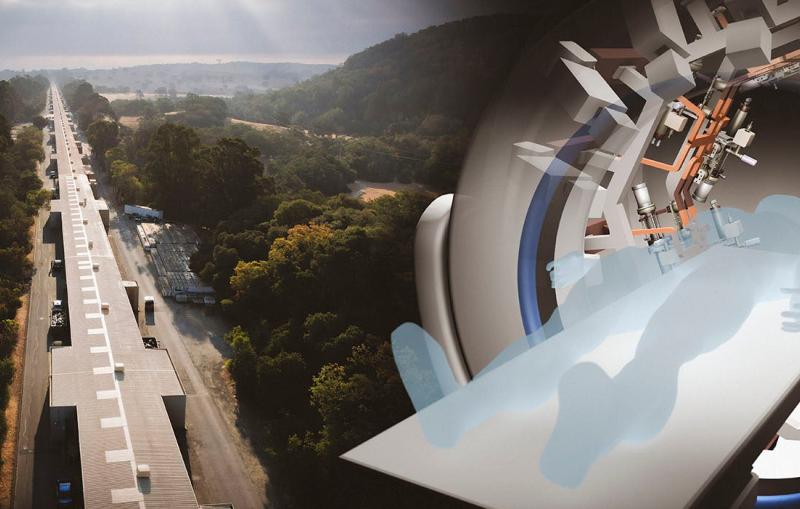
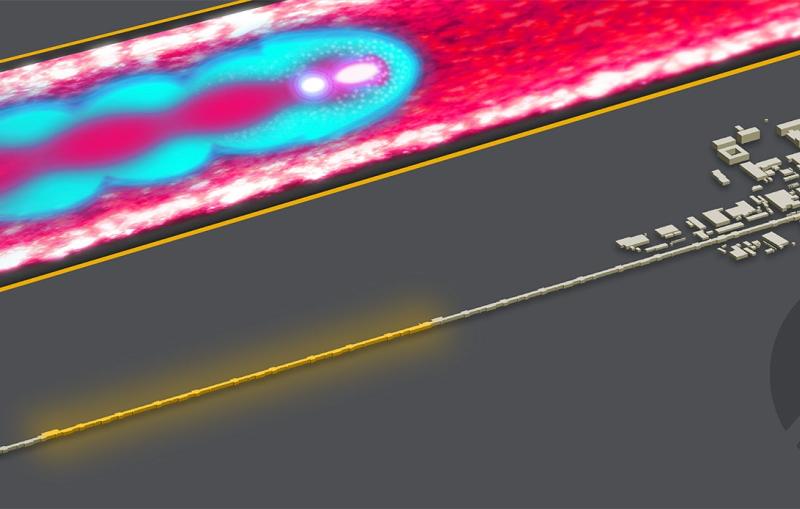
New technologies, such as "plasma wakefield" accelerators, can boost electrons to very high energies in very short distances. This could lead to linear accelerators that are 100 times more powerful, boosting electrons to a given energy in one hundredth the distance. 

Related link: Advanced accelerators

Browse tagged content below

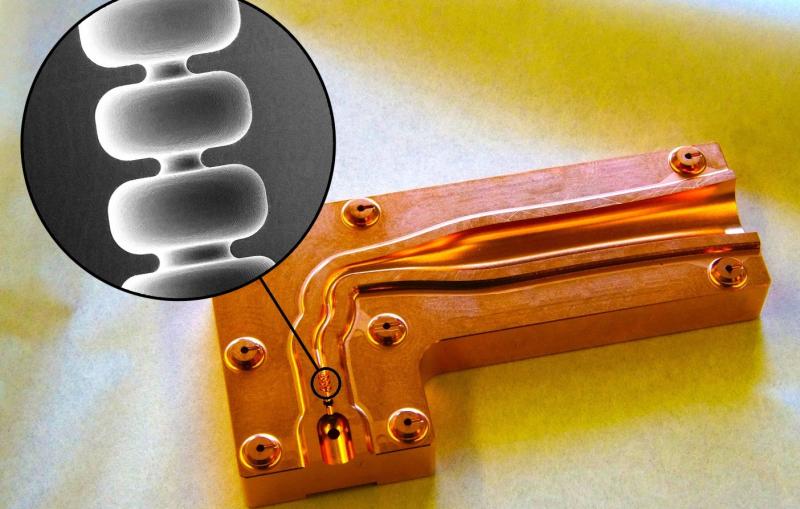
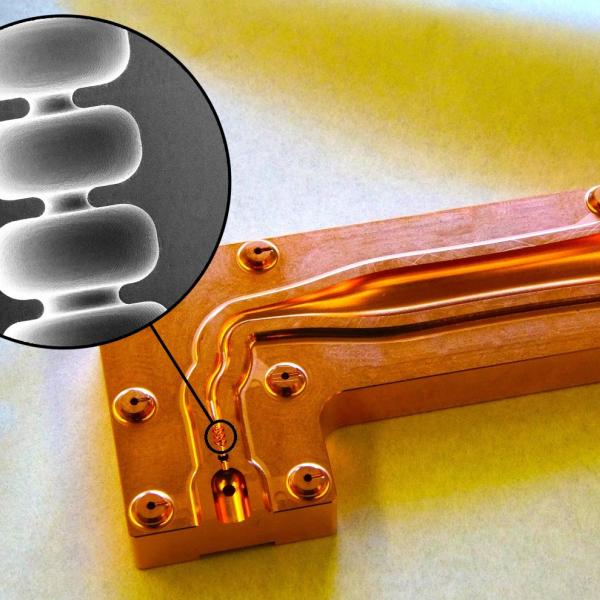
This image, magnified 25,000 times, shows a section of an accelerator-on-a-chip.
Animation
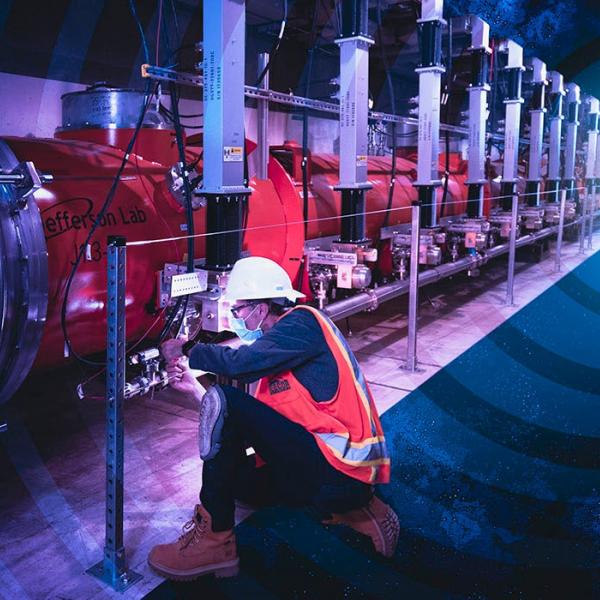
Now that the cavities have been cooled, the next step is to pump them with more than a megawatt of...
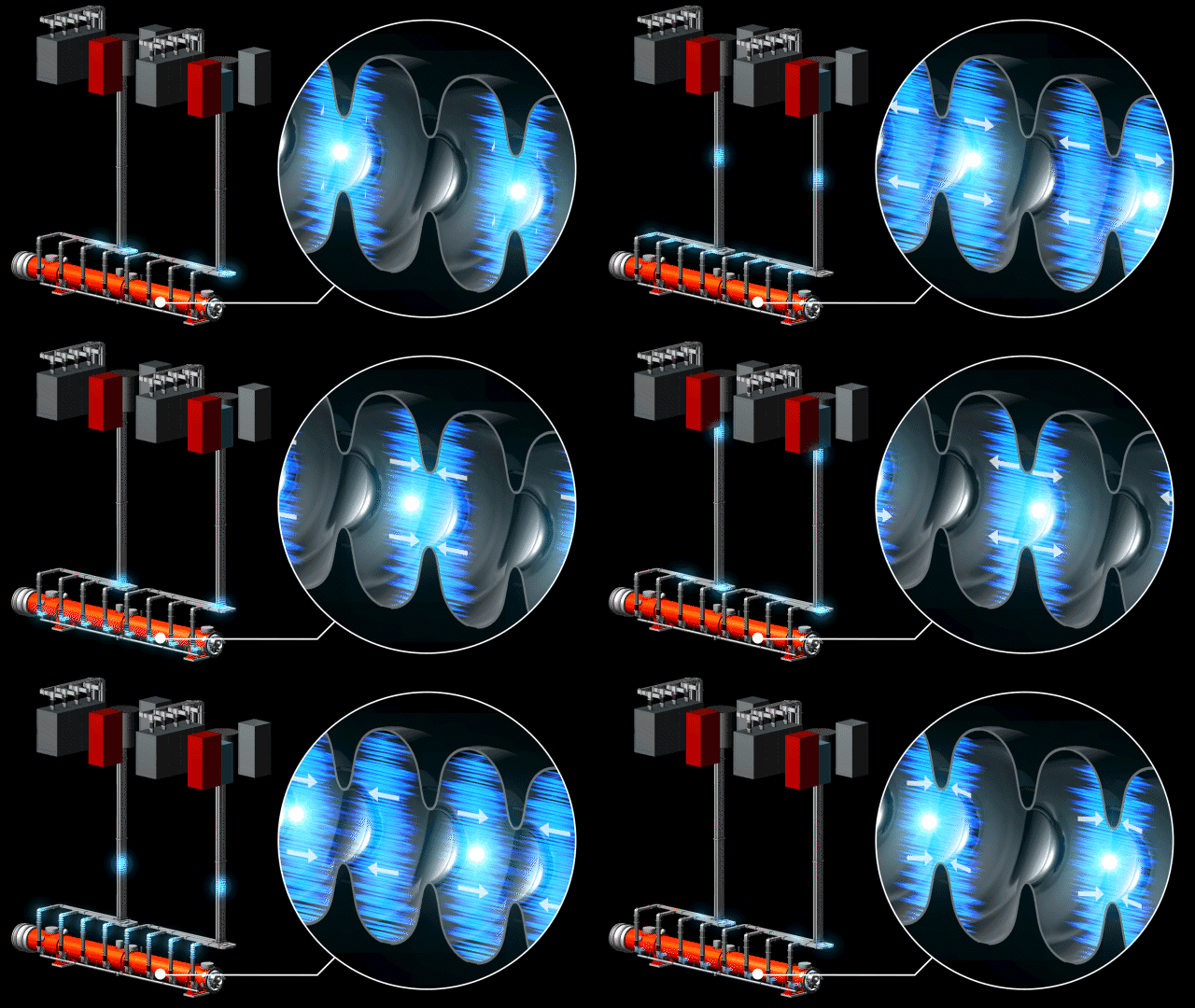
Cryomodule cavity animation
Feature

The leaders of SLAC's Technology Innovation Directorate discuss how their group supports the lab's most innovative projects.

TID senior managers
Feature

SLAC’s Matt Garrett and Susan Simpkins talk about tech transfer that brings innovations from the national lab to the people, including advances for medical...

Tech Transfer
Feature

Over the past few years, Kathleen Ratcliffe and Tien Fak Tan have worked together to help build the superconducting accelerator that will drive new...

SLAC's Tien Tan, left, and Kathleen Ratcliffe pose for a portrait outside a SLAC building.
Feature

From the invisible world of elementary particles to the mysteries of the cosmos, recipients of this prestigious award for early career scientists explore nature...

Panofsky fellows
News Brief

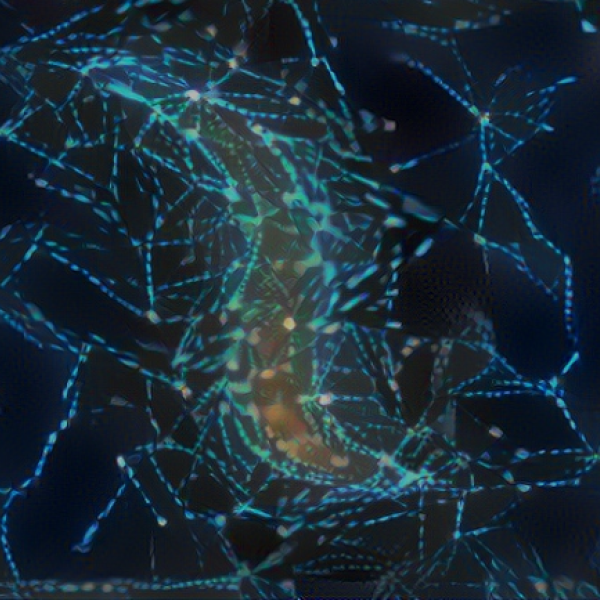
It can help operators optimize the performance of X-ray lasers, electron microscopes, medical accelerators and other devices that depend on high-quality beams.

Artistic representation of a neural network superimposed on an electron beam profile
News Release

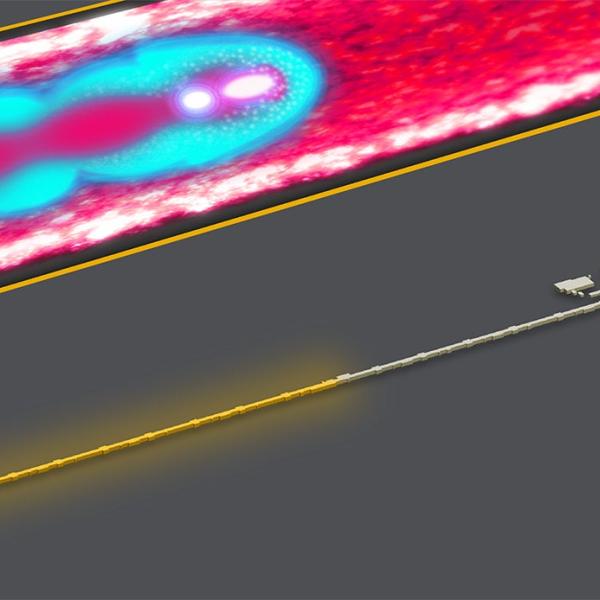
FACET-II will pave the way for a future generation of particle colliders and powerful light sources, opening avenues in high-energy physics, medicine, and materials...

FACET-II
News Brief

Institute of Electrical and Electronics Engineers recognizes his contributions to developing electron beams that power unique ‘electron cameras’ and could advance X-ray lasers.

Xijie Wang
News Brief

It uses terahertz radiation to power a miniscule copper accelerator structure.

Terahertz accelerator structure
Illustration
The second phase of a major upgrade project is now online at SLAC’S Linac Coherent Light Source (LCLS). On Saturday...
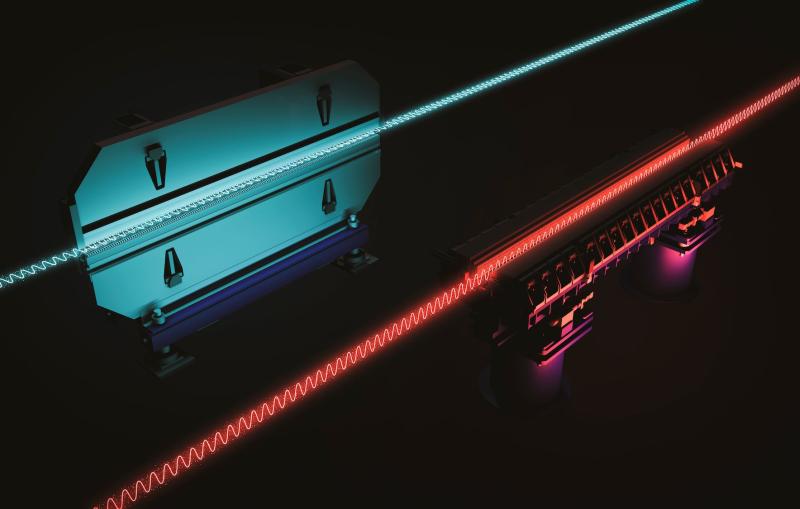
SXU
News Brief

This leap in capability will allow scientists to investigate quantum and chemical systems more directly than ever before.

SXU
Illustration

Klystrons are microwave generators. The klystrons used at SLAC are cousins to the microwave generators that heat up food in your microwave oven.

Klystron poster