SLAC National Accelerator Laboratory
    • About

      Learn about our science, people, facilities and partners. Discover our history and vision for the future.

    • OUR STORY
      • Mission, vision, values
      • History
    • LAB OVERVIEW
      • SLAC at a glance
      • Lab organization
      • Our partnerships
    • OUR PEOPLE
      • Leadership
      • Meet our teams
      • Faculty
    • VISIT SLAC
      • Public tours
      • Contact us
    • Resources
      • Images, videos & more
      • Brochures & fact sheets
    • Connect With Us
      • Facebook
      • Flickr
      • Instagram
      • LinkedIn
      • Twitter
      • YouTube
    video

    Who we are

    We explore radically new ideas with an entrepreneurial mindset.

    Science and User Support Building to the left and Arrillaga Science Center building to the right from above the Main Quad at SLAC's campus.
    • Research

      Get an overview of research at SLAC: X-ray and ultrafast science, particle and astrophysics, cosmology, particle accelerators, biology, energy and technology.

    • X-ray and Ultrafast science icon X-ray & ultrafast science

      Revealing nature’s fastest processes with X-rays, lasers and electrons

    • Physics of the universe science icon Physics of the universe

      Studying the particles and forces that knit the cosmos together

    • Advanced Accelerators science icon Advanced accelerators

      Building smaller, faster, more powerful accelerators for all

    • Science of life science icon Science of life

      Understanding the machinery of life at its most basic level

    • New technologies science icon New technologies

      Inventing new tools for science and society

    • Energy sciences science icon Energy sciences

      Finding clean, sustainable solutions for the world’s energy challenges

    Spotlight

    SLAC science explained

    Cut through the jargon while exploring our research.

    SAGE campers have fun experimenting with a Van de Graff generator
    • Facilities & Centers

      Learn more about the places where science happens at SLAC: our major facilities, institutes and centers.

    • SCIENTIFIC FACILITIES
      • LCLS website

        Linac Coherent Light Source

      • SSRL website

        Stanford Synchrotron Radiation Lightsource

      • FACET-II website

        Facility for Advanced Accelerator Experimental Tests

      • CryoEM website

        Cryogenic Electron Microscopy

    • JOINT INSTITUTES & CENTERS
      • SIMES website

        Stanford Institute for Materials & Energy Science

      • KIPAC website

        Kavli Institute for Particle Astrophysics & Cosmology

      • PULSE website

        Stanford PULSE Institute

      • SUNCAT website

        Center for Interface Science & Catalysis

      • SLAC-Stanford Battery Center

    NSF-DOE Vera C. Rubin Observatory LSST

    SLAC & Stanford build the world’s largest digital camera for the Legacy Survey of Space and Time (LSST).

    A drone photo of Rubin Observatory while taking pictures during the First Look observing campaign
    • Work with Us

      Find a career, partner with us or apply to use our tools and facilities.

    • PARTNER WITH US
      • For industry partners
      • Research partnerships & tech transfer
      • Technology Innovation
    • CAREERS AT SLAC
      • Job openings
      • Internships
      • Life at SLAC
    • USE OUR FACILITIES

      Apply to become a user of our scientific research facilities and instruments.

    • COMING TO SLAC
    • BECOME A SUPPLIER

    Careers at SLAC

    Join our united workforce.

    SLAC staff in main quad
    • News & Events

      Get the latest news about the lab, our science and discoveries. Explore SLAC events and learn how to participate.

    • NEWS CENTER
      • News archive
      • Media resources
      • Images & videos
    • SLAC EVENTS
      • Public lectures
      • Scientific seminars
      • Community events
    • SYMMETRY MAGAZINE

      This joint publication of SLAC and Fermilab is your view into the world of particle physics.

    • EDUCATIONAL PROGRAMS
      • Educational tours
      • Resources for students & educators
    • Connect With Us
      • Facebook
      • Flickr
      • Instagram
      • LinkedIn
      • Twitter
      • YouTube
    Upcoming public lecture

    Reinventing the way we break down plastic waste

    Thursday, March 26, 2026
    7:00–8:00 p.m. PDT

    Public Lecture: Ozge Bozkurt
Filter search by
Staff portalStanford directoryComing to SLACResources for…
  1. Home
  2. …
Filter by research area
  • X-ray and ultrafast science (341)
  • Physics of the universe (282)
  • Energy sciences (96)
  • Science of life (86)
  • New technologies (58)
  • Advanced accelerators (41)
Filter by Type
  • News (1778)
  • Image (387)
  • Video (227)
  • Event (158)
  • Page (67)
  • Person (66)
  • resource (64)
  • News Collection (5)
Sort by
2752 results
Display Grid Display List
Feature

EXO-200 Resumes Its Underground Quest

The upgraded experiment aims to discover if neutrinos are their own antiparticles.

May 3, 2016
News Release

Scientists watch bacterial sensor respond to light in real time

High-speed X-ray camera reveals ultrafast atomic motions at the root of organisms’ ability to turn light into biological function.

May 5, 2016  ·  3 min read
a protein from photosynthetic bacteria
Feature

SLAC’s Historic Linac Turns 50 and Gets a Makeover

The lab’s signature particle highway prepares to enter another era of transformative science as the home of the LCLS-II X-ray laser.

May 4, 2016  ·  6 min read
SLAC linear accelerator building at sunset
Feature
VIA Symmetry Magazine

Following LIGO’s Treasure Maps

Astronomers around the world are looking for visible sources of gravitational waves.

May 6, 2016
Feature
VIA Symmetry Magazine

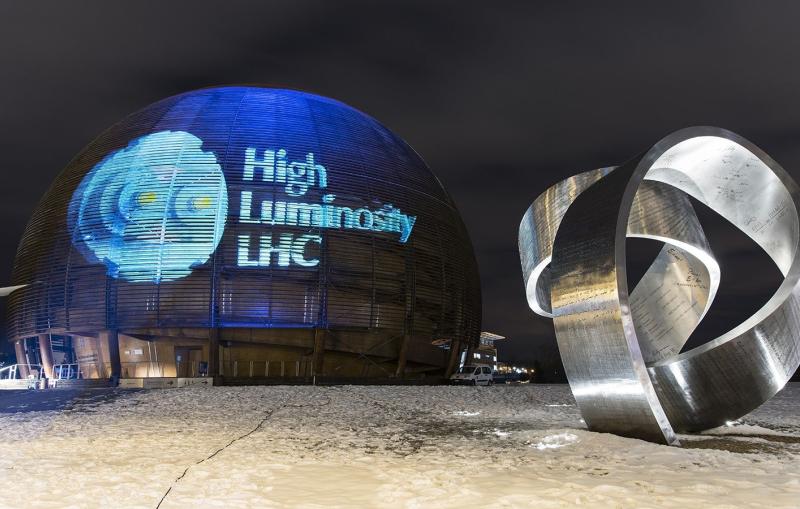
LHC Prepares to Deliver Six Times the Data

Experiments at the Large Hadron Collider are once again recording collisions at extraordinary energies.

May 9, 2016
VIA Symmetry Magazine

Mommy, Daddy, Where Does Mass Come From?

The Higgs field gives mass to elementary particles, but most of our mass comes from somewhere else.

May 12, 2016
Past Event
Public Lecture

Gravitational Waves: The Sound of Black Holes Colliding

On September 14, 2015, the Advanced Laser Interferometer Gravitational-wave Observatory (LIGO) made the first direct measurement of a gravitational wave coming from deep space...
Date Tuesday, May 24, 2016
12:30 p.m.  –  1:30 p.m.  PT
Location Panofsky Auditorium
stillframe gravitational waves
Feature

Q&A: Hitomi Researchers Talk About the X-ray Satellite’s Tragic End and the Data It Sent Home

KIPAC researchers mourn the loss of the Hitomi spacecraft but are thrilled about the data it was still able to capture.

May 16, 2016  ·  5 min read
Feature

Caught on Camera: First Movies of Droplets Getting Blown Up by X-ray Laser

Taken at SLAC, microscopic footage of exploding liquids will give researchers more control over experiments at X-ray lasers.

May 23, 2016  ·  4 min read
Feature

SLAC’s New Computer Science Division Teams with Stanford to Tackle Data Onslaught

Finding ways to handle torrents of data from LSST and LCLS-II will also advance “exascale” computing.

May 26, 2016  ·  5 min read
Feature

Ming Yi Awarded L'Oréal USA For Women in Science Fellowship

The former Stanford graduate student, who did extensive research at SLAC, is being honored as an exceptional role model for women in science.

October 12, 2015  ·  5 min read
Ming Yi
Feature

Xexon, Xenon Everywhere

It’s in the air we breathe, but it’s not so easy to get ahold of 10 metric tons of xenon in its liquid form...

October 13, 2015
  • Go to previous page
  • Page 1
  • …
  • Page 53
  • Page 54
  • Page 55
  • Page 56
  • Currently on page 57
  • Page 58
  • Page 59
  • Page 60
  • Page 61
  • …
  • Page 230
  • Go to next page

SLAC National Accelerator Laboratory 
2575 Sand Hill Road  
Menlo Park, CA 94025-7015  
650.926.3300

  • Coming to SLAC
  • Connect with us
  • Contact us
  • Facebook
  • Flickr
  • Instagram
  • LinkedIn
  • Twitter
  • YouTube

Sign up for our email

Monthly newsletter for cutting-edge science, SLAC milestones and events.

Sign up

Bold People
Visionary Science
Real Impact

We explore how the universe works at the biggest, smallest and fastest scales and invent powerful tools used by scientists around the globe.

  • About
    • Our story
    • Our people
    • Lab overview
    • Visit SLAC
    • Resources
    • Connect with us
  • Research
    • X-ray & ultrafast science
    • Advanced accelerators
    • New technologies
    • Physics of the universe
    • Science of life
    • Energy sciences
    • SLAC science explained
  • Facilities & centers
    • Scientific facilities
    • Joint institutes & centers
  • Work with us
    • Partner with us
    • Become a supplier
    • Use our facilities
    • Careers at SLAC
  • News & events
    • News center
    • Symmetry Magazine
    • Media resources
    • Events
    • Educational programs
    • Connect with us
  • Staff portal
  • Privacy policy
  • Accessibility
  • Vulnerability disclosure
  • A–Z index
  • Website feedback
Home
  • SLAC home
  • Maps & directions
  • Emergency info
  • Careers

© 2026 SLAC National Accelerator Laboratory is operated by Stanford University for the U.S. Department of Energy Office of Science.

Stanford University U.S. Department of Energy
Top Top
Back to top Back to top