SLAC National Accelerator Laboratory
    • About

      Learn about our science, people, facilities and partners. Discover our history and vision for the future.

    • OUR STORY
      • Mission, vision, values
      • History
    • LAB OVERVIEW
      • SLAC at a glance
      • Lab organization
      • Our partnerships
    • OUR PEOPLE
      • Leadership
      • Meet our teams
      • Faculty
    • VISIT SLAC
      • Public tours
      • Contact us
    • Resources
      • Images, videos & more
      • Brochures & fact sheets
    • Connect With Us
      • Facebook
      • Flickr
      • Instagram
      • LinkedIn
      • Twitter
      • YouTube
    video

    Who we are

    We explore radically new ideas with an entrepreneurial mindset.

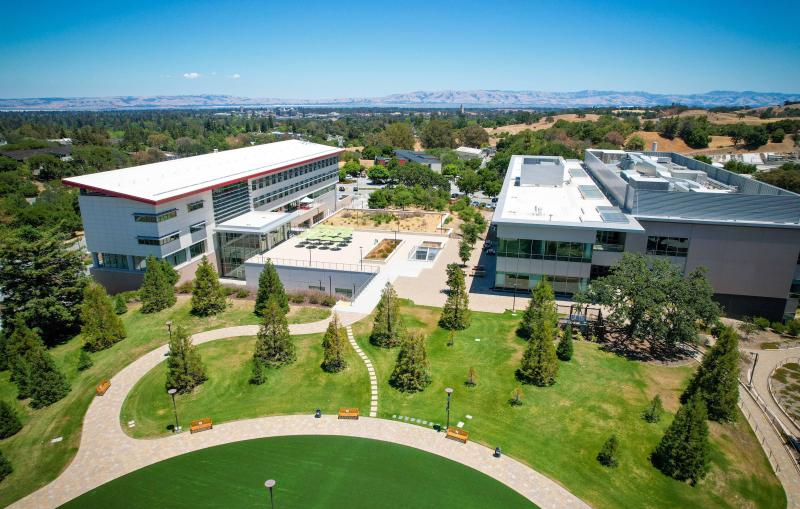
    Science and User Support Building to the left and Arrillaga Science Center building to the right from above the Main Quad at SLAC's campus.
    • Research

      Get an overview of research at SLAC: X-ray and ultrafast science, particle and astrophysics, cosmology, particle accelerators, biology, energy and technology.

    • X-ray and Ultrafast science icon X-ray & ultrafast science

      Revealing nature’s fastest processes with X-rays, lasers and electrons

    • Physics of the universe science icon Physics of the universe

      Studying the particles and forces that knit the cosmos together

    • Advanced Accelerators science icon Advanced accelerators

      Building smaller, faster, more powerful accelerators for all

    • Science of life science icon Science of life

      Understanding the machinery of life at its most basic level

    • New technologies science icon New technologies

      Inventing new tools for science and society

    • Energy sciences science icon Energy sciences

      Finding clean, sustainable solutions for the world’s energy challenges

    Spotlight

    SLAC science explained

    Cut through the jargon while exploring our research.

    SAGE campers have fun experimenting with a Van de Graff generator
    • Facilities & Centers

      Learn more about the places where science happens at SLAC: our major facilities, institutes and centers.

    • SCIENTIFIC FACILITIES
      • LCLS website

        Linac Coherent Light Source

      • SSRL website

        Stanford Synchrotron Radiation Lightsource

      • FACET-II website

        Facility for Advanced Accelerator Experimental Tests

      • CryoEM website

        Cryogenic Electron Microscopy

    • JOINT INSTITUTES & CENTERS
      • SIMES website

        Stanford Institute for Materials & Energy Science

      • KIPAC website

        Kavli Institute for Particle Astrophysics & Cosmology

      • PULSE website

        Stanford PULSE Institute

      • SUNCAT website

        Center for Interface Science & Catalysis

      • SLAC-Stanford Battery Center

    NSF-DOE Vera C. Rubin Observatory LSST

    SLAC & Stanford build the world’s largest digital camera for the Legacy Survey of Space and Time (LSST).

    A drone photo of Rubin Observatory while taking pictures during the First Look observing campaign
    • Work with Us

      Find a career, partner with us or apply to use our tools and facilities.

    • PARTNER WITH US
      • For industry partners
      • Research partnerships & tech transfer
      • Technology Innovation
    • CAREERS AT SLAC
      • Job openings
      • Internships
      • Life at SLAC
    • USE OUR FACILITIES

      Apply to become a user of our scientific research facilities and instruments.

    • COMING TO SLAC
    • BECOME A SUPPLIER

    Careers at SLAC

    Join our united workforce.

    SLAC staff in main quad
    • News & Events

      Get the latest news about the lab, our science and discoveries. Explore SLAC events and learn how to participate.

    • NEWS CENTER
      • News archive
      • Media resources
      • Images & videos
    • SLAC EVENTS
      • Public lectures
      • Scientific seminars
      • Community events
    • SYMMETRY MAGAZINE

      This joint publication of SLAC and Fermilab is your view into the world of particle physics.

    • EDUCATIONAL PROGRAMS
      • Educational tours
      • Resources for students & educators
    • Connect With Us
      • Facebook
      • Flickr
      • Instagram
      • LinkedIn
      • Twitter
      • YouTube
    Upcoming public lecture

    Reinventing the way we break down plastic waste

    Thursday, March 26, 2026
    7:00–8:00 p.m. PDT

    Public Lecture: Ozge Bozkurt
Filter search by
Staff portalStanford directoryComing to SLACResources for…
  1. Home
  2. …
Filter by research area
  • X-ray and ultrafast science (337)
  • Physics of the universe (281)
  • Energy sciences (96)
  • Science of life (86)
  • New technologies (58)
  • Advanced accelerators (41)
Filter by Type
  • News (1774)
  • Image (387)
  • Video (227)
  • Event (157)
  • Page (67)
  • Person (66)
  • resource (64)
  • News Collection (4)
Sort by
2746 results
Display Grid Display List
News Release

Researchers discover a surprising way to jump-start battery performance

Charging lithium-ion batteries at high currents just before they leave the factory is 30 times faster and increases battery lifespans by 50%, according to...

August 29, 2024  ·  5 min read
An illustration shows batteries flow down an assembly line, turning them from gray to green.
News Brief

Scientists unlock the secrets of how a key protein converts DNA into RNA

The results, which show how the protein adds nucleotides to the growing RNA chain, could lead to more effective medications.

August 29, 2024  ·  3 min read
Calero_group
News Brief

X-rays unlock secrets of Earth's core-mantle boundary and super-Earth magma oceans

This research advances our understanding of Earth's deep interior and exoplanets, opening new research avenues in Earth and planetary sciences.

October 3, 2024  ·  2 min read
mec_super_earth
Feature

SLAC-led Energy Frontier Research Center awarded $14.4 million to advance new manufacturing solutions for microelectronics

The Center for Energy Efficient Magnonics (CEEMag) brings together a multidisciplinary group of researchers from SLAC and seven universities

September 4, 2024  ·  3 min read
Spin wave-based interconnect illustration
Feature
VIA Stanford

Scientists seek to invent a safe, reliable, and cheap battery for electricity grids

The Aqueous Battery Consortium of Stanford, SLAC, and 13 others seeks to overcome the limitations of a battery using water as its electrolyte.

September 3, 2024
Feature

Three SLAC scientists awarded prestigious DOE Early Career Research Program grants

David Cesar, Julia Gonski and W.L. Kimmy Wu will each receive $2.75 million issued over five years for their research in X-ray and ultrafast...

September 10, 2024  ·  8 min read
Early Career Award Winners 2024
Feature

A day in the life of a machine learning expert

Digital design engineer Abhilasha Dave’s passion for connecting machine learning and hardware is helping SLAC solve big data challenges.

September 16, 2024  ·  5 min read
Photo of Abhilasha Dave in her office
Feature

Haleh Alimohamadi wins 2024 Spicer Young Investigator Award for breakthroughs in understanding cell membrane activity

Alimohamadi is being recognized for her novel integration of theoretical and experimental results to connect diverse health outcomes with cell membrane behavior.

September 13, 2024  ·  3 min read
Haleh Alimohamadi
Feature

A modular neutrino detector years in the making

The prototype DUNE 2x2 detector will capture up to 10,000 neutrino interactions per day.

September 30, 2024  ·  6 min read
Two people in blue helmets examine experimental equipment.
Feature

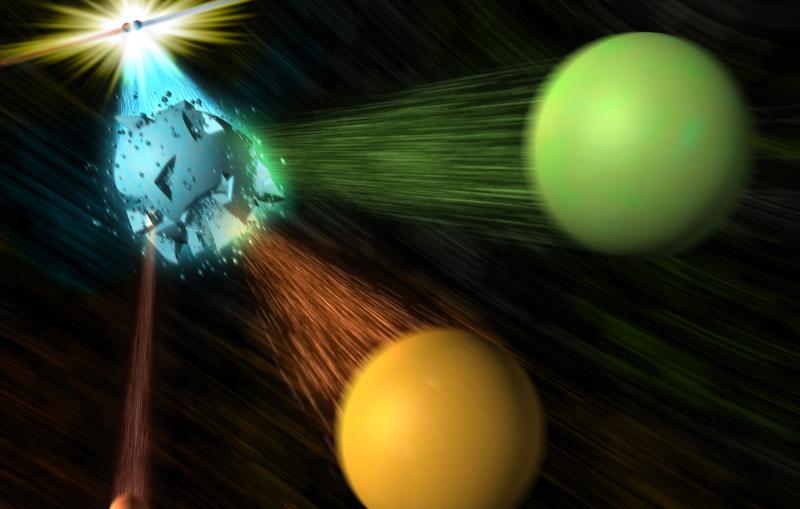
NSF–DOE Rubin Observatory’s unparalleled vision will revolutionize multi-messenger astronomy

Vera C. Rubin Observatory will unite coordinated observations of cosmic phenomena using the four messengers of the universe.

September 12, 2024  ·  4 min read
Two stars collide, sending particles to earth.

Environment Safety & Health

SLAC is committed to protecting the health and safety of our staff, the community, and the environment as we carry out our scientific mission.

Aerial photo of SLAC research yard
Past Event
Public Lectures

​​Primordial Pathway: A Legacy of Ancient Life on Earth

It is a mystery how the earliest organisms on earth evolved the means to thrive, grow and reproduce under the sparse conditions of the...
Date Thursday, October 10, 2024
7:00 p.m.  –  8:00 p.m.  PT
Location SLAC National Accelerator Laboratory, Kavli Auditorium
Public Lecture: Macon Abernathy
  • Go to previous page
  • Page 1
  • …
  • Page 164
  • Page 165
  • Page 166
  • Page 167
  • Currently on page 168
  • Page 169
  • Page 170
  • Page 171
  • Page 172
  • …
  • Page 229
  • Go to next page

SLAC National Accelerator Laboratory 
2575 Sand Hill Road  
Menlo Park, CA 94025-7015  
650.926.3300

  • Coming to SLAC
  • Connect with us
  • Contact us
  • Facebook
  • Flickr
  • Instagram
  • LinkedIn
  • Twitter
  • YouTube

Sign up for our email

Monthly newsletter for cutting-edge science, SLAC milestones and events.

Sign up

Bold People
Visionary Science
Real Impact

We explore how the universe works at the biggest, smallest and fastest scales and invent powerful tools used by scientists around the globe.

  • About
    • Our story
    • Our people
    • Lab overview
    • Visit SLAC
    • Resources
    • Connect with us
  • Research
    • X-ray & ultrafast science
    • Advanced accelerators
    • New technologies
    • Physics of the universe
    • Science of life
    • Energy sciences
    • SLAC science explained
  • Facilities & centers
    • Scientific facilities
    • Joint institutes & centers
  • Work with us
    • Partner with us
    • Become a supplier
    • Use our facilities
    • Careers at SLAC
  • News & events
    • News center
    • Symmetry Magazine
    • Media resources
    • Events
    • Educational programs
    • Connect with us
  • Staff portal
  • Privacy policy
  • Accessibility
  • Vulnerability disclosure
  • A–Z index
  • Website feedback
Home
  • SLAC home
  • Maps & directions
  • Emergency info
  • Careers

© 2026 SLAC National Accelerator Laboratory is operated by Stanford University for the U.S. Department of Energy Office of Science.

Stanford University U.S. Department of Energy
Top Top
Back to top Back to top