SLAC National Accelerator Laboratory
    • About

      Learn about our science, people, facilities and partners. Discover our history and vision for the future.

    • OUR STORY
      • Mission, vision, values
      • History
    • LAB OVERVIEW
      • SLAC at a glance
      • Lab organization
      • Our partnerships
    • OUR PEOPLE
      • Leadership
      • Meet our teams
      • Faculty
    • VISIT SLAC
      • Public tours
      • Contact us
    • Resources
      • Images, videos & more
      • Brochures & fact sheets
    • Connect With Us
      • Facebook
      • Flickr
      • Instagram
      • LinkedIn
      • Twitter
      • YouTube
    video

    Who we are

    We explore radically new ideas with an entrepreneurial mindset.

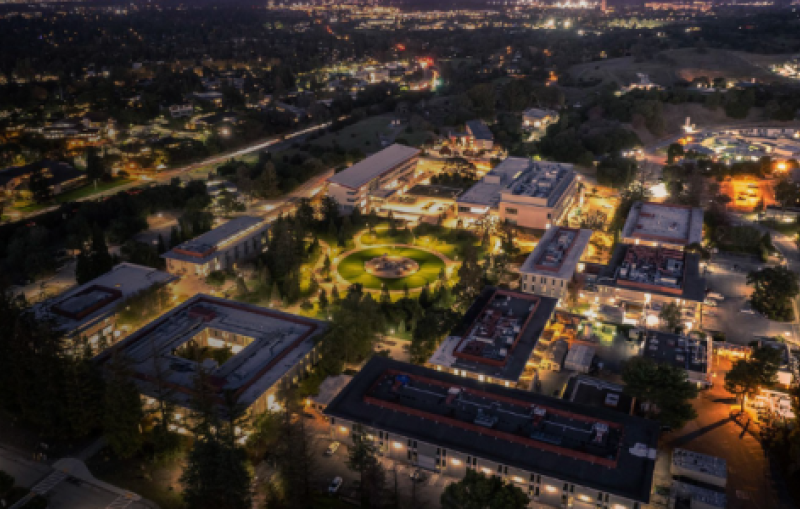
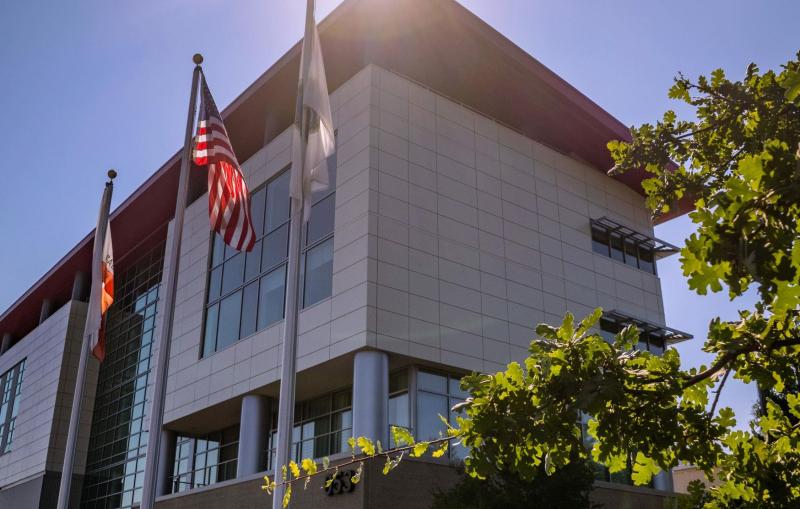
    Science and User Support Building to the left and Arrillaga Science Center building to the right from above the Main Quad at SLAC's campus.
    • Research

      Get an overview of research at SLAC: X-ray and ultrafast science, particle and astrophysics, cosmology, particle accelerators, biology, energy and technology.

    • X-ray and Ultrafast science icon X-ray & ultrafast science

      Revealing nature’s fastest processes with X-rays, lasers and electrons

    • Physics of the universe science icon Physics of the universe

      Studying the particles and forces that knit the cosmos together

    • Advanced Accelerators science icon Advanced accelerators

      Building smaller, faster, more powerful accelerators for all

    • Science of life science icon Science of life

      Understanding the machinery of life at its most basic level

    • New technologies science icon New technologies

      Inventing new tools for science and society

    • Energy sciences science icon Energy sciences

      Finding clean, sustainable solutions for the world’s energy challenges

    Spotlight

    SLAC science explained

    Cut through the jargon while exploring our research.

    SAGE campers have fun experimenting with a Van de Graff generator
    • Facilities & Centers

      Learn more about the places where science happens at SLAC: our major facilities, institutes and centers.

    • SCIENTIFIC FACILITIES
      • LCLS website

        Linac Coherent Light Source

      • SSRL website

        Stanford Synchrotron Radiation Lightsource

      • FACET-II website

        Facility for Advanced Accelerator Experimental Tests

      • CryoEM website

        Cryogenic Electron Microscopy

    • JOINT INSTITUTES & CENTERS
      • SIMES website

        Stanford Institute for Materials & Energy Science

      • KIPAC website

        Kavli Institute for Particle Astrophysics & Cosmology

      • PULSE website

        Stanford PULSE Institute

      • SUNCAT website

        Center for Interface Science & Catalysis

      • SLAC-Stanford Battery Center

    NSF-DOE Vera C. Rubin Observatory LSST

    SLAC & Stanford build the world’s largest digital camera for the Legacy Survey of Space and Time (LSST).

    A drone photo of Rubin Observatory while taking pictures during the First Look observing campaign
    • Work with Us

      Find a career, partner with us or apply to use our tools and facilities.

    • PARTNER WITH US
      • For industry partners
      • Research partnerships & tech transfer
      • Technology Innovation
    • CAREERS AT SLAC
      • Job openings
      • Internships
      • Life at SLAC
    • USE OUR FACILITIES

      Apply to become a user of our scientific research facilities and instruments.

    • COMING TO SLAC
    • BECOME A SUPPLIER

    Careers at SLAC

    Join our united workforce.

    SLAC staff in main quad
    • News & Events

      Get the latest news about the lab, our science and discoveries. Explore SLAC events and learn how to participate.

    • NEWS CENTER
      • News archive
      • Media resources
      • Images & videos
    • SLAC EVENTS
      • Public lectures
      • Scientific seminars
      • Community events
    • SYMMETRY MAGAZINE

      This joint publication of SLAC and Fermilab is your view into the world of particle physics.

    • EDUCATIONAL PROGRAMS
      • Educational tours
      • Resources for students & educators
    • Connect With Us
      • Facebook
      • Flickr
      • Instagram
      • LinkedIn
      • Twitter
      • YouTube
    Upcoming public lecture

    Reinventing the way we break down plastic waste

    Thursday, March 26, 2026
    7:00–8:00 p.m. PDT

    Public Lecture: Ozge Bozkurt
Filter search by
Staff portalStanford directoryComing to SLACResources for…
  1. Home
  2. …
Filter by research area
  • X-ray and ultrafast science (337)
  • Physics of the universe (281)
  • Energy sciences (96)
  • Science of life (86)
  • New technologies (58)
  • Advanced accelerators (41)
Filter by Type
  • News (1774)
  • Image (387)
  • Video (227)
  • Event (157)
  • Page (67)
  • Person (66)
  • resource (64)
  • News Collection (4)
Sort by
2746 results
Display Grid Display List
News Brief

NSF–DOE Rubin Observatory test camera sees the sky

The observatory's practice camera has captured its first on-sky data.

October 30, 2024  ·  3 min read
A telescope pointed through open doors in its building's roof.
Feature

SLAC’s Keith O. Hodgson wins 2024 Farrel W. Lytle Award

For nearly 50 years, Hodgson has illuminated the synchrotron radiation community through his pioneering research, innovations, leadership, advocacy and mentorship at the Stanford Synchrotron...

November 4, 2024  ·  5 min read
Photo of a group of men
news collection

Fusion energy

Harnessing nuclear fusion would bring the clean, unlimited energy of the stars to Earth.

fusion energy illustration
News Brief

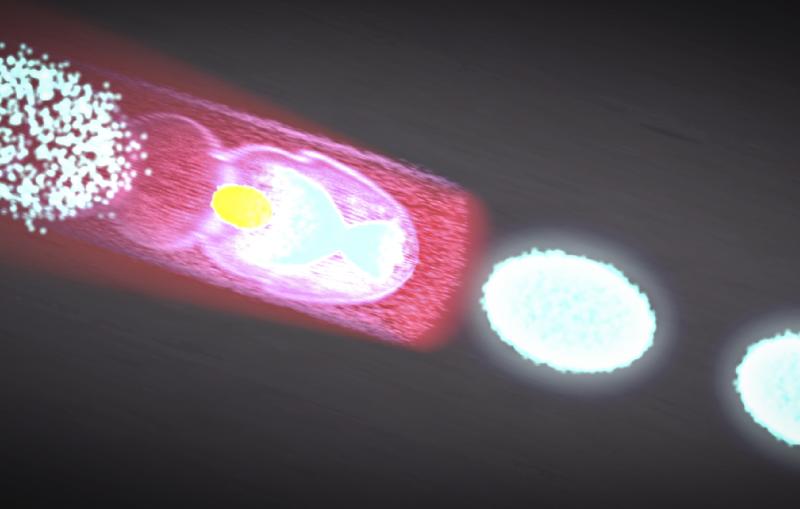
How microbes create the most toxic form of mercury

SLAC’s SSRL helps pin down key players in the microbial production of methylmercury, a poison that can accumulate in fish.

November 15, 2024  ·  2 min read
A school of fish.
Feature

Spotlight on sustainability research: Jocelyn Richardson on supporting ecosystem health

An associate scientist at SSRL, Richardson studies plant growth to find ways to enhance nutrient uptake in plants, especially in challenging conditions – such...

November 15, 2024  ·  2 min read
Jocelyn Richardson
Past Event
Public Lectures

Expecting the Unexpected with AI at Particle Colliders

Register to watch in person in the  Kavli Auditorium,  or watch the lecture live on our YouTube page.  In particle physics, we search for...
Date Thursday, December 5, 2024
7:00 p.m.  –  8:00 p.m.  PT
Location SLAC National Accelerator Laboratory, Kavli Auditorium
Public lecture illustration
Feature

Taming big data and particle beams: how SLAC researchers are pushing AI to the edge

Researchers across the lab are developing AI tools to harness data and particle beams in real time and make molecular movies, speeding up the...

November 19, 2024  ·  6 min read
Graphic of AI in several science areas
Feature

SLAC celebrates 50 years of Nobel-winning discovery in particle physics

In 1974, the independent discovery of the J/psi particle at SLAC and Brookhaven National Laboratory rocked the physics world, and entire textbooks had to...

November 20, 2024  ·  8 min read
50th anniversary of the J/psi discovery
Feature

Dark matter, neutrinos and drug discovery: how AI is powering SLAC science and technology

AI is playing a key role in helping SLAC researchers find new galaxies and tiny neutrinos, and discover new drugs.

November 25, 2024  ·  8 min read
Diffraction pattern
Feature
Argonne National Lab

A new era for batteries: Argonne leads $50M sodium-ion innovation push

SLAC partners with five national labs and eight universities seeking to increase the supply diversity of EV batteries and relieve supply chain concerns.

November 21, 2024
SLAC-Stanford Battery Center
News Brief

Solving the case of the missing platinum

SSRL scientists have figured out how platinum electrodes dissolve, potentially paving the way for renewable energy improvements.

February 21, 2025  ·  3 min read
White dots on a black background, with additional purple and blue dots and purple triangles connecting them.
News Brief

Slow atomic movements shed new light on unconventional superconductivity

A SLAC study shows a process called atomic relaxation offers a new way to explore quantum states in these puzzling materials.

December 4, 2024  ·  3 min read
Light blue wavy lines on a maroon red background.
  • Go to previous page
  • Page 1
  • …
  • Page 166
  • Page 167
  • Page 168
  • Page 169
  • Currently on page 170
  • Page 171
  • Page 172
  • Page 173
  • Page 174
  • …
  • Page 229
  • Go to next page

SLAC National Accelerator Laboratory 
2575 Sand Hill Road  
Menlo Park, CA 94025-7015  
650.926.3300

  • Coming to SLAC
  • Connect with us
  • Contact us
  • Facebook
  • Flickr
  • Instagram
  • LinkedIn
  • Twitter
  • YouTube

Sign up for our email

Monthly newsletter for cutting-edge science, SLAC milestones and events.

Sign up

Bold People
Visionary Science
Real Impact

We explore how the universe works at the biggest, smallest and fastest scales and invent powerful tools used by scientists around the globe.

  • About
    • Our story
    • Our people
    • Lab overview
    • Visit SLAC
    • Resources
    • Connect with us
  • Research
    • X-ray & ultrafast science
    • Advanced accelerators
    • New technologies
    • Physics of the universe
    • Science of life
    • Energy sciences
    • SLAC science explained
  • Facilities & centers
    • Scientific facilities
    • Joint institutes & centers
  • Work with us
    • Partner with us
    • Become a supplier
    • Use our facilities
    • Careers at SLAC
  • News & events
    • News center
    • Symmetry Magazine
    • Media resources
    • Events
    • Educational programs
    • Connect with us
  • Staff portal
  • Privacy policy
  • Accessibility
  • Vulnerability disclosure
  • A–Z index
  • Website feedback
Home
  • SLAC home
  • Maps & directions
  • Emergency info
  • Careers

© 2026 SLAC National Accelerator Laboratory is operated by Stanford University for the U.S. Department of Energy Office of Science.

Stanford University U.S. Department of Energy
Top Top
Back to top Back to top