Institute of Electrical and Electronics Engineers recognizes his contributions to developing electron beams that power unique ‘electron cameras’ and could advance X-ray lasers.
They found that gently heating N95 masks in high relative humidity could inactivate SARS-CoV-2 virus trapped within the masks, without degrading the masks’ performance.
Daniel Ratner, head of SLAC’s machine learning initiative, explains the lab’s unique opportunities to advance scientific discovery through machine learning.
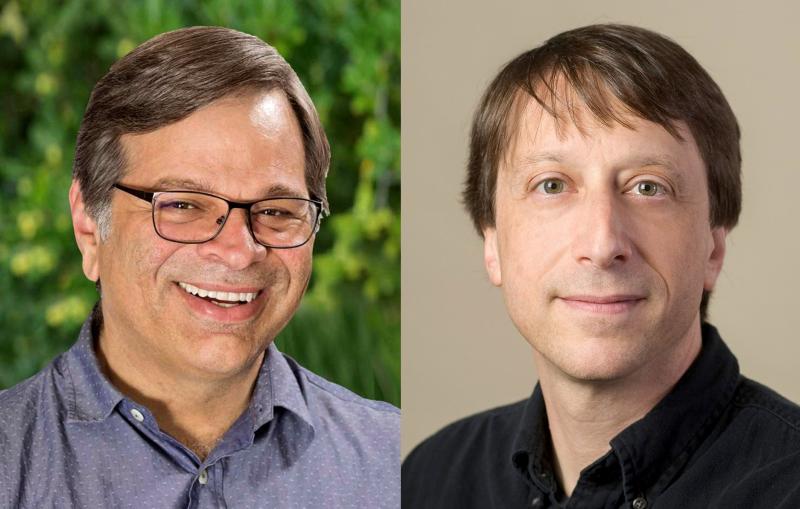
Cryan is an investigator with the Stanford PULSE Institute at SLAC, while Marsden is an associate professor of pediatrics and of bioengineering at Stanford.
FACET-II will pave the way for a future generation of particle colliders and powerful light sources, opening avenues in high-energy physics, medicine, and materials...
The annual conference for scientists who conduct research at SLAC’s light sources engaged more than 1,700 researchers in talks, workshops and discussions.
Presented by Diana Gamzina. In particle accelerators, electrons are pushed to extreme energies by electromagnetic fields that oscillate inside evacuated metal cavities. Those cavities...