SLAC National Accelerator Laboratory
    • About

      Learn about our science, people, facilities and partners. Discover our history and vision for the future.

    • OUR STORY
      • Mission, vision, values
      • History
    • LAB OVERVIEW
      • SLAC at a glance
      • Lab organization
      • Our partnerships
    • OUR PEOPLE
      • Leadership
      • Meet our teams
      • Faculty
    • VISIT SLAC
      • Public tours
      • Contact us
    • Resources
      • Images, videos & more
      • Brochures & fact sheets
    • Connect With Us
      • Facebook
      • Flickr
      • Instagram
      • LinkedIn
      • Twitter
      • YouTube
    video

    Who we are

    We explore radically new ideas with an entrepreneurial mindset.

    Science and User Support Building to the left and Arrillaga Science Center building to the right from above the Main Quad at SLAC's campus.
    • Research

      Get an overview of research at SLAC: X-ray and ultrafast science, particle and astrophysics, cosmology, particle accelerators, biology, energy and technology.

    • X-ray and Ultrafast science icon X-ray & ultrafast science

      Revealing nature’s fastest processes with X-rays, lasers and electrons

    • Physics of the universe science icon Physics of the universe

      Studying the particles and forces that knit the cosmos together

    • Advanced Accelerators science icon Advanced accelerators

      Building smaller, faster, more powerful accelerators for all

    • Science of life science icon Science of life

      Understanding the machinery of life at its most basic level

    • New technologies science icon New technologies

      Inventing new tools for science and society

    • Energy sciences science icon Energy sciences

      Finding clean, sustainable solutions for the world’s energy challenges

    Spotlight

    SLAC science explained

    Cut through the jargon while exploring our research.

    SAGE campers have fun experimenting with a Van de Graff generator
    • Facilities & Centers

      Learn more about the places where science happens at SLAC: our major facilities, institutes and centers.

    • SCIENTIFIC FACILITIES
      • LCLS website

        Linac Coherent Light Source

      • SSRL website

        Stanford Synchrotron Radiation Lightsource

      • FACET-II website

        Facility for Advanced Accelerator Experimental Tests

      • CryoEM website

        Cryogenic Electron Microscopy

    • JOINT INSTITUTES & CENTERS
      • SIMES website

        Stanford Institute for Materials & Energy Science

      • KIPAC website

        Kavli Institute for Particle Astrophysics & Cosmology

      • PULSE website

        Stanford PULSE Institute

      • SUNCAT website

        Center for Interface Science & Catalysis

      • SLAC-Stanford Battery Center

    NSF-DOE Vera C. Rubin Observatory LSST

    SLAC & Stanford build the world’s largest digital camera for the Legacy Survey of Space and Time (LSST).

    A drone photo of Rubin Observatory while taking pictures during the First Look observing campaign
    • Work with Us

      Find a career, partner with us or apply to use our tools and facilities.

    • PARTNER WITH US
      • For industry partners
      • Research partnerships & tech transfer
      • Technology Innovation
    • CAREERS AT SLAC
      • Job openings
      • Internships
      • Life at SLAC
    • USE OUR FACILITIES

      Apply to become a user of our scientific research facilities and instruments.

    • COMING TO SLAC
    • BECOME A SUPPLIER

    Careers at SLAC

    Join our united workforce.

    SLAC staff in main quad
    • News & Events

      Get the latest news about the lab, our science and discoveries. Explore SLAC events and learn how to participate.

    • NEWS CENTER
      • News archive
      • Media resources
      • Images & videos
    • SLAC EVENTS
      • Public lectures
      • Scientific seminars
      • Community events
    • SYMMETRY MAGAZINE

      This joint publication of SLAC and Fermilab is your view into the world of particle physics.

    • EDUCATIONAL PROGRAMS
      • Educational tours
      • Resources for students & educators
    • Connect With Us
      • Facebook
      • Flickr
      • Instagram
      • LinkedIn
      • Twitter
      • YouTube
    Upcoming public lecture

    Reinventing the way we break down plastic waste

    Thursday, March 26, 2026
    7:00–8:00 p.m. PDT

    Public Lecture: Ozge Bozkurt
Filter search by
Staff portalStanford directoryComing to SLACResources for…
  1. Home
  2. …
Filter by research area
  • X-ray and ultrafast science (179)
  • Physics of the universe (127)
  • Energy sciences (43)
  • Science of life (28)
  • New technologies (22)
  • Advanced accelerators (10)
Filter by Type
  • (-) News (1774)
  • Image (387)
  • Video (227)
  • Event (157)
  • Page (67)
  • Person (66)
  • resource (64)
  • News Collection (4)
Sort by
1774 results
Display Grid Display List
Clear all
News Release

SLAC researcher discovers giant cavity in key tuberculosis molecule

The giant cavity, in a protein that transports nutrients across the cell membrane, is unlike anything researchers have seen before.

March 25, 2020  ·  6 min read
A scientist working overlaid on a world map and images of tuberculosis bacteria.
Feature

Terahertz radiation technique opens a new door for studying atomic behavior

Researchers have squeezed a high-energy electron beam into tight bundles using terahertz radiation, a promising advance in watching the ultrafast world of atoms unfold.

March 5, 2020  ·  4 min read
SLAC’s Emma Snively and Mohamed Othman at the lab’s high-speed “electron camera."
Feature
VIA External

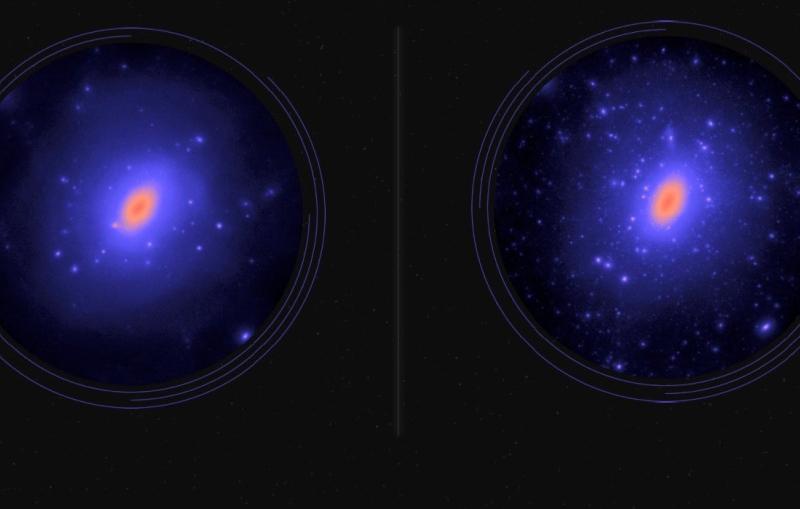
The Milky Way’s satellites help reveal link between dark matter halos and galaxy formation

Just like we orbit the sun and the moon orbits us, the Milky Way has satellite galaxies with their own satellites. Drawing from data...

March 31, 2020  ·  7 min read
Dark matter forms into clumps, where galaxies and satellite galaxies form.
Feature

An advance in molecular moviemaking reveals the subtle, complex ways a simple molecule can shimmy and fly apart

Hitting molecules with two photons of light at once set off unexpected processes that were captured in detail with SLAC’s X-ray laser. Scientists say...

March 18, 2020  ·  5 min read
Closeup image of molecular movie frames
Feature

Solving the mysteries of a Trojan-horse mosquito toxin

An LCLS imaging technique reveals how a mosquito-borne bacterium deploys a toxin to kill mosquito larvae. Scientists hope to harness it to fight disease.

March 24, 2020  ·  4 min read
A photograph of mosquito larvae.
Feature

A new way to fine-tune exotic materials: Thin, stretch and clamp

Turning a brittle oxide into a flexible membrane and stretching it on a tiny apparatus flipped it from a conducting to an insulating state...

April 2, 2020  ·  4 min read
Close up of strain pattern produced by stretching membrane
Feature

In a first, researchers use ultrafast ‘electron camera’ to learn about molecules in liquid samples

This new technology could enable future insights into chemical and biological processes that occur in solution, such as vision, catalysis and photosynthesis.

April 9, 2020  ·  3 min read
UED liquid
Feature

Testing how accurately X-ray lasers can measure the inner workings of biological molecules

Researchers investigate how much damage spreads through molecules struck by a pulse from LCLS.

April 15, 2020  ·  3 min read
Two color mode
Feature

SLAC joins the global fight against COVID-19

The lab is responding to the coronavirus crisis by imaging disease-related biomolecules, developing standards for reliable coronavirus testing and enabling other essential research.

April 16, 2020  ·  8 min read
SARS-CoV-2
Feature

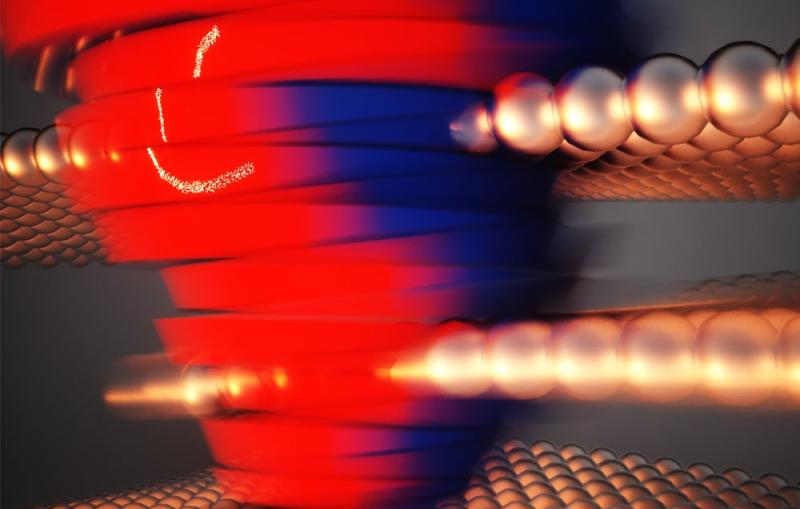
To tame an electron bunch in an X-ray laser, scientists put a ring on it

New research shows that when a bunch of electrons zooms through the middle of a ring-shaped laser beam, the bunch can wind up with...

April 21, 2020  ·  3 min read
donut laser
Feature

A new machine learning method streamlines particle accelerator operations

It combines human knowledge and expertise with the speed and efficiency of “smart” computer algorithms.

April 29, 2020  ·  4 min read
Accelerator Control Room
Feature
VIA Stanford News

Blas Cabrera and Arun Majumdar elected to National Academy of Sciences

The SLAC/Stanford scientists are among 120 new members of an organization that advises the nation on science and technology issues.

April 29, 2020
NAS 2020
  • Go to previous page
  • Page 1
  • …
  • Page 82
  • Page 83
  • Page 84
  • Page 85
  • Currently on page 86
  • Page 87
  • Page 88
  • Page 89
  • Page 90
  • …
  • Page 148
  • Go to next page

SLAC National Accelerator Laboratory 
2575 Sand Hill Road  
Menlo Park, CA 94025-7015  
650.926.3300

  • Coming to SLAC
  • Connect with us
  • Contact us
  • Facebook
  • Flickr
  • Instagram
  • LinkedIn
  • Twitter
  • YouTube

Sign up for our email

Monthly newsletter for cutting-edge science, SLAC milestones and events.

Sign up

Bold People
Visionary Science
Real Impact

We explore how the universe works at the biggest, smallest and fastest scales and invent powerful tools used by scientists around the globe.

  • About
    • Our story
    • Our people
    • Lab overview
    • Visit SLAC
    • Resources
    • Connect with us
  • Research
    • X-ray & ultrafast science
    • Advanced accelerators
    • New technologies
    • Physics of the universe
    • Science of life
    • Energy sciences
    • SLAC science explained
  • Facilities & centers
    • Scientific facilities
    • Joint institutes & centers
  • Work with us
    • Partner with us
    • Become a supplier
    • Use our facilities
    • Careers at SLAC
  • News & events
    • News center
    • Symmetry Magazine
    • Media resources
    • Events
    • Educational programs
    • Connect with us
  • Staff portal
  • Privacy policy
  • Accessibility
  • Vulnerability disclosure
  • A–Z index
  • Website feedback
Home
  • SLAC home
  • Maps & directions
  • Emergency info
  • Careers

© 2026 SLAC National Accelerator Laboratory is operated by Stanford University for the U.S. Department of Energy Office of Science.

Stanford University U.S. Department of Energy
Top Top
Back to top Back to top