SLAC National Accelerator Laboratory
    • About

      Learn about our science, people, facilities and partners. Discover our history and vision for the future.

    • OUR STORY
      • Mission, vision, values
      • History
    • LAB OVERVIEW
      • SLAC at a glance
      • Lab organization
      • Our partnerships
    • OUR PEOPLE
      • Leadership
      • Meet our teams
      • Faculty
    • VISIT SLAC
      • Public tours
      • Contact us
    • Resources
      • Images, videos & more
      • Brochures & fact sheets
    • Connect With Us
      • Facebook
      • Flickr
      • Instagram
      • LinkedIn
      • Twitter
      • YouTube
    video

    Who we are

    We explore radically new ideas with an entrepreneurial mindset.

    Science and User Support Building to the left and Arrillaga Science Center building to the right from above the Main Quad at SLAC's campus.
    • Research

      Get an overview of research at SLAC: X-ray and ultrafast science, particle and astrophysics, cosmology, particle accelerators, biology, energy and technology.

    • X-ray and Ultrafast science icon X-ray & ultrafast science

      Revealing nature’s fastest processes with X-rays, lasers and electrons

    • Physics of the universe science icon Physics of the universe

      Studying the particles and forces that knit the cosmos together

    • Advanced Accelerators science icon Advanced accelerators

      Building smaller, faster, more powerful accelerators for all

    • Science of life science icon Science of life

      Understanding the machinery of life at its most basic level

    • New technologies science icon New technologies

      Inventing new tools for science and society

    • Energy sciences science icon Energy sciences

      Finding clean, sustainable solutions for the world’s energy challenges

    Spotlight

    SLAC science explained

    Cut through the jargon while exploring our research.

    SAGE campers have fun experimenting with a Van de Graff generator
    • Facilities & Centers

      Learn more about the places where science happens at SLAC: our major facilities, institutes and centers.

    • SCIENTIFIC FACILITIES
      • LCLS website

        Linac Coherent Light Source

      • SSRL website

        Stanford Synchrotron Radiation Lightsource

      • FACET-II website

        Facility for Advanced Accelerator Experimental Tests

      • CryoEM website

        Cryogenic Electron Microscopy

    • JOINT INSTITUTES & CENTERS
      • SIMES website

        Stanford Institute for Materials & Energy Science

      • KIPAC website

        Kavli Institute for Particle Astrophysics & Cosmology

      • PULSE website

        Stanford PULSE Institute

      • SUNCAT website

        Center for Interface Science & Catalysis

      • SLAC-Stanford Battery Center

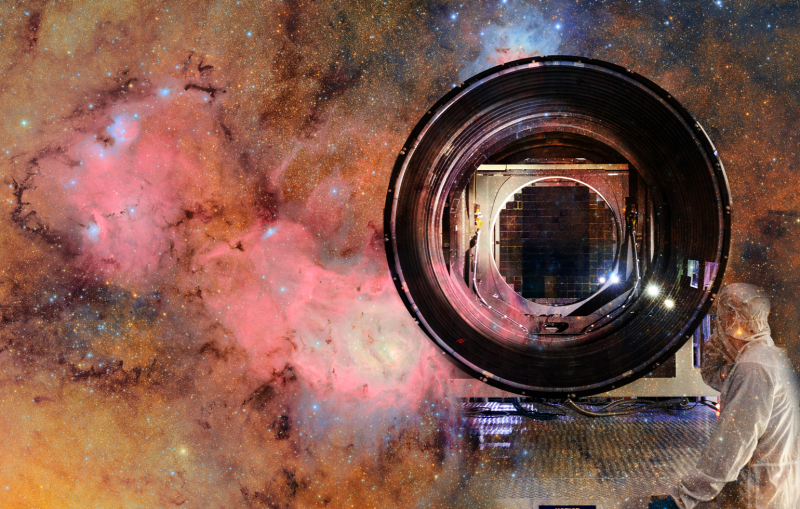
    NSF-DOE Vera C. Rubin Observatory LSST

    SLAC & Stanford build the world’s largest digital camera for the Legacy Survey of Space and Time (LSST).

    A drone photo of Rubin Observatory while taking pictures during the First Look observing campaign
    • Work with Us

      Find a career, partner with us or apply to use our tools and facilities.

    • PARTNER WITH US
      • For industry partners
      • Research partnerships & tech transfer
      • Technology Innovation
    • CAREERS AT SLAC
      • Job openings
      • Internships
      • Life at SLAC
    • USE OUR FACILITIES

      Apply to become a user of our scientific research facilities and instruments.

    • COMING TO SLAC
    • BECOME A SUPPLIER

    Careers at SLAC

    Join our united workforce.

    SLAC staff in main quad
    • News & Events

      Get the latest news about the lab, our science and discoveries. Explore SLAC events and learn how to participate.

    • NEWS CENTER
      • News archive
      • Media resources
      • Images & videos
    • SLAC EVENTS
      • Public lectures
      • Scientific seminars
      • Community events
    • SYMMETRY MAGAZINE

      This joint publication of SLAC and Fermilab is your view into the world of particle physics.

    • EDUCATIONAL PROGRAMS
      • Educational tours
      • Resources for students & educators
    • Connect With Us
      • Facebook
      • Flickr
      • Instagram
      • LinkedIn
      • Twitter
      • YouTube
    Upcoming public lecture

    Reinventing the way we break down plastic waste

    Thursday, March 26, 2026
    7:00–8:00 p.m. PDT

    Public Lecture: Ozge Bozkurt
Filter search by
Staff portalStanford directoryComing to SLACResources for…
  1. Home
  2. …
Filter by research area
  • X-ray and ultrafast science (179)
  • Physics of the universe (126)
  • Energy sciences (43)
  • Science of life (28)
  • New technologies (22)
  • Advanced accelerators (10)
Filter by Type
  • (-) News (1773)
  • Image (387)
  • Video (227)
  • Event (157)
  • Page (67)
  • Person (66)
  • resource (64)
  • News Collection (4)
Sort by
1773 results
Display Grid Display List
Clear all
SLAC Science Explained

XFELs: Spying on atoms and molecules

Molecular movie-making is both an art and a science; the results let us watch how nature works on the smallest scales.

June 1, 2022  ·  7 min read
Molecular movie filmstrip.
News Release
VIA Stanford News

Physicist, SLAC founding director Wolfgang Panofsky is dead at 88

Physicist Wolfgang K. H. Panofsky, known affectionately to most as "Pief," spent more than five decades at Stanford in enthusiastic pursuit of some of...

September 25, 2007
Pief Panofsky
Feature
VIA Stanford Magazine

The Making of Project M

Forty years ago,Wolfgang Panofsky dreamed up the largest, most expensive piece of machinery ever used in experimental physics. Today we call it SLAC.

May 1, 1997
Project M article on front page of Stanford Daily newspaper in 1960
News Brief
VIA Stanford Report

Dorfan to step down as SLAC director after nearly 8 years

Jonathan Dorfan, who has served as the director of the Stanford Linear Accelerator Center (SLAC) for nearly eight years, has announced he will step...

March 12, 2007
Jonathan Dorfan
News Brief

SLAC physicist wins American Physical Society early career award

Bernhard Mistlberger will receive the APS's 2023 Henry Primakoff Award for Early-Career Particle Physics for his work on precision Standard Model calculations.

October 17, 2022  ·  2 min read
A man smiles at the camera.
Feature
via Stanford News

Charging cars at home at night is not the way to go, Stanford study finds

A research team including SLAC staff engineer Gustavo Cezar shows that charging electric vehicles in the daytime would spread the load on the electric...

September 22, 2022
Photograph of a man plugging an electric cord into a gray car on a driveway.
News Release

X-Rays Offer First Detailed Look at Hotspots for Calcium-related Disease

Calcium regulates many critical processes within the body, including muscle contraction, the heartbeat, and the release of hormones.

November 4, 2010
High-resolution images of the ryanodine receptor, a protein associated with calcium
News Release

Energy Secretary Dedicates World's Most Powerful X-ray Laser

Secretary of Energy Steven Chu on Monday dedicated the Linac Coherent Light Source (LCLS), the world's most powerful X-ray laser, at the Department of...

August 16, 2010
LCLS dedication
News Release

Jonathan Dorfan, SLAC Professor and Director Emeritus, to Lead New Graduate University in Japan

Dr. Jonathan Dorfan has been named president-elect of the Okinawa Institute of Science and Technology (OIST) Graduate University.

July 9, 2010
Jonathan Dorfan
News Release

First Results from the LCLS: Unpeeling Atoms and Molecules from the Inside Out

The first published scientific results from the world's most powerful hard X-ray laser, located at the Department of Energy's SLAC National Accelerator Laboratory, show...

June 30, 2010
Illustration of X-ray laser pulses stripping electrons away from atoms
News Release

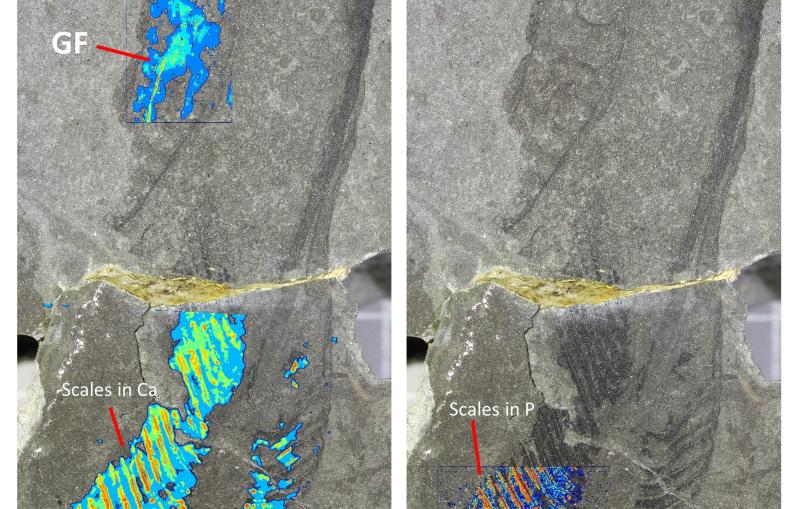
X-Rays Reveal Chemical Link Between Birds and Dinosaurs

Researchers have found that a 150 million year old "dinobird" fossil, long thought to contain nothing but fossilized bone and rock, has been hiding...

May 10, 2010
A false color image of the Thermopolis Archaeopteryx
News Release

First X-ray Laser's Early Success Brings Approval for Next-phase Facility

The U.S. Department of Energy has granted approval for SLAC National Accelerator Laboratory—home of the Linac Coherent Light Source (LCLS), the world's first hard...

May 5, 2010
Undulator Hall
  • Go to previous page
  • Page 1
  • …
  • Page 117
  • Page 118
  • Page 119
  • Page 120
  • Currently on page 121
  • Page 122
  • Page 123
  • Page 124
  • Page 125
  • …
  • Page 148
  • Go to next page

SLAC National Accelerator Laboratory 
2575 Sand Hill Road  
Menlo Park, CA 94025-7015  
650.926.3300

  • Coming to SLAC
  • Connect with us
  • Contact us
  • Facebook
  • Flickr
  • Instagram
  • LinkedIn
  • Twitter
  • YouTube

Sign up for our email

Monthly newsletter for cutting-edge science, SLAC milestones and events.

Sign up

Bold People
Visionary Science
Real Impact

We explore how the universe works at the biggest, smallest and fastest scales and invent powerful tools used by scientists around the globe.

  • About
    • Our story
    • Our people
    • Lab overview
    • Visit SLAC
    • Resources
    • Connect with us
  • Research
    • X-ray & ultrafast science
    • Advanced accelerators
    • New technologies
    • Physics of the universe
    • Science of life
    • Energy sciences
    • SLAC science explained
  • Facilities & centers
    • Scientific facilities
    • Joint institutes & centers
  • Work with us
    • Partner with us
    • Become a supplier
    • Use our facilities
    • Careers at SLAC
  • News & events
    • News center
    • Symmetry Magazine
    • Media resources
    • Events
    • Educational programs
    • Connect with us
  • Staff portal
  • Privacy policy
  • Accessibility
  • Vulnerability disclosure
  • A–Z index
  • Website feedback
Home
  • SLAC home
  • Maps & directions
  • Emergency info
  • Careers

© 2026 SLAC National Accelerator Laboratory is operated by Stanford University for the U.S. Department of Energy Office of Science.

Stanford University U.S. Department of Energy
Top Top
Back to top Back to top