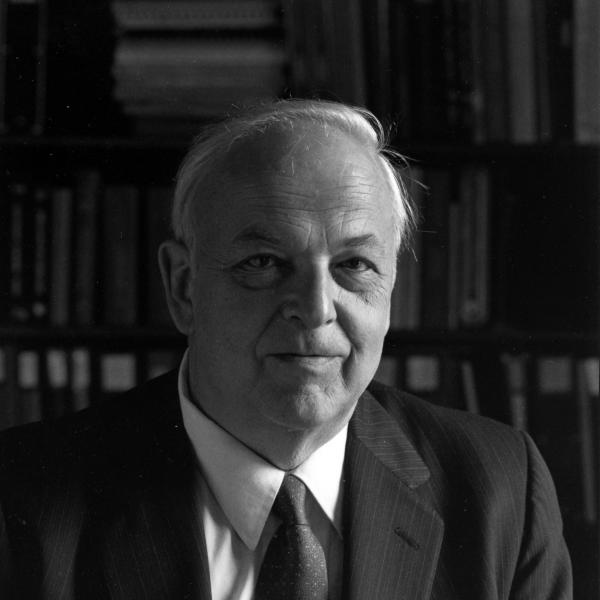
The burst of scientific activity that began with the discovery of the J/psi particle in 1974 is known to particle physicists as the “November revolution” because it so radically changed their perspective. Burton Richter made that revolution possible by designing...
Jonathan Dorfan, who has served as the director of the Stanford Linear Accelerator Center (SLAC) for nearly eight years, has announced he will step down this fall.
Presented by Johanna Nelson Weker. X-ray vision might sound like the stuff of superheroes and science fiction, but at SLAC’s Stanford Synchrotron Radiation Lightsource (SSRL) it’s what allows scientists to peer inside batteries and see what makes them tick.
Presented by Lisa Rosenberg. How do poetic and scientific exploration create access and insight between domains? Can art created within the worlds of science and technology broaden expectations and possibilities for engagement? Formally trained in physics and poetry, Lisa Rosenberg...
As one of 17 Department of Energy national laboratories, SLAC is dedicated to carrying out research and developing technologies in support of national priorities.
The missionof the SCM Procurement Department is to provide acquisition services to support accomplishing the goals and objectives of SLAC's world class research program activities.
What is the nature of design and the meaning it holds in human life? What does it mean to design well? To design ethically? How can the shaping of technology reflect our values as human beings? This talk explores how...
In the film Diamonds are Forever, James Bond’s archnemesis uses diamonds to build a space-based laser weapon that can blow up stuff on Earth. SLAC physicist and Bond villain in training Emma McBride, however, uses lasers to mimic the extreme...