A new understanding of the nucleation process could shed light on how the shells help microbes interact with their environments, and help people design self-assembling nanostructures for various tasks.
What they learned could lead to a better understanding of how antibiotics are broken down in the body, potentially leading to the development of more effective drugs.
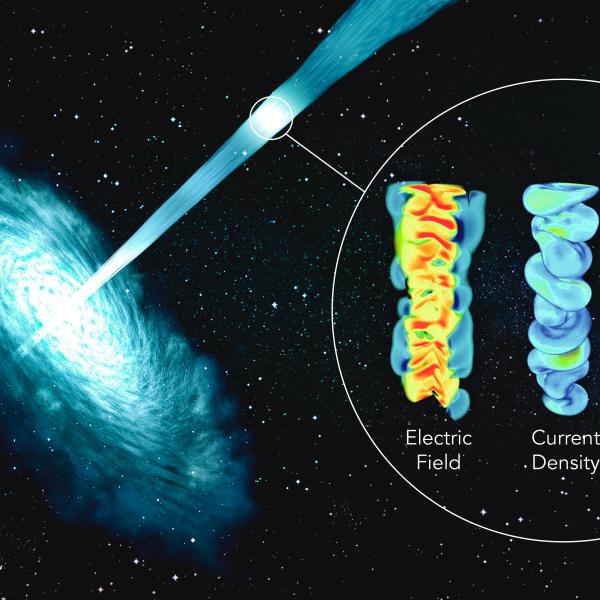
Presented by Eric Charles. A single gamma ray carries millions of times the energy of a single photon of visible light. This means that gamma rays are produced only in the most convulsive environments in the universe – pulsars spinning...
Researchers from SLAC and around the world increasingly use machine learning to handle Big Data produced in modern experiments and to study some of the most fundamental properties of the universe.
A SLAC-Stanford study reveals exactly what it takes for diamond to crystallize around a “seed” cluster of atoms. The results apply to industrial processes and to what happens in clouds overhead.