SLAC topics

Advanced accelerator R and D RSS feed

New technologies, such as "plasma wakefield" accelerators, can boost electrons to very high energies in very short distances. This could lead to linear accelerators that are 100 times more powerful, boosting electrons to a given energy in one hundredth the distance. 

Related link: Advanced accelerators

Browse tagged content below
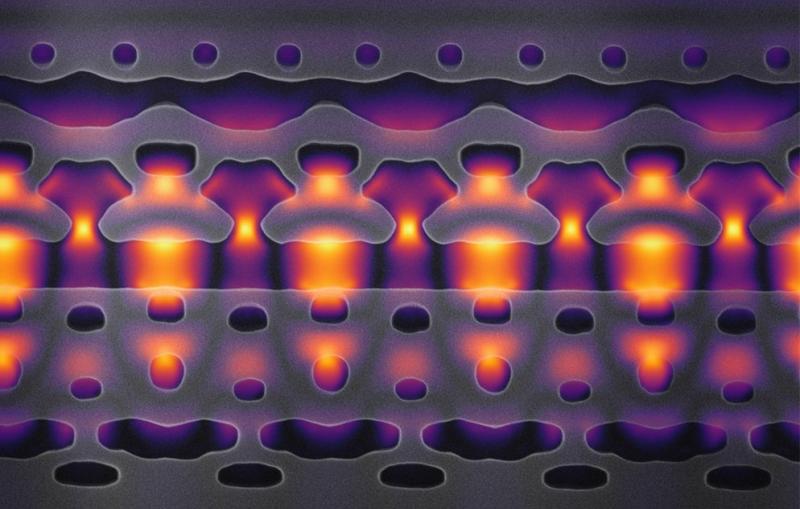
This image, magnified 25,000 times, shows a section of an accelerator-on-a-chip.
News Release

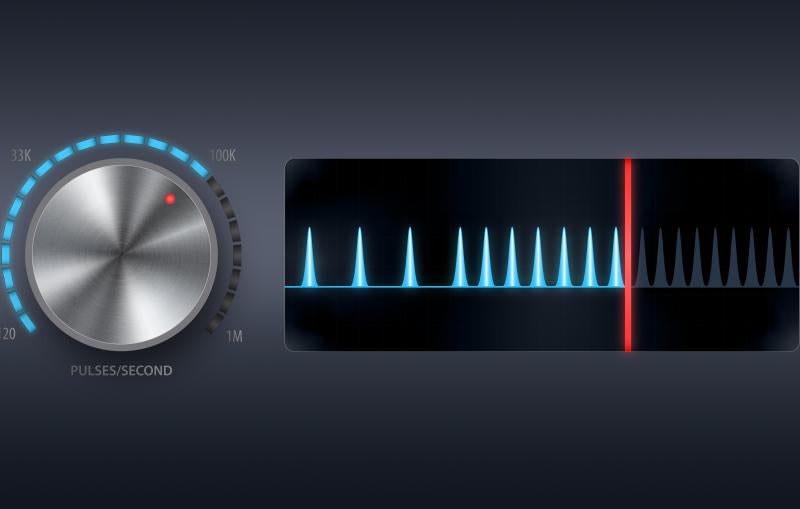
Experiments running at these higher pulse rates will allow scientists to capture ultrafast processes with greater precision, collect data more efficiently and explore phenomena...

lcls ii milestone
Feature

The SLAC team is developing digital twins – powered by AI and high-performance computing – to help quickly shape high-quality particle beams for the...

hand pointing to digital twin
Multimedia

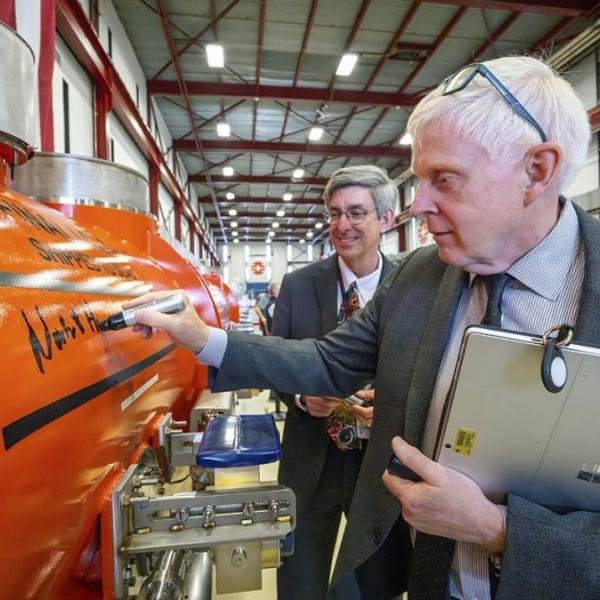
His visit highlighted the breadth of our world-class research and the people and collaborations that make it possible. A key theme of the day...

U.S. Deputy Secretary of Energy Danly watches a simulation of dark matter.
Feature

The technique could improve how scientists study materials and drive advancements in high-performance technologies, such as next-generation computer chips.

poincare beams
Feature

Researchers positioned lasers to compress billions of electrons together, creating a beam five times more powerful than before.

Claudio Emma and Brendan O’Shea examine experimental apparatus.
News Brief

Scientists studying laser-plasma proton acceleration made an unexpected breakthrough, simultaneously resolving multiple long-standing problems although they had only aimed to address one. 

Graphic depiction of a laser beam going through a water target
News Release

The high-energy upgrade will keep the U.S. at the forefront of X-ray science and technology, allowing researchers to advance fields such as sustainability, human...

LCLS-II-HE
Feature

David Cesar, Julia Gonski and W.L. Kimmy Wu will each receive $2.75 million issued over five years for their research in X-ray and ultrafast...

Early Career Award Winners 2024
Feature

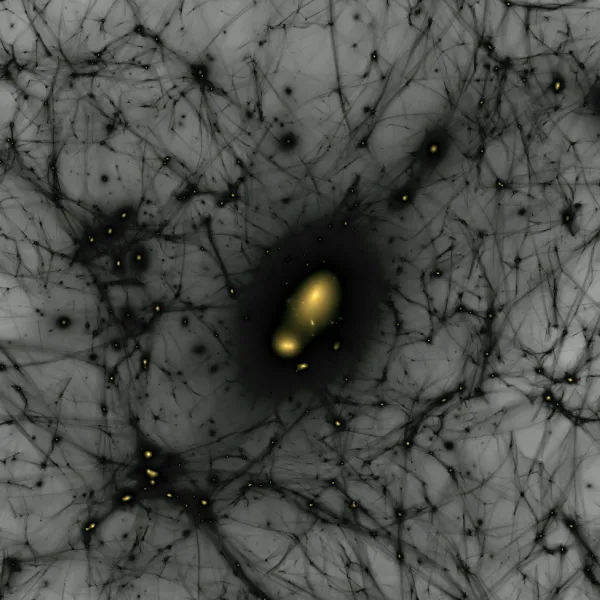
A new report outlines suggestions for federal investments needed for the next generation of transformative discoveries in particle physics and cosmology, including priority projects...

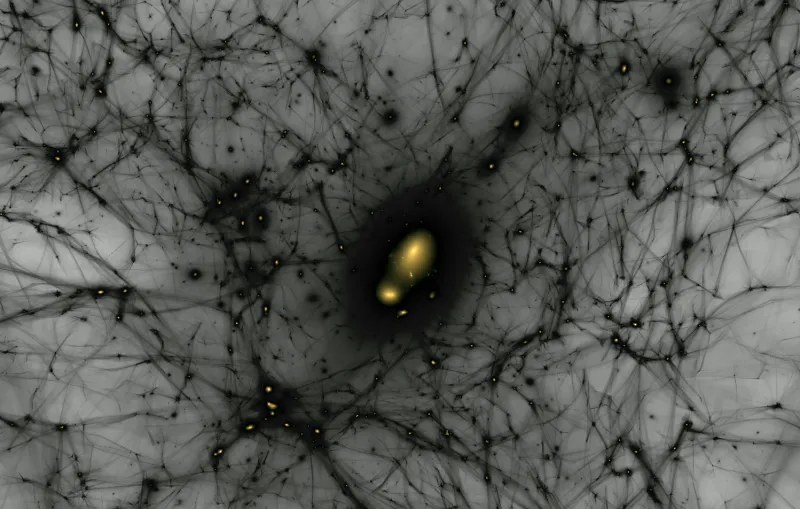
A web of dark matter, in which galaxies are forming.
Feature

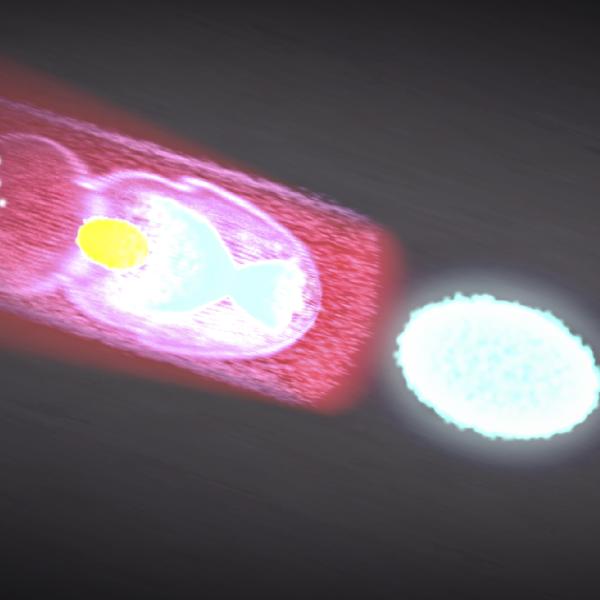
What could smaller particle accelerators look like in the future? SLAC scientists are working on innovations that could give more researchers access to accelerator...

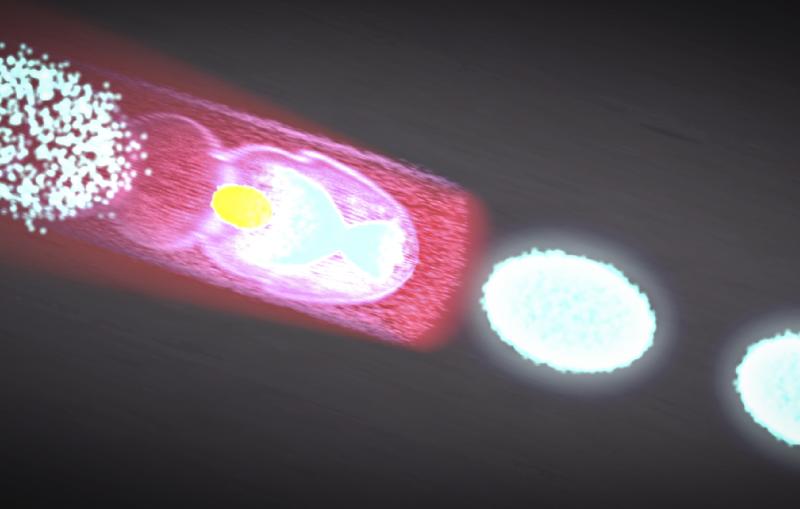
This is a graphic image of particles moving through plasma during plasma wakefield acceleration.
Feature

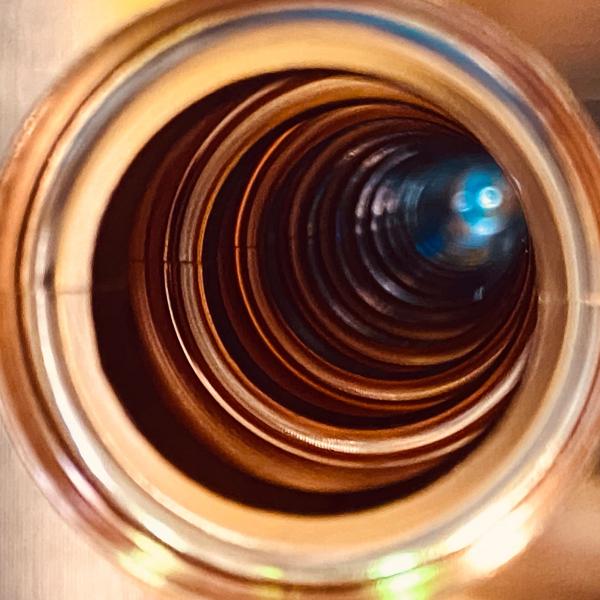
The future of experimental particle physics is exciting –  and energy intensive. SLAC physicists are thinking about how to make one proposal, the Cool...

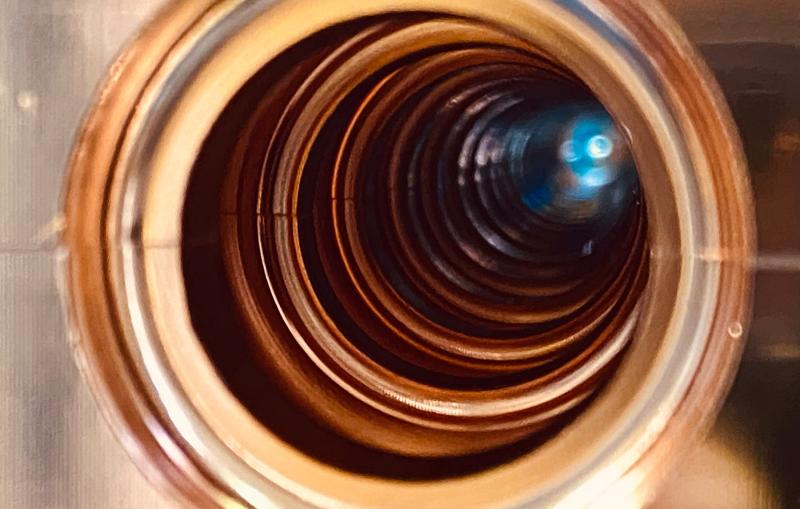
The view down a copper tube.
News Release

With up to a million X-ray flashes per second, 8,000 times more than its predecessor, it transforms the ability of scientists to explore atomic-scale...

LCLS-II first light