SLAC National Accelerator Laboratory
    • About

      Learn about our science, people, facilities and partners. Discover our history and vision for the future.

    • OUR STORY
      • Mission, vision, values
      • History
    • LAB OVERVIEW
      • SLAC at a glance
      • Lab organization
      • Our partnerships
    • OUR PEOPLE
      • Leadership
      • Meet our teams
      • Faculty
    • VISIT SLAC
      • Public tours
      • Contact us
    • Resources
      • Images, videos & more
      • Brochures & fact sheets
    • Connect With Us
      • Facebook
      • Flickr
      • Instagram
      • LinkedIn
      • Twitter
      • YouTube
    video

    Who we are

    We explore radically new ideas with an entrepreneurial mindset.

    Science and User Support Building to the left and Arrillaga Science Center building to the right from above the Main Quad at SLAC's campus.
    • Research

      Get an overview of research at SLAC: X-ray and ultrafast science, particle and astrophysics, cosmology, particle accelerators, biology, energy and technology.

    • X-ray and Ultrafast science icon X-ray & ultrafast science

      Revealing nature’s fastest processes with X-rays, lasers and electrons

    • Physics of the universe science icon Physics of the universe

      Studying the particles and forces that knit the cosmos together

    • Advanced Accelerators science icon Advanced accelerators

      Building smaller, faster, more powerful accelerators for all

    • Science of life science icon Science of life

      Understanding the machinery of life at its most basic level

    • New technologies science icon New technologies

      Inventing new tools for science and society

    • Energy sciences science icon Energy sciences

      Finding clean, sustainable solutions for the world’s energy challenges

    Spotlight

    SLAC science explained

    Cut through the jargon while exploring our research.

    SAGE campers have fun experimenting with a Van de Graff generator
    • Facilities & Centers

      Learn more about the places where science happens at SLAC: our major facilities, institutes and centers.

    • SCIENTIFIC FACILITIES
      • LCLS website

        Linac Coherent Light Source

      • SSRL website

        Stanford Synchrotron Radiation Lightsource

      • FACET-II website

        Facility for Advanced Accelerator Experimental Tests

      • CryoEM website

        Cryogenic Electron Microscopy

    • JOINT INSTITUTES & CENTERS
      • SIMES website

        Stanford Institute for Materials & Energy Science

      • KIPAC website

        Kavli Institute for Particle Astrophysics & Cosmology

      • PULSE website

        Stanford PULSE Institute

      • SUNCAT website

        Center for Interface Science & Catalysis

      • SLAC-Stanford Battery Center

    NSF-DOE Vera C. Rubin Observatory LSST

    SLAC & Stanford build the world’s largest digital camera for the Legacy Survey of Space and Time (LSST).

    A drone photo of Rubin Observatory while taking pictures during the First Look observing campaign
    • Work with Us

      Find a career, partner with us or apply to use our tools and facilities.

    • PARTNER WITH US
      • For industry partners
      • Research partnerships & tech transfer
      • Technology Innovation
    • CAREERS AT SLAC
      • Job openings
      • Internships
      • Life at SLAC
    • USE OUR FACILITIES

      Apply to become a user of our scientific research facilities and instruments.

    • COMING TO SLAC
    • BECOME A SUPPLIER

    Careers at SLAC

    Join our united workforce.

    SLAC staff in main quad
    • News & Events

      Get the latest news about the lab, our science and discoveries. Explore SLAC events and learn how to participate.

    • NEWS CENTER
      • News archive
      • Media resources
      • Images & videos
    • SLAC EVENTS
      • Public lectures
      • Scientific seminars
      • Community events
    • SYMMETRY MAGAZINE

      This joint publication of SLAC and Fermilab is your view into the world of particle physics.

    • EDUCATIONAL PROGRAMS
      • Educational tours
      • Resources for students & educators
    • Connect With Us
      • Facebook
      • Flickr
      • Instagram
      • LinkedIn
      • Twitter
      • YouTube
    Upcoming public lecture

    Reinventing the way we break down plastic waste

    Thursday, March 26, 2026
    7:00–8:00 p.m. PDT

    Public Lecture: Ozge Bozkurt
Filter search by
Staff portalStanford directoryComing to SLACResources for…
  1. Home
  2. …
Filter by research area
  • X-ray and ultrafast science (179)
  • Physics of the universe (127)
  • Energy sciences (43)
  • Science of life (28)
  • New technologies (22)
  • Advanced accelerators (10)
Filter by Type
  • (-) News (1774)
  • Image (387)
  • Video (227)
  • Event (157)
  • Page (67)
  • Person (66)
  • resource (64)
  • News Collection (4)
Sort by
1774 results
Display Grid Display List
Clear all
VIA Stanford News

James Cryan and Alison Marsden named American Physical Society Fellows

Cryan is an investigator with the Stanford PULSE Institute at SLAC, while Marsden is an associate professor of pediatrics and of bioengineering at Stanford.

October 5, 2020
Portrait of James Cryan and Alison Marsden
Feature

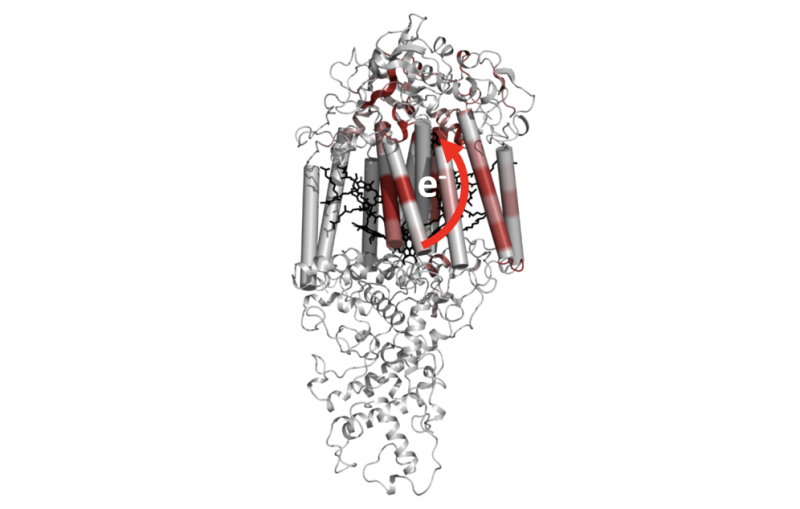
First detailed look at how a molecular Ferris wheel delivers protons to cellular factories

No human cell can function without these tiny machines, which cause disease when they go haywire and offer potential targets for therapeutic drugs.

October 7, 2020  ·  5 min read
Illustration of molecular Ferris wheel moving protons
News Release

SLAC starts up new facility to revolutionize particle accelerators

FACET-II will pave the way for a future generation of particle colliders and powerful light sources, opening avenues in high-energy physics, medicine, and materials...

October 12, 2020  ·  5 min read
FACET-II
News Release

A new approach boosts lithium-ion battery efficiency and puts out fires, too

Adding polymers and fireproofing to a battery’s current collectors makes it lighter, safer and about 20% more efficient.

October 15, 2020  ·  4 min read
Conceptual illustration of advantages of redesigned current collector.
Feature
VIA Symmetry Magazine

A powerful new tool to study the cosmos

Rubin Observatory will bring new capabilities to the studies of dark matter and dark energy.

October 13, 2020
Illustration of Vera Rubin Observatory
Feature

Slideshow: 2020 SSRL/LCLS Users’ Meeting

The annual conference for scientists who conduct research at SLAC’s light sources engaged more than 1,700 researchers in talks, workshops and discussions.

October 16, 2020  ·  1 min read
2020 SSRL/LCLS Users' Meeting
Feature

A day in the life of a SLAC machine maker

At the Machine Shop, Pete Franco crafts beautiful, intricate and precise parts for the lab’s latest scientific tools.

October 21, 2020  ·  5 min read
Pete Franco at the SLAC Machine Shop
Feature

Elisa Biasin receives 2020 LCLS Young Investigator Award for ultrafast X-ray science

The early-career award honors a promising leader in X-ray free-electron laser research.

October 20, 2020  ·  4 min read
elisa
News Brief

SLAC researchers join effort to make plastic more recyclable

Scientists at the Stanford Synchrotron Radiation Lightsource will study plastics and biologically-motivated processes that break them down in hopes of finding more efficient ways...

October 28, 2020  ·  3 min read
Clear plastic bottles
Feature

Gravitational lenses could hold the key to better estimates of the expansion of the universe

SLAC cosmologists are using multiple images of the same quasars, produced by massive galaxies’ gravitational pull, to calibrate cosmic distances. Their work may help...

November 16, 2020  ·  7 min read
Light from a distant quasar bends around a galaxy, creating four images of the quasar.
Feature

The LaserNetUS high-power laser consortium, including SLAC, receives $18 million from the U.S. Department of Energy

The initiative will give scientists more access to powerful lasers at universities and labs.

October 28, 2020  ·  3 min read
LaserNetUS
Feature

Scientists launch quest to develop quantum sensors for probing quantum materials

SLAC and Stanford partner with two Illinois universities to create the Center for Quantum Sensing and Quantum Materials, which aims to unravel mysteries associated...

October 29, 2020  ·  4 min read
Illustration of quantum processes
  • Go to previous page
  • Page 1
  • …
  • Page 87
  • Page 88
  • Page 89
  • Page 90
  • Currently on page 91
  • Page 92
  • Page 93
  • Page 94
  • Page 95
  • …
  • Page 148
  • Go to next page

SLAC National Accelerator Laboratory 
2575 Sand Hill Road  
Menlo Park, CA 94025-7015  
650.926.3300

  • Coming to SLAC
  • Connect with us
  • Contact us
  • Facebook
  • Flickr
  • Instagram
  • LinkedIn
  • Twitter
  • YouTube

Sign up for our email

Monthly newsletter for cutting-edge science, SLAC milestones and events.

Sign up

Bold People
Visionary Science
Real Impact

We explore how the universe works at the biggest, smallest and fastest scales and invent powerful tools used by scientists around the globe.

  • About
    • Our story
    • Our people
    • Lab overview
    • Visit SLAC
    • Resources
    • Connect with us
  • Research
    • X-ray & ultrafast science
    • Advanced accelerators
    • New technologies
    • Physics of the universe
    • Science of life
    • Energy sciences
    • SLAC science explained
  • Facilities & centers
    • Scientific facilities
    • Joint institutes & centers
  • Work with us
    • Partner with us
    • Become a supplier
    • Use our facilities
    • Careers at SLAC
  • News & events
    • News center
    • Symmetry Magazine
    • Media resources
    • Events
    • Educational programs
    • Connect with us
  • Staff portal
  • Privacy policy
  • Accessibility
  • Vulnerability disclosure
  • A–Z index
  • Website feedback
Home
  • SLAC home
  • Maps & directions
  • Emergency info
  • Careers

© 2026 SLAC National Accelerator Laboratory is operated by Stanford University for the U.S. Department of Energy Office of Science.

Stanford University U.S. Department of Energy
Top Top
Back to top Back to top