Learn about our science, people, facilities and partners. Discover our history and vision for the future.
Who we are
We explore radically new ideas with an entrepreneurial mindset.
Get an overview of research at SLAC: X-ray and ultrafast science, particle and astrophysics, cosmology, particle accelerators, biology, energy and technology.
Revealing nature’s fastest processes with X-rays, lasers and electrons
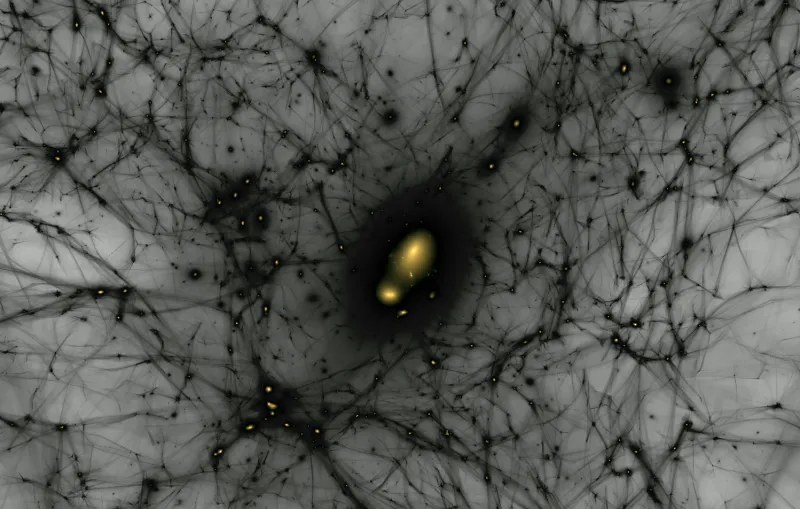
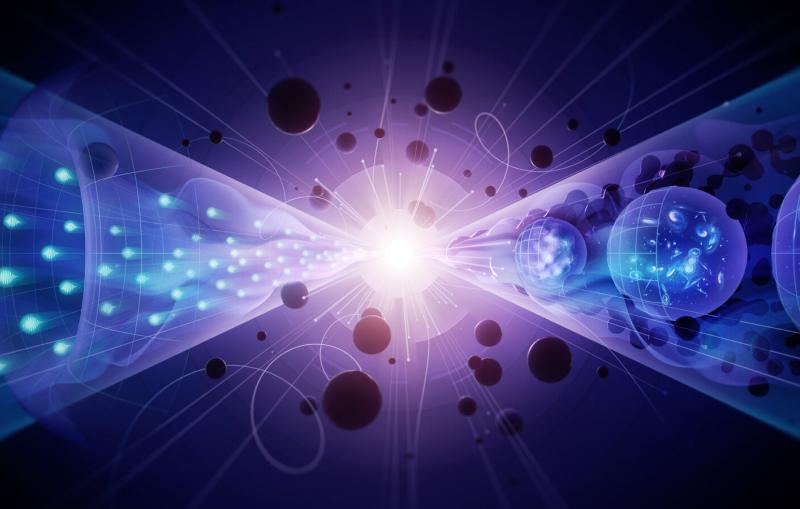
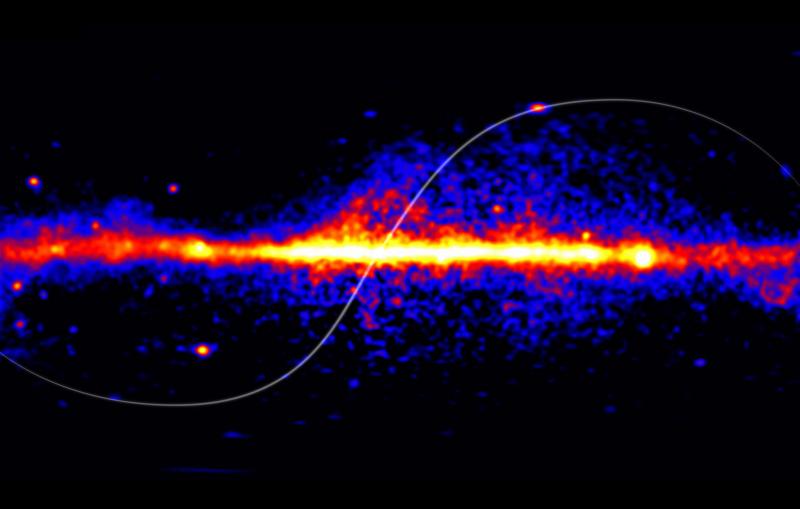
Studying the particles and forces that knit the cosmos together
Building smaller, faster, more powerful accelerators for all
Understanding the machinery of life at its most basic level
Inventing new tools for science and society
Finding clean, sustainable solutions for the world’s energy challenges
SLAC science explained
Cut through the jargon while exploring our research.
Learn more about the places where science happens at SLAC: our major facilities, institutes and centers.
Linac Coherent Light Source
Stanford Synchrotron Radiation Lightsource
Facility for Advanced Accelerator Experimental Tests
Cryogenic Electron Microscopy
Stanford Institute for Materials & Energy Science
Kavli Institute for Particle Astrophysics & Cosmology
Stanford PULSE Institute
Center for Interface Science & Catalysis
NSF-DOE Vera C. Rubin Observatory LSST
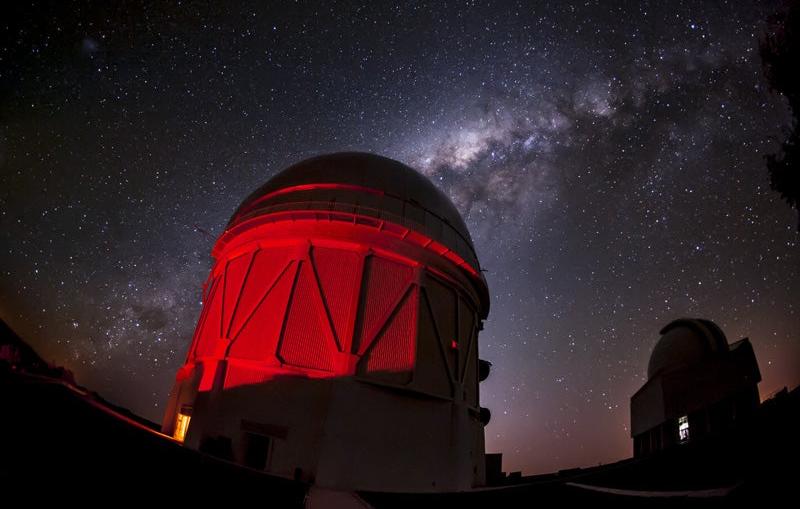
SLAC & Stanford build the world’s largest digital camera for the Legacy Survey of Space and Time (LSST).
Find a career, partner with us or apply to use our tools and facilities.
Apply to become a user of our scientific research facilities and instruments.
Careers at SLAC
Join our united workforce.
Get the latest news about the lab, our science and discoveries. Explore SLAC events and learn how to participate.
This joint publication of SLAC and Fermilab is your view into the world of particle physics.
Reinventing the way we break down plastic waste
Thursday, March 26, 20267:00–8:00 p.m. PDT
Two determined fellows share their thoughts on representation, mentorship and staying true to themselves in STEM.
The first reflective coating was applied to Vera C. Rubin Observatory’s 8.4-meter combined primary/tertiary mirror using the observatory’s onsite coating chamber.
Scientists inside and outside of particle physics and astrophysics are leaning on AI for assistance with complex tasks.
Election to the academy honors exceptional scholars who discover and advance knowledge and who apply knowledge to the problems of society.
Harold Hwang and Tony Heinz were among 124 newly elected members.
Physics may seem like its own world, but different sectors using machine learning are all part of the same universe.
Machine learning is becoming an essential part of a physicist’s toolkit. How should new students learn to use it?
Today NASA announced an award to Stanford University for development of a space-based gamma-ray telescope named GLAST.
Using high-intensity lasers, scientists hope to simulate a black hole event horizon in a laboratory, something that has never been done before.
The award acknowledged the on-time, on-budget completion of the $293 million B Factory Project.
President Clinton today named Sidney Drell as a winner of the Enrico Fermi Award, given for a lifetime of achievement in the field of...
Scientists at DOEs Stanford Linear Accelerator Center (SLAC) were in the last three days of the scheduled operation of the B Factorys PEP II...