SLAC National Accelerator Laboratory
    • About

      Learn about our science, people, facilities and partners. Discover our history and vision for the future.

    • OUR STORY
      • Mission, vision, values
      • History
    • LAB OVERVIEW
      • SLAC at a glance
      • Lab organization
      • Our partnerships
    • OUR PEOPLE
      • Leadership
      • Meet our teams
      • Faculty
    • VISIT SLAC
      • Public tours
      • Contact us
    • Resources
      • Images, videos & more
      • Brochures & fact sheets
    • Connect With Us
      • Facebook
      • Flickr
      • Instagram
      • LinkedIn
      • Twitter
      • YouTube
    video

    Who we are

    We explore radically new ideas with an entrepreneurial mindset.

    Science and User Support Building to the left and Arrillaga Science Center building to the right from above the Main Quad at SLAC's campus.
    • Research

      Get an overview of research at SLAC: X-ray and ultrafast science, particle and astrophysics, cosmology, particle accelerators, biology, energy and technology.

    • X-ray and Ultrafast science icon X-ray & ultrafast science

      Revealing nature’s fastest processes with X-rays, lasers and electrons

    • Physics of the universe science icon Physics of the universe

      Studying the particles and forces that knit the cosmos together

    • Advanced Accelerators science icon Advanced accelerators

      Building smaller, faster, more powerful accelerators for all

    • Science of life science icon Science of life

      Understanding the machinery of life at its most basic level

    • New technologies science icon New technologies

      Inventing new tools for science and society

    • Energy sciences science icon Energy sciences

      Finding clean, sustainable solutions for the world’s energy challenges

    Spotlight

    SLAC science explained

    Cut through the jargon while exploring our research.

    SAGE campers have fun experimenting with a Van de Graff generator
    • Facilities & Centers

      Learn more about the places where science happens at SLAC: our major facilities, institutes and centers.

    • SCIENTIFIC FACILITIES
      • LCLS website

        Linac Coherent Light Source

      • SSRL website

        Stanford Synchrotron Radiation Lightsource

      • FACET-II website

        Facility for Advanced Accelerator Experimental Tests

      • CryoEM website

        Cryogenic Electron Microscopy

    • JOINT INSTITUTES & CENTERS
      • SIMES website

        Stanford Institute for Materials & Energy Science

      • KIPAC website

        Kavli Institute for Particle Astrophysics & Cosmology

      • PULSE website

        Stanford PULSE Institute

      • SUNCAT website

        Center for Interface Science & Catalysis

      • SLAC-Stanford Battery Center

    NSF-DOE Vera C. Rubin Observatory LSST

    SLAC & Stanford build the world’s largest digital camera for the Legacy Survey of Space and Time (LSST).

    A drone photo of Rubin Observatory while taking pictures during the First Look observing campaign
    • Work with Us

      Find a career, partner with us or apply to use our tools and facilities.

    • PARTNER WITH US
      • For industry partners
      • Research partnerships & tech transfer
      • Technology Innovation
    • CAREERS AT SLAC
      • Job openings
      • Internships
      • Life at SLAC
    • USE OUR FACILITIES

      Apply to become a user of our scientific research facilities and instruments.

    • COMING TO SLAC
    • BECOME A SUPPLIER

    Careers at SLAC

    Join our united workforce.

    SLAC staff in main quad
    • News & Events

      Get the latest news about the lab, our science and discoveries. Explore SLAC events and learn how to participate.

    • NEWS CENTER
      • News archive
      • Media resources
      • Images & videos
    • SLAC EVENTS
      • Public lectures
      • Scientific seminars
      • Community events
    • SYMMETRY MAGAZINE

      This joint publication of SLAC and Fermilab is your view into the world of particle physics.

    • EDUCATIONAL PROGRAMS
      • Educational tours
      • Resources for students & educators
    • Connect With Us
      • Facebook
      • Flickr
      • Instagram
      • LinkedIn
      • Twitter
      • YouTube
    Upcoming public lecture

    Reinventing the way we break down plastic waste

    Thursday, March 26, 2026
    7:00–8:00 p.m. PDT

    Public Lecture: Ozge Bozkurt
Filter search by
Staff portalStanford directoryComing to SLACResources for…
  1. Home
  2. …
Filter by research area
  • X-ray and ultrafast science (183)
  • Physics of the universe (128)
  • Energy sciences (47)
  • Science of life (29)
  • New technologies (24)
  • Advanced accelerators (10)
Filter by Type
  • (-) News (1773)
  • Image (387)
  • Video (227)
  • Event (157)
  • Page (67)
  • (-) Person (66)
  • resource (64)
  • News Collection (4)
Sort by
1839 results
Display Grid Display List
Clear all
VIA Stanford News

Solving Big Questions Requires Big Computation

Understanding the origins of our solar system, the future of our planet or humanity requires complex calculations run on high-power computers.

June 2, 2014
Photo - tom abel in srcc
Feature
VIA Symmetry Magazine

Beam On: My Father’s Fight with Cancer

After working with particle accelerators his entire professional career, Heather Rock Woods’ father placed himself in the path of a beam to fight cancer.

June 3, 2014
Feature
VIA NASA

Black Hole ‘Batteries’ Keep Blazars Going and Going

Differences between two types of black-hole-powered galaxies may reflect a change in how the galaxies extract energy from their central black holes.

June 3, 2014
Feature

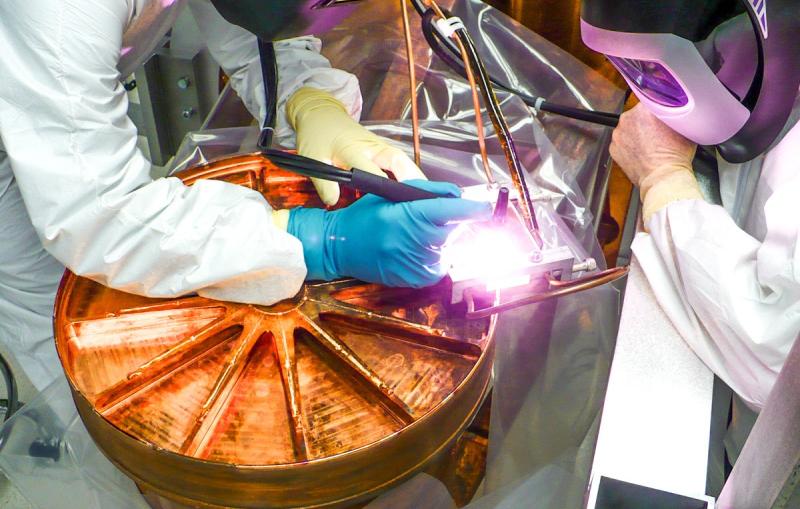
Scientists Search for Exotic Decay with Straightforward Implications

If it exists, a type of decay called neutrinoless double-beta decay will show that neutrinos are their own antiparticles and can help scientists determine...

June 4, 2014  ·  4 min read
Photo – SLAC engineers weld the xenon vessel shut
Feature

SLAC Contributes Cutting-edge Sensor Design to ATLAS Upgrade

A sensor design first envisioned in 1995 by physicists and engineers at SLAC plays a starring role in a major ATLAS detector upgrade at...

June 9, 2014  ·  3 min read
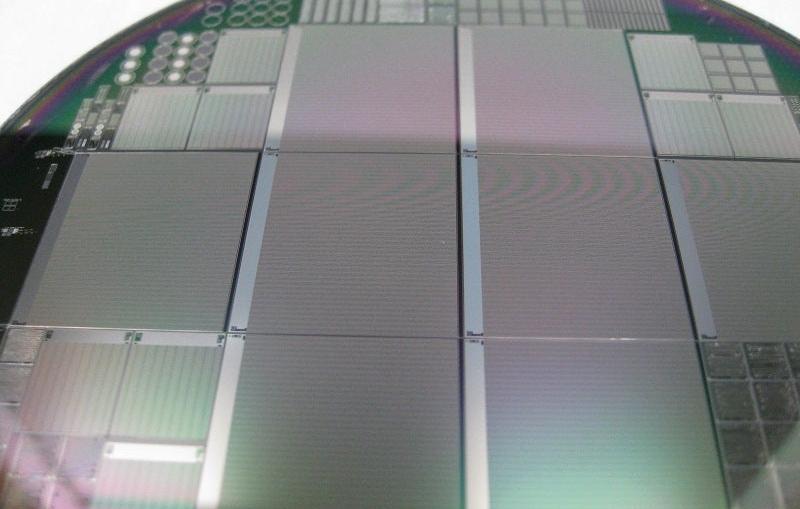
Photo - Several 3-D sensors etched into a silicon wafer
Feature

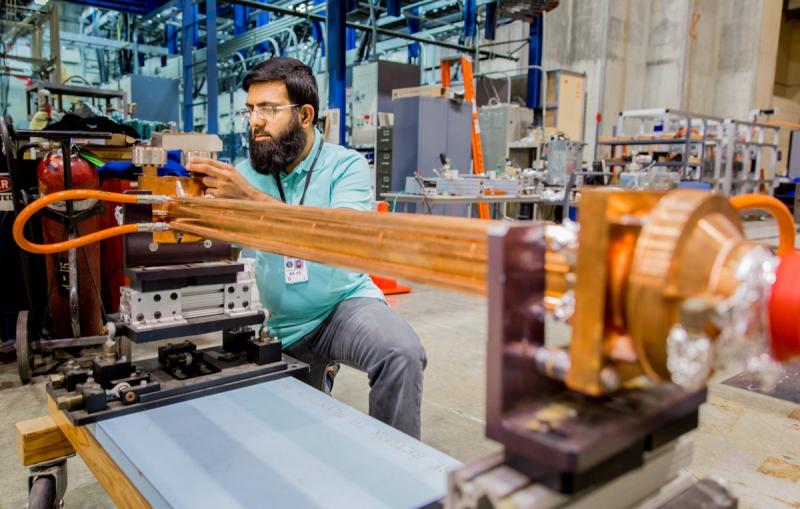
A New Way to Create Compact Light Sources

SLAC scientists have found a new way to produce bright pulses of light from accelerated electrons that could shrink "light source" technology used around...

June 6, 2014  ·  4 min read
A PhD student inspects the microwave undulator.
Feature

Journal Highlights X-ray Laser Impacts on Biological Science

Even in their infancy, X-ray lasers such as SLAC's Linac Coherent Light Source are notching a list of important discoveries, and a special issue...

June 12, 2014  ·  3 min read
Image - This illustration represents data derived from 175,000 X-ray diffraction patterns of Trapanosoma brucei cathepsin B, a protein relevant to African sleeping sickness, measured with X-ray pulses at SLAC's Linac Coherent Light Source. (CFEL)
News Release

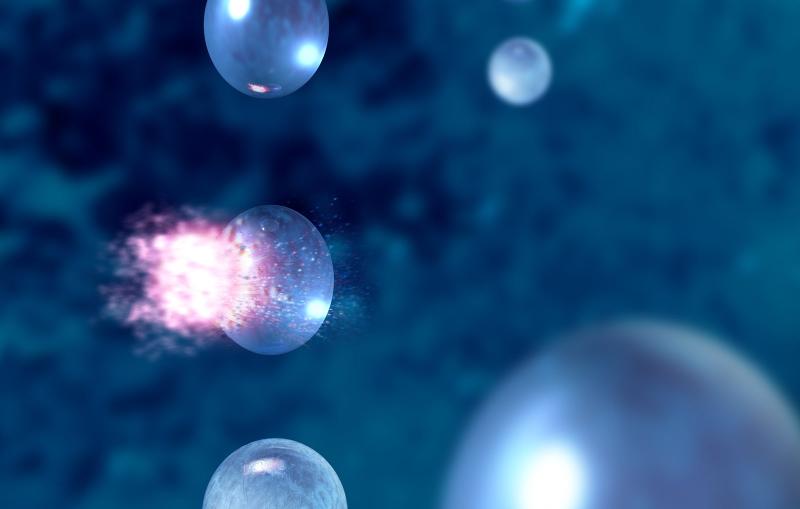
Scientists Take First Dip into Water’s Mysterious ‘No Man’s Land’

Scientists at the Department of Energy's SLAC National Accelerator Laboratory have made the first structural observations of liquid water at temperatures down to minus...
June 18, 2014  ·  4 min read
Artist's concept - see caption
Feature

Curiosity Created the Chemist

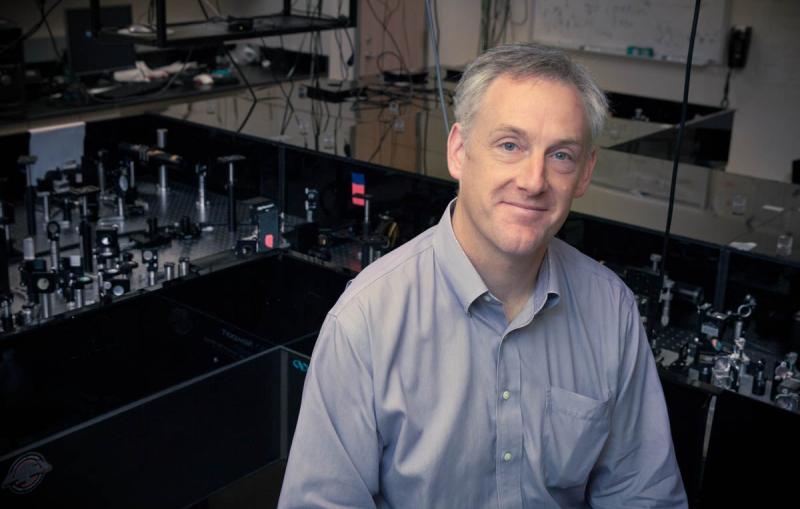
A sense of adventure and intellectual rigor led PULSE chemistry professor Kelly Gaffney to a successful career in science.

June 17, 2014  ·  4 min read
Image - PULSE chemistry professor Kelly Gaffney. (Brad Plummer/SLAC)
Feature
VIA Symmetry Magazine

The Art of Back-of-the-Envelope Calculations

Students estimate their way through pop culture problems to learn a life skill.

June 20, 2014
News Release

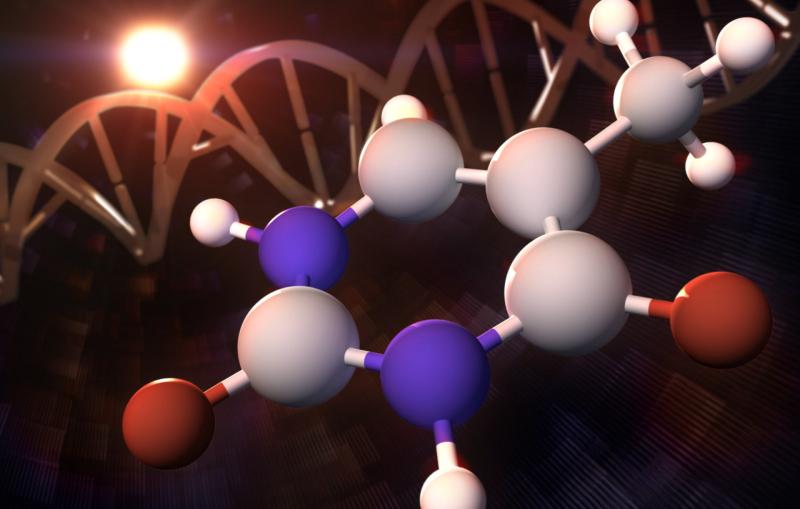
Scientists Use X-rays to Look at How DNA Protects Itself from UV Light

SLAC Research Reveals Rapid DNA Changes that Act as Molecular Sunscreen

June 23, 2014  ·  4 min read
Illustration showing a thymine molecule, DNA helix and the sun.
Feature
VIA Symmetry Magazine

Higgs Boson Shows Scientists New Tricks

A new result from the Large Hadron Collider strengthens the case that the Higgs interacts with both types of particles in the Standard Model.

June 23, 2014
  • Go to previous page
  • Page 1
  • …
  • Page 30
  • Page 31
  • Page 32
  • Page 33
  • Currently on page 34
  • Page 35
  • Page 36
  • Page 37
  • Page 38
  • …
  • Page 154
  • Go to next page

SLAC National Accelerator Laboratory 
2575 Sand Hill Road  
Menlo Park, CA 94025-7015  
650.926.3300

  • Coming to SLAC
  • Connect with us
  • Contact us
  • Facebook
  • Flickr
  • Instagram
  • LinkedIn
  • Twitter
  • YouTube

Sign up for our email

Monthly newsletter for cutting-edge science, SLAC milestones and events.

Sign up

Bold People
Visionary Science
Real Impact

We explore how the universe works at the biggest, smallest and fastest scales and invent powerful tools used by scientists around the globe.

  • About
    • Our story
    • Our people
    • Lab overview
    • Visit SLAC
    • Resources
    • Connect with us
  • Research
    • X-ray & ultrafast science
    • Advanced accelerators
    • New technologies
    • Physics of the universe
    • Science of life
    • Energy sciences
    • SLAC science explained
  • Facilities & centers
    • Scientific facilities
    • Joint institutes & centers
  • Work with us
    • Partner with us
    • Become a supplier
    • Use our facilities
    • Careers at SLAC
  • News & events
    • News center
    • Symmetry Magazine
    • Media resources
    • Events
    • Educational programs
    • Connect with us
  • Staff portal
  • Privacy policy
  • Accessibility
  • Vulnerability disclosure
  • A–Z index
  • Website feedback
Home
  • SLAC home
  • Maps & directions
  • Emergency info
  • Careers

© 2026 SLAC National Accelerator Laboratory is operated by Stanford University for the U.S. Department of Energy Office of Science.

Stanford University U.S. Department of Energy
Top Top
Back to top Back to top