Learn about our science, people, facilities and partners. Discover our history and vision for the future.
Who we are
We explore radically new ideas with an entrepreneurial mindset.
Get an overview of research at SLAC: X-ray and ultrafast science, particle and astrophysics, cosmology, particle accelerators, biology, energy and technology.
Revealing nature’s fastest processes with X-rays, lasers and electrons
Studying the particles and forces that knit the cosmos together
Building smaller, faster, more powerful accelerators for all
Understanding the machinery of life at its most basic level
Inventing new tools for science and society
Finding clean, sustainable solutions for the world’s energy challenges
SLAC science explained
Cut through the jargon while exploring our research.
Learn more about the places where science happens at SLAC: our major facilities, institutes and centers.
Linac Coherent Light Source
Stanford Synchrotron Radiation Lightsource
Facility for Advanced Accelerator Experimental Tests
Cryogenic Electron Microscopy
Stanford Institute for Materials & Energy Science
Kavli Institute for Particle Astrophysics & Cosmology
Stanford PULSE Institute
Center for Interface Science & Catalysis
NSF-DOE Vera C. Rubin Observatory LSST
SLAC & Stanford build the world’s largest digital camera for the Legacy Survey of Space and Time (LSST).
Find a career, partner with us or apply to use our tools and facilities.
Apply to become a user of our scientific research facilities and instruments.
Careers at SLAC
Join our united workforce.
Get the latest news about the lab, our science and discoveries. Explore SLAC events and learn how to participate.
This joint publication of SLAC and Fermilab is your view into the world of particle physics.
How scientists are building the AI-powered laboratory
Thursday, June 4, 2026
A new study is a step forward in understanding why perovskite materials work so well in energy devices and potentially leads the way toward...
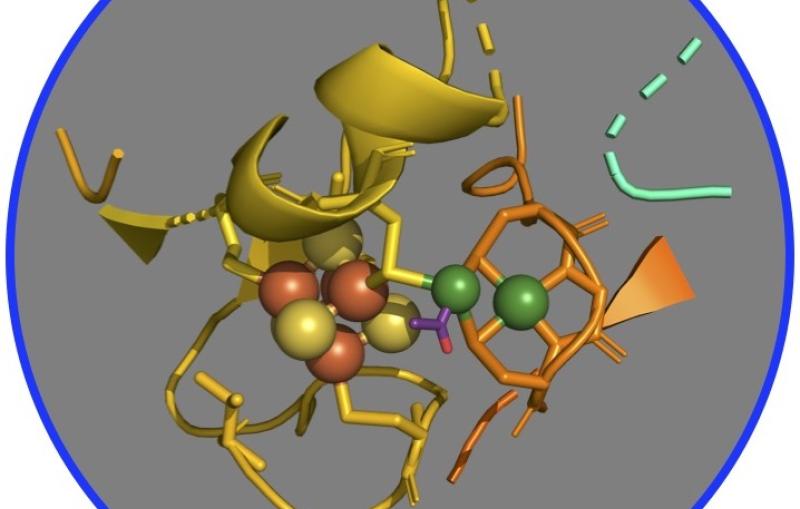
In a major step forward, SLAC’s X-ray laser captures all four stable states of the process that produces the oxygen we breathe, as well...
Researchers mapped trace elements within Pleistocene fossils to learn about the life of a long-extinct subspecies of spotted hyena.
Predicted by Einstein and discovered in 1979, gravitational lensing helps astrophysicists understand the evolving shape of the universe.
SLAC and Stanford researchers secure support for two projects that share one goal: to reduce the side effects of radiation therapy by vastly shrinking...
New research will help in the quest to design low-cost drugs that can tackle postpartum bleeding and other conditions without severe side effects.
During the last four years, LHC scientists have filled in gaps in our knowledge and tested the boundaries of the Standard Model.
The SIMES researcher was a rare theorist who concerned himself with the implications of his abstract ideas about new quantum states of matter on...
SLAC scientists find a new way to explain how a black hole’s plasma jets boost particles to the highest energies observed in the universe...
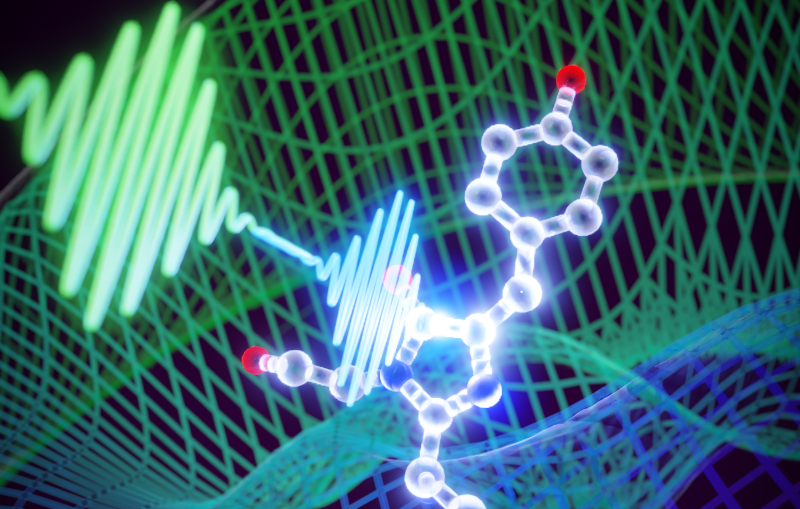
Ultrafast manipulation of material properties with light could stimulate the development of novel electronics, including quantum computers.
Over the past few years, Kathleen Ratcliffe and Tien Fak Tan have worked together to help build the superconducting accelerator that will drive new...