SLAC National Accelerator Laboratory
    • About

      Learn about our science, people, facilities and partners. Discover our history and vision for the future.

    • OUR STORY
      • Mission, vision, values
      • History
    • LAB OVERVIEW
      • SLAC at a glance
      • Lab organization
      • Our partnerships
    • OUR PEOPLE
      • Leadership
      • Meet our teams
      • Faculty
    • VISIT SLAC
      • Public tours
      • Contact us
    • Resources
      • Images, videos & more
      • Brochures & fact sheets
    • Connect With Us
      • Facebook
      • Flickr
      • Instagram
      • LinkedIn
      • Twitter
      • YouTube
    video

    Who we are

    We explore radically new ideas with an entrepreneurial mindset.

    Science and User Support Building to the left and Arrillaga Science Center building to the right from above the Main Quad at SLAC's campus.
    • Research

      Get an overview of research at SLAC: X-ray and ultrafast science, particle and astrophysics, cosmology, particle accelerators, biology, energy and technology.

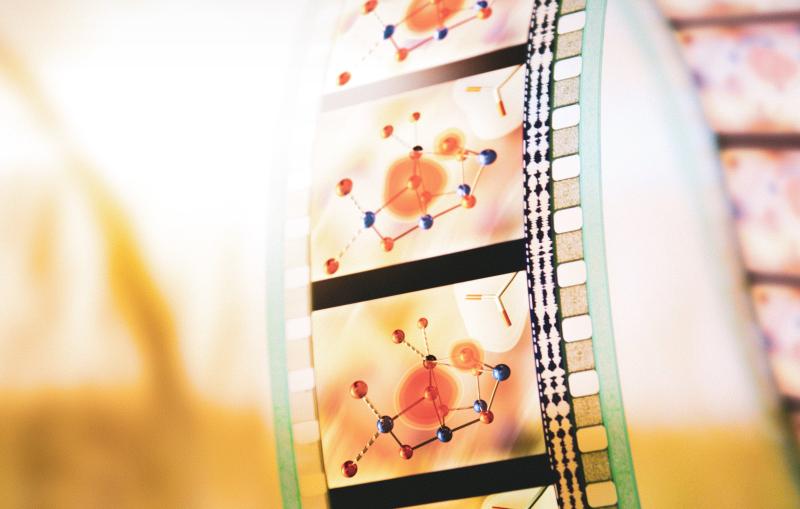
    • X-ray and Ultrafast science icon X-ray & ultrafast science

      Revealing nature’s fastest processes with X-rays, lasers and electrons

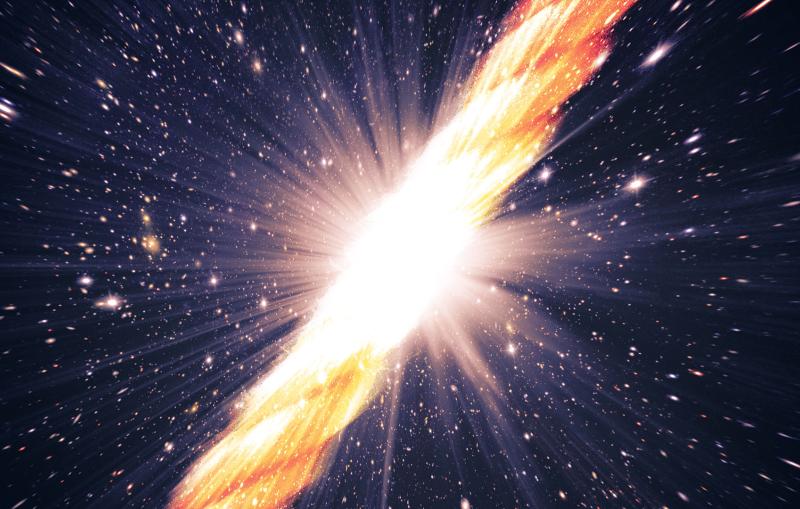
    • Physics of the universe science icon Physics of the universe

      Studying the particles and forces that knit the cosmos together

    • Advanced Accelerators science icon Advanced accelerators

      Building smaller, faster, more powerful accelerators for all

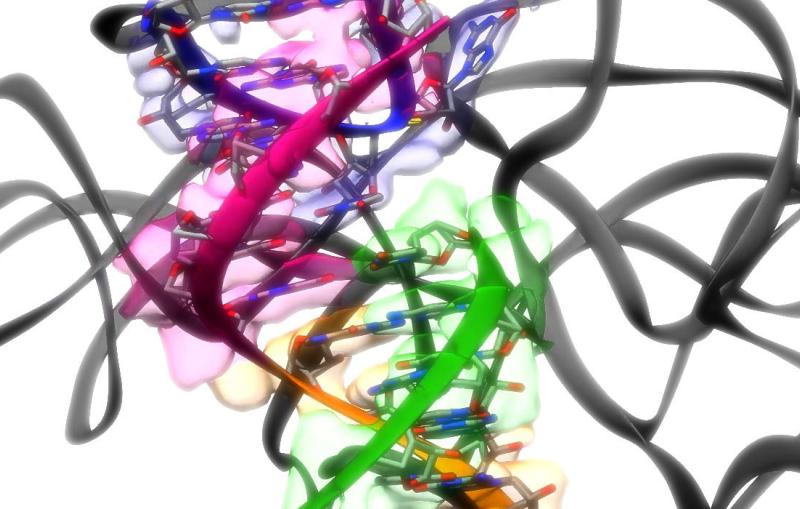
    • Science of life science icon Science of life

      Understanding the machinery of life at its most basic level

    • New technologies science icon New technologies

      Inventing new tools for science and society

    • Energy sciences science icon Energy sciences

      Finding clean, sustainable solutions for the world’s energy challenges

    Spotlight

    SLAC science explained

    Cut through the jargon while exploring our research.

    SAGE campers have fun experimenting with a Van de Graff generator
    • Facilities & Centers

      Learn more about the places where science happens at SLAC: our major facilities, institutes and centers.

    • SCIENTIFIC FACILITIES
      • LCLS website

        Linac Coherent Light Source

      • SSRL website

        Stanford Synchrotron Radiation Lightsource

      • FACET-II website

        Facility for Advanced Accelerator Experimental Tests

      • CryoEM website

        Cryogenic Electron Microscopy

    • JOINT INSTITUTES & CENTERS
      • SIMES website

        Stanford Institute for Materials & Energy Science

      • KIPAC website

        Kavli Institute for Particle Astrophysics & Cosmology

      • PULSE website

        Stanford PULSE Institute

      • SUNCAT website

        Center for Interface Science & Catalysis

      • SLAC-Stanford Battery Center

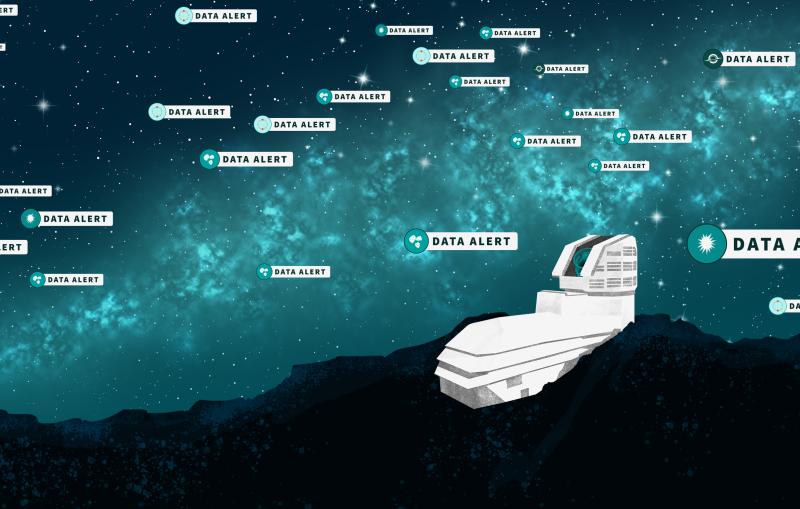
    NSF-DOE Vera C. Rubin Observatory LSST

    SLAC & Stanford build the world’s largest digital camera for the Legacy Survey of Space and Time (LSST).

    A drone photo of Rubin Observatory while taking pictures during the First Look observing campaign
    • Work with Us

      Find a career, partner with us or apply to use our tools and facilities.

    • PARTNER WITH US
      • For industry partners
      • Research partnerships & tech transfer
      • Technology Innovation
    • CAREERS AT SLAC
      • Job openings
      • Internships
      • Life at SLAC
    • USE OUR FACILITIES

      Apply to become a user of our scientific research facilities and instruments.

    • COMING TO SLAC
    • BECOME A SUPPLIER

    Careers at SLAC

    Join our united workforce.

    SLAC staff in main quad
    • News & Events

      Get the latest news about the lab, our science and discoveries. Explore SLAC events and learn how to participate.

    • NEWS CENTER
      • News archive
      • Media resources
      • Images & videos
    • SLAC EVENTS
      • Public lectures
      • Scientific seminars
      • Community events
    • SYMMETRY MAGAZINE

      This joint publication of SLAC and Fermilab is your view into the world of particle physics.

    • EDUCATIONAL PROGRAMS
      • Educational tours
      • Resources for students & educators
    • Connect With Us
      • Facebook
      • Flickr
      • Instagram
      • LinkedIn
      • Twitter
      • YouTube
    Spotlight

    SLAC events

    Event attendees listen to a science lecture
Filter search by
Staff portalStanford directoryComing to SLACResources for…
  1. Home
  2. …
Filter by research area
  • X-ray and ultrafast science (344)
  • (-) Physics of the universe (285)
  • Energy sciences (96)
  • (-) Science of life (87)
  • New technologies (58)
  • Advanced accelerators (41)
Filter by Type
  • News (160)
  • Image (84)
  • Video (84)
  • Event (31)
  • resource (5)
  • Page (4)
  • Person (3)
  • News Collection (1)
Sort by
372 results
Display Grid Display List
Clear all
Feature

Recommendations for U.S. government investments in particle physics include SLAC research priorities

A new report outlines suggestions for federal investments needed for the next generation of transformative discoveries in particle physics and cosmology, including priority projects...

December 8, 2023  ·  3 min read
A web of dark matter, in which galaxies are forming.
Feature
VIA Symmetry Magazine

Scientists design program for the future of US particle physics research

The High Energy Physics Advisory Panel has approved the recommendations of the P5 Report.

December 8, 2023
P5 report
News Brief

Fermi mission creates 14-year time-lapse of the gamma-ray sky

Supermassive black holes at the hearts of distant galaxies – and even our own sun – shine in the new movie. 

December 20, 2023  ·  3 min read
A blobby trail of orange, surrounded by red and blue, cuts across a black background.
Feature

Final supernova results from Dark Energy Survey offer unique insights into the expansion of the universe

The latest results put the strongest constraints on the expansion of the universe ever obtained with DES supernova data.

January 12, 2024  ·  8 min read
Blanco Telescope
Feature

Saket Bagde wins 2022 Spicer Young Investigator Award for deciphering how nature produces some antibiotics

Bagde is being recognized for his successful efforts to describe the structures and mechanisms of several biologically important enzymes.

September 21, 2022  ·  2 min read
A man wearing a yellow shirt smiles at the camera.
Feature
VIA Symmetry Magazine

Finding art in astrophysics technology

LSST Camera images provide the inspiration for artist Lennart Lahuis’s “Astromelancholia.”

November 22, 2022
Broccoli
Video

SLAC Recent History: Building the world's largest digital camera for a 10-year survey of the universe

SLAC Recent History (1990s-today NSF-DOE Vera C. Rubin Observatory LSST Camera module) – Building the largest digital camera for a 10-year survey of the...

September 29, 2022  ·  00:06:59  runtime
Building the largest digital camera for a 10-year survey of the universe
Video
Research

Science of life

Tiny microbes and molecular machines have an outsized impact on human health, and they play key roles in the vast global cycles that shape climate and make carbon and nitrogen available to all living things. SLAC biology advances our understanding...

Identifying each tiny chemical step in photosynthesis could aid the development of renewable energy technology.
Research

Physics of the universe

In its infancy, the universe was awash in fundamental particles. Over billions of years, matter cooled and clumped into stars and galaxies, tied together by a cosmic web of dark matter.

Dwarf Galaxy 3.
Explore our Frontier Research

Astrophysics & cosmology

To explore the birth of the universe, the formation of stars and galaxies and the fundamental structure of space and time, SLAC researchers develop cutting-edge technologies for sensitive experiments located deep underground, on the surface and in space.

This composite image shows the galaxy cluster 1E 0657-56, also known as the "bullet cluster."
Explore our frontier research

Elementary particle physics

Working at the forefront of particle physics, SLAC scientists use powerful particle accelerators to create and study nature’s fundamental building blocks and forces, build sensitive detectors to search for new particles and develop theories that explain and guide experiments.

Concept Art: B to D-Star-Tau-Nu
Photograph

Cosmic Abundance

This image captures a small section of NSF–DOE Vera C. Rubin Observatory’s view of the Virgo Cluster, offering a vivid glimpse of the variety...

June 18, 2025
A small section of NSF–DOE Vera C. Rubin Observatory’s view of the Virgo Cluster, offering a vivid glimpse of the variety in the cosmos
  • Go to previous page
  • Page 1
  • …
  • Page 23
  • Page 24
  • Page 25
  • Page 26
  • Page 27
  • Currently on page 28
  • Page 29
  • Page 30
  • Page 31
  • Go to next page

SLAC National Accelerator Laboratory 
2575 Sand Hill Road  
Menlo Park, CA 94025-7015  
650.926.3300

  • Coming to SLAC
  • Connect with us
  • Contact us
  • Facebook
  • Flickr
  • Instagram
  • LinkedIn
  • Twitter
  • YouTube

Sign up for our email

Monthly newsletter for cutting-edge science, SLAC milestones and events.

Sign up

Bold People
Visionary Science
Real Impact

We explore how the universe works at the biggest, smallest and fastest scales and invent powerful tools used by scientists around the globe.

  • About
    • Our story
    • Our people
    • Lab overview
    • Visit SLAC
    • Resources
    • Connect with us
  • Research
    • X-ray & ultrafast science
    • Advanced accelerators
    • New technologies
    • Physics of the universe
    • Science of life
    • Energy sciences
    • SLAC science explained
  • Facilities & centers
    • Scientific facilities
    • Joint institutes & centers
  • Work with us
    • Partner with us
    • Become a supplier
    • Use our facilities
    • Careers at SLAC
  • News & events
    • News center
    • Symmetry Magazine
    • Media resources
    • Events
    • Educational programs
    • Connect with us
  • Staff portal
  • Privacy policy
  • Accessibility
  • Vulnerability disclosure
  • A–Z index
  • Website feedback
Home
  • SLAC home
  • Maps & directions
  • Emergency info
  • Careers

© 2026 SLAC National Accelerator Laboratory is operated by Stanford University for the U.S. Department of Energy Office of Science.

Stanford University U.S. Department of Energy
Top Top
Back to top Back to top