SLAC National Accelerator Laboratory
    • About

      Learn about our science, people, facilities and partners. Discover our history and vision for the future.

    • OUR STORY
      • Mission, vision, values
      • History
    • LAB OVERVIEW
      • SLAC at a glance
      • Lab organization
      • Our partnerships
    • OUR PEOPLE
      • Leadership
      • Meet our teams
      • Faculty
    • VISIT SLAC
      • Public tours
      • Contact us
    • Resources
      • Images, videos & more
      • Brochures & fact sheets
    • Connect With Us
      • Facebook
      • Flickr
      • Instagram
      • LinkedIn
      • Twitter
      • YouTube
    video

    Who we are

    We explore radically new ideas with an entrepreneurial mindset.

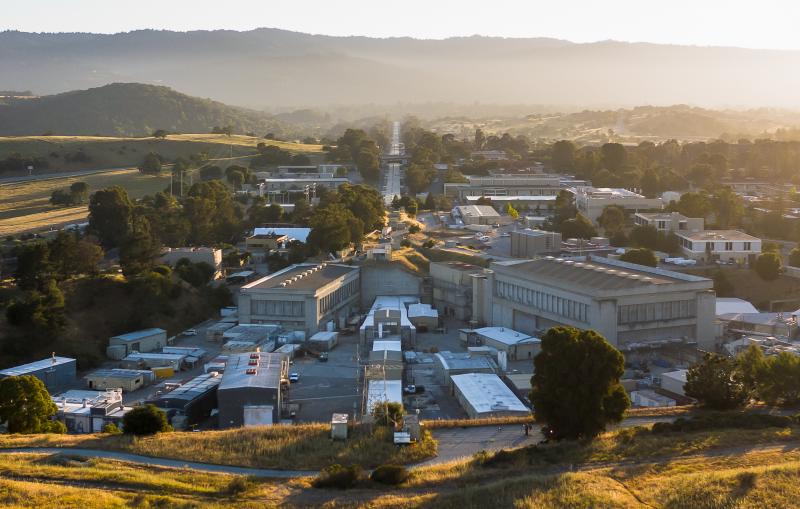
    Science and User Support Building to the left and Arrillaga Science Center building to the right from above the Main Quad at SLAC's campus.
    • Research

      Get an overview of research at SLAC: X-ray and ultrafast science, particle and astrophysics, cosmology, particle accelerators, biology, energy and technology.

    • X-ray and Ultrafast science icon X-ray & ultrafast science

      Revealing nature’s fastest processes with X-rays, lasers and electrons

    • Physics of the universe science icon Physics of the universe

      Studying the particles and forces that knit the cosmos together

    • Advanced Accelerators science icon Advanced accelerators

      Building smaller, faster, more powerful accelerators for all

    • Science of life science icon Science of life

      Understanding the machinery of life at its most basic level

    • New technologies science icon New technologies

      Inventing new tools for science and society

    • Energy sciences science icon Energy sciences

      Breaking new ground in securing abundant, affordable and reliable energy.

    Spotlight

    SLAC science explained

    Cut through the jargon while exploring our research.

    SAGE campers have fun experimenting with a Van de Graff generator
    • Facilities & Centers

      Learn more about the places where science happens at SLAC: our major facilities, institutes and centers.

    • SCIENTIFIC FACILITIES
      • LCLS website

        Linac Coherent Light Source

      • SSRL website

        Stanford Synchrotron Radiation Lightsource

      • FACET-II website

        Facility for Advanced Accelerator Experimental Tests

      • CryoEM website

        Cryogenic Electron Microscopy

    • JOINT INSTITUTES & CENTERS
      • SIMES website

        Stanford Institute for Materials & Energy Science

      • KIPAC website

        Kavli Institute for Particle Astrophysics & Cosmology

      • PULSE website

        Stanford PULSE Institute

      • SUNCAT website

        Center for Interface Science & Catalysis

      • SLAC-Stanford Battery Center

    NSF-DOE Vera C. Rubin Observatory LSST

    SLAC & Stanford build the world’s largest digital camera for the Legacy Survey of Space and Time (LSST).

    A drone photo of Rubin Observatory while taking pictures during the First Look observing campaign
    • Work with Us

      Find a career, partner with us or apply to use our tools and facilities.

    • PARTNER WITH US
      • For industry partners
      • Research partnerships & tech transfer
      • Technology Innovation
    • CAREERS AT SLAC
      • Job openings
      • Internships
      • Life at SLAC
    • USE OUR FACILITIES

      Apply to become a user of our scientific research facilities and instruments.

    • COMING TO SLAC
    • BECOME A SUPPLIER

    Careers at SLAC

    Join our united workforce.

    SLAC staff in main quad
    • News & Events

      Get the latest news about the lab, our science and discoveries. Explore SLAC events and learn how to participate.

    • NEWS CENTER
      • News archive
      • Media resources
      • Images & videos
    • SLAC EVENTS
      • Public lectures
      • Scientific seminars
      • Community events
    • SYMMETRY MAGAZINE

      This joint publication of SLAC and Fermilab is your view into the world of particle physics.

    • EDUCATIONAL PROGRAMS
      • Educational tours
      • Resources for students & educators
    • Connect With Us
      • Facebook
      • Flickr
      • Instagram
      • LinkedIn
      • Twitter
      • YouTube
    Upcoming Public Lecture

    Blazing the path to a fusion future

    Thursday, October 8, 7:00 p.m.

    Public Lecture: Arianna Gleason
Filter search by
Staff portalStanford directoryComing to SLACResources for…
  1. Home
  2. …
Filter by research area
  • (-) X-ray and ultrafast science (353)
  • Physics of the universe (286)
  • Energy sciences (102)
  • Science of life (88)
  • New technologies (61)
  • (-) Advanced accelerators (40)
Filter by Type
  • News (205)
  • Image (96)
  • Video (53)
  • Event (19)
  • Page (7)
  • resource (7)
  • Person (4)
  • News Collection (2)
Sort by
393 results
Display Grid Display List
Clear all
Feature
VIA Stanford

‘Real-world impact’: Stanford Board of Trustees learns how SLAC can change the future

The Stanford Board of Trustees held its first meeting of the 2022-23 academic year Oct. 17-18. Trustees toured the SLAC National Accelerator Laboratory and...

October 24, 2022
Aerial photo of SLAC research yard
Feature

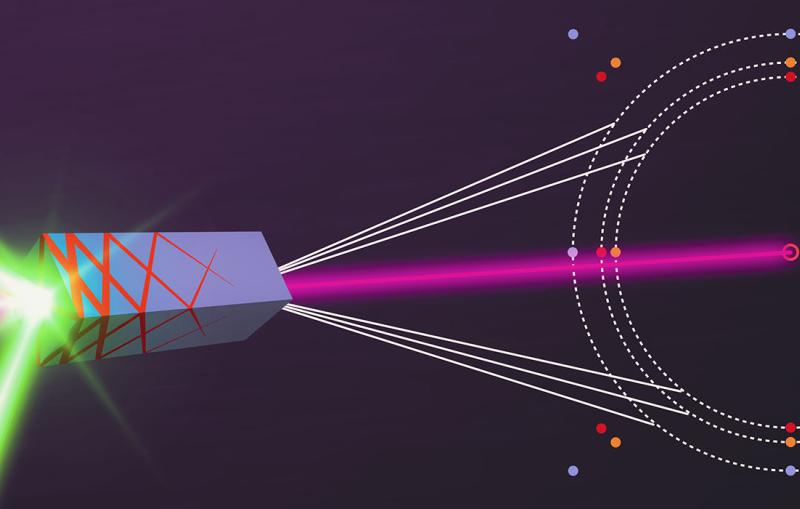
Artificial intelligence deciphers detector "clouds" to accelerate materials research

A machine learning algorithm automatically extracts information to speed up – and extend – the study of materials with X-ray pulse pairs.

November 7, 2022  ·  3 min read
A pattern of red and yellow dots surrounded by a ring of blue dots on a black background.
Feature

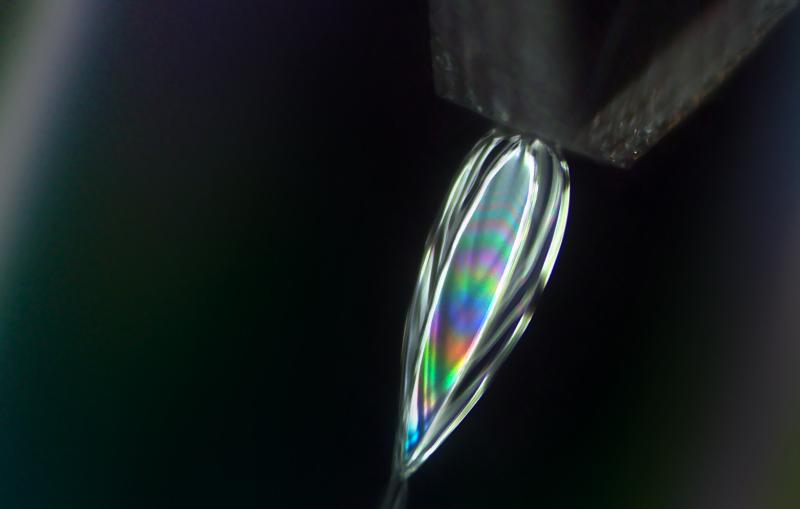
Shining a new light on oil-slick rainbows and other thin-layer physics

To invent a new tool for studying how chemicals react at interfaces, researchers shoot tiny jets of oil and water at each other and...

November 30, 2022  ·  4 min read
Rainbow colors in a sheet of layered liquids
News Release

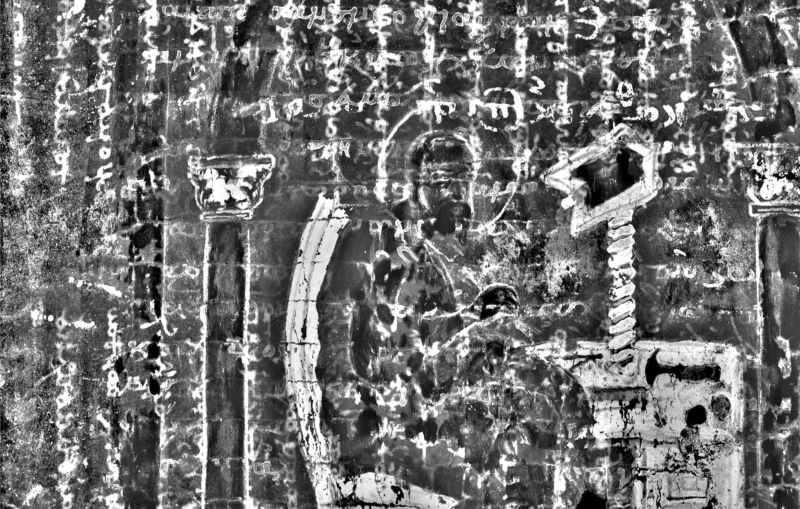
Archimedes Manuscript Yields Secrets under X-ray Gaze

For five days in May, the ancient collided with the ultra-modern at the Stanford Linear Accelerator Center (SLAC), bringing brilliant, long-hidden ideas to light...

June 16, 2005  ·  4 min read
X-ray fluorescence scan revealing both the Euchologion and Archimedes texts on a folio with a forged painting
Feature

Researchers resolve decades-long debate about shock-compressed silicon with unprecedented detail

They saw how the material finds a path to contorting and flexing to avoid being irreversibly crushed.

October 13, 2022  ·  5 min read
MEC silicon
Feature

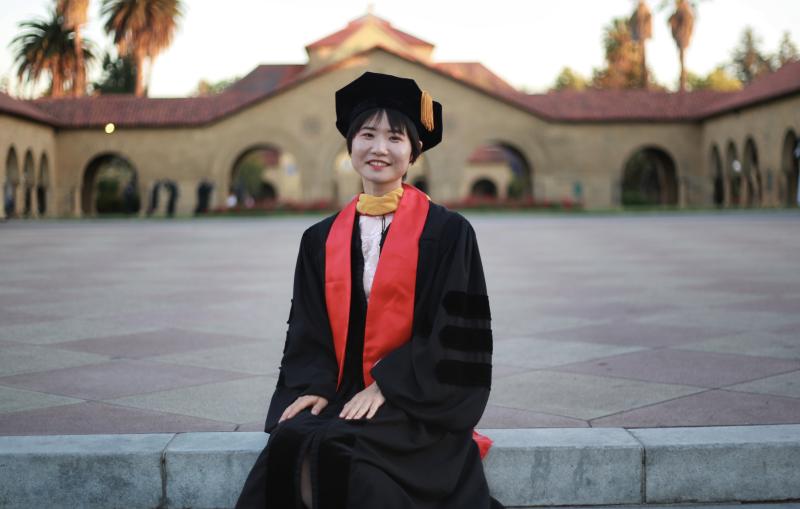
Yijing Huang wins 2022 LCLS Young Investigator Award for work on controlling unique structures of semiconductors

The award celebrates Huang’s achievements studying atom-scale physics with fast X-ray pulses.

October 31, 2022  ·  2 min read
Yijing Huang at Stanford University
Video

Quantum Lightswitch: A New Direction in Ultrafast Electronics

Public lecture presented by Joshua Turner

January 29, 2013  ·  01:14:35  runtime
Stillframe for public lecture
Video
Research

Advanced accelerators

Accelerators form the backbone of SLAC's national user facilities. They are complicated machines, with hundreds of thousands of components that all need to be designed, engineered, operated and maintained to achieve the highest energy acceleration and the highest quality particle...

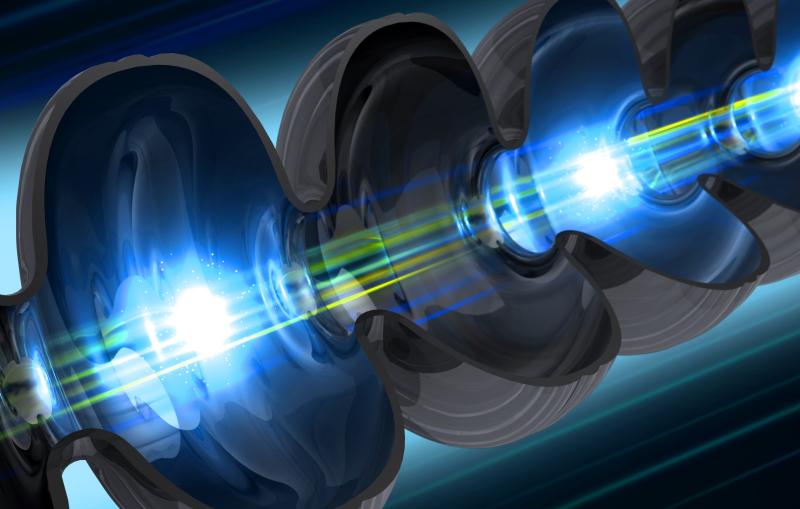
illustration of an electron beam traveling through a niobium cavity – a key component of SLAC’s future LCLS-II X-ray laser.
Feature

Scientists create first attosecond atomic X-ray laser

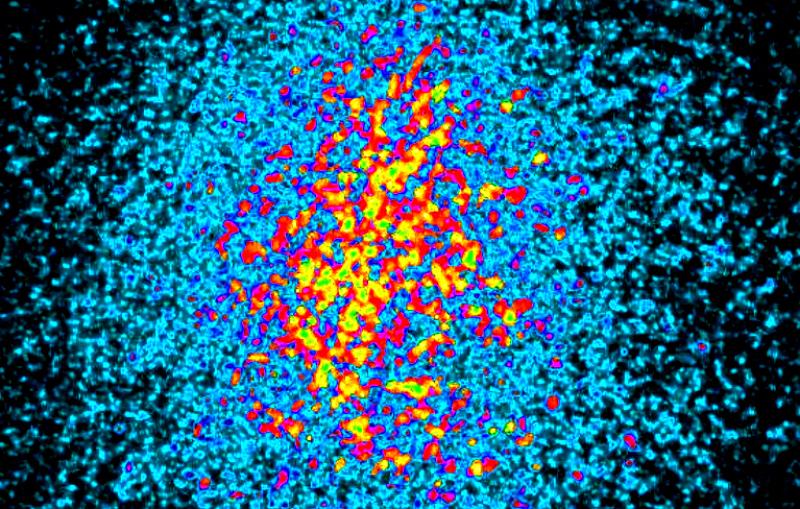
One-quintillionth of a second lasing breakthrough could lead to next-generation X-ray technologies, improving imaging in medical, material, and quantum science.
June 11, 2025  ·  3 min read
A purple blob with black streaks and a yellow center.
News Brief
VIA Stanford

Shambhu Ghimire named American Physical Society Fellow

He was honored for his work in ultrafast physics.

November 13, 2025
Portrait of Shambhu Ghimire
News Brief
Via Max Planck Institute for Nuclear Physics

Observing quantum footballs blown up by laser kicks

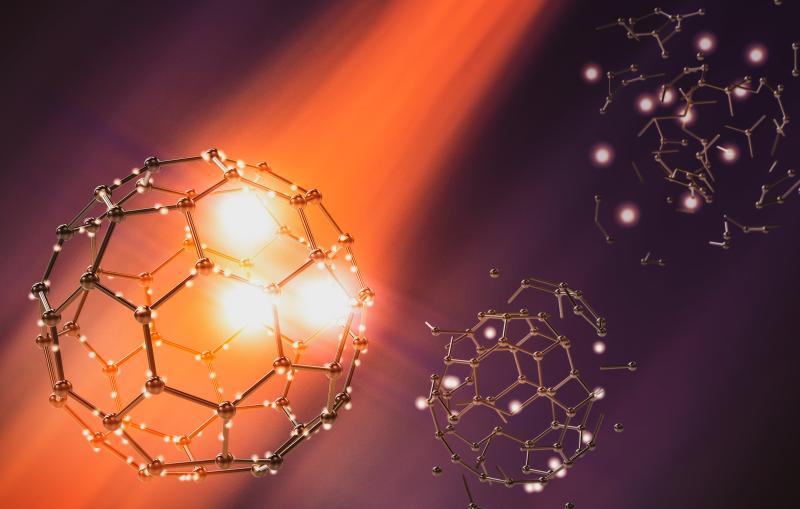
Laser-driven break up of "buckyballs" is recorded in real-time by X-ray imaging at LCLS. 

November 21, 2025
Buckyballs
Feature

The ideal fusion fuel target doesn’t exist – yet. Researchers at SLAC are trying to change that.

Researchers at SLAC are developing experimental techniques to evaluate new candidates for inertial fusion energy targets. 

November 26, 2025  ·  7 min read
a graphic in the style of graphic novel depicts four lasers converging on a spherical target, which represents an inertial fusion energy reaction
  • Go to previous page
  • Page 1
  • …
  • Page 17
  • Page 18
  • Page 19
  • Page 20
  • Currently on page 21
  • Page 22
  • Page 23
  • Page 24
  • Page 25
  • …
  • Page 33
  • Go to next page

SLAC National Accelerator Laboratory 
2575 Sand Hill Road  
Menlo Park, CA 94025-7015  
650.926.3300

  • Coming to SLAC
  • Connect with us
  • Contact us
  • Facebook
  • Flickr
  • Instagram
  • LinkedIn
  • Twitter
  • YouTube

Sign up for our email

Monthly newsletter for cutting-edge science, SLAC milestones and events.

Sign up

Bold People
Visionary Science
Real Impact

We explore how the universe works at the biggest, smallest and fastest scales and invent powerful tools used by scientists around the globe.

  • About
    • Our story
    • Our people
    • Lab overview
    • Visit SLAC
    • Resources
    • Connect with us
  • Research
    • X-ray & ultrafast science
    • Advanced accelerators
    • New technologies
    • Physics of the universe
    • Science of life
    • SLAC science explained
  • Facilities & centers
    • Scientific facilities
    • Joint institutes & centers
  • Work with us
    • Partner with us
    • Become a supplier
    • Use our facilities
    • Careers at SLAC
  • News & events
    • News center
    • Symmetry Magazine
    • Media resources
    • Events
    • Educational programs
    • Connect with us
  • Staff portal
  • Privacy policy
  • Accessibility
  • Vulnerability disclosure
  • A–Z index
  • Website feedback
Home
  • SLAC home
  • Maps & directions
  • Emergency info
  • Careers

© 2026 SLAC National Accelerator Laboratory is operated by Stanford University for the U.S. Department of Energy Office of Science.

Stanford University U.S. Department of Energy
Top Top
Back to top Back to top