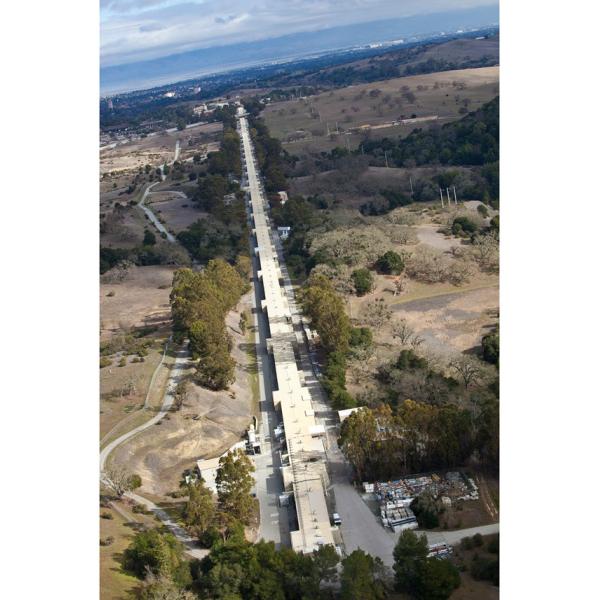
Two studies to be published February 3 in Nature demonstrate how the unique capabilities of the world’s first hard X-ray free-electron laser—the Linac Coherent Light Source, located at the Department of Energy’s SLAC National Accelerator Laboratory—could revolutionize the study of...
The synchrotron light source community is a large one – about 70 facilities exist around the world – but the men and women who run them are like an extended family.
Scientists from SLAC and Stanford have used finely tuned X-rays at the Stanford Synchrotron Radiation Lightsource (SSRL) to pin down the source of a mysterious magnetism that appears when two materials are sandwiched together.
The success of SLAC's Linac Coherent Light Source X-ray free-electron laser project, which opened to users in 2009 with plans for expansion already well under way, hasn't gone unnoticed.
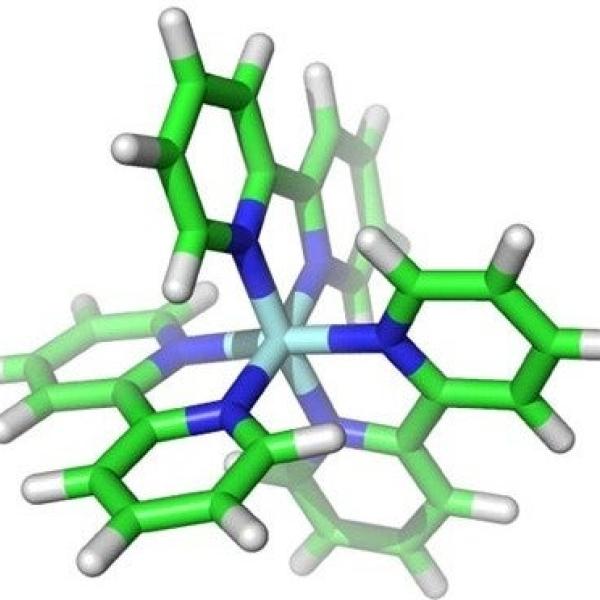
The way electrons move within and between molecules, transferring energy as they go, plays an important role in many chemical and biological processes, such as the conversion of sunlight to energy in photosynthesis and solar cells
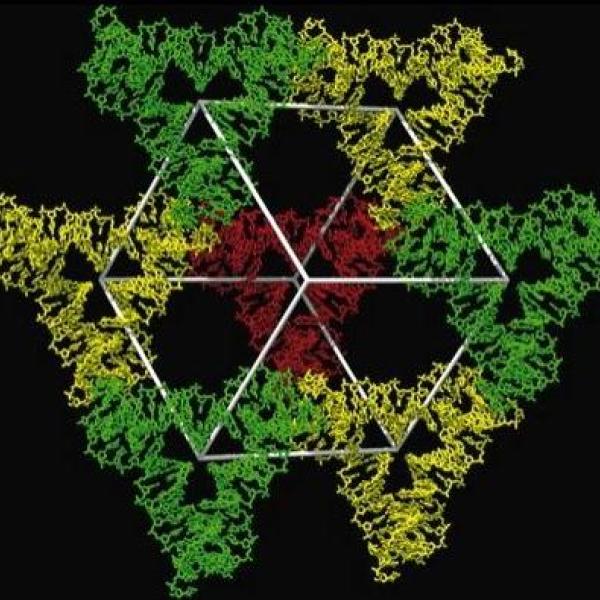
The founding father of DNA nanotechnology – a field that forges tiny geometric building blocks from DNA strands – recently came to SLAC to get a new view of these creations using powerful X-ray laser pulses.
Last week the SLAC-built Radiometric All Sky Infrared Camera, or RASICAM, passed its final acceptance test before being partially disassembled, crated up and shipped off to Arizona.
Menlo Park, Calif. — The first controlled studies of extremely hot, dense matter have overthrown the widely accepted 50-year-old model used to explain how ions influence each other’s behavior in a dense plasma.
Scientists working at SLAC's Linac Coherent Light Source have captured the first single-shot X-ray microscope image of a magnetic nanostructure and shown that it can be done without damaging the material.