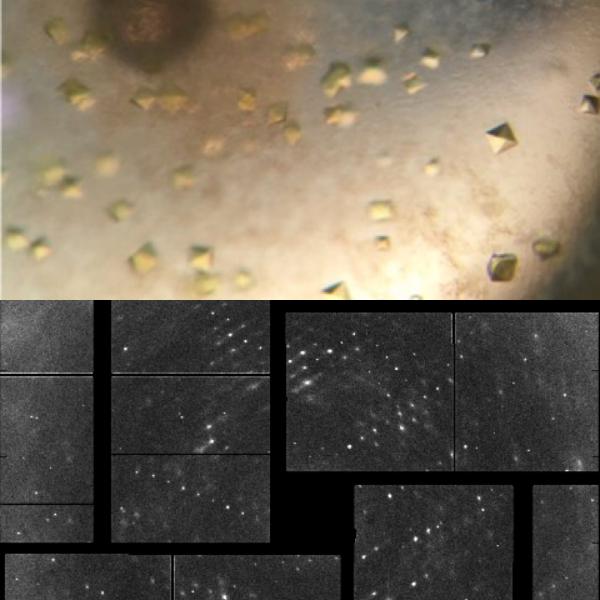
Top: An optical microscope image of crystallized photolyase enzymes before they are probed by the LCLS X-ray laser. Bottom: An X-ray diffraction pattern from the photolyase crystals. These patterns, made by X-rays interacting with atoms in the crystal, are used...
Al Ashley with internship program fellows in 2012. From left: Dorian Bohler, Manuel A. Carrasco, Al Ashley, Darius Morris, Eduardo Perez Gatica, Antonio Cedillos.
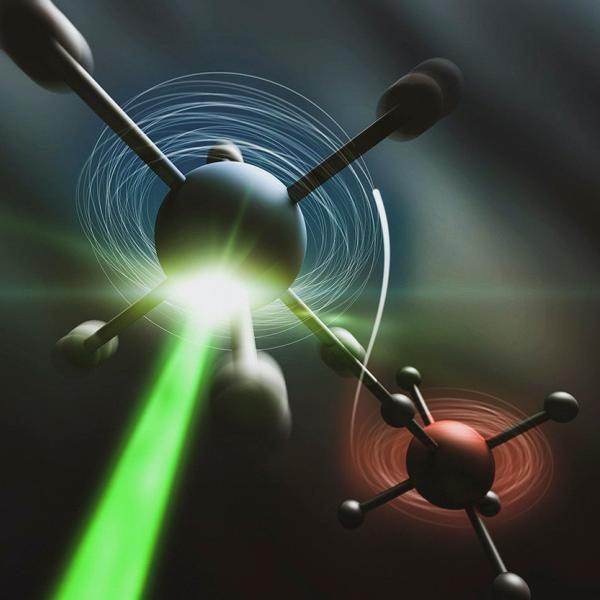
These fleeting disruptions, seen for the first time in lead hybrid perovskites, may help explain why these materials are exceptionally good at turning sunlight into electrical current in solar cells.
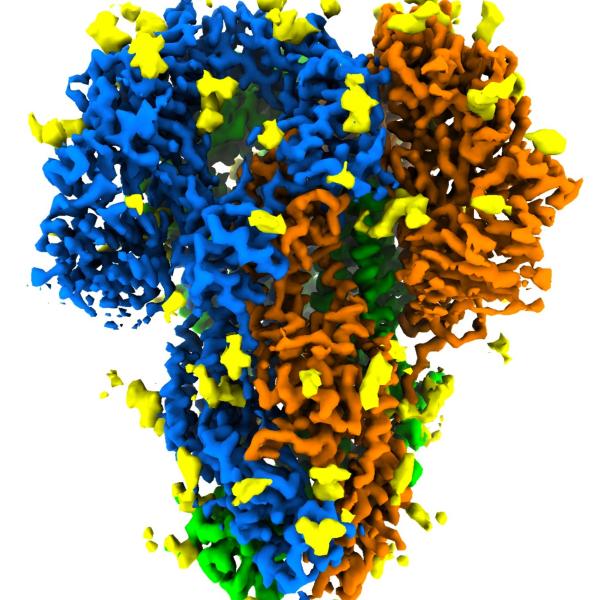
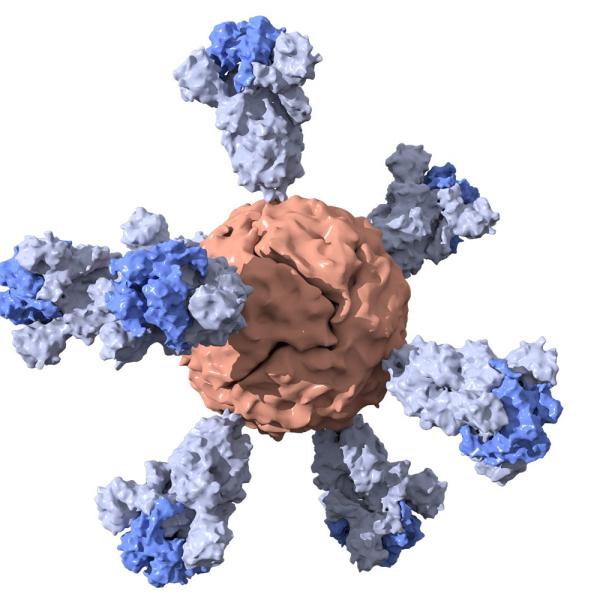
The study, done on a mild-mannered relative of the virus that causes COVID-19, paves the way for seeing more clearly how spike proteins initiate infections, with an eye to preventing and treating them.
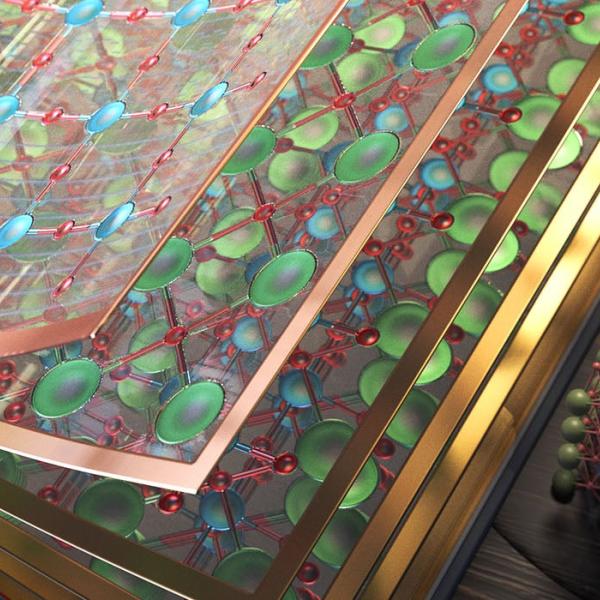
The results, which show that ultrafast atomic motions are the first step in forming a magnetic state, could lead to faster and more efficient data storage devices.